https://threestatesrecords.com/2020/08/01/8-7-zhang-lu/
Added in 5 minutes 35 seconds:
"
Lǔ therefore occupied Hànzhōng and with ghostly Dào taught the people, declaring himself “Teacher Lord.” Those that came to learn his Dào, at first were all named “Ghost Soldier,” those receiving foundational Dào and then trusted, called “Libationer.” Each commanded division armies, those with many were “Governing Head Chief Libationer.” All were taught to be honest and faithful and not cheat and deceive, if with illness than confess their faults, overall with the Huángjīn [“Yellow Scarves”] resembling one another. The various Libationers all made “Righteous Lodges,” like the present’s relay stations. They also set up Righteous rice and meat, offered at the Righteous Lodges, travelers estimated how much they needed and obtained enough; if they were excessive, the demonic Dào would then make them ill. Those that violated law, were thrice pardoned, and afterward executed. He did not install Chief Clerks, all used Libationers to govern, the people and foreign tribes found it convenient. His power occupied Bā and Hàn[zhōng] for nearly thirty years. (1) At Hàn’s end, its strength could not campaign [against Zhāng Lǔ], and therefore gave favor to Lǔ as Defending the People Internal Cadet General, designate Hànníng Administrator, but he delivered tribute and nothing more. Among the commoners someone in the ground obtained a jade seal, and the subordinates wished to honor Lǔ as King of Hànníng. Lǔ’s Merit Officer Bāxī’s Yán Pǔ remonstrated Lǔ saying: “The Hàn stream’s people, its households are more than a hundred thousand, its wealth rich and its soil fertile, and on four sides is rugged terrain; if above you rectify Heaven’s Son, then you will you will be like Huán and Wén, or else match Dòu Róng, and not lose riches and honor. Now to carry on regulation and appoint officials, your strength is sufficient to cut off, and it is not worth the trouble of ruling as a King. May you for now not declare [yourself as King], to not advance disaster.” Lǔ followed this. Due to Hán Suì and Mǎ Chāo’s chaos, the people west of the passes through Zǐwǔ valley fled to take refuge were several tens of thousand families.
"
"
(1) Diǎnlüè states:
During Xīpíng [172-177], witch rebels greatly rose, and the three adjuncts had Luò Yào. During Guānghé [178-183], the east had Zhāng Jué, Hànzhōng had Zhāng Xiū. Luò Yào taught the people the Miǎnnì Fǎ “Method of Concealment”, [Zhāng] Jué had the Tàipíng Dào “Way of Grand Peace”, [Zhāng] Xiū had the Wǔdǒumǐ Dào “Way of Five dǒu of Rice.”
The Tàipíng Dào, the masters grasped nine integrity staff as talisman to pray, teaching sick men to knock head [on ground] and think on their faults, and then had them drink blessed water, and of the sick some daily improved and healed, and then said these men had faith in the Dào, and the rest that did not heal, then were said to not have faith in the Dào. [Zhāng] Xiū’s methods overall with [Zhāng] Jué were the same, but added granting a tranquil house, having the sick reside inside and think on their faults. Also he employed men as Treachery Control Libationer, Libationers that were masters of the Lǎo-zǐ of five thousand words, and sent to the capital to study, were called as Treachery Control. He appointed ghost officials, to manage praying for the sick. The method of praying, was to write the sick person’s surname and personal name, and say their criminal thoughts. They made three copies, one sent up to Heaven, placed on mountain top, one buried to earth, one submerged in water, calling it three offices hand written letter. They had the sick person’s families give five dǒu of rice as a standard, and therefore were called as Five dǒu Rice Teacher. In fact there was no benefit in treating illness, and only was utterly absurd, however lesser men were muddled and deceived, and competed together to serve them. Later [Zhāng] Jué was executed, and [Zhāng] Xiū also died.
When [Zhāng] Lǔ was at Hànzhōng, because its people had faith in following [Zhāng] Xiū’s enterprise, therefore expanded and ornamented it. He taught them to make Righteous Lodges, with rice and meat set inside for resting travelers; he also taught them to self conceal, those with small faults, were to use this way and go hundred steps, and then the guilt would be removed; he also relied on moon [season dependent] orders, in spring and summer prohibiting killing; he also prohibited alcohol. Refugees that came to his land, did not dare not believe.
Your Servant Sōngzhī says Zhāng Xiū should be Zhāng Héng, if it is not the Diǎnlüè‘s mistake, then it is a copyist error.
"
"
(2) Your Servant Sōngzhī believes though Zhāng Lǔ had good heart, still he was defeated and only afterward surrendered, now to be favored with ten thousand households, five sons all as ranked Marquis, is excessive.
Xí Zuòchǐ states: Lǔ wished to declare himself King, but Yán Pǔ remonstrated and stopped him, now fief was given on [Yán] Pǔ as ranked Marquis. Rewards and punishments, are how to discourage evil and encourage good, if it can enlighten path and teaching with things, there are none far and near hidden in depth. Now Yán Pǔ remonstrated Lǔ to not be a King, and Tàizǔ in recollection gave fief on him, of future men who would not think of obedience? Stop the origin source and the ending flow itself stopped, this is what it is called. If then one does not understand this and value scorching and destructive achievement, with abundant rank and generous rewards only on to the death battle soldiers, then the people will profit from chaos, and custom will compete in killing and fighting, using weapons and relying on strength, shields and spears never stored. Tàizǔ in this fief, can be said to know the foundations of rewards and punishments, and even Tāng and Wǔ dealt with it, there would be nothing to add.
Wèilüè states: During Huángchū [220-226], increased [Yán] Pǔ rank and fief, inside ritual request. Later after over ten years he of illness died.
Jìnzhū says: Xīróng Major Yán Zuǎn was Pǔ’s grandson.
"
"
(3) Wèilüè states: Liú Xióngmíng was a Lántián man. When young he made gathering drugs and shooting and hunting his business, always residing below Fùchē mountain, every morning and night, going out through clouds, memorizing route to not be lost, and at the time people therefore said he could become cloud and mist. During Guō [Sì] and Lǐ [Jué]’s chaos, of men many joined him. During Jiàn’ān, he attached to the province and prefecture, and the province and prefecture memorialized and recommended him as a lesser office. Mǎ Chāo and others rebelled, he would agree to follow, and [Mǎ] Chāo defeated him. Later he visited Tàizǔ, and Tàizǔ grasped his hand and said to him: “When I just entered the passes, I dream of obtaining a divine man, is it you?” Therefore he generously treated him, memorializing him as a General, sending him to welcome his followers. His followers did not wish to surrender, and therefore forced him to rebel, and various exiles all went to join him, and he had an army of several thousand men, occupying Wǔ pass road’s mouth. Tàizǔ sent Xiàhóu Yuān to suppress and defeat him, [Liú] Xióngmíng fled south to Hànzhōng. When Hànzhōng fell, he had nowhere to go, and therefore again went to surrender. Tàizǔ grabbed his beard and said: “Old rebel, [I’ve] really got you!” He restored his office, transferred to Bóhǎi. At the time there also was Chéng Yín, Hóu Xuǎn, Lǐ Kān, all Hédōng men. During Xīngpíng [193-195] chaos, each had armies of over a thousand families. Jiàn’ān Sixteenth Year [211], they all with Mǎ Chāo joined. [Mǎ] Chāo was defeated and fled, and [Lǐ] Kān on the battle lines died. [Chéng] Yín and [Hóu] Xuǎn went south into Hànzhōng, Hànzhōng fell, they went to Tàizǔ to surrender, and both were restored office and rank.
"
Added in 55 minutes 34 seconds:
https://en.wikipedia.org/wiki/Chinese_g ... _immortals
"
The gods are energies or principles revealing, imitating, and propagating the way of heaven (天, Tian),[2] which is the supreme godhead manifesting in the northern culmen of the starry vault of the skies and its order.[citation needed] Many gods are ancestors or men who became deities for their heavenly achievements. Most gods are also identified with stars and constellations.[3] Ancestors are regarded as the equivalent of Heaven within human society,[4] and therefore, as the means of connecting back to Heaven, which is the "utmost ancestral father" (曾祖父, zēngzǔfù).[5]
There are a variety of immortals in Chinese thought, and one major type is the xian, which is thought in some religious Taoism movements to be a human given long or infinite life. In China, "gods"(deities) are often referred to together with "xian"(immortals). Gods are innumerable, as every phenomenon has or is one or more gods, and they are organised in a complex celestial hierarchy.[6] Besides the traditional worship of these entities, Chinese folk religion, Chinese Buddhism, Confucianism, Taoism, and formal thinkers in general give theological interpretations affirming a monistic essence of divinity.[7]
"
"
"Polytheism" and "monotheism" are categories derived from Western religion and do not fit Chinese religion, which has never conceived the two things as opposites.[8] Tian bridges the gap between supernatural phenomena and many kinds of beings, giving them a single source from spiritual energy in some Chinese belief systems.[2] However, there is a significant belief in Taoism which differentiates tian from the forces of earth and water, which are held to be equally powerful.[9]
Since all gods are considered manifestations of qì (氣), the "power" or pneuma of Heaven, in some views of tian, some scholars have employed the term "polypneumatism" or "(poly)pneumatolatry", first coined by Walter Medhurst (1796–1857), to describe the practice of Chinese polytheism.[10] Some Taoists consider deities the manifestation of the Tao.[citation needed]
In the theology of the classic texts and Confucianism, "Heaven is the lord of the hundreds of deities".[11]
Modern Confucian theology sometimes compares them to substantial forms or entelechies (inner purposes) as described by Leibniz as a force that generates all types of beings, so that "even mountains and rivers are worshipped as something capable of enjoying sacrificial offerings".[12]
Unlike in Hinduism, the deification of historical persons and ancestors is not traditionally the duty of Confucians or Taoists.[clarification needed] Rather, it depends on the choices of common people; persons are deified when they have made extraordinary deeds and have left an efficacious legacy. Yet, Confucians and Taoists traditionally may demand that state honours be granted to a particular deity. Each deity has a cult centre and ancestral temple where he or she, or the parents, lived their mortal life. There are frequently disputes over which is the original place and source temple of the cult of a deity.[13]
The gods and immortals (神仙) believed in by Taoism and Chinese mythology can be roughly divided into two categories, namely "gods" and "xian" (immortals). "Gods" are also called deities and there are many kinds, that is, god of heaven (天神), god of ground (地祇), wuling (物灵: animism, the spirit of all things), god of netherworld (地府神灵), god of human body (人体之神), god of human ghost(人鬼之神), etc. Among these "gods" such as god of heaven (天神), god of ground (地祇), god of netherworld (阴府神灵), god of human body (人体之神) are innate beings. "Xian" (immortals) is acquired the cultivation of the Tao,persons with vast supernatural powers, unpredictable changes and immortality.[14]
"
https://en.wikipedia.org/wiki/Potential ... _actuality
"
Chinese traditional theology, which comes in different interpretations according to the classic texts, and specifically Confucian, Taoist, and other philosophical formulations,[15] is fundamentally monistic, that is to say, it sees the world and the gods who produce it as an organic whole, or cosmos.[16] The universal principle that gives origin to the world is conceived as transcendent and immanent to creation, at the same time.[17] The Chinese idea of the universal God is expressed in different ways. There are many names of God from the different sources of Chinese tradition.[18]
The radical Chinese terms for the universal God are Tian (天) and Shangdi (上帝, "Highest Deity") or simply, Dì (帝, "Deity").[19][20] There is also the concept of Tàidì (太帝, "Great Deity"). Dì is a title expressing dominance over the all-under-Heaven, that is, all things generated by Heaven and ordered by its cycles and by the stars.[21] Tian is usually translated as "Heaven", but by graphical etymology, it means "Great One" and a number of scholars relate it to the same Dì through phonetic etymology and trace their common root, through their archaic forms, respectively *Teeŋ and *Tees, to the symbols of the squared north celestial pole godhead (口, Dīng).[3][22] These names are combined in different ways in Chinese theological literature, often interchanged in the same paragraph, if not in the same sentence.[23]
Names of the God of Heaven
edit
Besides Shàngdì and Tàidì, other names include Yudi ("Jade Deity") and Taiyi ("Great Oneness") who, in mythical imagery, holds the ladle of the Big Dipper (Great Chariot), providing the movement of life to the world.[24] As the hub of the skies, the north celestial pole constellations are known, among various names, as Tiānmén (天門, "Gate of Heaven")[25] and Tiānshū (天樞, "Pivot of Heaven").[26]
Other names of the God of Heaven are attested in the vast Chinese religio-philosophical literary tradition:
Tiāndì (天帝), "Deity of Heaven" or "Emperor of Heaven":[27] "On Rectification" (Zheng lun) of the Xunzi uses this term to refer to the active God of Heaven setting creation in motion.[21]
Tianzhu (天主), the "Lord of Heaven": In "The Document of Offering Sacrifices to Heaven and Earth on the Mountain Tai" (Fengshan shu) of the Records of the Grand Historian, it is used as the title of the first God from whom all the other gods derive.[28]
Tiānhuáng (天皇), the "August Personage of Heaven": In the "Poem of Fathoming Profundity" (Si'xuan fu), transcribed in "The History of the Later Han Dynasty" (Hou Han shu), Zhang Heng ornately writes: «I ask the superintendent of the Heavenly Gate to open the door and let me visit the King of Heaven at the Jade Palace».[27]
Tianwang (天王), the "King of Heaven" or "Monarch of Heaven".
Tiāngōng (天公), the "Duke of Heaven" or "General of Heaven".[29]
Tiānjūn (天君), the "Prince of Heaven" or "Lord of Heaven".[29]
Tiānzūn (天尊), the "Heavenly Venerable", also a title for high gods in Taoist theologies.[27]
Tiānshén (天神), the "God of Heaven", interpreted in the Shuowen Jiezi as "the being that gives birth to all things".[21]
Shénhuáng (神皇), "God the August", attested in Taihong ("The Origin of Vital Breath").[21]
Lǎotiānyé (老天爺), the "Olden Heavenly Father".[27]
Tian is both transcendent and immanent, manifesting in the three forms of dominance, destiny, and nature of things. In the Wujing yiyi (五經異義, "Different Meanings in the Five Classics"), Xu Shen explains that the designation of Heaven is quintuple:[28]
Huáng Tiān (皇天), "August Heaven" or "Imperial Heaven", when it is venerated as the lord of creation.
Hào Tiān (昊天), "Vast Heaven", with regard to the vastness of its vital breath (qi).
Mín Tiān (旻天), "Compassionate Heaven", for it hears and corresponds with justice to the all-under-Heaven.
Shàng Tiān (上天), "Highest Heaven" or "First Heaven", for it is the primordial being supervising all-under-Heaven.
Cāng Tiān (蒼天), "Deep-Green Heaven", for it being unfathomably deep.
All these designations reflect a hierarchical, multiperspective experience of divinity.[18]
"
"
In Taoism and Chinese folk religion, gods and xian[37] are often seen as embodiments of water.[38] Water gods and xian were often thought to ensure good grain harvests, mild weather and seas, and rivers with abundant water.[38] Some xian were thought to be humans who gained power by drinking "charmed water".[37]
Some gods were based on previously existing Taoist immortals, bodhisattvas, or historical figures.[39]
Stoneware figure of a Daoist (Taoist) deity. From China, Ming dynasty, 16th century CE. The British Museum
Cosmic gods
edit
Yudi (玉帝, "Jade Deity") or Yuhuang (玉皇, "Jade Emperor" or "Jade King"), is the popular human-like representation of the God of Heaven.[40] Jade traditionally represents purity, so it is a metaphor for the unfathomable source of creation.
Doumu (斗母, "Mother of the Great Chariot"), often entitled with the honorific Tianhou (天后, "Queen of Heaven") is the heavenly goddess portrayed as the mother of the Big Dipper (Great Chariot), whose seven stars, in addition to two invisible ones, are conceived as her sons, the Jiuhuangshen (九皇神, "Nine God-Kings"), themselves regarded as the ninefold manifestation of Jiuhuangdadi (九皇大帝, "Great Deity of the Nine Kings") or Doufu (斗父, "Father of the Great Chariot"), another name of the God of Heaven. She is, therefore, both wife and mother of the God of Heaven.[41][42]
Pangu (盤古), a macranthropic metaphor of the cosmos. He separated yin and yang, creating the earth (murky yin) and the sky (clear yang). All things were made from his body after he died.[43]
Xiwangmu (西王母, "Queen Mother of the West"),[ii] identified with the Kunlun Mountain, shamanic inspiration, death, and immortality.[45][46] She is the dark, chthonic goddess, pure yin, at the same time terrifying and benign, both creation and destruction, associated with the tiger and weaving.[47] Her male counterpart is Dongwanggong (東王公, "King Duke of the East";[iii] also called Mugong, 木公 "Duke of the Woods"),[48] who represents the yang principle.[47]
Hòuyì (后羿, "Yi the Archer"), was a man who sought for immortality, reaching Xiwangmu on her mountain, Kunlun.
Yanwang (閻王, "Purgatory King")[iv] the ruler of the underworld, assisted by the Heibai Wuchang (黑白無常, "Black and White Impermanence"), representing the alternation of yin and yang principles, alongside Ox-Head and Horse-Face, who escort spirits to his realm.
Yinyanggong (陰陽公, "Yinyang Duke"[iii]) or Yinyangsi (陰陽司, "Yinyang Controller"), the personification of the union of yin and yang.
Three Patrons and Five Deities
edit
Wufang Shangdi (五方上帝), the order of Heaven inscribing worlds as tán 壇, "altar", the Chinese concept equivalent to the Indian mandala. The supreme God conceptualised as the Yellow Deity, and Xuanyuan as its human form, is the heart of the universe and the other Four Deities are his emanations. The diagram is based on the Huainanzi.[50]
Statue and ceremonial complex of the Yellow and Red Gods in Zhengzhou, Henan.
Temple of the Three Officials of Heaven in Chiling, Zhangpu, Fujian.
Temple of the Great Deity of the Eastern Peak at Mount Tai, Tai'an, Shandong.
Sānhuáng (三皇, "Three Patrons or Augusts") or Sāncái (三才, "Three Potencies"); they are the "vertical" manifestation of Heaven, spatially corresponding to the Sānjiè (三界, "Three Realms"), representing the yin and yang and the medium between them, that is the human being:
Fuxi (伏羲) , the patron of heaven (天皇, Tiānhuáng), also called Bāguàzǔshī (八卦祖師, "Venerable Inventor of the Bagua") by the Taoists, is a divine man reputed to have taught to humanity writing, fishing, and hunting.
Nüwa (女媧), the patroness of earth (地皇, Dehuáng), is a goddess attributed for the creation of mankind and mending the order of the world when it was broken.
Shennong (神農), "Peasant God", the patron of humanity (人皇, Rénhuáng), identified as Yandi (炎帝, "Flame Deity" or "Fiery Deity"), a divine man said to have taught the techniques of farming, herbal medicine, and marketing. He is often represented as a human with horns and other features of an ox.[51]
Wǔdì (五帝, "Five Deities"),[52] also Wǔfāng Shàngdì (五方上帝, "Five Manifestations of the Highest Deity"), Wǔfāng Tiānshén (五方天神, "Five Manifestations of the Heavenly God"), Wǔfāngdì (五方帝, "Five Forms Deity"), Wǔtiāndì (五天帝, "Five Heavenly Deities"), Wǔlǎojūn (五老君, "Five Ancient Lords"), Wǔdàoshén (五道神, "Five Ways God[s]"); they are the five main "horizontal" manifestations of Heaven, and along with the Three Potencies, they have a celestial, a terrestrial, and a chthonic form. They correspond to the five phases of creation, the five constellations rotating around the celestial pole and five planets, the five sacred mountains and five directions of space (their terrestrial form), and the five Dragon Gods which represent their mounts, that is to say, the material forces they preside over (their chthonic form).[53][54]
Huangdi (黃帝, "Yellow Emperor" or "Yellow Deity"); or Huángshén (黃神, "Yellow God"), also known as Xuānyuán Huángdì (軒轅黃帝, "Yellow Deity of the Chariot Shaft"), is the Zhōngyuèdàdì (中岳大帝, "Great Deity of the Central Peak"): he represents the essence of earth and the Yellow Dragon,[51] and is associated with Saturn.[54] The character 黃 (huáng, "yellow"), by homophony and shared etymology with 皇 (huáng), also means "august", "creator", and "radiant", identifying the Yellow Emperor with Shangdi ("Highest Deity").[55] Huangdi represents the heart of creation, the axis mundi (Kunlun) that is the manifestation of the divine order in physical reality, opening the way to immortality.[51] As the deity of the centre, intersecting the Three Patrons and the Five Deities, in the Shizi he is described as "Yellow Emperor with Four Faces" (黃帝四面, Huángdì Sìmiàn).[56] As a human, he is said to have been the fruit of a virginal birth, as his mother Fubao conceived him as she was aroused, while walking in the country, by a lightning from the Big Dipper (Great Chariot). She delivered her son after twenty-four months on the mount of Shou (Longevity) or mount Xuanyuan (Chariot Shaft), after which he was named.[57] He is reputed to be the founder of the Huaxia civilisation, and the Han Chinese identify themselves as the descendants of Yandi and Huangdi.
Cangdi (蒼帝, "Green Deity); or Qīngdì (青帝, "Blue Deity" or "Bluegreen Deity", the Dōngdì (東帝, "East Deity") or Dōngyuèdàdì (東岳大帝, "Great Deity of the Eastern Peak"): he is Tàihào (太昊), associated with the essence of wood and with Jupiter, and is the god of fertility and spring. The Bluegreen Dragon is both his animal form and constellation.[51][54] His female consort is the goddess of fertility, Bixia.
Heidi (黑帝, "Black Deity), the Běidì (北帝, "North Deity") or Běiyuèdàdì (北岳大帝, "Great Deity of the Northern Peak"): he is Zhuanxu (顓頊), today frequently worshiped as Xuanwu (玄武, "Dark Warrior") or Zhēnwǔ (真武), and is associated with the essence of water and winter, and with Mercury. His animal form is the Black Dragon and his stellar animal is the tortoise-snake.[51][54]
Chidi (赤帝, "Red Deity"), the Nándì (帝, "South Deity") or Nányuèdàdì (南岳大帝, "Great Deity of the Southern Peak"): he is Shennong (the "Divine Farmer"), the Yandi ("Fiery Deity"), associated with the essence of fire and summer, and with Mars. His animal form is the Red Dragon and his stellar animal is the phoenix. He is the god of agriculture, animal husbandry, medicinal plants, and market.[51][54]
Baidi (白帝, "White Deity"), the Xīdì (西帝, "West Deity") or Xīyuèdàdì (西岳大帝, "Great Deity of the Western Peak"): he is Shaohao (少昊), and is the god of the essence of metal and autumn, associated with Venus. His animal form is the White Dragon and his stellar animal is the tiger.[54]
The Three Great Emperor-Officials: the Tiānguān (天官, "Official of Heaven"), the Dìguān (地官, "Official of Earth"), and the Shuǐguān (水官, "Official of Water").[9][58]
In mythology, Huangdi and Yandi fought a battle against each other, and Huang finally defeated Yan with the help of the Dragon (the controller of water, who is Huangdi himself).[59] This myth symbolizes the equipoise of yin and yang, here the fire of knowledge (reason and craft) and earthly stability.[59]
Yan (炎) is flame, scorching fire, or an excess of it (Graphically, it is a double 火 (huo, "fire").[59] As an excess of fire brings destruction to the earth, it has to be controlled by a ruling principle. Nothing is good in itself, without limits; good outcomes depend on the proportion in the composition of things and their interactions, never on extremes in absolute terms.[59] Huangdi and Yandi are complementary opposites, necessary for the existence of one another, and they are powers that exist together within the human being.
Gods of celestial and terrestrial phenomena
edit
Temple of the Wind God in Tainan.
Longshen (龍神, "Dragon Gods") or Lóngwáng, (龍王, "Dragon Kings"), also Sìhǎi Lóngwáng (四海龍王, "Dragon Kings of the Four Seas"), are gods of watery sources, usually reduced to four, patrons of the Four Seas (四海, sihai) and the four cardinal directions. They are the White Dragon (白龍, Báilóng), the Black Dragon (玄龍, Xuánlóng), the Red Dragon (朱龍, Zhūlóng), and the Bluegreen Dragon (青龍, Qīnglóng). Corresponding with the Five Deities as the chthonic forces that they sublimate (the Dragon Gods are often represented as the "mount" of the Five Deities), they inscribe the land of China into an ideal sacred squared boundary. The fifth dragon, the Yellow Dragon (黃龍, Huánglóng), is the dragon of the centre, representing the Yellow God.
In Taiyuan, Liu Heng, the fifth emperor of the Western Han dynasty, is worshiped as the Dragon King. This is because Liu Heng once served as the Prince of Dai of the area and was welcomed by the local people. Every year, local villagers hold a sacrifice to him on the Longtaitou Festival.[60][61]
Báoshén (雹神, "Hail God")[iv]
Bālà (八蜡), the Chóngshén (蟲神, "Insect God") or Chóngwáng (蟲王, "Insect King"): the gods of insects.[iv]
Dìzhǔshén (地主神, "Landlord God").
Dòushén (痘神, "Smallpox God").[iv]
Fei Lian (飛帘), the Fēngshén (風神, "Wind God").[iv]
Hǎishén (海神, "Sea God"); also Hǎiyé (海爷, "Sea Lord").
Hebo (河伯, "River Lord") or Héshén (河神, "River God"): any watercourse god, among which, one of the most revered is the god of the Yellow River.[iv]
Gǔshén (穀神, "Valley God"): in the Daodejing, a name used to refer to the Way[62]
Huǒshén (火神, "Fire God"), often personified as Zhurong (祝融)[iv]
Húshén (湖神, "Lake God")
Shèshén (社神, "Soil God")
Jìshén (稷神, "Grain God")
Jīnshén (金神, "Gold God"), often identified as the Qiūshén (秋神, "Autumn God") and personified as Rùshōu (蓐收)
Jǐngshén (井神, "Waterspring God").[62]
Leishen (雷神, "Thunder God") or Léigōng (雷公, "Thunder Duke");[iii] his consort is Diànmǔ (電母, "Lightning Mother").
Mùshén (木神, "Woodland God"), usually the same as the Chūnshén (春神, "Spring God"), and as Jùmáng (句芒).
Shānshén (山神, "Mountain God")
Shuǐshén (水神, "Water God")
Tudishen (土地神, "God of the Local Land"), also Tǔshén (土神, "Earth God"), or Tudigong (土地公, "Duke of the Local Land"):[iii] the tutelary deity of any locality. Their Overlord is Houtu (后土, "Queen of the Earth").[ii]
Wen Shen (瘟神, "Plague God")[iv]
Xiangshuishen (湘水神, "Xiang Waters' Goddesses"): the patrons of the Xiang River.
Xuěshén (雪神, "Snow God")
Yǔshén (雨神, "Rain God")[iv]
Xihe (羲和), the Tàiyángshén (太陽神, "Great Sun Goddess") or Shírìzhīmǔ (十日之母, "Mother of the Ten Suns").[ii]
Yuèshén (月神, "Moon Goddesses"): Chángxī (常羲) or Shí'èryuèzhīmǔ (十二月之母, "Mother of the Twelve Moons"), and Chang'e (嫦娥).
Gods of human virtues and crafts
edit
Guan Yu (middle), Guan Ping (his right) and Zhou Cang (his left) at a Chinese folk religious temple in Osaka, Japan. Guandi is one of the most revered gods among Han Chinese.
The Waterside Dame and her two attendants, Lin Jiuniang and Li Sanniang, at the Temple of Heavenly Harmony of the Lushan school of Red Taoism in Luodong, Yilan, Taiwan.
Temple of the Dragon Mother in Deqing, Guangdong.
Temple of the Ancestral Mother the Queen of Heaven in Qingdao, Shandong.
Some Taoist gods were thought to affect human morality and the consequences of it in certain traditions. Some Taoists beseeched gods, multiple gods, and/or pantheons to aid them in life and/or abolish their sins.[63]
The six Jade Maidens, as depicted in The Ordination of Empress Zhang (detail)
Civil and military (wen and wu) deities:
Wendi (文帝, "Culture Deity"), also Wénchāngdì (文昌帝, "Deity who Makes Culture Thrive") or Wénchāngwáng (文昌王, "King who Makes Culture Thrive"): in southern provinces, this deity takes the identity of various historical persons, while in the north, he is more frequently identified as being the same as Confucius (孔夫子, Kǒngfūzǐ)
Kuixing (魁星, "Chief Star"): another god of culture and literature, but specifically, examination, is a personification of the man who awakens to the order of the Great Chariot.
Wǔdì (武帝, "Military Deity"): Guandì (關帝, "Divus Guan"), also called Guāngōng (關公, "Duke Guan"),[iii] and popularly Guānyǔ (關羽).[ii]
Another class is the Zhànshén (戰神, "Fight God"), who may be personified by Chiyou (蚩尤) or Xingtian (刑天), who was decapitated for fighting against Tian.
Baoshengdadi (保生大帝, "Great Deity who Protects Life").[v]
Baxian (八仙, "Eight Immortals").
Canshen (蠶神, "Silkworm God"), who may be:
Cánmǔ (蠶母, "Silkworm Mother"), also called Cángū (蠶姑, "Silkworm Maiden"), who is identified as Leizu (嫘祖), the wife of the Yellow Emperor: the invention of sericulture is attributed primarily to her.
Qīngyīshén (青衣神, "Bluegreen-Clad God"): his name as a human was Cáncóng (蠶叢, "Silkworm Twig"), and he is the first ruler and ancestor of the Shu state and promoter of sericulture among his people.
Caishen (財神, "Wealth God").[ii]
Yánshén (鹽神, "Salt God"): a pantheon of salt deities that bring wealth to their adherents, including ChiYou for his blood turned into a pool of salt after he died in some tellings, Sushashi for being the first to extract salt from seawater in mythology, Guan Zhong for he gave his state an official monopoly on salt operations, and animals of all types, such as crows and deer, which were credited with leading humans to salt and thus granted divinity. Many of the salt gods can be worshipped as wealth gods.[64]
Cangjie (倉頡), the four-eyed inventor of the Chinese characters.
Cāngshén (倉神, "Granary God").
Chuānzhǔ (川主, "Lord of Sichuan")
Chenghuangshen (城隍神, "Moat and Walls God", or "Boundary God"): the god of the sacred boundaries of a human agglomeration, he is often personified by founding fathers or noble personalities from each city or town.[ii]
Chen Jinggu (陳靖姑, "Old Quiet Lady"), also called Línshuǐ Fūrén (臨水夫人, "Waterside Dame").[v]
Hùshén (戶神, "Gate God").
Chēshén (車神, "Vehicle God")[iv]
Erlangshen (二郎神, "Twice Young God"), the god of engineering.
Guǎngzé Zūnwáng (廣澤尊王, "Honorific King of Great Compassion").[v]
Guanyin (觀音, "She who Hears the Cries of the World"), the goddess of mercy.[ii]
Huang Daxian (黃大仙, "Great Immortal Huang").
Jigong (濟公, "Help Lord").
Jiǔshén (酒神, "Wine God"), personified as Yidi (儀狄).[iv]
Jiutian Xuannü (九天玄女, "Mysterious Lady of the Nine Heavens"), a disciple of Xiwangmu and initiator of Huangdi.
Longmu (龍母, "Dragon Mother").
Lu Ban (魯班), the god of carpentry.
Lùshén (路神, "Road God").[iv]
Xíngshén (行神, "Walking God").
Mazu (媽祖, "Ancestral Mother"), often entitled the "Queen of Heaven".[vi]
Pànguān (判官, "Judging Official").
Píng'ānshén (平安神, "Peace God"), an embodiment of whom is considered to have been Mao Zedong.[66]
Qingshui Zushi (清水祖師, "Venerable Patriarch of the Clear Stream")[v]
Táoshén (陶神, "Pottery God")[iv]
Tuershen (兔兒神, "Leveret God"), the god of love among males.
Tuōtǎlǐ Tiānwáng (托塔李天王, "Pagoda-Bearing Heavenly King"), also known as Li Jing (李靖). He has three sons, the warlike protector deities Jinzha (金吒), Muzha (木吒), and Nezha (哪吒).
Wǔxiǎn (五顯, "Five Shining Ones"), possibly a popular form of the cosmological Five Deities.[v]
Xǐshén (喜神, "Joy God").
Yàoshén (藥神, "Medicine God") or frequently Yàowáng (藥王, "Medicine King").[iv]
Yuexia Laoren (月下老人, "Old Man Under the Moon"), the matchmaker who pairs lovers together.
Yùshén (獄神, "Jail-Purgatory God")[iv]
Zaoshen (灶神, "Hearth God"), the master of the household deities, including the "Bed God" (床神, Chuángshén), the "Gate Gods" (門神, Ménshén), and the "Toilet god" (廁神, Cèshén), often personified as Zigu.
Zhong Kui (鍾馗), the vanquisher of ghosts and evil beings.
Sanxing (三星, "Three Stars"), a cluster of three astral gods of well-being:
Fuxing (福星, "Prosperity Star"), god of happiness.
Luxing (祿星, "Firmness Star"), god of firmness and success in life and examinations.
Shouxing (壽星, "Longevity Star"), who stands for a healthy and long life.
Gods of animal and vegetal life
edit
Huāshén (花神, "Flower Goddess").
Huxian (狐神, "Fox God[dess]") or Húxiān (狐仙, "Fox Immortal"), also called Húxiān Niángniáng (狐仙娘娘, "Fox Immortal Lady").[vii]
Two other great fox deities, peculiar to northeast China, are the "Great Lord of the Three Foxes" (胡三太爷, Húsān Tàiyé) and the "Great Lady of the Three Foxes" (胡三太奶, Húsān Tàinǎi), representing the yin and yang.[vii]
Mǎshén (馬神, "Horse God") or Mǎwáng (马王, "Horse King").[iv]
Niúshén (牛神, "Cattle God" or "Ox God"), also called Niúwáng (牛王, "Cattle King").[iv]
Lángshén (狼神, "Wolf God").[iv]
Shùshén (樹神, "Tree God[s]").
Wǔgǔshén (五谷神, "Five Cereals God"),[iv] another name for Shennong.
Yuánshén (猿神, "Monkey God") or Yuánwáng (猿王, "Monkey King"), who is identified as Sun Wukong (孙悟空).[viii]
Zhīmáshén (芝蔴神, "Sesame God")[iv]
Bixia mother goddess worship
edit
"Bixia" redirects here. For the regal address, see Emperor of China.
Taiwanese wooden icon of the Queen of the Earth (Houtu).
The worship of mother goddesses for the cultivation of offspring is present all over China, but predominantly in northern provinces. There are nine main goddesses, and all of them tend to be considered as manifestations or attendant forces of a singular goddess identified variously as Bixia Yuanjun (碧霞元君, "Lady of the Blue Dawn"), also known as the Tiānxiān Niángniáng (天仙娘娘, "Heavenly Immortal Lady") or Tàishān Niángniáng (泰山娘娘, "Lady of Mount Tai"),[ix] or also Jiǔtiān Shèngmǔ (九天聖母,[68] "Holy Mother of the Nine Skies"[x])[69]: 149–150 or Houtu, the goddess of the earth.[70]
Bixia herself is identified by Taoists as the more ancient goddess Xiwangmu.[71] The general Chinese term for "goddess" is nǚshén (女神), and goddesses may receive many qualifying titles, including mǔ (母, "mother"), lǎomǔ (老母, "old mother"), shèngmǔ (聖母, "holy mother"), niángniáng (娘娘, "lady"), nǎinai (奶奶, "granny").
The additional eight main goddesses of fertility, reproduction, and growth are:[69]: 149–150, 191, note 18
Bānzhěn Niángniáng (瘢疹娘娘), the goddess who protects children from illness.
Cuīshēng Niángniáng (催生娘娘), the goddess who gives swift childbirth and protects midwives.
Nǎimǔ Niángniáng (奶母娘娘), the goddess who presides over maternal milk and protects nursing.
Péigū Niángniáng (培姑娘娘), the goddess who cultivates children.
Péiyǎng Niángniáng (培養娘娘), the goddess who protects the upbringing of children.
Songzi Niangniang (送子娘娘) or Zǐsūn Niángniáng (子孫娘娘), the goddess who presides over offspring.
Yǎnguāng Niángniáng (眼光娘娘), the goddess who protects eyesight.
Yǐnméng Niángniáng (引蒙娘娘), the goddess who guides young children.
Altars of goddess worship are usually arranged with Bixia at the center and two goddesses at her sides, most frequently the "Lady of Eyesight" and the "Lady of Offspring".[69]: 149–150, 191, note 18 A different figure, but with the same astral connections as Bixia is the "Goddess of the Seven Stars" (七星娘娘, Qīxīng Niángniáng).[xi]
There is also the cluster of the "Holy Mothers of the Three Skies" (三霄聖母, Sānxiāo Shèngmǔ; or 三霄娘娘, Sānxiāo Niángniáng, "Ladies of the Three Stars"), composed of Yunxiao Guniang, Qiongxiao Guniang, and Bixiao Guniang.[72] The cult of Chenjinggu, present in southeast China, is identified by some scholars as an emanation of the northern cult of Bixia.[73]
Other goddesses worshipped in China include Cánmǔ (蠶母, "Silkworm Mother") or Cángū (蠶姑, "Silkworm Maiden"),[70] identified with Leizu (嫘祖, the wife of the Yellow Emperor), Magu (麻姑, "Hemp Maiden"), Saoqing Niang (掃清娘, "Goddess who Sweeps Clean"),[xii][74] Sānzhōu Niángniáng (三洲娘娘, "Goddess of the Three Isles"),[74] and Wusheng Laomu. The mother goddess is central in the theology of many folk religious sects.[70]
Gods of northeast China
edit
See also: Wudaxian and Northeast China folk religion
Northeast China has clusters of deities which are peculiar to the area, deriving from the Manchu and broader Tungusic substratum of the local population. Animal deities related to shamanic practices are characteristic of the area and reflect wider Chinese cosmology. Besides the aforementioned Fox Gods (狐仙, Húxiān), they include:[citation needed]
Huángxiān (黃仙, "Yellow Immortal", the Weasel God.
Shéxiān (蛇仙, "Snake Immortal"), also variously called Liǔxiān (柳仙, "Immortal Liu"), or Chángxiān (常仙, "Viper Immortal") or also Mǎngxiān (蟒仙, "Python or Boa Immortal").
Báixiān (白仙, "White Immortal"), the Hedgehog God.
Hēixiān (黑仙, "Black Immortal"), who may be the Wūyāxiān (烏鴉仙, "Crow Immortal"), or the Huīxiān (灰仙, "Rat Immortal"), with the latter considered a misinterpretation of the former.
Gods of Indian origin
edit
Temple of the Four-Faced God in Changhua, Taiwan.
Gods who have been adopted into Chinese religion but who have their origins in the Indian subcontinent or Hinduism:
Guanyin (觀音, "She who Hears the Cries of the World"), a Chinese goddess of mercy modeled after the bodhisattva Avalokiteśvara
Sìmiànshén (四面神, "Four-Faced God"), but also a metaphor for "Ubiquitous God": The recent cult has its origin in the Thai transmission of the Hindu god Brahma, but it is also an epithet of the indigenous Chinese god Huangdi who, as the deity of the centre of the cosmos, is described in the Shizi as "Yellow Emperor with Four Faces" (黃帝四面, Huángdì Sìmiàn).[56]
Xiàngtóushén (象頭神, "Elephant-Head God"), is the Indian god Ganesha.[75]
Gods of North China and Mongolia
edit
Genghis Khan (成吉思汗, Chéngjísīhán), worshipped by Mongols and Chinese under a variety of divinity titles, including Shèngwǔ Huángdì (聖武皇帝, "Holy Military Sovereign Deity"), Fǎtiān Qǐyùn (法天啓運, "Starter of the Transmission of the Law of Heaven"), and Tàizǔ (太祖, "Great Ancestor") of the Yuan and the Mongols.
Gods of folk and Local
edit
Heng and Ha (哼哈二將), two generals of the Shang dynasty, guards of Buddhist temples in East Asia.[76]
Menshen (門神, "Door Gods"), divine guardians of doors and gates.
Shentu and Yulü (鬱壘), a pair of deities who punished evil spirits.
Luoshen (洛神), the goddess of the Luo River.
"
https://en.wikipedia.org/wiki/Huxian
"
Húxiān (simplified Chinese: 胡仙; traditional Chinese: 狐仙; trans. "Fox Immortal"), also called Húshén (胡神; 狐神; "Fox God") or Húwáng (胡王; 狐王; "Fox Ruler")[1] is a deity in Chinese religion whose cult is present in provinces of north China (from Henan and Shandong northwards), but especially in northeast China where it can be said to be the most popular deity.[2]
"
"
Northeast China was the homeland of several ethnic groups, including the Koreans, Manchus (or Jurchens), Ulchs, Hezhen (also known as the Goldi and Nanai), Sushen, Xianbei, and Mohe.
"
"
The Northern dynasties, all of which were either led or heavily influenced by the Xianbei, opposed and promoted sinicization at one point or another but trended towards the latter and had merged with the general Chinese population by the Tang dynasty.[19][20][21][22][23] The Northern Wei also arranged for ethnic Han elites to marry daughters of the Tuoba imperial clan in the 480s.[24] More than fifty percent of Tuoba Xianbei princesses of the Northern Wei were married to southern Han men from the imperial families and aristocrats from southern China of the Southern dynasties who defected and moved north to join the Northern Wei.[25]
"
https://en.wikipedia.org/wiki/Xiongnu
"
The Xianbei were likely not of a single ethnicity, but rather a multilingual, multi-ethnic confederation.[23][24][25][26]
"
https://en.wikipedia.org/wiki/Tuoba
https://en.wikipedia.org/wiki/Rouran_Khaganate
https://en.wikipedia.org/wiki/Hyacinth_(Bichurin)
https://www.academia.edu/114820602/Inve ... Understand
https://en.wikipedia.org/wiki/Haplogrou ... urasia.jpg
https://en.wikipedia.org/wiki/Northern_Wei
https://en.wikipedia.org/wiki/Cao_Wei
https://en.wikipedia.org/wiki/Xinjiang
"
The frequency of R1a1a is comparatively low among some Turkic-speaking groups like Yakuts, yet levels are higher (19 to 28%) in certain Turkic or Mongolic-speaking groups of Northwestern China, such as the Bonan, Dongxiang, Salar, and Uyghurs.[16][116][117]
A Chinese paper published in 2018 found R1a-Z94 in 38.5% (15/39) of a sample of Keriyalik Uyghurs from Darya Boyi / Darya Boye Village, Yutian County, Xinjiang (于田县达里雅布依乡), R1a-Z93 in 28.9% (22/76) of a sample of Dolan Uyghurs from Horiqol township, Awat County, Xinjiang (阿瓦提县乌鲁却勒镇), and R1a-Z93 in 6.3% (4/64) of a sample of Loplik Uyghurs from Karquga / Qarchugha Village, Yuli County, Xinjiang (尉犁县喀尔曲尕乡). R1a(xZ93) was observed only in one of 76 Dolan Uyghurs.[118] Note that Darya Boyi Village is located in a remote oasis formed by the Keriya River in the Taklamakan Desert. A 2011 Y-DNA study found Y-dna R1a1 in 10% of a sample of southern Hui people from Yunnan, 1.6% of a sample of Tibetan people from Tibet (Tibet Autonomous Region), 1.6% of a sample of Xibe people from Xinjiang, 3.2% of a sample of northern Hui from Ningxia, 9.4% of a sample of Hazak (Kazakhs) from Xinjiang, and rates of 24.0%, 22.2%, 35.2%, 29.2% in 4 different samples of Uyghurs from Xinjiang, 9.1% in a sample of Mongols from Inner Mongolia. A different subclade of R1 was also found in 1.5% of a sample of northern Hui from Ningxia.[119] in the same study there were no cases of R1a detected at all in 6 samples of Han Chinese in Yunnan, 1 sample of Han in Guangxi, 5 samples of Han in Guizhou, 2 samples of Han in Guangdong, 2 samples of Han in Fujian, 2 samples of Han in Zhejiang, 1 sample of Han in Shanghai, 1 samples of Han in Jiangxi, 2 samples of Han in Hunan, 1 sample of Han in Hubei, 2 samples of Han in Sichuan, 1 sample of Han in Chongqing, 3 samples of Han in Shandong, 5 samples of Han in Gansu, 3 samples of Han in Jilin and 2 samples of Han in Heilongjiang.[120] 40% of Salars, 45.2% of Tajiks of Xinjiang, 54.3% of Dongxiang, 60.6% of Tatars and 68.9% of Kyrgyz in Xinjiang in northwestern China tested in one sample had R1a1-M17. Bao'an (Bonan) had the most haplogroup diversity of 0.8946±0.0305 while the other ethnic minorities in northwestern China had a high haplogroup diversity like Central Asians, of 0.7602±0.0546.[121]
In Eastern Siberia, R1a1a is found among certain indigenous ethnic groups including Kamchatkans and Chukotkans, and peaking in Itel'man at 22%.[122]
"
"
The Shimar (Shammar) Bedouin tribe in Kuwait show the highest frequency in the Middle East at 43%.[124][125][126]
"
https://en.wikipedia.org/wiki/Shammar
"
Further to the north of these Western Asian regions on the other hand, R1a1a levels start to increase in the Caucasus, once again in an uneven way. Several populations studied have shown no sign of R1a1a, while highest levels so far discovered in the region appears to belong to speakers of the Karachay-Balkar language among whom about one quarter of men tested so far are in haplogroup R1a1a.[3]
"
"
Russian filmmaker Andrei Proshkin used Karachay–Balkar for The Horde, believing that it might be the closest language to the original Kipchak language which was spoken during the Golden Horde.[12]
"
"
Most of the dialogue in The Horde is in the Karachay-Balkar language (with Russian overdub in the theatrical release). The filmmakers considered Karachay-Balkar to be the living language most closely resembling Kipchak spoken by the 14th century Golden Horde.[2] Nevertheless, none of the actors of Turkic extraction are native speakers of the language; Dakayarov, Lvov, and Yegorov are Yakuts, whereas Hairullina is Volga Tatar.
"
https://en.wikipedia.org/wiki/Karachays
https://en.wikipedia.org/wiki/Koban_culture
https://en.wikipedia.org/wiki/Itelmens
https://en.wikipedia.org/wiki/Chukotko- ... _languages
"
In a 2015 paper, Gerhard Jäger of the University of Tübingen reported "intriguing" and "controversial" findings regarding Chukotko-Kamchatkan and Indo-European and other language families. Using a variant of mass lexical comparison, augmented by computational linguistic techniques, such as large-scale statistical analysis, Jäger investigated "deep genetic relations" between many different language families. To increase the chances that genuine genetic relationships were detected, he eliminated from consideration "rogue taxa," languages and families that had ambiguous positions because of random similarities or recent language contact.
Jäger found evidence that Chukotko-Kamchatkan and the Indo-European languages had statistically-significant similarities with each other, suggesting that they may have once formed part of a clade. On the whole, similarities between the two families were greater than either shared with any other language family. That was the case even when Jäger factored in similarities in phonology that were likely random coincidences (such as a "surprisingly high number" of resemblances in vocabulary between Chukotko-Kamchatkan and the Goidelic branch of the Celtic languages).
According to Jäger, when these "rogue taxa" were removed, the confidence value of a notional "Indo-European/Chukotko-Kamchatkan clade" fell only slightly, from 0.969 to a still statistically-significant 0.964.[7]
"
https://en.wikipedia.org/wiki/Itelmen_language
"
There are two points of view about where Itelmen belongs genetically. According to the first theory, Itelmen and Chukotkan descend from a common proto-language; the sharp differences of Itelmen, noticed at all levels, are explained by the intense influence of other languages. It is suggested that Itelmen absorbed a different non-Chukotko-Kamchatkan language.[5] According to the second theory, Itelmen is not related to other Chukotko-Kamchatkan languages; common elements are due to contact.[6]
"
https://en.wikipedia.org/wiki/Kutka
https://en.wikipedia.org/wiki/Chachy
Added in 9 minutes 16 seconds:
"
The Itelmens subscribed to a polytheistic religion. The creative god was referred to as Kutka or Kutga. Though he is regarded as the creator of all things, Steller describes a complete lack of veneration for him. The Itelmens attribute the problems and difficulties of life to his stupidity, and are quick to scold or curse him.[5] They believed Kutka to be married to an intelligent woman named Chachy, who was said to have kept him from much foolishness and to have corrected him constantly. Kutka was believed to have lived on the greatest rivers of the Kamchatka Peninsula, and is said to have left a son and daughter for each river, which is used to explain the great variety of dialects present on the peninsula. The Itelmens also worshiped several spirits, Mitgh, who dwelled in the ocean and lived in the form of a fish. They believed in forest sprites, who were called ushakhtchu, said to resemble people. The mountain gods were called gamuli or little souls, who resided in the high mountains, especially volcanoes. The clouds were believed to be inhabited by the god billukai, who was responsible for thunder, lightning and storms. They postulated a devil, who was called Kamma, who was said to live in a tree outside Nizhnoi village, which was annually shot up with arrows.[4]
"
"
The Itelmens he found there had captured a Japanese merchant's clerk named Dembei, who had been part of an expedition that was shipwrecked and overtaken by Itelmens upon arrival at the Kamchatka River. Atlasov, who initially assumed the prisoner to be a Hindu from India, resulting from confusion over the word "Hondo" or Tokyo, had him sent to Moscow where Peter the Great had him establish a Japanese-language school.[6]
"
https://i.pinimg.com/736x/16/65/de/1665 ... eabd4a.jpg
https://en.wikipedia.org/wiki/Gaels
https://en.wikipedia.org/wiki/Goidelic_languages
https://en.wikipedia.org/wiki/Primitive_Irish
Added in 2 minutes 56 seconds:
"
Transcribed Ogham inscriptions, which lack a letter for /p/, show Primitive Irish to be similar in morphology and inflections to Gaulish, Latin, Classical Greek and Sanskrit. Many of the characteristics of modern (and medieval) Irish, such as initial mutations, distinct "broad" and "slender" consonants and consonant clusters, are not yet apparent.
"
"
Primitive Irish has a morphology similar to other Indo-European languages, however it did not display the most distinctive characteristics of other phases of the language including velarized ("broad") and palatalized ("slender") consonants (such consonant alterations may have existed, but they would have been allophonic), initial mutations, some loss of inflectional endings, but not of case marking, and consonant clusters.[38] Old Irish does carry with it these distinctive features, as well as the loss of grammatical suffixes, the introduction of the letter p through loanwords and proper names,[39][40] the simplification of the inflectional system,[41] the alteration of some short vowels through vowel harmony,[42] and, most notably, vowel elisions which resulted in distinctive consonant clusters.[42][43]
This last phenomenon, especially marked in the genesis of Old Irish proper, began with an application of secondary stress to the third syllable of most words with four or more syllables, and also to the fifth syllable of words with six or more, in addition to the primary stress, which fell on the first syllable, as is typical of Celtic languages.[42][44] This caused apocope of (final) syllables, syncope of stressless (internal) syllables, and the shortening of all long vowels in non-initial syllables, around 500 AD and the middle of the 6th century, respectively.[42][45][46] This loss of vowels caused consonant clusters to develop.
As an example, a 5th-century king of Leinster, whose name is recorded in Old Irish king-lists and annals as Mac Caírthinn Uí Enechglaiss, is memorialised on an Ogham stone near where he died. This gives the late Primitive Irish version of his name (in the genitive case), as MAQI CAIRATINI AVI INEQAGLAS.[47] Similarly, the Corcu Duibne, a people of County Kerry known from Old Irish sources, are memorialised on a number of stones in their territory as DOVINIAS.[48] Old Irish filed, "poet (gen.)", appears in ogham as VELITAS.[49] In each case the development of Primitive to Old Irish shows the loss of unstressed syllables and certain consonant changes.
Gradually, the grammaticalization of consonant mutations introduced a new characteristic that Irish would eventually share with all other modern Celtic languages.[50] Old Irish phonetic conditions generated different allophonic mutations over time, and with the diachronic loss of the conditions which caused the mutations, those mutations became the only way to distinguish between different grammatical forms. Thus, the mutations became differentiated phonemes with their own morphosyntactic functions. For example, in the Primitive Irish phrase SINDHI MAQQI ("of the son", SINDHI being a form of the definite article), originally pronounced ˈsɪndiː ˈmakʷiː, the initial M would have lenited to /β̃/ due to the influence of the -I ending of the preceding word. The variation in the pronunciation of the word would not have caused a difference in meaning; it would be allophonic. In a later stage of the language, the Primitive Irish word SINDHI became Old Irish in, losing the final vowel which caused the lenition. However, in the Old Irish phrase in maicc ("of the son"), the m is still lenited, so the pronunciation would be /ɪn β̃ak/. The lenition was 'reinterpreted' as being caused by the fact that maicc follows the definite article in, a rule of morphosyntax (grammar) rather than phonology. What was originally a phonological feature of the language therefore became grammaticalized.[41][51]
"
"
In the Primitive Irish language (c. 300 to 500s CE), the phrase sindhi maqqi meant "of the son". Over time, the word sindhi evolved into the Old Irish word in, losing the final vowel and changing its pronunciation and exact grammatical function.
"
Added in 29 minutes 47 seconds:
https://en.wikipedia.org/wiki/L%C3%BC_Bu
Added in 6 hours 22 minutes 54 seconds:
"
No descriptions of Lü Bu's physical appearance exist in historical records. It was noted that he specialized in archery and horse-riding, and possessed great physical strength. He was nicknamed "Flying General" (飛將軍) for his martial prowess.[Sanguozhi 1] He also owned a powerful steed known as the "Red Hare".[Sanguozhi 2][Houhanshu 1] The Cao Man Zhuan recorded that there was a saying at the time to describe Lü Bu and the Red Hare: "Among men, Lü Bu; Among steeds, Red Hare)".[Sanguozhi zhu 1]
Lü Bu is described as follows in the 14th-century historical novel Romance of the Three Kingdoms:
[...] a lofty and dignified look, a majestic and awe-inspiring bearing, wielding a fangtian huaji, [...] hair pulled back and worn in a golden headdress, donning a flowery-patterned battle robe, encased in body armour decorated with images of the ni,[c] wearing a precious belt adorned with the image of a lion, [...][5]
Biography
edit
Service under Ding Yuan and defection to Dong Zhuo
edit
An illustration of Lü Bu killing Ding Yuan (呂布弒丁原) in the Long Corridor of the Summer Palace, Beijing.
Lü Bu was from Jiuyuan County (九原縣), Wuyuan Commandery, which is near present-day Baotou, Inner Mongolia. He was known for his martial valour in Bing Province. When Ding Yuan, the Inspector (刺史) of Bing Province, was appointed as a Cavalry Commandant (騎都尉) by the Han central government and ordered to garrison at Henei Commandery, he recruited Lü Bu as a Registrar (主簿) and treated him kindly.
"
Added in 15 hours 24 minutes 3 seconds:
Added in 1 minute 28 seconds:
Lord Soth
Moderator: atreestump
Forum rules
No Abusive Behavior. No Spam. No Porn. No Gore. It's that simple.
No Abusive Behavior. No Spam. No Porn. No Gore. It's that simple.


-
kFoyauextlH
- Posts: 1668
- Joined: Sun Jun 15, 2025 3:53 pm
Re: Lord Soth
Before they were Nazgul:
https://tolkiengateway.net/wiki/G%C3%BBl
"
gûl is a word used in both Sindarin and the Black Speech (derived from the former).[1][2]
Elvish ngōl-[2] (from root NGOL)[3][4]
In Sindarin, gûl originally referred to "secret knowledge, arts"[4] or "the deeper knowledge of the 'wise' or skilled persons".[2] However, the word came to be associated with Morgoth's black arts (as in the compound morgul).[4] It is therefore also found glossed as "evil or perverted knowledge, necromancy, sorcery".[1]
In the Black Speech, gûl (or gūl) is glossed as "(phantom, shadow of dark magic, necromancer), slave, servant?", "[evil] spirit". In The Lord of the Rings, gûl is translated as "wraiths" (as in Nazgûl, the Ringwraiths).[2]
morgul
Nazgûl
guldur
Quenya: ñóle[4]
Telerin: góle, engole[4]
In the Etymologies appears the Noldorin form gûl ("magic").[3]
J.R.R. Tolkien, Christopher Tolkien (ed.), Morgoth's Ring, "Part Four. Athrabeth Finrod ah Andreth: Glossary", p. 350
J.R.R. Tolkien, "Words, Phrases and Passages in Various Tongues in The Lord of the Rings", in Parma Eldalamberon XVII (edited by Christopher Gilson), pp. 11, 79
J.R.R. Tolkien, Christopher Tolkien (ed.), The Lost Road and Other Writings, Part Three: "The Etymologies", p. 377 (root ÑGOL-)
J.R.R. Tolkien, Christopher Tolkien (ed.), The War of the Jewels, "Part Four. Quendi and Eldar: C. The Clan-names, with notes on other names for divisions of the Eldar", p. 383
"
https://tolkiengateway.net/wiki/Guldur
"
guldur is a Sindarin noun meaning "(dark) sorcery" (a compound of gûl + dûr).[1]
"
https://tolkiengateway.net/wiki/Dol_Guldur
https://pbs.twimg.com/media/GAeZhY8XEAAyMXl.jpg
https://i.pinimg.com/736x/a9/d3/f4/a9d3 ... 12f07b.jpg
https://dioces48-previews.s3.amazonaws. ... thumb2.jpg
https://encrypted-tbn0.gstatic.com/imag ... zUjMU&s=10
Added in 7 hours 28 minutes 46 seconds:
https://en.wikipedia.org/wiki/Nasser_bi ... _Al_Wadaei
https://en.wikipedia.org/wiki/List_of_t ... est_people
Added in 2 days 22 hours 19 minutes 28 seconds:
https://thewriterandthetramp.wordpress. ... sohadores/
Added in 3 minutes 40 seconds:
https://www.cntraveler.com/story/a-paga ... n-sardinia
Added in 2 minutes 9 seconds:
"
Based on traditional interpretations of the Mamoiada Carnival in Sardinia, the
Mamuthones are sometimes interpreted as representing Moorish (Saracen) prisoners captured by local Sardinian shepherds, known as the Issohadores.
However, this is just one of several theories regarding their origin, and they are not literally Moors in a historical, ethnic sense.
Key Aspects of the Interpretation:
Symbolic Captives: According to this interpretation, the parade represents a victory of the local Barbagian shepherds over Saracen invaders who had captured them.
The Roles: The Mamuthones, wearing dark, frightening wooden masks and black sheepskin, walk in a slow, struggling, rhythmic dance, while the Issohadores (wearing red jackets) act as their captors, leading them with ropes.
Other Theories: Other interpretations suggest the Mamuthones are, in fact, pre-Christian, Nuragic-era figures meant to propitiate the harvest, ward off evil spirits, or represent the relationship between humans and animals.
In summary, while the legend of the "captured Moors" is a popular interpretation of their role in the carnival, the Mamuthones are more broadly understood as ancient, symbolic figures representing a mix of pastoral, Dionysian, and ancestral rituals.
"
https://tolkiengateway.net/wiki/G%C3%BBl
"
gûl is a word used in both Sindarin and the Black Speech (derived from the former).[1][2]
Elvish ngōl-[2] (from root NGOL)[3][4]
In Sindarin, gûl originally referred to "secret knowledge, arts"[4] or "the deeper knowledge of the 'wise' or skilled persons".[2] However, the word came to be associated with Morgoth's black arts (as in the compound morgul).[4] It is therefore also found glossed as "evil or perverted knowledge, necromancy, sorcery".[1]
In the Black Speech, gûl (or gūl) is glossed as "(phantom, shadow of dark magic, necromancer), slave, servant?", "[evil] spirit". In The Lord of the Rings, gûl is translated as "wraiths" (as in Nazgûl, the Ringwraiths).[2]
morgul
Nazgûl
guldur
Quenya: ñóle[4]
Telerin: góle, engole[4]
In the Etymologies appears the Noldorin form gûl ("magic").[3]
J.R.R. Tolkien, Christopher Tolkien (ed.), Morgoth's Ring, "Part Four. Athrabeth Finrod ah Andreth: Glossary", p. 350
J.R.R. Tolkien, "Words, Phrases and Passages in Various Tongues in The Lord of the Rings", in Parma Eldalamberon XVII (edited by Christopher Gilson), pp. 11, 79
J.R.R. Tolkien, Christopher Tolkien (ed.), The Lost Road and Other Writings, Part Three: "The Etymologies", p. 377 (root ÑGOL-)
J.R.R. Tolkien, Christopher Tolkien (ed.), The War of the Jewels, "Part Four. Quendi and Eldar: C. The Clan-names, with notes on other names for divisions of the Eldar", p. 383
"
https://tolkiengateway.net/wiki/Guldur
"
guldur is a Sindarin noun meaning "(dark) sorcery" (a compound of gûl + dûr).[1]
"
https://tolkiengateway.net/wiki/Dol_Guldur
https://pbs.twimg.com/media/GAeZhY8XEAAyMXl.jpg
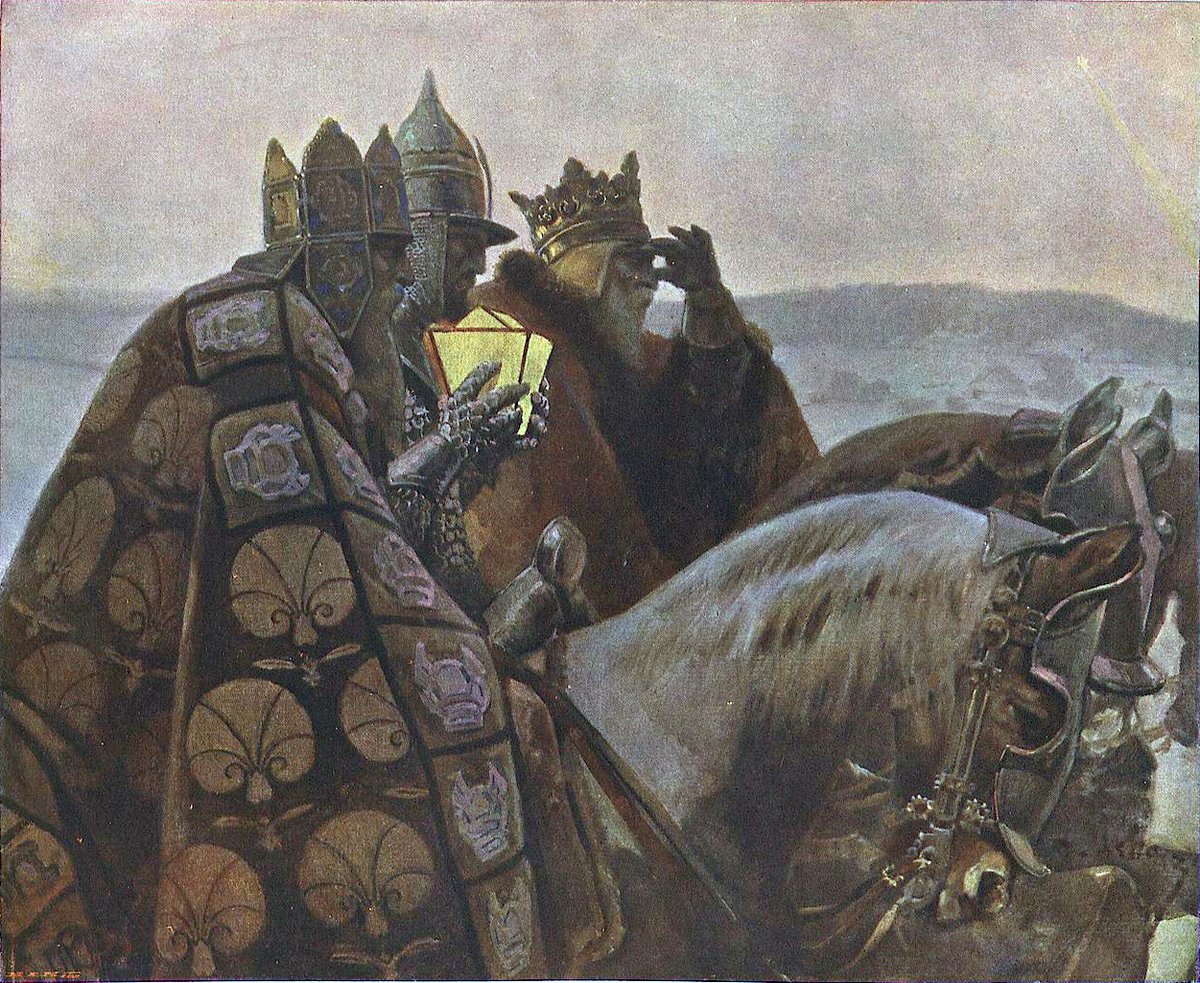
https://i.pinimg.com/736x/a9/d3/f4/a9d3 ... 12f07b.jpg

https://dioces48-previews.s3.amazonaws. ... thumb2.jpg

https://encrypted-tbn0.gstatic.com/imag ... zUjMU&s=10
Added in 7 hours 28 minutes 46 seconds:
https://en.wikipedia.org/wiki/Nasser_bi ... _Al_Wadaei
https://en.wikipedia.org/wiki/List_of_t ... est_people
Added in 2 days 22 hours 19 minutes 28 seconds:
https://thewriterandthetramp.wordpress. ... sohadores/
Added in 3 minutes 40 seconds:
https://www.cntraveler.com/story/a-paga ... n-sardinia
Added in 2 minutes 9 seconds:
"
Based on traditional interpretations of the Mamoiada Carnival in Sardinia, the
Mamuthones are sometimes interpreted as representing Moorish (Saracen) prisoners captured by local Sardinian shepherds, known as the Issohadores.
However, this is just one of several theories regarding their origin, and they are not literally Moors in a historical, ethnic sense.
Key Aspects of the Interpretation:
Symbolic Captives: According to this interpretation, the parade represents a victory of the local Barbagian shepherds over Saracen invaders who had captured them.
The Roles: The Mamuthones, wearing dark, frightening wooden masks and black sheepskin, walk in a slow, struggling, rhythmic dance, while the Issohadores (wearing red jackets) act as their captors, leading them with ropes.
Other Theories: Other interpretations suggest the Mamuthones are, in fact, pre-Christian, Nuragic-era figures meant to propitiate the harvest, ward off evil spirits, or represent the relationship between humans and animals.
In summary, while the legend of the "captured Moors" is a popular interpretation of their role in the carnival, the Mamuthones are more broadly understood as ancient, symbolic figures representing a mix of pastoral, Dionysian, and ancestral rituals.
"
-
kFoyauextlH
- Posts: 1668
- Joined: Sun Jun 15, 2025 3:53 pm
Re: Lord Soth
"
It was also popular with many film producers who used the Brutalist architecture for films like Harry Brown and even for Madonna’s music videos.
Hung Up, the Queen of Pop’s iconic track, used the estate as a backdrop for one of the opening dance routines.
"
"
Brutalist architecture is a post-World War II style characterized by raw, exposed materials, particularly concrete, and bold, geometric, utilitarian forms. Emerging in the 1950s, it emphasizes the expression of construction and structural elements over decorative design, creating large, heavy-looking buildings. The term "brutalism" comes from the French "béton brut" (raw concrete), a material and technique popularized by Le Corbusier. While popular for government buildings, universities, and housing in the 1960s and 70s, it became controversial and fell out of favor but is now experiencing a critical and popular resurgence.
"
https://en.m.wikipedia.org/wiki/Brutalist_architecture
https://metro.co.uk/2025/09/08/judge-wi ... -24105041/
That article was at the bottom:
"
At one point Mr Justice Jay says: ‘I have to wish you all the best and say to you that the way forward is to keep on your medication, listen to the advice you are going to get, and keep out of the sort of things you were doing.
‘Because you saw where it ended up and you do not want to go back to that, I am sure.’
"
https://metro.co.uk/2025/09/08/new-bank ... -24106255/
"Grenfell Tower" sounds like something from out of all the fantasy that I've been bringing up.
https://en.m.wikipedia.org/wiki/Grenfell_Tower_fire
"
The fire was started by an electrical fault in a refrigerator on the fourth floor.[note 1] As Grenfell was an existing building originally built in concrete to varying tolerances, gaps around window openings following window installation were irregular and these were filled with combustible foam insulation to maintain air-tightness by contractors.[4] This foam insulation around window jambs acted as a conduit into the rainscreen cavity, which was faced with 150 mm-thick (5.9-inch) combustible polyisocyanurate rigid board insulation and clad in aluminium composite panels, which included a 2 mm (0.079-inch) highly combustible polyethylene filler to bond each panel face together. As is typical in rainscreen cladding systems, a ventilated cavity between the insulation board and rear of the cladding panel existed; however, cavity barriers to the line of each flat were found to be inadequately installed, or not suitable for the intended configuration, and this exacerbated the rapid and uncontrolled spread of fire, both vertically and horizontally, to the tower.[5]
"
"
1973 Summerland disaster – leisure centre fire in Douglas, Isle of Man, worsened by the ignition of flammable acrylic sheeting covering the building, led to at least 50 deaths.[52][51]
1991 Knowsley Heights fire – a fire in a tower block in Liverpool that had recently been fitted with rain screen cladding spread from the bottom to the top of the building via the 90 mm (3.5 in) air gap behind the cladding.[309][310]
1999 Garnock Court fire – the fire in a tower block in Irvine, North Ayrshire, spread rapidly up combustible cladding,[181] resulting in one death and four injured.[311] The incident led to a parliamentary inquiry into the fire risk of external cladding and a change of the law in Scotland in 2005 requiring any cladding to inhibit the spread of fire.[312]
2005 Harrow Court fire – in a tower block in Stevenage, Hertfordshire, led to three deaths.[313]
2009 Lakanal House fire – in a tower block in Camberwell, South London, caused by a faulty television set, led to six deaths and at least twenty injured; an inquest "found the fire spread unexpectedly fast, both laterally and vertically, trapping people in their homes, with the exterior cladding panels burning through in just four and a half minutes."[314]
2010 Shirley Towers fire – two firefighters died after tower block fire rapidly escalated.[315]
2016 Shepherd's Court fire – in a tower block in Shepherd's Bush, West London, a faulty tumble-dryer caught fire on the seventh floor, 19 August 2016. The fire spread up six floors on the outside of the building, which is owned by Hammersmith and Fulham Council. There were no fatalities but some suffered smoke inhalation.[57][58][59][56]
2019 De Pass Gardens fire – a fire in a six-storey tower block in Barking, East London spread through all six floors.[316]
2019 The Cube fire – a fire in a six-storey student residence in Bolton, re-clad in 2018 with high-pressure laminate. The fire spread "extremely rapidly" through the top three floors of the building.[317][318]
2021 Poplar/New Providence Wharf fire – a fire that affected three floors of a tower block in New Providence Wharf, Poplar, which also used the same type of cladding tiles, with two people being sent to hospital for smoke inhalation[319]
2024 Spectrum Building fire – a fire in a tower block in Dagenham with known "fire safety issues" and non-compliant cladding.[320]
"
https://www.architectsjournal.co.uk/new ... mendations
The picture really comes off as so snarky.
The guy in the video, which I watched a few brief moments only on mute and without subtitles, made me think of the mimesis involved in political, ultimately ideological, so including religious, interaction, where a representative of a disgruntled and offended people then tries to explain to a disconnected or defensive wall of a person looking at them in a very specific way, something that the people love to see and hear. The words could be anything, and though the specifics may differ, the whole thing seems to have played out so many times that at this point it seems like a standard gesture:
https://thedramateacher.com/words-used- ... rformance/
https://mariaisabelarango.net/a-theatre-of-gesture/
"
Stock Gestures in Actors’ Performance
I’ve been trying to pay closer attention to the craft of acting lately. I’ve come to find several “stock” gestures that actors will use to convey something to the audience.
Some examples:
Actors playing alcoholics tend to touch their mouths whenever alcohol is shown, or even mentioned - to convey their desire and preoccupation.
When a character is given an important piece of information, the actor will remain still but blink their eyes in rapid succession - as if to convey that they are “struck” or “dazed.” (Jon Hamm does this A LOT).
This isn’t really a gesture, but “eating an apple” - to convey that the character is a dick.
Obviously many actors are trained in “the craft” and so these gestures become a kind of universally stock language that the audience is “trained” to recognize.
Some of these are limited to meta-textual performance: like an actor referencing Marlon Brando in the Godfather by mumbling and scratching their chin with the back of their hand.
And some are very “actor” specific, like Steve Coogan’s explanation of Richard Gere’s style:
What “gestures” do you often see actors use to convey ideas?
"
"
b2thekind
•
2y ago
•
Edited 2y ago
There’s a few things going on here. u/cmatthew99 is right that indicating is a big thing. Actors ping each other for it a lot. “Oh he was indicating.”
The thing is in film work, sometimes you have to. There’s a difference between acting and pretending to an actor. You can just live honestly in your imaginary scene for a yelling scene or a kissing scene. But the second you start punching or f*ck*ng? You have to fake that. You have to pretend. You have to indicate sleeping, dying, org*sms, sneezing, etc. But some of what your noticing is actors indicating when they don’t need to. It’s always worse in fight scenes, sleepy scenes, drunk scenes. A scene that requires a lot of pretending like that leads you to indicate more. Your first example is probably indicating. Second one might be.
Another possibility here is habits. I think with the Gere clip in particular, habits are a lot of what you’re seeing. Actors are people and they have physical habits. Sometimes they do it just in their acting, which might be indicating that became habit over time. But a lot of times they do it in their personal life, too. Leonardo DiCaprio runs his fingers through his hair front to back constantly. Meryl rests her hand on her cheek. These bring realism and personality to performances in my opinion. Some actors, Christian Bale, Joaquin Phoenix, and Daniel Day Lewis never let any personal habits in. I don’t think that habits are a sign of a bad actor. Philip Seymour Hoffman exhales through his nose sharply when he’s upset and and smiles really wide when he’s nervous. That’s fine for most of his characters. But when he did Capote, he kept his personal habits from showing at all. I think a great actor knows when their habits are a fit and when they aren’t. You second example might be habitual.
And your last example seems like a director choice to me. Directors have certain things they like in acting. Directors love making actors do certain things. Folding clothes is one that I’ve been asked to do tons of times. Eating an apple would be a director decision. Sometimes actors who are high profile enough, like Brad Pitt, will have themselves eat in every scene, but they have to work that out with the director and continuity supervisor and prop department and costume and makeup even. So it’s a larger creative decision.
Other things can affect things. Some actresses blink often because they have thin lashes and are constantly in big fake lashes. Fake nails influence how you hold your hands. Some very trained actors don’t like blinking and have trained themselves not to. Some new actors switch their gaze between their scene partners two eyes back and forth, which makes their eyes kinda dart around. Sometimes you have to match a previous take for continuity and force yourself to look away or fix your hair or swallow at the exact same point, and that can look fake by the tenth take of doing it even though it looked real the first time. Sometimes actors swallow on purpose if directors ask them to do something in close up and they don’t know what to do, that’s an old trick. And some actors, usually untrained, do choose gestures actively.
But most actors don’t really have a stock chest of gestures, and actually try to avoid this. It comes out on accident usually. A gesture here or there that was left over from when they were a worse actor and did plan gestures, cause we all go through that phase of planning gestures before we’re trained. If pointed out, most actors will see it as a problem and try to fix it.
EDIT:
You also asked for examples. I have some examples I’ve noticed or habits in particular. Harrison Ford points a finger in the air when he’s mad. John Malkovich touches his pointer to his thumb like an okay sign when he’s explaining things. Jeff Goldblum circles his hand on his wrist when he’s looking for words. Leo’s right shoulder moves up and down a bit when he’s mad. Elizabeth Olsen smiles when she’s upset. Meryl Streep hides behind her hair when she’s shy. Drew Barrymore scrunches her mouth to one side when she’s uncomfortable. Adam Driver breathes in through gritted teeth when he’s upset and trying to calm down. I could go on and on. But none of these examples are indicating or, in my opinion, bad acting. This is probably what they do when they feel that emotion in real life, and it’s a sign that they’re really feeling it on set.
"
Added in 1 hour 12 seconds:
https://mark---lawrence.blogspot.com/20 ... y.html?m=1
"
Why are wizards so often depicted with towers?
is there any specific advantage a tower offers to a wizard that couldn't be found with an easier built structure? Is it from a time when wizards are often shown to be avid astrologers, the towers allowing for easier observation? Are wizards just more vertically inclined than the average man (hence the hats)?
"
"
Mournelithe
•
6y ago
Well, a tower does help with having rooms well away from the damp. Good for libraries and so on.
It is easily defended, with generally only one entrance.
It is a statement of purpose and temporal power, requiring significant investment to construct in the first place.
You get a view from the top.
You can have rooms above the treetops for manipulation of air, and rooms beneath the ground for manipulation of earth. Fire and water are left for the advanced practitioner.
Most likely though ... historically throughout medieval society, the nobility had a room called a [Solar](https://en.wikipedia.org/wiki/Solar_(room)), which was isolated, higher and more exposed to the sun, where the lord and their family would live away from the general populace of the Great Hall. Often these were tower rooms. So a wizard is granted higher status by residing in a tower like the nobility would.
"
"
wjbc
•
6y ago
I think that's a 19th century affectation and it's part of a broader connection between intellectuals and the towers of universities like Cambridge and Oxford, as well as American universities that adopted similar architecture, sometimes called "ivory towers"
"
https://en.m.wikipedia.org/wiki/Solar_(room)
https://en.m.wikipedia.org/wiki/Ivory_tower
"
muck2
•
6y ago
The historical predecessors of the wizards of literature were hermits and "official" court occultists.
During the late middle ages and throughout the early-modern period, many monarchs and princes employed alchimists, occult healers and soothsayers which needed lodging. Depending on the period, they were often given quarters in a castle's outward towers, as these were usually the last suitable rooms in a castle not yet set aside for other usage.
Note that detached towers were actually quite rare in history – unless you decide to include the Tower Houses of the British Isles as well. This is where I'd factor in hermits. The stories often depict wizards as living under hermit-like conditions, but a shabby hut would obviously not do justice to the concept of the mighty wizard, rich in splendour and wealth. Detach the tower from a castle, place it someplace remote in the image of a hermitage, and you've got yourself the archetypical wizard of literature.
Another explanation might be found in folklore whose stories often rationalize our fear of ruins by rebranding them as homes of secret beings who're not to be trifled with; and for a long time, nothing was more scary to common folks than the ruins of medieval castles and defensive structures
"
"
TimeisConceptual
•
6y ago
I believe it has to do partly with astrology and partly yo do with power. Kings have castles, they are powerful and their castle depict so. I believe it's similar with wizards. Kind of like a power symbol. There a also the chance it could have to do with the individual stories magic source, a sky or wind wizard could have much to gain from being high up in the sky.
"
"
BillbabbleBosterbird
•
6y ago
It’s symbolic. Earthly power is measured horizontally; in the width and breath of the kingdom, the length of the walls, the size of the city, the size of the army.
Higher power is measured vertically, so that height is a sign of non-earthly power, wisdom, knowledge. The earliest example I can think of is the Tower of Babel, which was all about humanity getting too clever and building too tall.
The origins of this symbolism are probably fairly obvious and ancient. Being far up, like the top of a hill, gives you a better view, and thereby information. Being further up gives you even more information.
Being far up also makes you less dependent on what happens on the ground, like a bird, which translates well to wizards, who by nature usually don’t have to worry much about normal earthly power.
"
"
Shepsus
•
6y ago
That's interesting, I've never depicted the power structure like you do.
I've always thought it had two do with looming shadows across a broad land (for the bad wizards)
The raw energy from lightning (for the crazy, Dr. Frankenstein-esc wizards.)
And cause the lack of city they belong to, they are just separate from a society typically.
"
"
Liar_tuck
•
6y ago
There are a lot great answers here that really do justify the idea of wizards towers. But in fantasy tradition I think it goes back to Tolkien. Where the two (or five, look it up) towers represented power. Usually magical power.
Upvote
15
Downvote
Nevertrustafish
•
6y ago
I'm pretty sure Merlin was depicted as living in towers too? I tried looking it up but didn't make much headway. The Disney movie Sword and the Stone from 1965 definitely had him in a tower, but I can't find if that was true in older books like Once and Future King and Le Morte d'Arthur.
"
"
Outwriter
•
6y ago
Wizards tend to have one of two things—a lofty tower, or a secluded hermitage. The goal is to be left alone to study. You know what they say about wizards, it’s 99% study and 1% f*ck you I do magic.
Upvote
11
Downvote
u/skyskr4per avatar
skyskr4per
•
6y ago
In Discworld, it is known that wizards are content to live in a mystical university. It's the sorcerers that build towers, those snooty so-and-sos.
"
"
[deleted]
•
6y ago
Once, when the level of background magic on the Disc was young and high and found every opportunity to burst on the world, wizards were all as powerful as sourcerers and built their towers on every hilltop. And if there was one thing a really powerful wizard can’t stand, it is another wizard. His instinctive approach to diplomacy is to hex ‘em till they glow, then curse them in the dark.
That was, in fact, the problem. All the wizards were pretty evenly matched and in any case livedin high towers well protected with spells, which meant that most magical weapons rebounded andlanded on the common people who were trying to scratch an honest living from what was,temporarily, the soil, and lead ordinary, decent (but rather short) lives.
It had all gone critical. Wizardry was breaking up. Goodbye to the University, the levels, theOrders; deep in his heart, every wizard knew that the natural unit of wizardry was one wizard. Thetowers would multiply and fight until there was one tower left, and then the wizards would fight untilthere was one wizard.
— Sourcery by Terry Pratchett
"
"
wellofworlds
•
6y ago
The internet suggest it is a couple factors.
there a tower in Britain that was linked to merlin
Magical towers and wizards both share a mythological theme in fairy tales.
Astrology which required high places for telescopes.
"
"
kmmontandon
•
6y ago
•
Edited 6y ago
A wizard's staff has a knob on the end
It never will buckle; it never will bend
He cherishes it, and he calls it his friend,
And he frequently takes it in hand.
A wizard's staff is the source of his power.
He checks up on it every hour on the hour
And he's never surprised when it turns to a flower --
The fairest throughout all the land.
The staff of a wizard with honour is crowned.
Without it a wizard will rarely be found.
'Tis big and its round and weighs three to the pound
And without it he's truly unmanned.
The staff of a wizard can do mighty deeds.
It protects him from harm and attends to his needs,
Provides him with banquets upon which he feeds
And potions on which he gets canned.
Whenever a wizard is lonely or sad,
Or feeling dejected, or puzzled, or mad,
He turns to his staff, and things don't seem so bad --
By it he is never trepanned.
The staff of a wizard is dear to his heart
The source and the succour of his magic art.
They travel together, are never apart,
A relationship few understand.
A wizard is rarely of heroic build
Were it not for his staff, he would surely be killed.
By demons or monsters his blood would be spilled
All over the pitiless sand.
A wizard in thought, word, and deed should be chaste
If he is not, he's considered disgraced.
Although in his dreams he is often embraced
By ladies both lissome and tanned.
The staff of a wizard is polished with care.
He anoints it with spices and unguents rare,
Bedecks it with silver and jewels most fair,
And on feast days he has it japanned.
A wizard when young has a staff that is small.
It's puny and weak, ineffective withal.
It grows with his power until it stands tall
As his fame and his glory expand.
The staff of a wizard can hold many spells
For finding lost objects or dowsing new wells
For banishing demons to bottomless hells
Or bringing them back on demand.
A wizard's staff can do manifold tricks
To puzzle the nobles and fuddle the hicks
It rescues the wizard from many a fix --
It is totally at his command.
When a wizard is old, and is starting to fade
He looks on his staff that with cunning he made
The crown of his life and the tool of his trade
And together they make their last stand.
Upvote
80
Downvote
u/SetSytes avatar
SetSytes
•
6y ago
Provides him with banquets upon which he feeds
Uh. I was reading the whole thing as euphemisms, but this stopped me short.
Upvote
13
Downvote
u/othniel01 avatar
othniel01
•
6y ago
Hey don't kink-shame
"
"
Outwriter
•
6y ago
I looked into this and everything I found confirmed that wands aren’t actually a phallic symbol, but quite the opposite. They were based on the needles used in old Germanic Nålebinding. The Volva, or female witch class, tended to use what was handy for their magic spells, and knitting needles were readily available.
"
https://tvtropes.org/pmwiki/pmwiki.php/Main/MageTower
https://tvtropes.org/pmwiki/pmwiki.php/Main/TheTower
https://en.m.wikipedia.org/wiki/Watchtower_(magic)
"
The watchtowers were among the Golden Dawn concepts introduced into Wicca by its founder Gerald Gardner. The complicated tablets and Enochian names were largely abandoned, but Wicca retained the watchtowers as "the four cardinal points, regarded as guardians of the Magic Circle."[6] They are usually mentioned during the casting of the circle. In a conservative tradition such as Gardnerian or Alexandrian Wicca the invocation of the watchtowers begins in the East; the practitioner traces an invoking Earth Pentagram while saying;
Ye Lords of the Watchtowers of the East, ye Lords of Air; I do summon, stir and call you up, to witness our rites and to guard the Circle.[7]
Many Wiccan circle-castings no longer mention the watchtowers by name. Another important development is experimentation with the attribution of elements to the directions, instead of adhering to the attributions used by the Golden Dawn and Gardnerian Wicca (North/Earth, East/air, South/fire, West/water). Many Wiccans perceive themselves as participants in an earth-based religion; they believe their practices should reflect their living experience of the local environment. Both the Golden Dawn and early Wicca were active in Great Britain;[8][9] traditional attributions derived from the British climate may not appeal to or work for practitioners in other climates. A special instance of this problem is the circumstance of Wiccans living in the southern hemisphere, who tend to perceive the North, not the South, as the direction most characterized by fire and heat. Some Neopagans choose to follow the practices of a historical pagan group with whom they identify, or conform to local traditions; either choice may dictate a change of attributions.[10]
"
https://world-of-babel.fandom.com/wiki/ ... s_of_Magic
"
World of Babel Wiki
World of Babel Wiki
The Towers of Magic
159417813946445574
The Towers of Magic, ancient mega-structures of mysterious origin that baffle all of Etera. Though several towers have been discovered thus far, there is speculation that many more exist. These strange monoliths of power are so complex and potent, that their magic breaches the confines of the towers themselves. The lands around them warped and changed by proxy of this leaking magic.
Multiple towers have been explored so far, and several strange properties have been noted that may be consistent to its counterparts. The makeup of the towers seem to be of impressive technology, far beyond the norm for Etera. Once activated, the effects of the towers on the regions around them is pronounced and at times devastating, the tower in the Ghostlands so far the most catastrophic instance as undead were unleashed from it in great numbers.
The towers themselves represent the many different types of magic found within Etera. At times, the towers act as a source of the specific form of magic, or simply a strange and dangerous display of it.
Each tower is ran by a being known as the "Prime," which comes in many different forms, but who acts as a caretaker and guardian of the different towers. Typically these prime beings have one-word names that associate them with the tower they are attached to. These beings are typically cold-hearted and ruthless, though their desires and personalities may be influenced by the tower they represent.
There is speculation that the towers were originally created by a race that once populated Etera that has discarded much of their organic makeup, trading them for technological implants and other modifications. These beings have lost access to their magic, though their true history and their reason for creating the towers is still a mystery left unsolved.
The Variety of Towers
The Tower of Death; situated in the Ghostlands and caused undead hordes to attack.
The Tower of Light; Situated on the rather unkempt island of Roshanee, there is talk that natives worship the tower as a being of the sun, it seems to be rather hard for anyone to make any progress on expeditions to the island... perhaps an adventure is possible?
The Tower of Time; travels and appears at random intervals in the timeline. Is also capable of transforming into a massive construct that fights those who threaten time's natural flow.
The Tower of Life; a parasitic creature that gathered the flesh of its victims in order to form. The Tower of Life is both a structure and a disease that nearly crushed Babel beneath its feet.
The Tower of Fate; a casino that mysteriously appeared within the borders of the Ghostlands, filled with odd undead, strange games of chance, and a near imperceptable aura of luck and misfortune for those in and around it. The goals of those in and involved with the tower remain a mystery.
The Tower of Telekinesis; A tower that cannot be simply seen from outside, as it is created entirely of Force and invisible things. Within, one could hear a rather humnored voice throughout their time, with potential for being pied once or twice, encountering invisible things that shit invisible projectiles, as well as being able to change its structure through puzzle solving.
The Tower of Illusion; Hidden behind a veil of, understandably, illusions, a massive number of adventurers delved into research to uncover the hiding spot of this tower, the first party to gather the secrets needed to locate it, was able to put together a team to storm it, ahead of the rest.
The Tower of Necromancy; A gigantic tree, by the name Aer'Drasil, that once sucked massive amounts of life force and nutrients from the miles around it, to fuel some goal. Many examples of such contained life force took the form of life beads and orbs, necromatic objects constructed to house the essence of life.
The Tower of Divination(Vancian); Dwelling within the city of Babel itself, going near it is extremely dangerous to ones mind, due to the sheer information coursing through it.
The Tower of Weather; Not yet discovered, it lies dormant below the depths of the lake in Kuapuiwi
The Tower of Blood; In the open plains southwest of Fort Ragathiel, a labyrinthian castle stands tall, surrounded by rivers of blood, as it spreads corruption outward. A pillar, visible for miles outward in any direction.
The Tower of Nature; Formerly the location known as Moon Bright, it is surrounded by a 20 mile aura of natural disasters, over in the southwestern part of the continent.
Tower of Mana; One of the more powerful towers. The tower of Mana acts as a core for the various leylines that flow across Chronus. It's initial appearance caused those with the Spark to explode with an overabundance of magical energy.
The following is a list of the towers that either don't have a page yet, but were worked on enough to be added above, or they don't even have that much, and are simply written below so that you know they exist OOCly:
Spheres: Alteration, Blood, Conjuration, Creation, Dark, Destructions, Divination, Enhancement, Fallen Fey, Illusion, Light, Mana, Mind, Nature, Protection, Telekinesis, War, Warp, Technomancy, Bear, Veilweaving, and Weather.
Vancian: Abjuration, Conjuration, Divination, Enchantment, Evocation, Illusion, Necromancy, and Transmutation.
Psionics: Athanatism, Psychometabolism, Psychokinesis, Psychoportation, Clairsentience, Metacreativity, and Telepathy.
Akashic: ???, probably can just sum it up in the Veilweaving power, tbh, unless someone chooses to categorize akasha.
Pact Magic: ???, likely some kind of spirit based tower, unless someone wants to categorize this system too.
Other Magic Systems: Best to not press your luck. Perhaps, but eh. Not likely ever going to add towers to systems we don't allow.
"
"
Hubris Towers, and other tall constructions in general, are classically go-to architectural symbols of power and accomplishment.
"
https://news.ycombinator.com/item?id=30567749
https://forum.rpg.net/threads/where-doe ... om.835884/
https://worldbuilding.stackexchange.com ... -tower-why
https://forgottenrealms.fandom.com/wiki ... the_Arcane
"
Damien Morienus arrived at Icewind Dale sometime around 1269 DR. He wanted to pursue his research on eternal life and necromancy away from prying eyes of fellow wizards of the Brotherhood. He found a spot of natural power and erected the tower on the shores of Maer Dualdon, across the lake from the town of Lonelywood. The local barbarian tribe witnessed the act of tower's creation and started worshiping the necromancer as a god.[8]
Damien used the barbarians to perform horrible experiments on them. Eventually, a barbarian "prince" Kinnuki fell in love with the wizard's wife, Mathilda, and they left the wizard and the vicinity of the tower. Damien summoned demons to hunt them down.[8]
The demons were overzealous in achieving their goal and caused the event known as the Great Thaw which melted the permafrost under the tower and it sank underground never to be seen again. At the time of the Great Thaw, the tower had a guest, a priest of Myrkul, Yarmuth the Brown. He tried to usurp the control of the tower from Damien, unsuccessfully and apprehended. He placed a curse on the tower with his dying breath. The curse of undeath that brought all who died within tower back as the undead.[9]
"
https://www.reuters.com/world/uk/ghosts ... 025-01-06/
https://www.bbc.com/news/uk-45550805
"
A control room operator has told the Grenfell Tower fire inquiry the voice of one victim kept "going round and round" in her head after she finished work on 14 June last year.
Aisha Jabin spoke to a woman called Debbie, believed to be victim Deborah Lamprell, 45, whose body was found in a 23rd floor flat with six others.
Ms Jabin said she froze when she heard the sound of a baby crying in the flat.
Another operator did not tell people to stay in their flats, the inquiry heard.
Angie Gotts said she was reluctant to advise residents to stay in a burning building since the Lakanal House fire in 2009 in south London, where six people were killed.
'Distraught'
In a written statement, Ms Jabin described speaking to the resident of the 16th floor, who had sought shelter on the highest floor, and was "immediately screaming down the phone that she could not get out".
Ms Lamprell said she was among 11 residents, including children, barricaded in the top-floor flat.
"She told me that they had barricaded themselves in as much as they could but she was completely distraught," the statement said.
"She told me that there was not much smoke in the flat but that it was starting to get hot.
"I told her the usual guidance - get down low and as they had already barricaded themselves in I just tried to reassure her as much as I could."
At this point, the so-called stay-put policy was still in place for residents.
But Ms Jabin said her "heart sank" when she realised firefighters were carrying out rescues on the third floor - 20 levels below Ms Lamprell and her neighbours.
When the call operator heard the "loud crack" of the flat's windows shattering, her advice changed.
"I did tell her to get out of the flat immediately," she told the inquiry. "Unfortunately she couldn't."
Ms Jabin said she "froze" when she realised children were amongst those trapped.
"I am a mother and the thought of children being trapped and not able to breathe really affected me," the statement said.
Ms Lamprell's condition deteriorated and the transcript of the call shows her telling the operator: "I can't do this any more... It's too hot, it's too smoky."
"The call went from being really manic at the start and throughout most of it and then really, really quiet," Ms Jabin said in her statement.
"Eventually all I could hear was heavy breathing and what sounded like moaning. Eventually Debbie stopped responding completely and I had lost her."
"
F*ck.
"
"The lack of calls made it eerie in the control room. Someone said, 'What does this mean?' but we all know what it meant," she wrote.
"The atmosphere was one of stunned silence."
"
https://www.express.co.uk/showbiz/tv-ra ... after-fire
Specifically 72.
"
Kebede expressed his torment during the inquiry, saying: "Even though my family and friends keep telling me that I am not responsible for the fire and I know they are right, I cannot help but blame myself. Sometimes I wish I had burned in the Tower with the others. I have been burning inside ever since."
"
"
In 2024, Kebede's poignant words were shared at Grenfell Testimony Week, a four-day event allowing those affected by the disaster to confront the organisations they hold responsible for the fire.
"
"
In Kebede's heartfelt message, which was shared with event attendees, he confessed the tragedy had rendered him "a ghost of a man" and admitted he still bears "deep pain" from the ordeal.
"I know, in my head, that the fire was the fault of RBKC (the council), Celotex, the government....in my heart - which is full of fear and grief, it was in my flat, my kitchen, where it started. It's a deep pain, a shame that I carry," his poignant statement said.
"
Ghost of a man:
https://en.m.wikipedia.org/wiki/Lich
https://swarfarm.com/bestiary/16302-fire-lich-antares/
https://static.standard.co.uk/s3fs-publ ... &width=960
"
The name Behailu (በኃይሉ) is an Ethiopian name meaning "By his power" or "By his force".
"
"
ከበደ - kebede
Means: He became heavy, he became honored
"
"
Kebede is a prominent Ethiopian name, primarily of Amharic origin. Its meaning is often translated as "my great one," "my elder," or "he is great/big," conveying respect, seniority, or importance. The name derives from the Amharic root "k'ebed" (ቀበደ), meaning "to be heavy," "to be great," or "to be important."
"
He, no doubt, and this is weirdly giving me deja vu, hates the element of fire.
https://www.mirror.co.uk/news/uk-news/l ... l-35867151
https://www.cosmopolitan.com/uk/reports ... mbers-now/
All these people are connected to fire. Towers themselves and the smoke element also are likened to towers due to the way fire rises vertically.
https://en.m.wikipedia.org/wiki/Fire_lookout_tower
https://westofloathing.fandom.com/wiki/ ... %27s_Tower
https://en.m.wikipedia.org/wiki/Necromancy
https://runescape.wiki/w/Necromancer_Tower
https://oldschool.runescape.wiki/w/Necromancer_Tower
https://oldschool.runescape.wiki/w/Irwin_Feaselbaum
https://oldschool.runescape.wiki/w/Zamorak_monk_robes
https://oldschool.runescape.wiki/w/Disciple_of_Iban
Didn't expect me to come up:
https://oldschool.runescape.wiki/w/Iban
"
Iban was very ambitious and was described as follows:
This hunger for more went far past the realm of mere mortals, into the shadowy places of darkness and evil. Iban's ambition was almost godlike in its insatiability, but therein lay the essence of his darkness: as its most base Iban's fundamental desire was to control the hearts and minds of his fellow men, to take them beyond the pale of mere allegiance, and corrupt them into a force of evil. A whole legion of these Soul-less beings, their minds demented from the sheer power of darkness that channeled through them... Zombies, void of emotions, without feelings or cares, servants to their wicked master even unto death...
— The Tale of Iban
"
"
Soon afterwards, Kardia, an evil witch, found his corpse and decided to resurrect him with a ritual, so that he could fulfil his wish of leading an army of undead. First, she took some of Iban's flesh from his body and smeared it out on a doll bearing his likeness. She needed Iban's blood next, but it had long seeped away from his body, so Kardia travelled to the Underground Pass - a huge and dangerous system of caverns going underneath the Galarpos Mountains and connecting the forest of Isafdar to West Ardougne. There, she found a colony of gigantic yellow spiders led by Kalrag that were known to devour humans. She killed one and used its blood for Iban's doll.
"
What the HECK. There was a dream someone had...
"
For the essence of life itself, Kardia performed the ancient dark ritual of Incantia, which nearly killed her. She recovered, however, and found three demons, Holthion, Doomion and Othainian, focusing their energy on the doll and she realised she had bound them to him forever as the guardians of Iban's shadow. For the final part, she needed to provide Iban with a conscience to prevent him from becoming a mindless zombie. In her own words: Locked inside an old wooden cage sat a beautiful white dove. A symbol of peace, freedom, and hope, but also the oblivious to the darkness of the world, like a newborn child. Taking the dove with me, I cradled the thing in my arms, stroking its soft downy feathers. I looked into the eyes of the bird, and gently placing a kiss upon its fragile head, I then strangled the bird, taking its life between my callous fingers. Truly this bird would be the conscience of Iban: innocence corrupted by evil... Thus, Iban was resurrected in the Year 168 of the Fifth Age and he took up residence in his own temple in the Underground Pass, with the ritual being the only thing that could banish him.
"
"
Iban proclaimed himself to be the son of Zamorak and turned the pass into a realm of terror. He soon gained fame as a "crazy lunatic", according to King Lathas, who had made the pass impossible to cross. Further, the Well of Voyage, which would normally teleport one to Isafdar, had been corrupted by him to become the Well of the Damned, a direct gateway to the realm where Zamorak had been banished to after the God Wars. Iban was known to the elves, who dared not enter the Underground Pass.
At some point, he gained some followers who worshipped Iban as his disciples in a cult-like manner. At this time, there was a belief that Iban slowly took over the minds of anyone who entered the pass, whispering to them with eerie voices. These voices would come to corrupt all who came; a notable example being the famous adventurer Randas. However, in actuality, the Dark Lord, a part of Seren who was trapped in the nearby Temple of Light, was the entity corrupting these people. Iban would then lock these people into cages until their minds would completely succumb to his rule. Then, they would join his army of soulless, with no trace of any humanity. Additionally, there are many 'blessed' spiders, such as the one Kardia had killed, in the pass that are described as Iban's pets.
"
https://oldschool.runescape.wiki/w/Zamorak
https://oldschool.runescape.wiki/images ... .jpg?e430c
"
The Mahjarrat (pronounced MAH-jer-att) are a very powerful, warlike and long-lived race from the realm of Freneskae.[1] The Mahjarrat have powerful innate magical powers, some of them delving into necromancy or manipulating the Shadow Realm, and all of them capable of shapeshifting and sensing the presence of another member of their race.
Although not immortal, Mahjarrat age slowly. In their usual form, they take the appearance of skeletal humanoids. They are primarily followers of the gods Zamorak or Zaros and often reference "going North." Additionally, General Khazard and his men make reference to a 'ritual' amongst the Mahjarrat performed 'in the place of half light and ice' when the planets are aligned, which may be related.
"
What the heck, my thread "Storm North", I also use this guy as a reference to myself:
Oh NO! I lost SO MUCH that I wrote and collected here! OMG! Luckily I remember it all! I created a very cool meditative device.
Now a good portion of it is hidden with me, but at least this half gets me started. I don't know if I'm up to trying to recreate it all.
It was amazing, lol, the connections, the things brought up, argh! I really don't like that it didn't save all that when it automatically refreshed. Even though it is a mundane occurrence, I take it as a magical event, one that I take to have occurred because of what it does, which I take as beneficial, since it really emphasizes all the things I remember which are now missing from here. It also seems to occur every time I mention this particular dream, it wipes everything out when I do, and hasn't in any other case. So it heavily emphasizes that dream, and it wasn't even a dream I saw or had!
I'll say a few words for my notes though:
Jhallan, like Jallan, Rhalgr, Heaven Of Lightning, Norman Tower Bury St. Edwards, Muslim Towers Medieval Europe, Minaret, Barnack Stone, Bewcastle Cross, Electrical Fire, High Vertical Structures Attract Electrical Activity Including Ancient Monumental Pillars Affirming Their Special Nature Besides Other Psychological Influences:
Oh, wow, so a big wave seems to be coming in of spiritual, mystical stuff, which usually further "unfolds" after everything goes quiet in the ears and the ear rings and then lots of stuff starts unfolding live.
Oh yeah, Haborym, Baby-face Suspect/R*pist K*ller, cold case, dying unresolved, Haborym as Raum, Merlin as Black Bird as Martin. Martin's tower, the tree they wouldn't cut, the tree they cut that missed him, Early Gallic "Faith" and "Fate".
Multiple "Casino" connections popped up also.
https://emv586mw5ad.exactdn.com/en/blog ... sy=1&ssl=1
Notice the tower-like center of the roulette table.
Towers are used as fire lookouts specifically also.
Still, I'm extremely disappointed to have lost all I wrote, but I also believe that such may play a role in the meditation and has always led to certain things by there being this emotional element that starts running, like something with some strong emotional flavor, which then influences the next things and the feeling is carried into them and backs them and is underlying, besides motivating the next steps, so it is necessarily hateful, as if one isn't agitated then the next moves would be unlikely to be decided upon, whatever they may be.
Added in 27 minutes 49 seconds:
@johncrawford009
1 year ago
Been a fan.. before hearing Future Islands...been waiting... I'm 72 and glad of patience!
Added in 25 minutes 12 seconds:
Notice the black bird.
People claim to watch that once a month.
"
Future Islands performed on the Late Show with David Letterman on March 3, 2014, a pivotal moment in their career that launched them to prominence with their song "Seasons (Waiting on You)". This performance became the most-viewed video on the show's YouTube page and is considered one of the best live performances of all time.
"
"
@litfilament393
1 year ago
Back in 2015 I met the singer, Sam, at a bar in Baltimore. We had a cigarette outside together, and I told him that the first time I had ever heard their music was when I saw this performance. I was at work, watching it in a computer lab— And I felt so moved that I was crying. He laughed so hard then said, "I CANNOT BELIEVE WE MADE YOU CRY IN A COMPUTER LAB!"
"
We don't know what he is saying, but the people clearly just want some effort and a sense that a person is putting something in and meaning what they are saying, they don't even care about the words necessarily, just the intensity and the passion, the sturm und drang:
https://en.m.wikipedia.org/wiki/Sturm_und_Drang
"
The Sturm und Drang movement was a reaction to this lack of political unity for the German people and often dealt with the idea of living life on a smaller scale and the desire to become a part of something bigger.
The Sturm und Drang movement also paid a lot of attention to the language of a piece of literature. It is no wonder that Shakespeare, with his brilliant use of language, originality with complex plot lines and subplots, and multifaceted characters from all social classes, was seen as a model for German writers (Wilson and Goldfarb 287). Many writers of the Sturm und Drang movement considered themselves to be challengers of the Enlightenment. However, the movement is actually a continuation of the Enlightenment. Many Sturm und Drang plays showed interest in how society affects the individual, a common theme in many Enlightenment plays as well. However, Sturm und Drang “makes its own distinctive contribution to 18th-century culture, bringing attention to the power of the environment as well as to the contradictory and self-defeating attitudes present in every segment of society” (Liedner ix). Far before its time, the divergent style of Sturm und Drang shrewdly explored depression and violence with an open plot structure (Liedner ix). The Sturm und Drang movement rebelled against all the rules of neoclassicism and the enlightenment, first recognized Shakespeare as a “genius” of dramaturgy, and provided the foundation for 19th-century romanticism. Writers such as Heinrich Leopold Wagner, Goethe, Lenz, Klinger, and Schiller used episodic structure, violence, and mixed genres to comment on societal rules and morals, while doubting that anything would change. The Sturm und Drang movement was brief, but it set a fire that still burns intensely today.
Six main playwrights initiated and popularized the Sturm und Drang movement: Leisewitz, Wagner, Goethe, Lenz, Klinger, and Schiller. The theatre director Abel Seyler, the owner of the Seylersche Schauspiel-Gesellschaft, had an important role in promoting the Sturm und Drang poets.
"
https://songoftheday.ca/2023/10/16/seas ... ng-on-you/
Wow, this is actually an interesting way to process information for word frequency and impact:
It was also popular with many film producers who used the Brutalist architecture for films like Harry Brown and even for Madonna’s music videos.
Hung Up, the Queen of Pop’s iconic track, used the estate as a backdrop for one of the opening dance routines.
"
"
Brutalist architecture is a post-World War II style characterized by raw, exposed materials, particularly concrete, and bold, geometric, utilitarian forms. Emerging in the 1950s, it emphasizes the expression of construction and structural elements over decorative design, creating large, heavy-looking buildings. The term "brutalism" comes from the French "béton brut" (raw concrete), a material and technique popularized by Le Corbusier. While popular for government buildings, universities, and housing in the 1960s and 70s, it became controversial and fell out of favor but is now experiencing a critical and popular resurgence.
"
https://en.m.wikipedia.org/wiki/Brutalist_architecture
https://metro.co.uk/2025/09/08/judge-wi ... -24105041/
That article was at the bottom:
"
At one point Mr Justice Jay says: ‘I have to wish you all the best and say to you that the way forward is to keep on your medication, listen to the advice you are going to get, and keep out of the sort of things you were doing.
‘Because you saw where it ended up and you do not want to go back to that, I am sure.’
"
https://metro.co.uk/2025/09/08/new-bank ... -24106255/
"Grenfell Tower" sounds like something from out of all the fantasy that I've been bringing up.
https://en.m.wikipedia.org/wiki/Grenfell_Tower_fire
"
The fire was started by an electrical fault in a refrigerator on the fourth floor.[note 1] As Grenfell was an existing building originally built in concrete to varying tolerances, gaps around window openings following window installation were irregular and these were filled with combustible foam insulation to maintain air-tightness by contractors.[4] This foam insulation around window jambs acted as a conduit into the rainscreen cavity, which was faced with 150 mm-thick (5.9-inch) combustible polyisocyanurate rigid board insulation and clad in aluminium composite panels, which included a 2 mm (0.079-inch) highly combustible polyethylene filler to bond each panel face together. As is typical in rainscreen cladding systems, a ventilated cavity between the insulation board and rear of the cladding panel existed; however, cavity barriers to the line of each flat were found to be inadequately installed, or not suitable for the intended configuration, and this exacerbated the rapid and uncontrolled spread of fire, both vertically and horizontally, to the tower.[5]
"
"
1973 Summerland disaster – leisure centre fire in Douglas, Isle of Man, worsened by the ignition of flammable acrylic sheeting covering the building, led to at least 50 deaths.[52][51]
1991 Knowsley Heights fire – a fire in a tower block in Liverpool that had recently been fitted with rain screen cladding spread from the bottom to the top of the building via the 90 mm (3.5 in) air gap behind the cladding.[309][310]
1999 Garnock Court fire – the fire in a tower block in Irvine, North Ayrshire, spread rapidly up combustible cladding,[181] resulting in one death and four injured.[311] The incident led to a parliamentary inquiry into the fire risk of external cladding and a change of the law in Scotland in 2005 requiring any cladding to inhibit the spread of fire.[312]
2005 Harrow Court fire – in a tower block in Stevenage, Hertfordshire, led to three deaths.[313]
2009 Lakanal House fire – in a tower block in Camberwell, South London, caused by a faulty television set, led to six deaths and at least twenty injured; an inquest "found the fire spread unexpectedly fast, both laterally and vertically, trapping people in their homes, with the exterior cladding panels burning through in just four and a half minutes."[314]
2010 Shirley Towers fire – two firefighters died after tower block fire rapidly escalated.[315]
2016 Shepherd's Court fire – in a tower block in Shepherd's Bush, West London, a faulty tumble-dryer caught fire on the seventh floor, 19 August 2016. The fire spread up six floors on the outside of the building, which is owned by Hammersmith and Fulham Council. There were no fatalities but some suffered smoke inhalation.[57][58][59][56]
2019 De Pass Gardens fire – a fire in a six-storey tower block in Barking, East London spread through all six floors.[316]
2019 The Cube fire – a fire in a six-storey student residence in Bolton, re-clad in 2018 with high-pressure laminate. The fire spread "extremely rapidly" through the top three floors of the building.[317][318]
2021 Poplar/New Providence Wharf fire – a fire that affected three floors of a tower block in New Providence Wharf, Poplar, which also used the same type of cladding tiles, with two people being sent to hospital for smoke inhalation[319]
2024 Spectrum Building fire – a fire in a tower block in Dagenham with known "fire safety issues" and non-compliant cladding.[320]
"
https://www.architectsjournal.co.uk/new ... mendations
The picture really comes off as so snarky.
The guy in the video, which I watched a few brief moments only on mute and without subtitles, made me think of the mimesis involved in political, ultimately ideological, so including religious, interaction, where a representative of a disgruntled and offended people then tries to explain to a disconnected or defensive wall of a person looking at them in a very specific way, something that the people love to see and hear. The words could be anything, and though the specifics may differ, the whole thing seems to have played out so many times that at this point it seems like a standard gesture:
https://thedramateacher.com/words-used- ... rformance/
https://mariaisabelarango.net/a-theatre-of-gesture/
"
Stock Gestures in Actors’ Performance
I’ve been trying to pay closer attention to the craft of acting lately. I’ve come to find several “stock” gestures that actors will use to convey something to the audience.
Some examples:
Actors playing alcoholics tend to touch their mouths whenever alcohol is shown, or even mentioned - to convey their desire and preoccupation.
When a character is given an important piece of information, the actor will remain still but blink their eyes in rapid succession - as if to convey that they are “struck” or “dazed.” (Jon Hamm does this A LOT).
This isn’t really a gesture, but “eating an apple” - to convey that the character is a dick.
Obviously many actors are trained in “the craft” and so these gestures become a kind of universally stock language that the audience is “trained” to recognize.
Some of these are limited to meta-textual performance: like an actor referencing Marlon Brando in the Godfather by mumbling and scratching their chin with the back of their hand.
And some are very “actor” specific, like Steve Coogan’s explanation of Richard Gere’s style:
What “gestures” do you often see actors use to convey ideas?
"
"
b2thekind
•
2y ago
•
Edited 2y ago
There’s a few things going on here. u/cmatthew99 is right that indicating is a big thing. Actors ping each other for it a lot. “Oh he was indicating.”
The thing is in film work, sometimes you have to. There’s a difference between acting and pretending to an actor. You can just live honestly in your imaginary scene for a yelling scene or a kissing scene. But the second you start punching or f*ck*ng? You have to fake that. You have to pretend. You have to indicate sleeping, dying, org*sms, sneezing, etc. But some of what your noticing is actors indicating when they don’t need to. It’s always worse in fight scenes, sleepy scenes, drunk scenes. A scene that requires a lot of pretending like that leads you to indicate more. Your first example is probably indicating. Second one might be.
Another possibility here is habits. I think with the Gere clip in particular, habits are a lot of what you’re seeing. Actors are people and they have physical habits. Sometimes they do it just in their acting, which might be indicating that became habit over time. But a lot of times they do it in their personal life, too. Leonardo DiCaprio runs his fingers through his hair front to back constantly. Meryl rests her hand on her cheek. These bring realism and personality to performances in my opinion. Some actors, Christian Bale, Joaquin Phoenix, and Daniel Day Lewis never let any personal habits in. I don’t think that habits are a sign of a bad actor. Philip Seymour Hoffman exhales through his nose sharply when he’s upset and and smiles really wide when he’s nervous. That’s fine for most of his characters. But when he did Capote, he kept his personal habits from showing at all. I think a great actor knows when their habits are a fit and when they aren’t. You second example might be habitual.
And your last example seems like a director choice to me. Directors have certain things they like in acting. Directors love making actors do certain things. Folding clothes is one that I’ve been asked to do tons of times. Eating an apple would be a director decision. Sometimes actors who are high profile enough, like Brad Pitt, will have themselves eat in every scene, but they have to work that out with the director and continuity supervisor and prop department and costume and makeup even. So it’s a larger creative decision.
Other things can affect things. Some actresses blink often because they have thin lashes and are constantly in big fake lashes. Fake nails influence how you hold your hands. Some very trained actors don’t like blinking and have trained themselves not to. Some new actors switch their gaze between their scene partners two eyes back and forth, which makes their eyes kinda dart around. Sometimes you have to match a previous take for continuity and force yourself to look away or fix your hair or swallow at the exact same point, and that can look fake by the tenth take of doing it even though it looked real the first time. Sometimes actors swallow on purpose if directors ask them to do something in close up and they don’t know what to do, that’s an old trick. And some actors, usually untrained, do choose gestures actively.
But most actors don’t really have a stock chest of gestures, and actually try to avoid this. It comes out on accident usually. A gesture here or there that was left over from when they were a worse actor and did plan gestures, cause we all go through that phase of planning gestures before we’re trained. If pointed out, most actors will see it as a problem and try to fix it.
EDIT:
You also asked for examples. I have some examples I’ve noticed or habits in particular. Harrison Ford points a finger in the air when he’s mad. John Malkovich touches his pointer to his thumb like an okay sign when he’s explaining things. Jeff Goldblum circles his hand on his wrist when he’s looking for words. Leo’s right shoulder moves up and down a bit when he’s mad. Elizabeth Olsen smiles when she’s upset. Meryl Streep hides behind her hair when she’s shy. Drew Barrymore scrunches her mouth to one side when she’s uncomfortable. Adam Driver breathes in through gritted teeth when he’s upset and trying to calm down. I could go on and on. But none of these examples are indicating or, in my opinion, bad acting. This is probably what they do when they feel that emotion in real life, and it’s a sign that they’re really feeling it on set.
"
Added in 1 hour 12 seconds:
https://mark---lawrence.blogspot.com/20 ... y.html?m=1
"
Why are wizards so often depicted with towers?
is there any specific advantage a tower offers to a wizard that couldn't be found with an easier built structure? Is it from a time when wizards are often shown to be avid astrologers, the towers allowing for easier observation? Are wizards just more vertically inclined than the average man (hence the hats)?
"
"
Mournelithe
•
6y ago
Well, a tower does help with having rooms well away from the damp. Good for libraries and so on.
It is easily defended, with generally only one entrance.
It is a statement of purpose and temporal power, requiring significant investment to construct in the first place.
You get a view from the top.
You can have rooms above the treetops for manipulation of air, and rooms beneath the ground for manipulation of earth. Fire and water are left for the advanced practitioner.
Most likely though ... historically throughout medieval society, the nobility had a room called a [Solar](https://en.wikipedia.org/wiki/Solar_(room)), which was isolated, higher and more exposed to the sun, where the lord and their family would live away from the general populace of the Great Hall. Often these were tower rooms. So a wizard is granted higher status by residing in a tower like the nobility would.
"
"
wjbc
•
6y ago
I think that's a 19th century affectation and it's part of a broader connection between intellectuals and the towers of universities like Cambridge and Oxford, as well as American universities that adopted similar architecture, sometimes called "ivory towers"
"
https://en.m.wikipedia.org/wiki/Solar_(room)
https://en.m.wikipedia.org/wiki/Ivory_tower
"
muck2
•
6y ago
The historical predecessors of the wizards of literature were hermits and "official" court occultists.
During the late middle ages and throughout the early-modern period, many monarchs and princes employed alchimists, occult healers and soothsayers which needed lodging. Depending on the period, they were often given quarters in a castle's outward towers, as these were usually the last suitable rooms in a castle not yet set aside for other usage.
Note that detached towers were actually quite rare in history – unless you decide to include the Tower Houses of the British Isles as well. This is where I'd factor in hermits. The stories often depict wizards as living under hermit-like conditions, but a shabby hut would obviously not do justice to the concept of the mighty wizard, rich in splendour and wealth. Detach the tower from a castle, place it someplace remote in the image of a hermitage, and you've got yourself the archetypical wizard of literature.
Another explanation might be found in folklore whose stories often rationalize our fear of ruins by rebranding them as homes of secret beings who're not to be trifled with; and for a long time, nothing was more scary to common folks than the ruins of medieval castles and defensive structures
"
"
TimeisConceptual
•
6y ago
I believe it has to do partly with astrology and partly yo do with power. Kings have castles, they are powerful and their castle depict so. I believe it's similar with wizards. Kind of like a power symbol. There a also the chance it could have to do with the individual stories magic source, a sky or wind wizard could have much to gain from being high up in the sky.
"
"
BillbabbleBosterbird
•
6y ago
It’s symbolic. Earthly power is measured horizontally; in the width and breath of the kingdom, the length of the walls, the size of the city, the size of the army.
Higher power is measured vertically, so that height is a sign of non-earthly power, wisdom, knowledge. The earliest example I can think of is the Tower of Babel, which was all about humanity getting too clever and building too tall.
The origins of this symbolism are probably fairly obvious and ancient. Being far up, like the top of a hill, gives you a better view, and thereby information. Being further up gives you even more information.
Being far up also makes you less dependent on what happens on the ground, like a bird, which translates well to wizards, who by nature usually don’t have to worry much about normal earthly power.
"
"
Shepsus
•
6y ago
That's interesting, I've never depicted the power structure like you do.
I've always thought it had two do with looming shadows across a broad land (for the bad wizards)
The raw energy from lightning (for the crazy, Dr. Frankenstein-esc wizards.)
And cause the lack of city they belong to, they are just separate from a society typically.
"
"
Liar_tuck
•
6y ago
There are a lot great answers here that really do justify the idea of wizards towers. But in fantasy tradition I think it goes back to Tolkien. Where the two (or five, look it up) towers represented power. Usually magical power.
Upvote
15
Downvote
Nevertrustafish
•
6y ago
I'm pretty sure Merlin was depicted as living in towers too? I tried looking it up but didn't make much headway. The Disney movie Sword and the Stone from 1965 definitely had him in a tower, but I can't find if that was true in older books like Once and Future King and Le Morte d'Arthur.
"
"
Outwriter
•
6y ago
Wizards tend to have one of two things—a lofty tower, or a secluded hermitage. The goal is to be left alone to study. You know what they say about wizards, it’s 99% study and 1% f*ck you I do magic.
Upvote
11
Downvote
u/skyskr4per avatar
skyskr4per
•
6y ago
In Discworld, it is known that wizards are content to live in a mystical university. It's the sorcerers that build towers, those snooty so-and-sos.
"
"
[deleted]
•
6y ago
Once, when the level of background magic on the Disc was young and high and found every opportunity to burst on the world, wizards were all as powerful as sourcerers and built their towers on every hilltop. And if there was one thing a really powerful wizard can’t stand, it is another wizard. His instinctive approach to diplomacy is to hex ‘em till they glow, then curse them in the dark.
That was, in fact, the problem. All the wizards were pretty evenly matched and in any case livedin high towers well protected with spells, which meant that most magical weapons rebounded andlanded on the common people who were trying to scratch an honest living from what was,temporarily, the soil, and lead ordinary, decent (but rather short) lives.
It had all gone critical. Wizardry was breaking up. Goodbye to the University, the levels, theOrders; deep in his heart, every wizard knew that the natural unit of wizardry was one wizard. Thetowers would multiply and fight until there was one tower left, and then the wizards would fight untilthere was one wizard.
— Sourcery by Terry Pratchett
"
"
wellofworlds
•
6y ago
The internet suggest it is a couple factors.
there a tower in Britain that was linked to merlin
Magical towers and wizards both share a mythological theme in fairy tales.
Astrology which required high places for telescopes.
"
"
kmmontandon
•
6y ago
•
Edited 6y ago
A wizard's staff has a knob on the end
It never will buckle; it never will bend
He cherishes it, and he calls it his friend,
And he frequently takes it in hand.
A wizard's staff is the source of his power.
He checks up on it every hour on the hour
And he's never surprised when it turns to a flower --
The fairest throughout all the land.
The staff of a wizard with honour is crowned.
Without it a wizard will rarely be found.
'Tis big and its round and weighs three to the pound
And without it he's truly unmanned.
The staff of a wizard can do mighty deeds.
It protects him from harm and attends to his needs,
Provides him with banquets upon which he feeds
And potions on which he gets canned.
Whenever a wizard is lonely or sad,
Or feeling dejected, or puzzled, or mad,
He turns to his staff, and things don't seem so bad --
By it he is never trepanned.
The staff of a wizard is dear to his heart
The source and the succour of his magic art.
They travel together, are never apart,
A relationship few understand.
A wizard is rarely of heroic build
Were it not for his staff, he would surely be killed.
By demons or monsters his blood would be spilled
All over the pitiless sand.
A wizard in thought, word, and deed should be chaste
If he is not, he's considered disgraced.
Although in his dreams he is often embraced
By ladies both lissome and tanned.
The staff of a wizard is polished with care.
He anoints it with spices and unguents rare,
Bedecks it with silver and jewels most fair,
And on feast days he has it japanned.
A wizard when young has a staff that is small.
It's puny and weak, ineffective withal.
It grows with his power until it stands tall
As his fame and his glory expand.
The staff of a wizard can hold many spells
For finding lost objects or dowsing new wells
For banishing demons to bottomless hells
Or bringing them back on demand.
A wizard's staff can do manifold tricks
To puzzle the nobles and fuddle the hicks
It rescues the wizard from many a fix --
It is totally at his command.
When a wizard is old, and is starting to fade
He looks on his staff that with cunning he made
The crown of his life and the tool of his trade
And together they make their last stand.
Upvote
80
Downvote
u/SetSytes avatar
SetSytes
•
6y ago
Provides him with banquets upon which he feeds
Uh. I was reading the whole thing as euphemisms, but this stopped me short.
Upvote
13
Downvote
u/othniel01 avatar
othniel01
•
6y ago
Hey don't kink-shame
"
"
Outwriter
•
6y ago
I looked into this and everything I found confirmed that wands aren’t actually a phallic symbol, but quite the opposite. They were based on the needles used in old Germanic Nålebinding. The Volva, or female witch class, tended to use what was handy for their magic spells, and knitting needles were readily available.
"
https://tvtropes.org/pmwiki/pmwiki.php/Main/MageTower
https://tvtropes.org/pmwiki/pmwiki.php/Main/TheTower
https://en.m.wikipedia.org/wiki/Watchtower_(magic)
"
The watchtowers were among the Golden Dawn concepts introduced into Wicca by its founder Gerald Gardner. The complicated tablets and Enochian names were largely abandoned, but Wicca retained the watchtowers as "the four cardinal points, regarded as guardians of the Magic Circle."[6] They are usually mentioned during the casting of the circle. In a conservative tradition such as Gardnerian or Alexandrian Wicca the invocation of the watchtowers begins in the East; the practitioner traces an invoking Earth Pentagram while saying;
Ye Lords of the Watchtowers of the East, ye Lords of Air; I do summon, stir and call you up, to witness our rites and to guard the Circle.[7]
Many Wiccan circle-castings no longer mention the watchtowers by name. Another important development is experimentation with the attribution of elements to the directions, instead of adhering to the attributions used by the Golden Dawn and Gardnerian Wicca (North/Earth, East/air, South/fire, West/water). Many Wiccans perceive themselves as participants in an earth-based religion; they believe their practices should reflect their living experience of the local environment. Both the Golden Dawn and early Wicca were active in Great Britain;[8][9] traditional attributions derived from the British climate may not appeal to or work for practitioners in other climates. A special instance of this problem is the circumstance of Wiccans living in the southern hemisphere, who tend to perceive the North, not the South, as the direction most characterized by fire and heat. Some Neopagans choose to follow the practices of a historical pagan group with whom they identify, or conform to local traditions; either choice may dictate a change of attributions.[10]
"
https://world-of-babel.fandom.com/wiki/ ... s_of_Magic
"
World of Babel Wiki
World of Babel Wiki
The Towers of Magic
159417813946445574
The Towers of Magic, ancient mega-structures of mysterious origin that baffle all of Etera. Though several towers have been discovered thus far, there is speculation that many more exist. These strange monoliths of power are so complex and potent, that their magic breaches the confines of the towers themselves. The lands around them warped and changed by proxy of this leaking magic.
Multiple towers have been explored so far, and several strange properties have been noted that may be consistent to its counterparts. The makeup of the towers seem to be of impressive technology, far beyond the norm for Etera. Once activated, the effects of the towers on the regions around them is pronounced and at times devastating, the tower in the Ghostlands so far the most catastrophic instance as undead were unleashed from it in great numbers.
The towers themselves represent the many different types of magic found within Etera. At times, the towers act as a source of the specific form of magic, or simply a strange and dangerous display of it.
Each tower is ran by a being known as the "Prime," which comes in many different forms, but who acts as a caretaker and guardian of the different towers. Typically these prime beings have one-word names that associate them with the tower they are attached to. These beings are typically cold-hearted and ruthless, though their desires and personalities may be influenced by the tower they represent.
There is speculation that the towers were originally created by a race that once populated Etera that has discarded much of their organic makeup, trading them for technological implants and other modifications. These beings have lost access to their magic, though their true history and their reason for creating the towers is still a mystery left unsolved.
The Variety of Towers
The Tower of Death; situated in the Ghostlands and caused undead hordes to attack.
The Tower of Light; Situated on the rather unkempt island of Roshanee, there is talk that natives worship the tower as a being of the sun, it seems to be rather hard for anyone to make any progress on expeditions to the island... perhaps an adventure is possible?
The Tower of Time; travels and appears at random intervals in the timeline. Is also capable of transforming into a massive construct that fights those who threaten time's natural flow.
The Tower of Life; a parasitic creature that gathered the flesh of its victims in order to form. The Tower of Life is both a structure and a disease that nearly crushed Babel beneath its feet.
The Tower of Fate; a casino that mysteriously appeared within the borders of the Ghostlands, filled with odd undead, strange games of chance, and a near imperceptable aura of luck and misfortune for those in and around it. The goals of those in and involved with the tower remain a mystery.
The Tower of Telekinesis; A tower that cannot be simply seen from outside, as it is created entirely of Force and invisible things. Within, one could hear a rather humnored voice throughout their time, with potential for being pied once or twice, encountering invisible things that shit invisible projectiles, as well as being able to change its structure through puzzle solving.
The Tower of Illusion; Hidden behind a veil of, understandably, illusions, a massive number of adventurers delved into research to uncover the hiding spot of this tower, the first party to gather the secrets needed to locate it, was able to put together a team to storm it, ahead of the rest.
The Tower of Necromancy; A gigantic tree, by the name Aer'Drasil, that once sucked massive amounts of life force and nutrients from the miles around it, to fuel some goal. Many examples of such contained life force took the form of life beads and orbs, necromatic objects constructed to house the essence of life.
The Tower of Divination(Vancian); Dwelling within the city of Babel itself, going near it is extremely dangerous to ones mind, due to the sheer information coursing through it.
The Tower of Weather; Not yet discovered, it lies dormant below the depths of the lake in Kuapuiwi
The Tower of Blood; In the open plains southwest of Fort Ragathiel, a labyrinthian castle stands tall, surrounded by rivers of blood, as it spreads corruption outward. A pillar, visible for miles outward in any direction.
The Tower of Nature; Formerly the location known as Moon Bright, it is surrounded by a 20 mile aura of natural disasters, over in the southwestern part of the continent.
Tower of Mana; One of the more powerful towers. The tower of Mana acts as a core for the various leylines that flow across Chronus. It's initial appearance caused those with the Spark to explode with an overabundance of magical energy.
The following is a list of the towers that either don't have a page yet, but were worked on enough to be added above, or they don't even have that much, and are simply written below so that you know they exist OOCly:
Spheres: Alteration, Blood, Conjuration, Creation, Dark, Destructions, Divination, Enhancement, Fallen Fey, Illusion, Light, Mana, Mind, Nature, Protection, Telekinesis, War, Warp, Technomancy, Bear, Veilweaving, and Weather.
Vancian: Abjuration, Conjuration, Divination, Enchantment, Evocation, Illusion, Necromancy, and Transmutation.
Psionics: Athanatism, Psychometabolism, Psychokinesis, Psychoportation, Clairsentience, Metacreativity, and Telepathy.
Akashic: ???, probably can just sum it up in the Veilweaving power, tbh, unless someone chooses to categorize akasha.
Pact Magic: ???, likely some kind of spirit based tower, unless someone wants to categorize this system too.
Other Magic Systems: Best to not press your luck. Perhaps, but eh. Not likely ever going to add towers to systems we don't allow.
"
"
Hubris Towers, and other tall constructions in general, are classically go-to architectural symbols of power and accomplishment.
"
https://news.ycombinator.com/item?id=30567749
https://forum.rpg.net/threads/where-doe ... om.835884/
https://worldbuilding.stackexchange.com ... -tower-why
https://forgottenrealms.fandom.com/wiki ... the_Arcane
"
Damien Morienus arrived at Icewind Dale sometime around 1269 DR. He wanted to pursue his research on eternal life and necromancy away from prying eyes of fellow wizards of the Brotherhood. He found a spot of natural power and erected the tower on the shores of Maer Dualdon, across the lake from the town of Lonelywood. The local barbarian tribe witnessed the act of tower's creation and started worshiping the necromancer as a god.[8]
Damien used the barbarians to perform horrible experiments on them. Eventually, a barbarian "prince" Kinnuki fell in love with the wizard's wife, Mathilda, and they left the wizard and the vicinity of the tower. Damien summoned demons to hunt them down.[8]
The demons were overzealous in achieving their goal and caused the event known as the Great Thaw which melted the permafrost under the tower and it sank underground never to be seen again. At the time of the Great Thaw, the tower had a guest, a priest of Myrkul, Yarmuth the Brown. He tried to usurp the control of the tower from Damien, unsuccessfully and apprehended. He placed a curse on the tower with his dying breath. The curse of undeath that brought all who died within tower back as the undead.[9]
"
https://www.reuters.com/world/uk/ghosts ... 025-01-06/
https://www.bbc.com/news/uk-45550805
"
A control room operator has told the Grenfell Tower fire inquiry the voice of one victim kept "going round and round" in her head after she finished work on 14 June last year.
Aisha Jabin spoke to a woman called Debbie, believed to be victim Deborah Lamprell, 45, whose body was found in a 23rd floor flat with six others.
Ms Jabin said she froze when she heard the sound of a baby crying in the flat.
Another operator did not tell people to stay in their flats, the inquiry heard.
Angie Gotts said she was reluctant to advise residents to stay in a burning building since the Lakanal House fire in 2009 in south London, where six people were killed.
'Distraught'
In a written statement, Ms Jabin described speaking to the resident of the 16th floor, who had sought shelter on the highest floor, and was "immediately screaming down the phone that she could not get out".
Ms Lamprell said she was among 11 residents, including children, barricaded in the top-floor flat.
"She told me that they had barricaded themselves in as much as they could but she was completely distraught," the statement said.
"She told me that there was not much smoke in the flat but that it was starting to get hot.
"I told her the usual guidance - get down low and as they had already barricaded themselves in I just tried to reassure her as much as I could."
At this point, the so-called stay-put policy was still in place for residents.
But Ms Jabin said her "heart sank" when she realised firefighters were carrying out rescues on the third floor - 20 levels below Ms Lamprell and her neighbours.
When the call operator heard the "loud crack" of the flat's windows shattering, her advice changed.
"I did tell her to get out of the flat immediately," she told the inquiry. "Unfortunately she couldn't."
Ms Jabin said she "froze" when she realised children were amongst those trapped.
"I am a mother and the thought of children being trapped and not able to breathe really affected me," the statement said.
Ms Lamprell's condition deteriorated and the transcript of the call shows her telling the operator: "I can't do this any more... It's too hot, it's too smoky."
"The call went from being really manic at the start and throughout most of it and then really, really quiet," Ms Jabin said in her statement.
"Eventually all I could hear was heavy breathing and what sounded like moaning. Eventually Debbie stopped responding completely and I had lost her."
"
F*ck.
"
"The lack of calls made it eerie in the control room. Someone said, 'What does this mean?' but we all know what it meant," she wrote.
"The atmosphere was one of stunned silence."
"
https://www.express.co.uk/showbiz/tv-ra ... after-fire
Specifically 72.
"
Kebede expressed his torment during the inquiry, saying: "Even though my family and friends keep telling me that I am not responsible for the fire and I know they are right, I cannot help but blame myself. Sometimes I wish I had burned in the Tower with the others. I have been burning inside ever since."
"
"
In 2024, Kebede's poignant words were shared at Grenfell Testimony Week, a four-day event allowing those affected by the disaster to confront the organisations they hold responsible for the fire.
"
"
In Kebede's heartfelt message, which was shared with event attendees, he confessed the tragedy had rendered him "a ghost of a man" and admitted he still bears "deep pain" from the ordeal.
"I know, in my head, that the fire was the fault of RBKC (the council), Celotex, the government....in my heart - which is full of fear and grief, it was in my flat, my kitchen, where it started. It's a deep pain, a shame that I carry," his poignant statement said.
"
Ghost of a man:
https://en.m.wikipedia.org/wiki/Lich
https://swarfarm.com/bestiary/16302-fire-lich-antares/
https://static.standard.co.uk/s3fs-publ ... &width=960
"
The name Behailu (በኃይሉ) is an Ethiopian name meaning "By his power" or "By his force".
"
"
ከበደ - kebede

Means: He became heavy, he became honored
"
"
Kebede is a prominent Ethiopian name, primarily of Amharic origin. Its meaning is often translated as "my great one," "my elder," or "he is great/big," conveying respect, seniority, or importance. The name derives from the Amharic root "k'ebed" (ቀበደ), meaning "to be heavy," "to be great," or "to be important."
"
He, no doubt, and this is weirdly giving me deja vu, hates the element of fire.
https://www.mirror.co.uk/news/uk-news/l ... l-35867151
https://www.cosmopolitan.com/uk/reports ... mbers-now/
All these people are connected to fire. Towers themselves and the smoke element also are likened to towers due to the way fire rises vertically.
https://en.m.wikipedia.org/wiki/Fire_lookout_tower
https://westofloathing.fandom.com/wiki/ ... %27s_Tower
https://en.m.wikipedia.org/wiki/Necromancy
https://runescape.wiki/w/Necromancer_Tower
https://oldschool.runescape.wiki/w/Necromancer_Tower
https://oldschool.runescape.wiki/w/Irwin_Feaselbaum
https://oldschool.runescape.wiki/w/Zamorak_monk_robes
https://oldschool.runescape.wiki/w/Disciple_of_Iban
Didn't expect me to come up:
https://oldschool.runescape.wiki/w/Iban
"
Iban was very ambitious and was described as follows:
This hunger for more went far past the realm of mere mortals, into the shadowy places of darkness and evil. Iban's ambition was almost godlike in its insatiability, but therein lay the essence of his darkness: as its most base Iban's fundamental desire was to control the hearts and minds of his fellow men, to take them beyond the pale of mere allegiance, and corrupt them into a force of evil. A whole legion of these Soul-less beings, their minds demented from the sheer power of darkness that channeled through them... Zombies, void of emotions, without feelings or cares, servants to their wicked master even unto death...
— The Tale of Iban
"
"
Soon afterwards, Kardia, an evil witch, found his corpse and decided to resurrect him with a ritual, so that he could fulfil his wish of leading an army of undead. First, she took some of Iban's flesh from his body and smeared it out on a doll bearing his likeness. She needed Iban's blood next, but it had long seeped away from his body, so Kardia travelled to the Underground Pass - a huge and dangerous system of caverns going underneath the Galarpos Mountains and connecting the forest of Isafdar to West Ardougne. There, she found a colony of gigantic yellow spiders led by Kalrag that were known to devour humans. She killed one and used its blood for Iban's doll.
"
What the HECK. There was a dream someone had...
"
For the essence of life itself, Kardia performed the ancient dark ritual of Incantia, which nearly killed her. She recovered, however, and found three demons, Holthion, Doomion and Othainian, focusing their energy on the doll and she realised she had bound them to him forever as the guardians of Iban's shadow. For the final part, she needed to provide Iban with a conscience to prevent him from becoming a mindless zombie. In her own words: Locked inside an old wooden cage sat a beautiful white dove. A symbol of peace, freedom, and hope, but also the oblivious to the darkness of the world, like a newborn child. Taking the dove with me, I cradled the thing in my arms, stroking its soft downy feathers. I looked into the eyes of the bird, and gently placing a kiss upon its fragile head, I then strangled the bird, taking its life between my callous fingers. Truly this bird would be the conscience of Iban: innocence corrupted by evil... Thus, Iban was resurrected in the Year 168 of the Fifth Age and he took up residence in his own temple in the Underground Pass, with the ritual being the only thing that could banish him.
"
"
Iban proclaimed himself to be the son of Zamorak and turned the pass into a realm of terror. He soon gained fame as a "crazy lunatic", according to King Lathas, who had made the pass impossible to cross. Further, the Well of Voyage, which would normally teleport one to Isafdar, had been corrupted by him to become the Well of the Damned, a direct gateway to the realm where Zamorak had been banished to after the God Wars. Iban was known to the elves, who dared not enter the Underground Pass.
At some point, he gained some followers who worshipped Iban as his disciples in a cult-like manner. At this time, there was a belief that Iban slowly took over the minds of anyone who entered the pass, whispering to them with eerie voices. These voices would come to corrupt all who came; a notable example being the famous adventurer Randas. However, in actuality, the Dark Lord, a part of Seren who was trapped in the nearby Temple of Light, was the entity corrupting these people. Iban would then lock these people into cages until their minds would completely succumb to his rule. Then, they would join his army of soulless, with no trace of any humanity. Additionally, there are many 'blessed' spiders, such as the one Kardia had killed, in the pass that are described as Iban's pets.
"
https://oldschool.runescape.wiki/w/Zamorak
https://oldschool.runescape.wiki/images ... .jpg?e430c

"
The Mahjarrat (pronounced MAH-jer-att) are a very powerful, warlike and long-lived race from the realm of Freneskae.[1] The Mahjarrat have powerful innate magical powers, some of them delving into necromancy or manipulating the Shadow Realm, and all of them capable of shapeshifting and sensing the presence of another member of their race.
Although not immortal, Mahjarrat age slowly. In their usual form, they take the appearance of skeletal humanoids. They are primarily followers of the gods Zamorak or Zaros and often reference "going North." Additionally, General Khazard and his men make reference to a 'ritual' amongst the Mahjarrat performed 'in the place of half light and ice' when the planets are aligned, which may be related.
"
What the heck, my thread "Storm North", I also use this guy as a reference to myself:
Oh NO! I lost SO MUCH that I wrote and collected here! OMG! Luckily I remember it all! I created a very cool meditative device.
Now a good portion of it is hidden with me, but at least this half gets me started. I don't know if I'm up to trying to recreate it all.
It was amazing, lol, the connections, the things brought up, argh! I really don't like that it didn't save all that when it automatically refreshed. Even though it is a mundane occurrence, I take it as a magical event, one that I take to have occurred because of what it does, which I take as beneficial, since it really emphasizes all the things I remember which are now missing from here. It also seems to occur every time I mention this particular dream, it wipes everything out when I do, and hasn't in any other case. So it heavily emphasizes that dream, and it wasn't even a dream I saw or had!
I'll say a few words for my notes though:
Jhallan, like Jallan, Rhalgr, Heaven Of Lightning, Norman Tower Bury St. Edwards, Muslim Towers Medieval Europe, Minaret, Barnack Stone, Bewcastle Cross, Electrical Fire, High Vertical Structures Attract Electrical Activity Including Ancient Monumental Pillars Affirming Their Special Nature Besides Other Psychological Influences:
Oh, wow, so a big wave seems to be coming in of spiritual, mystical stuff, which usually further "unfolds" after everything goes quiet in the ears and the ear rings and then lots of stuff starts unfolding live.
Oh yeah, Haborym, Baby-face Suspect/R*pist K*ller, cold case, dying unresolved, Haborym as Raum, Merlin as Black Bird as Martin. Martin's tower, the tree they wouldn't cut, the tree they cut that missed him, Early Gallic "Faith" and "Fate".
Multiple "Casino" connections popped up also.
https://emv586mw5ad.exactdn.com/en/blog ... sy=1&ssl=1

Notice the tower-like center of the roulette table.
Towers are used as fire lookouts specifically also.
Still, I'm extremely disappointed to have lost all I wrote, but I also believe that such may play a role in the meditation and has always led to certain things by there being this emotional element that starts running, like something with some strong emotional flavor, which then influences the next things and the feeling is carried into them and backs them and is underlying, besides motivating the next steps, so it is necessarily hateful, as if one isn't agitated then the next moves would be unlikely to be decided upon, whatever they may be.
Added in 27 minutes 49 seconds:
@johncrawford009
1 year ago
Been a fan.. before hearing Future Islands...been waiting... I'm 72 and glad of patience!
Added in 25 minutes 12 seconds:
Notice the black bird.
People claim to watch that once a month.
"
Future Islands performed on the Late Show with David Letterman on March 3, 2014, a pivotal moment in their career that launched them to prominence with their song "Seasons (Waiting on You)". This performance became the most-viewed video on the show's YouTube page and is considered one of the best live performances of all time.
"
"
@litfilament393
1 year ago
Back in 2015 I met the singer, Sam, at a bar in Baltimore. We had a cigarette outside together, and I told him that the first time I had ever heard their music was when I saw this performance. I was at work, watching it in a computer lab— And I felt so moved that I was crying. He laughed so hard then said, "I CANNOT BELIEVE WE MADE YOU CRY IN A COMPUTER LAB!"
"
We don't know what he is saying, but the people clearly just want some effort and a sense that a person is putting something in and meaning what they are saying, they don't even care about the words necessarily, just the intensity and the passion, the sturm und drang:
https://en.m.wikipedia.org/wiki/Sturm_und_Drang
"
The Sturm und Drang movement was a reaction to this lack of political unity for the German people and often dealt with the idea of living life on a smaller scale and the desire to become a part of something bigger.
The Sturm und Drang movement also paid a lot of attention to the language of a piece of literature. It is no wonder that Shakespeare, with his brilliant use of language, originality with complex plot lines and subplots, and multifaceted characters from all social classes, was seen as a model for German writers (Wilson and Goldfarb 287). Many writers of the Sturm und Drang movement considered themselves to be challengers of the Enlightenment. However, the movement is actually a continuation of the Enlightenment. Many Sturm und Drang plays showed interest in how society affects the individual, a common theme in many Enlightenment plays as well. However, Sturm und Drang “makes its own distinctive contribution to 18th-century culture, bringing attention to the power of the environment as well as to the contradictory and self-defeating attitudes present in every segment of society” (Liedner ix). Far before its time, the divergent style of Sturm und Drang shrewdly explored depression and violence with an open plot structure (Liedner ix). The Sturm und Drang movement rebelled against all the rules of neoclassicism and the enlightenment, first recognized Shakespeare as a “genius” of dramaturgy, and provided the foundation for 19th-century romanticism. Writers such as Heinrich Leopold Wagner, Goethe, Lenz, Klinger, and Schiller used episodic structure, violence, and mixed genres to comment on societal rules and morals, while doubting that anything would change. The Sturm und Drang movement was brief, but it set a fire that still burns intensely today.
Six main playwrights initiated and popularized the Sturm und Drang movement: Leisewitz, Wagner, Goethe, Lenz, Klinger, and Schiller. The theatre director Abel Seyler, the owner of the Seylersche Schauspiel-Gesellschaft, had an important role in promoting the Sturm und Drang poets.
"
https://songoftheday.ca/2023/10/16/seas ... ng-on-you/
Wow, this is actually an interesting way to process information for word frequency and impact:
-
kFoyauextlH
- Posts: 1668
- Joined: Sun Jun 15, 2025 3:53 pm
Re: Lord Soth
King's Field IV (4):
https://www.ribaj.com/intelligence/gren ... te-london/
This is extremely weird:
"
The story of Grenfell Tower is in many ways a timeline to tragedy. According to his widow Pauline, architect Clifford Wearden never wanted Grenfell Tower to be built as part of his post-war masterplan for Notting Dale, west London. His disgust for it was such that he later pretended to his family that it had been demolished, though it was in plain sight when they drove over the Westway.
Grenfell Tower is part of the Lancaster West estate built between 1972 and 1981 on a 28 acre plot behind Latimer Road Station. The area had a turbulent history. In the early 19th century it was infamous as a shanty town of shed housing and piggeries built amid stagnant water. After the bombing of the Second World War, the 1860s terraced housing became slums and in 1958 it was the locus of the Notting Hill race riots.
In the 1960s, Kensington & Chelsea commissioned the Lancaster West development to replace these Victorian streets that were deemed ‘rank with decay’. It was seen as an opportunity to replace them with something cleaner, better and more spacious. Clifford Wearden & Associates, a small private practice, was appointed in 1963.
"
https://tribunemag.co.uk/2022/09/grenfe ... ish-empire
"
Named for a colonial leader and built under the same deregulatory drive imposed on newly independent nations, the Grenfell Tower fire wasn't solely a disaster of the present – it was proof of empire's long and continuing shadow.
"
"
Field Marshall Francis Grenfell served in the British Army for almost fifty years. In that time, his service took him across Africa, where he led troops to fight native populations in the countries Britain had colonised. Grenfell led British soldiers armed with machine guns against Zulu forces armed with spears and a few muskets in South Africa in the 1870s, and helped Britain invade and conquer Egypt in 1882, eventually becoming commander of the Egyptian army after they were defeated.
He died in 1925, aged 83, and—considered a war hero—his memory was preserved by the naming of several streets around the UK in his honour. These included Tooting, Leicester, Maidenhead, and a small back road in North Kensington, West London. In the second half of the twentieth century, this street would become part of a new housing estate, and one of the towers built on the estate would take its name: Grenfell Tower.
As the tower which took Field Marshall Grenfell’s name was being completed in 1974, the empire he had helped build was in the final stages of its collapse. The countries where he had served, fought, and killed to enforce British control were finally freeing themselves of their colonisers and becoming independent nations.
Many did not merely want political independence from Britain, but economic independence from the institutions and corporations which extracted their resources and sold them at a profit. They began to pass laws and attempt to nationalise their economies to ensure the companies which had robbed their nations for centuries would no longer do so now they were free.
This led to a global clash of economic interests: between those from the newly independent states who wanted great state control of businesses, and those from the former colonial masters who wanted to ensure these new governments could not disrupt the flow of goods and profits along the old imperial lines.
In the 1980s, with Margaret Thatcher taking power in the UK and Ronald Reagan in the US, this clash was decisively won by the old guard. The new global economy was deregulated, and a new philosophy took control: states should not interfere in the market; they must remove regulation and allow business to thrive.
"
https://en.wikipedia.org/wiki/The_Tower_(tarot_card)
https://thechrysalisbrewproject.com/202 ... rytelling/
https://www.theguardian.com/books/2010/ ... ure-mullan
As silly and even inconsiderate as it may sound, the sorts of weird things that play out in these old games tend to have versions occur in real life among the people interacting and their lives, like in the real Grenfell Tower even before it fell, and the fall was built into it and the name, even in theway the architect supposedly spoke of it, it was ominously forecast for disaster and was playing out so many disturbing things in the area, even before it was built. People just hyperfocus on a climactic event, but that was the least of it really, the creeping horror in the area had existed there for a very long time, it was the King's Field of Misery, and the Cursed Crown's Legacy.
This guy does so much work with seemingly very little reward compared to others.
The miserable life of poverty under the typical system trapping the world now is a cult.
72.
The beep is so troubling.
11:11
Added in 37 minutes :
https://awoiaf.westeros.org/index.php/A ... _Targaryen
https://i.postimg.cc/rmvfn5Wp/1000144029.png
https://i.postimg.cc/zB9xtTWV/1000144030.png
https://i.postimg.cc/MTh9P1Rc/1000144031.png
https://i.postimg.cc/hjH2yVxz/1000144032.png
https://i.postimg.cc/26P0cnvL/1000144033.png
YouTube doesn't let me copy paste text any more.
This video is pretty tedious and long winded I suppose, but it does have little tidbits that I found significant, at least symbolicslly, as well as some technical things that were useful in several areas, one of which was how they translated a document in another language using something called, who knows, now everything crashed because I turned on the headphones, to hell with modern garbage.
Added in 2 hours 18 minutes 53 seconds:
https://en.wikipedia.org/wiki/The_Shadow_of_the_Tower
https://kotaku.com/elden-ring-from-soft ... 1848578949
https://kotaku.com/kingdom-come-deliver ... 2000658501
https://www.theguardian.com/commentisfr ... fell-tower
https://www.historyworkshop.org.uk/hous ... n-and-now/
https://www.occupy.com/dev/article/nott ... 4vtZs.dpbs
https://salonforthecity.blogspot.com/20 ... s.html?m=1
"
A slum in Kensington? Jennings' Buildings consisted of 81 two-story wooden tenements rammed with over 1,000 Irish immigrants living in accommodation meant for 200 with only 49 toilets for all the inhabitants. Not surprisingly, its death rate was twice that of the surrounding area.
The industrial revolution had pulled thousands from the poverty-stricken countryside into the city in search of work but, with nowhere for them to live, the result was a gigantic growth in slum housing and the infamous rookeries described by Dickens and appalled 19th century social reformers.
Meanwhile, over in the East End, things were even worse. Halfway up Commercial Street, one block away from Spitalfields Market, lies an anonymous service road. The average pedestrian wouldn’t even notice it existed. But unlikely though it may seem, this characterless, 400ft strip of tarmac was once Dorset Street – the most notorious thoroughfare in the Capital.
"
https://victorianweb.org/history/slums.html
These systems and places are prisons for the unconvicted and so-called "free".
https://www.historyextra.com/period/vic ... from-hell/
https://www.city-journal.org/article/a- ... d-the-poor
A slow death in an oppressive hell dungeon.
https://www.broadcastnow.co.uk/factual/ ... 79.article
https://www.walks.com/blog/slums-of-victorian-london/
https://www.ucl.ac.uk/bartlett/sites/ba ... inar-1.pdf
https://branchesofmytree.weebly.com/100 ... on-in-1914
https://en.wikipedia.org/wiki/North_Kensington
This may be a spoiler for 28 Years Later:
https://en.wikipedia.org/wiki/Wicker_man
"
The "largest bonfire" depends on the measurement, but recent contenders for the tallest include a 205-foot pyre in Larne, Northern Ireland (2024) and the annual Slinningsbålet in Ålesund, Norway (reaching 155 ft in 2016). For volume, the largest was a massive structure built in Scheveningen, Netherlands (2015).
Tallest Bonfire Records (Height)
2024 (Unofficial): A 205-foot bonfire in Craigyhill, Northern Ireland was built for the Eleventh Night celebrations, awaiting Guinness World Record confirmation.
2019 (Official): Hofstalder Funkenzunft Lustenau in Lustenau, Austria, built a 60.64-meter (198 ft 11 in) bonfire.
2016 (Official): The Slinningsbålet in Ålesund, Norway, achieved 47.4 meters (155 ft).
Largest Bonfire (Volume)
2015 (Official): Vreugdevuur Scheveningen in the Netherlands built a bonfire measuring 8,695 cubic meters.
"
https://www.upi.com/Odd_News/2024/07/11 ... 720718276/
The Grenfell fire happened right around the time that these huge tower fires are held.
Added in 2 minutes 4 seconds:
https://change.druidnetwork.org/what-is ... sacrifice/
Added in 18 minutes 39 seconds:
"
June 21
On the first day of Summer (which normally occurs on or near this date), the Summer Solstice Sabbat is celebrated by Wiccans and Witches throughout the world. Summer Solstice (which is also known as Midsummer, Alban hefin, and Litha) marks the longest day of the year when the Sun is at its zenith. In certain Wiccan traditions, the Summer Solstice symbolizes the end of the reign of the waxing year’s Oak-King, who is now replaced by his successor, the Holly-King of the waning year. (The Holly-King will rule until the Winter Solstice.) It is the ideal time for divinations, healing rituals, and the cutting of divining rods and wands.
On Midsummer Day, the people of ancient Russia worshiped the fertility goddess Kupala. To ensure female fertility and abundant crops, she was honored with bonfires, sacrifices of cockarels, and special wreaths that were cast into the rivers.
"
https://ichef.bbci.co.uk/news/480/cpspr ... f.jpg.webp
https://www.peeblesshirenews.com/news/n ... iry-finds/
The majority of the names, and in actually all of the people, are victims of "The (Accursed) Crown", even ancestrally, these were prisoners.
https://www.hrp.org.uk/tower-of-london/ ... on-prison/
https://en.wikipedia.org/wiki/L%C3%A8se-majest%C3%A9
https://commonslibrary.parliament.uk/re ... /cbp-8885/
"
The concept of the Crown developed first in England as a separation of the physical crown and property of the kingdom from the person and personal property of the monarch. As the kingdom merged with those in Scotland and Ireland, the concept extended to the legal lexicons of not only the United Kingdom but its dependencies and overseas territories, as well as several now independent Commonwealth Realms.
There are, as a result, many distinct Crowns – of Canada, Australia and other countries (realms) where King Charles III is head of state – all connected via the “personal union” of the current monarch, who succeeded to the throne in September 2022.
The terms “the sovereign” or “monarch” and “the Crown” are related but have separate meanings. The Crown encompasses both the monarch and the government. It is vested in the King, but in general its functions are exercised by Ministers of the Crown accountable to the UK Parliament or the three devolved legislatures.
"
https://monarchies.fandom.com/wiki/The_Crown
"
The Crown is a political concept used in Commonwealth realms, analogous to the concept of the state in legal systems influenced by Roman civil law.[1]
English common law never developed a concept of the state and left supreme executive power with the monarch.[1] The concept of the Crown as a corporation sole developed in the Kingdom of England as a separation of the physical crown and property of the kingdom from the person and personal property of the monarch. It spread through English and later British colonisation, becoming embedded in the legal lexicon of the British dominions. As the dominions gained control over the royal prerogative in the 1930s, the concept evolved such that 'the Crown in right of' each realm and territory acts independently of the other realms and territories.[2]
Depending on the context, it may refer to the entirety of the state, the executive government specifically (either of a realm or one of its provinces, states or territories) or only to the monarch and their direct representatives.[1] The Crown as a political concept should not be confused with physical crowns, such as those of the British regalia.
"
https://www.thegns.org/blog/coronation
https://www.english-heritage.org.uk/lea ... n-history/
https://firstthings.com/the-ancient-roy ... oronation/
"
But by the High Middle Ages, a rite designed to draw kings into Christian loyalty was beginning to seem too much like the anointing and consecration of priests and bishops. Debate raged about whether anointed kings were in some sense ordained; to this day, Britain’s monarchs are clothed in priestly vestments. Yet the rite persisted, justified by the biblical precedent of Zadok and Nathan’s anointing of David, commemorated in Handel’s famous anthem sung at every British coronation since that of George II. The oil for King Charles III’s anointing was consecrated by the Greek Orthodox Patriarch of Jerusalem.
The “magicalization” of the coronation rite intensified in the reign of Edward I, who captured the Stone of Destiny (also called the Stone of Scone), used in the coronation of Scottish monarchs, and had it built into St. Edward’s Chair, the throne used only for coronations. According to legend, the Stone of Destiny was the very stone on which Jacob laid his head when he dreamt of the angelic ladder. The Stone is in reality a pre-Christian object that probably played a part in the investitures of pagan kings. As kingship became ever more closely associated with King Solomon, celebrated for his wisdom and alleged magical skill, Edward III had leopards added to St. Edward’s Chair in imitation of Solomon’s throne, and commissioned a Cosmatesque pavement on the floor beneath it that was designed to function as an astrological talisman, drawing down positive heavenly influences on the king.
England’s first Protestant coronation did not occur until 1603, for James I (Elizabeth’s had still been Catholic), yet the Protestant rite largely retained its Catholic form. The Reformation abolished anointing with (and blessing of) oil, yet the coronation was an exception. The coronation thus acquired a uniquely numinous quality in post-Reformation England, not only because kings and queens were now deemed supreme governors of the Church, but because the coronation showcased forms of Catholic ceremonial outlawed elsewhere. Then, as Britain’s empire expanded, the spoils of empire joined the crown jewels: The world’s largest diamond, the Great Star of Africa, was set in the sovereign’s scepter, and the Kohinoor diamond from India in the queen consort’s crown.
By the coronation of Edward VII in 1902, after a period of Victorian restraint that followed the gargantuan expenditure and lavish ceremonial of George IV, ritual was back in fashion, even with the Church of England. But the sheer color, grandeur, and pageantry of Elizabeth II’s coronation in 1953 was such a contrast with the drabness of post-war Britain that it indelibly marked the memories of those who watched it on television—Britain’s equivalent of the moon landings. Whether Charles III’s coronation will acquire the same iconic cultural status remains to be seen, but this ancient ceremony continues to be an enduring source of fascination.
"
https://www.carlanayland.org/essays/human_sacrifice.htm
https://en.wikipedia.org/wiki/Coronatio ... sh_monarch
Added in 3 minutes 37 seconds:
https://www.londonintelligence.co.uk/72 ... -grenfell/
They supposedly also killed animals such such fires, and most likely many animals were also killed in this incident.
Added in 21 minutes 23 seconds:
"
The story of
King's Field centers on the dark fantasy land of Verdite, plagued by evil forces, where the hero, Jean Alfred Forester, enters a haunted monastery catacomb to find his missing father, uncovering a dark conspiracy involving a corrupt king, ancient magic, and the legendary Dragon hero, ultimately leading him to wield the powerful Moonlight Sword to save the kingdom and claim the throne. The narrative unfolds through cryptic dialogue and exploration as players delve deeper, revealing familial betrayal and a recurring evil that predates the current king, setting a precedent for FromSoftware's later Souls series.
"
https://www.superjumpmagazine.com/the-v ... i-and-iii/
https://www.superjumpmagazine.com/shado ... aystation/
https://balkancelts.wordpress.com/2013/ ... icker-man/
https://bcd.bzh/becedia/en/did-the-drui ... ice-humans
https://ichef.bbci.co.uk/ace/standard/9 ... new_pa.png
https://en.wikipedia.org/wiki/Benin_Expedition_of_1897
"
Within the week, news had made it to London of the massacre. This event led to the mounting of the Punitive Expedition.[12][13]
As a result of this attack, the Foreign Office authorized military action, leading to the "punitive expedition", the purported intention by Moor: »It is imperative that a most severe lesson be given the Kings, Chiefs, and JuJu men of all surrounding countries, that white men cannot be killed with impunity, and that human sacrifices, with the oppression of the weak and poor, must cease.« According to historian Philip Igbafe, the humanitarian and punitive justifications given by Moor ran counter to the economic justifications for military action that he and other members of the Protectorate administration promoted in the months and years before the events of February 1897.[4]
"
https://en.wikipedia.org/wiki/British_war_crimes
https://en.wikipedia.org/wiki/Order_of_the_Bath
https://en.wikipedia.org/wiki/Francis_G ... n_Grenfell
"
After serving as aide-de-camp to the Commander-in-Chief, South Africa, he fought in the 9th Xhosa War, the Anglo-Zulu War and then the Anglo-Egyptian War. He went on to become Sirdar (Commander-in-Chief) of the Egyptian Army and commanded the forces at the Battle of Suakin in December 1888 and at the Battle of Toski in August 1889 during the Mahdist War. After that he became Governor of Malta and then Commander-in-Chief, Ireland before retiring in 1908.[2]
"
https://en.wikipedia.org/wiki/Pascoe_Grenfell
"
He was born at Marazion, in Cornwall. His father, Pascoe Grenfell (1729–1810), and uncle were merchants in the tin and copper business.
"
https://en.wikipedia.org/wiki/Great_Mar ... stituency)
https://en.wikipedia.org/wiki/Xhosa_War ... 80%931879)
https://en.wikipedia.org/wiki/Anglo-Zulu_War
https://en.wikipedia.org/wiki/Battle_of_Suakin
He killed so many of the kinds of people that Grenfell Tower killed. What is that all about?
Added in 17 hours 14 minutes 51 seconds:
https://www.ribaj.com/intelligence/gren ... te-london/
This is extremely weird:
"
The story of Grenfell Tower is in many ways a timeline to tragedy. According to his widow Pauline, architect Clifford Wearden never wanted Grenfell Tower to be built as part of his post-war masterplan for Notting Dale, west London. His disgust for it was such that he later pretended to his family that it had been demolished, though it was in plain sight when they drove over the Westway.
Grenfell Tower is part of the Lancaster West estate built between 1972 and 1981 on a 28 acre plot behind Latimer Road Station. The area had a turbulent history. In the early 19th century it was infamous as a shanty town of shed housing and piggeries built amid stagnant water. After the bombing of the Second World War, the 1860s terraced housing became slums and in 1958 it was the locus of the Notting Hill race riots.
In the 1960s, Kensington & Chelsea commissioned the Lancaster West development to replace these Victorian streets that were deemed ‘rank with decay’. It was seen as an opportunity to replace them with something cleaner, better and more spacious. Clifford Wearden & Associates, a small private practice, was appointed in 1963.
"
https://tribunemag.co.uk/2022/09/grenfe ... ish-empire
"
Named for a colonial leader and built under the same deregulatory drive imposed on newly independent nations, the Grenfell Tower fire wasn't solely a disaster of the present – it was proof of empire's long and continuing shadow.
"
"
Field Marshall Francis Grenfell served in the British Army for almost fifty years. In that time, his service took him across Africa, where he led troops to fight native populations in the countries Britain had colonised. Grenfell led British soldiers armed with machine guns against Zulu forces armed with spears and a few muskets in South Africa in the 1870s, and helped Britain invade and conquer Egypt in 1882, eventually becoming commander of the Egyptian army after they were defeated.
He died in 1925, aged 83, and—considered a war hero—his memory was preserved by the naming of several streets around the UK in his honour. These included Tooting, Leicester, Maidenhead, and a small back road in North Kensington, West London. In the second half of the twentieth century, this street would become part of a new housing estate, and one of the towers built on the estate would take its name: Grenfell Tower.
As the tower which took Field Marshall Grenfell’s name was being completed in 1974, the empire he had helped build was in the final stages of its collapse. The countries where he had served, fought, and killed to enforce British control were finally freeing themselves of their colonisers and becoming independent nations.
Many did not merely want political independence from Britain, but economic independence from the institutions and corporations which extracted their resources and sold them at a profit. They began to pass laws and attempt to nationalise their economies to ensure the companies which had robbed their nations for centuries would no longer do so now they were free.
This led to a global clash of economic interests: between those from the newly independent states who wanted great state control of businesses, and those from the former colonial masters who wanted to ensure these new governments could not disrupt the flow of goods and profits along the old imperial lines.
In the 1980s, with Margaret Thatcher taking power in the UK and Ronald Reagan in the US, this clash was decisively won by the old guard. The new global economy was deregulated, and a new philosophy took control: states should not interfere in the market; they must remove regulation and allow business to thrive.
"
https://en.wikipedia.org/wiki/The_Tower_(tarot_card)
https://thechrysalisbrewproject.com/202 ... rytelling/
https://www.theguardian.com/books/2010/ ... ure-mullan
As silly and even inconsiderate as it may sound, the sorts of weird things that play out in these old games tend to have versions occur in real life among the people interacting and their lives, like in the real Grenfell Tower even before it fell, and the fall was built into it and the name, even in theway the architect supposedly spoke of it, it was ominously forecast for disaster and was playing out so many disturbing things in the area, even before it was built. People just hyperfocus on a climactic event, but that was the least of it really, the creeping horror in the area had existed there for a very long time, it was the King's Field of Misery, and the Cursed Crown's Legacy.
This guy does so much work with seemingly very little reward compared to others.
The miserable life of poverty under the typical system trapping the world now is a cult.
72.
The beep is so troubling.
11:11
Added in 37 minutes :
https://awoiaf.westeros.org/index.php/A ... _Targaryen
https://i.postimg.cc/rmvfn5Wp/1000144029.png
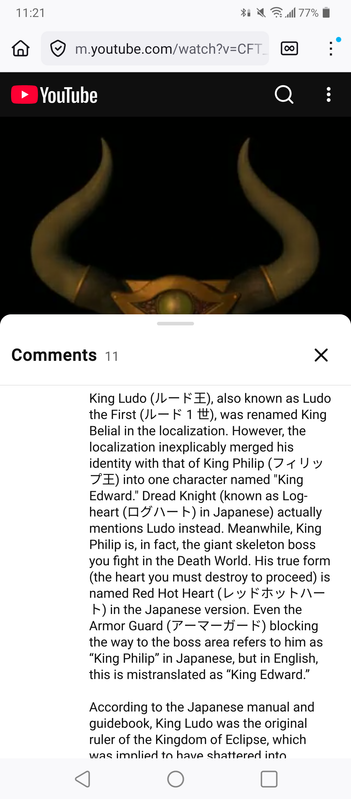
https://i.postimg.cc/zB9xtTWV/1000144030.png
https://i.postimg.cc/MTh9P1Rc/1000144031.png
https://i.postimg.cc/hjH2yVxz/1000144032.png
https://i.postimg.cc/26P0cnvL/1000144033.png
YouTube doesn't let me copy paste text any more.
This video is pretty tedious and long winded I suppose, but it does have little tidbits that I found significant, at least symbolicslly, as well as some technical things that were useful in several areas, one of which was how they translated a document in another language using something called, who knows, now everything crashed because I turned on the headphones, to hell with modern garbage.
Added in 2 hours 18 minutes 53 seconds:
https://en.wikipedia.org/wiki/The_Shadow_of_the_Tower
https://kotaku.com/elden-ring-from-soft ... 1848578949
https://kotaku.com/kingdom-come-deliver ... 2000658501
https://www.theguardian.com/commentisfr ... fell-tower
https://www.historyworkshop.org.uk/hous ... n-and-now/
https://www.occupy.com/dev/article/nott ... 4vtZs.dpbs
https://salonforthecity.blogspot.com/20 ... s.html?m=1
"
A slum in Kensington? Jennings' Buildings consisted of 81 two-story wooden tenements rammed with over 1,000 Irish immigrants living in accommodation meant for 200 with only 49 toilets for all the inhabitants. Not surprisingly, its death rate was twice that of the surrounding area.
The industrial revolution had pulled thousands from the poverty-stricken countryside into the city in search of work but, with nowhere for them to live, the result was a gigantic growth in slum housing and the infamous rookeries described by Dickens and appalled 19th century social reformers.
Meanwhile, over in the East End, things were even worse. Halfway up Commercial Street, one block away from Spitalfields Market, lies an anonymous service road. The average pedestrian wouldn’t even notice it existed. But unlikely though it may seem, this characterless, 400ft strip of tarmac was once Dorset Street – the most notorious thoroughfare in the Capital.
"
https://victorianweb.org/history/slums.html
These systems and places are prisons for the unconvicted and so-called "free".
https://www.historyextra.com/period/vic ... from-hell/
https://www.city-journal.org/article/a- ... d-the-poor
A slow death in an oppressive hell dungeon.
https://www.broadcastnow.co.uk/factual/ ... 79.article
https://www.walks.com/blog/slums-of-victorian-london/
https://www.ucl.ac.uk/bartlett/sites/ba ... inar-1.pdf
https://branchesofmytree.weebly.com/100 ... on-in-1914
https://en.wikipedia.org/wiki/North_Kensington
This may be a spoiler for 28 Years Later:
https://en.wikipedia.org/wiki/Wicker_man
"
The "largest bonfire" depends on the measurement, but recent contenders for the tallest include a 205-foot pyre in Larne, Northern Ireland (2024) and the annual Slinningsbålet in Ålesund, Norway (reaching 155 ft in 2016). For volume, the largest was a massive structure built in Scheveningen, Netherlands (2015).
Tallest Bonfire Records (Height)
2024 (Unofficial): A 205-foot bonfire in Craigyhill, Northern Ireland was built for the Eleventh Night celebrations, awaiting Guinness World Record confirmation.
2019 (Official): Hofstalder Funkenzunft Lustenau in Lustenau, Austria, built a 60.64-meter (198 ft 11 in) bonfire.
2016 (Official): The Slinningsbålet in Ålesund, Norway, achieved 47.4 meters (155 ft).
Largest Bonfire (Volume)
2015 (Official): Vreugdevuur Scheveningen in the Netherlands built a bonfire measuring 8,695 cubic meters.
"
https://www.upi.com/Odd_News/2024/07/11 ... 720718276/
The Grenfell fire happened right around the time that these huge tower fires are held.
Added in 2 minutes 4 seconds:
https://change.druidnetwork.org/what-is ... sacrifice/
Added in 18 minutes 39 seconds:
"
June 21
On the first day of Summer (which normally occurs on or near this date), the Summer Solstice Sabbat is celebrated by Wiccans and Witches throughout the world. Summer Solstice (which is also known as Midsummer, Alban hefin, and Litha) marks the longest day of the year when the Sun is at its zenith. In certain Wiccan traditions, the Summer Solstice symbolizes the end of the reign of the waxing year’s Oak-King, who is now replaced by his successor, the Holly-King of the waning year. (The Holly-King will rule until the Winter Solstice.) It is the ideal time for divinations, healing rituals, and the cutting of divining rods and wands.
On Midsummer Day, the people of ancient Russia worshiped the fertility goddess Kupala. To ensure female fertility and abundant crops, she was honored with bonfires, sacrifices of cockarels, and special wreaths that were cast into the rivers.
"
https://ichef.bbci.co.uk/news/480/cpspr ... f.jpg.webp
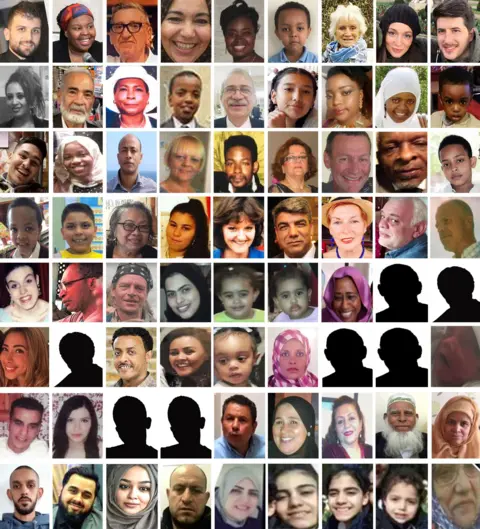
https://www.peeblesshirenews.com/news/n ... iry-finds/
The majority of the names, and in actually all of the people, are victims of "The (Accursed) Crown", even ancestrally, these were prisoners.
https://www.hrp.org.uk/tower-of-london/ ... on-prison/
https://en.wikipedia.org/wiki/L%C3%A8se-majest%C3%A9
https://commonslibrary.parliament.uk/re ... /cbp-8885/
"
The concept of the Crown developed first in England as a separation of the physical crown and property of the kingdom from the person and personal property of the monarch. As the kingdom merged with those in Scotland and Ireland, the concept extended to the legal lexicons of not only the United Kingdom but its dependencies and overseas territories, as well as several now independent Commonwealth Realms.
There are, as a result, many distinct Crowns – of Canada, Australia and other countries (realms) where King Charles III is head of state – all connected via the “personal union” of the current monarch, who succeeded to the throne in September 2022.
The terms “the sovereign” or “monarch” and “the Crown” are related but have separate meanings. The Crown encompasses both the monarch and the government. It is vested in the King, but in general its functions are exercised by Ministers of the Crown accountable to the UK Parliament or the three devolved legislatures.
"
https://monarchies.fandom.com/wiki/The_Crown
"
The Crown is a political concept used in Commonwealth realms, analogous to the concept of the state in legal systems influenced by Roman civil law.[1]
English common law never developed a concept of the state and left supreme executive power with the monarch.[1] The concept of the Crown as a corporation sole developed in the Kingdom of England as a separation of the physical crown and property of the kingdom from the person and personal property of the monarch. It spread through English and later British colonisation, becoming embedded in the legal lexicon of the British dominions. As the dominions gained control over the royal prerogative in the 1930s, the concept evolved such that 'the Crown in right of' each realm and territory acts independently of the other realms and territories.[2]
Depending on the context, it may refer to the entirety of the state, the executive government specifically (either of a realm or one of its provinces, states or territories) or only to the monarch and their direct representatives.[1] The Crown as a political concept should not be confused with physical crowns, such as those of the British regalia.
"
https://www.thegns.org/blog/coronation
https://www.english-heritage.org.uk/lea ... n-history/
https://firstthings.com/the-ancient-roy ... oronation/
"
But by the High Middle Ages, a rite designed to draw kings into Christian loyalty was beginning to seem too much like the anointing and consecration of priests and bishops. Debate raged about whether anointed kings were in some sense ordained; to this day, Britain’s monarchs are clothed in priestly vestments. Yet the rite persisted, justified by the biblical precedent of Zadok and Nathan’s anointing of David, commemorated in Handel’s famous anthem sung at every British coronation since that of George II. The oil for King Charles III’s anointing was consecrated by the Greek Orthodox Patriarch of Jerusalem.
The “magicalization” of the coronation rite intensified in the reign of Edward I, who captured the Stone of Destiny (also called the Stone of Scone), used in the coronation of Scottish monarchs, and had it built into St. Edward’s Chair, the throne used only for coronations. According to legend, the Stone of Destiny was the very stone on which Jacob laid his head when he dreamt of the angelic ladder. The Stone is in reality a pre-Christian object that probably played a part in the investitures of pagan kings. As kingship became ever more closely associated with King Solomon, celebrated for his wisdom and alleged magical skill, Edward III had leopards added to St. Edward’s Chair in imitation of Solomon’s throne, and commissioned a Cosmatesque pavement on the floor beneath it that was designed to function as an astrological talisman, drawing down positive heavenly influences on the king.
England’s first Protestant coronation did not occur until 1603, for James I (Elizabeth’s had still been Catholic), yet the Protestant rite largely retained its Catholic form. The Reformation abolished anointing with (and blessing of) oil, yet the coronation was an exception. The coronation thus acquired a uniquely numinous quality in post-Reformation England, not only because kings and queens were now deemed supreme governors of the Church, but because the coronation showcased forms of Catholic ceremonial outlawed elsewhere. Then, as Britain’s empire expanded, the spoils of empire joined the crown jewels: The world’s largest diamond, the Great Star of Africa, was set in the sovereign’s scepter, and the Kohinoor diamond from India in the queen consort’s crown.
By the coronation of Edward VII in 1902, after a period of Victorian restraint that followed the gargantuan expenditure and lavish ceremonial of George IV, ritual was back in fashion, even with the Church of England. But the sheer color, grandeur, and pageantry of Elizabeth II’s coronation in 1953 was such a contrast with the drabness of post-war Britain that it indelibly marked the memories of those who watched it on television—Britain’s equivalent of the moon landings. Whether Charles III’s coronation will acquire the same iconic cultural status remains to be seen, but this ancient ceremony continues to be an enduring source of fascination.
"
https://www.carlanayland.org/essays/human_sacrifice.htm
https://en.wikipedia.org/wiki/Coronatio ... sh_monarch
Added in 3 minutes 37 seconds:
https://www.londonintelligence.co.uk/72 ... -grenfell/
They supposedly also killed animals such such fires, and most likely many animals were also killed in this incident.
Added in 21 minutes 23 seconds:
"
The story of
King's Field centers on the dark fantasy land of Verdite, plagued by evil forces, where the hero, Jean Alfred Forester, enters a haunted monastery catacomb to find his missing father, uncovering a dark conspiracy involving a corrupt king, ancient magic, and the legendary Dragon hero, ultimately leading him to wield the powerful Moonlight Sword to save the kingdom and claim the throne. The narrative unfolds through cryptic dialogue and exploration as players delve deeper, revealing familial betrayal and a recurring evil that predates the current king, setting a precedent for FromSoftware's later Souls series.
"
https://www.superjumpmagazine.com/the-v ... i-and-iii/
https://www.superjumpmagazine.com/shado ... aystation/
https://balkancelts.wordpress.com/2013/ ... icker-man/
https://bcd.bzh/becedia/en/did-the-drui ... ice-humans
https://ichef.bbci.co.uk/ace/standard/9 ... new_pa.png
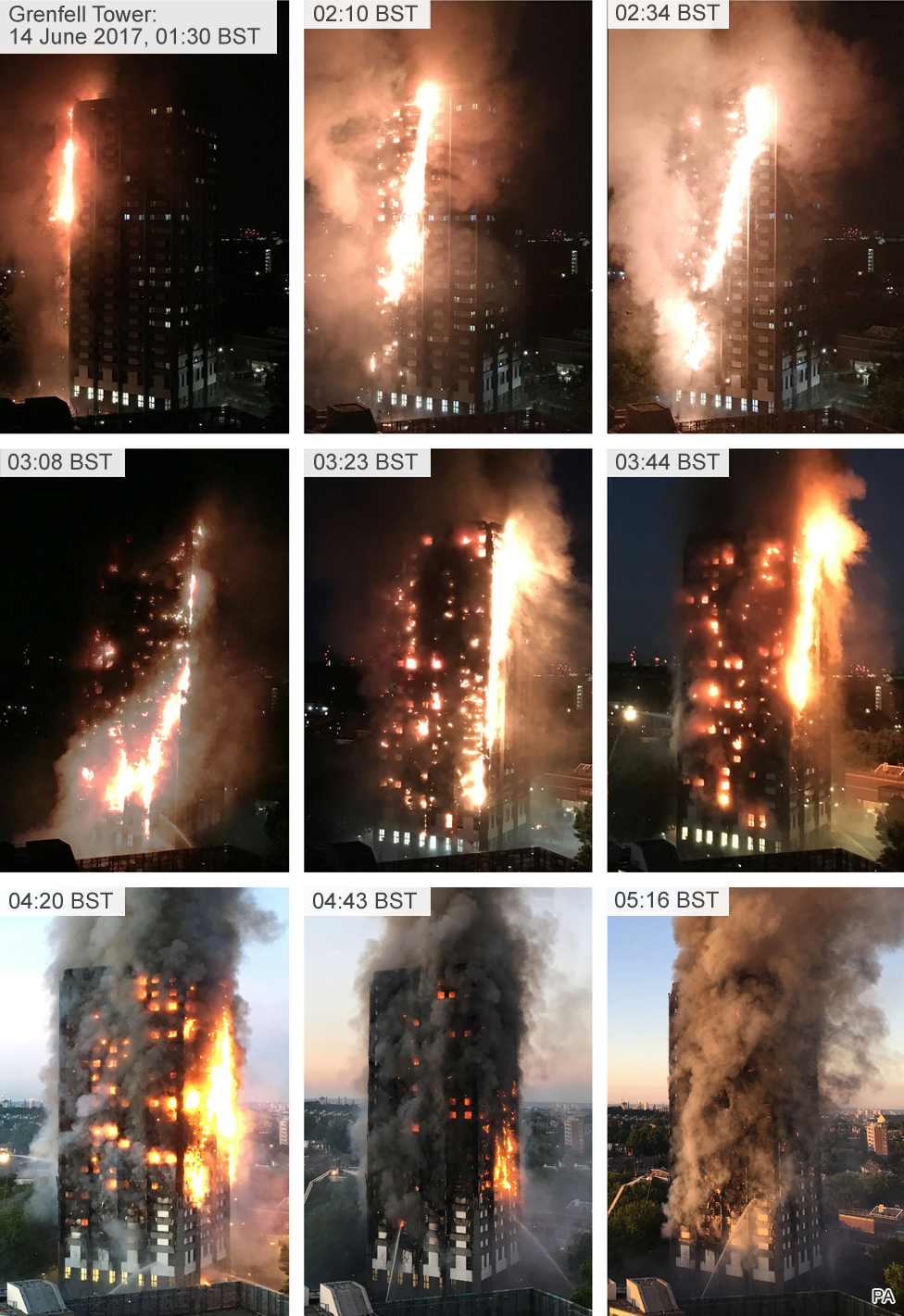
https://en.wikipedia.org/wiki/Benin_Expedition_of_1897
"
Within the week, news had made it to London of the massacre. This event led to the mounting of the Punitive Expedition.[12][13]
As a result of this attack, the Foreign Office authorized military action, leading to the "punitive expedition", the purported intention by Moor: »It is imperative that a most severe lesson be given the Kings, Chiefs, and JuJu men of all surrounding countries, that white men cannot be killed with impunity, and that human sacrifices, with the oppression of the weak and poor, must cease.« According to historian Philip Igbafe, the humanitarian and punitive justifications given by Moor ran counter to the economic justifications for military action that he and other members of the Protectorate administration promoted in the months and years before the events of February 1897.[4]
"
https://en.wikipedia.org/wiki/British_war_crimes
https://en.wikipedia.org/wiki/Order_of_the_Bath
https://en.wikipedia.org/wiki/Francis_G ... n_Grenfell
"
After serving as aide-de-camp to the Commander-in-Chief, South Africa, he fought in the 9th Xhosa War, the Anglo-Zulu War and then the Anglo-Egyptian War. He went on to become Sirdar (Commander-in-Chief) of the Egyptian Army and commanded the forces at the Battle of Suakin in December 1888 and at the Battle of Toski in August 1889 during the Mahdist War. After that he became Governor of Malta and then Commander-in-Chief, Ireland before retiring in 1908.[2]
"
https://en.wikipedia.org/wiki/Pascoe_Grenfell
"
He was born at Marazion, in Cornwall. His father, Pascoe Grenfell (1729–1810), and uncle were merchants in the tin and copper business.
"
https://en.wikipedia.org/wiki/Great_Mar ... stituency)
https://en.wikipedia.org/wiki/Xhosa_War ... 80%931879)
https://en.wikipedia.org/wiki/Anglo-Zulu_War
https://en.wikipedia.org/wiki/Battle_of_Suakin
He killed so many of the kinds of people that Grenfell Tower killed. What is that all about?
Added in 17 hours 14 minutes 51 seconds:
-
kFoyauextlH
- Posts: 1668
- Joined: Sun Jun 15, 2025 3:53 pm
Re: Lord Soth
I liked these similar characters, the males:
https://dragonage.fandom.com/wiki/Danarius
https://villains.fandom.com/wiki/Danarius
https://jadeempire.fandom.com/wiki/Smiling_Hawk
https://jadeempire.fandom.com/wiki/Scholar_Six_Heavens
I guess these are similar too, but I like them less:
https://en.wikipedia.org/wiki/Grand_Moff_Tarkin
https://starwars.fandom.com/wiki/Wilhuff_Tarkin
https://en.wikipedia.org/wiki/Count_Dooku
https://starwars.fandom.com/wiki/Dooku
https://starwars.fandom.com/wiki/Dooku/Legends
Even these two are reminiscent, also eerily to each other:
https://en.wikipedia.org/wiki/Abdulaziz_Al_Sheikh
https://en.wikipedia.org/wiki/Ibn_Baz
These two different people, one following the other, both had the same eye blind and looked very similar to one another.
Grand Moff, Grand Mufti.
https://en.wikipedia.org/wiki/Mufti_(dress)
https://www.pedestrian.tv/news/origin-m ... oblematic/
https://en.wikipedia.org/wiki/Mufti
"
a Muslim legal expert who is empowered to give rulings on religious matters.
Origin
late 16th century: from Arabic muftī, active participle of 'aftā ‘decide a point of law’.
"
https://warframe.fandom.com/wiki/Captain_Vor
https://warframe.fandom.com/wiki/Alad_V
https://warframe.fandom.com/wiki/Councilor_Vay_Hek
https://warframe.fandom.com/wiki/The_Grustrag_Three
Some good news finally, unless they don't give the treatment to most people suffering from this extreme killer cancer.
People are liking this but I don't care for it too much, like just being weird for weird's sake is not at all to my taste, I like things that are less heavy handed, heavy handedness seems less sophisticated to me or "try-hard" and "wannabe". I prefer there to be artfulness with intelligible meaning that is not clownishly overpronounced. Still, something more old-school and not like the current junk that seems to be pumped out more than ever before unceasingly is preferable, but the mind of the West seems to largely be surface-level rot at this point, all looks and aesthetics with not much underneath.
https://dragonage.fandom.com/wiki/Danarius
https://villains.fandom.com/wiki/Danarius
https://jadeempire.fandom.com/wiki/Smiling_Hawk
https://jadeempire.fandom.com/wiki/Scholar_Six_Heavens
I guess these are similar too, but I like them less:
https://en.wikipedia.org/wiki/Grand_Moff_Tarkin
https://starwars.fandom.com/wiki/Wilhuff_Tarkin
https://en.wikipedia.org/wiki/Count_Dooku
https://starwars.fandom.com/wiki/Dooku
https://starwars.fandom.com/wiki/Dooku/Legends
Even these two are reminiscent, also eerily to each other:
https://en.wikipedia.org/wiki/Abdulaziz_Al_Sheikh
https://en.wikipedia.org/wiki/Ibn_Baz
These two different people, one following the other, both had the same eye blind and looked very similar to one another.
Grand Moff, Grand Mufti.
https://en.wikipedia.org/wiki/Mufti_(dress)
https://www.pedestrian.tv/news/origin-m ... oblematic/
https://en.wikipedia.org/wiki/Mufti
"
a Muslim legal expert who is empowered to give rulings on religious matters.
Origin
late 16th century: from Arabic muftī, active participle of 'aftā ‘decide a point of law’.
"
https://warframe.fandom.com/wiki/Captain_Vor
https://warframe.fandom.com/wiki/Alad_V
https://warframe.fandom.com/wiki/Councilor_Vay_Hek
https://warframe.fandom.com/wiki/The_Grustrag_Three
Some good news finally, unless they don't give the treatment to most people suffering from this extreme killer cancer.
People are liking this but I don't care for it too much, like just being weird for weird's sake is not at all to my taste, I like things that are less heavy handed, heavy handedness seems less sophisticated to me or "try-hard" and "wannabe". I prefer there to be artfulness with intelligible meaning that is not clownishly overpronounced. Still, something more old-school and not like the current junk that seems to be pumped out more than ever before unceasingly is preferable, but the mind of the West seems to largely be surface-level rot at this point, all looks and aesthetics with not much underneath.