Identity Politics

This is the home of all topics from the old forum.

Moderator: atreestump

Forum rules
No Abusive Behavior. No Spam. No Porn. No Gore. It's that simple.
User avatar
kFoyauextlH
Posts: 1429
Joined: Sun Jun 15, 2025 3:53 pm

Re: Identity Politics

Post by kFoyauextlH »

https://www.irishtimes.com/opinion/fran ... -1.4099536

"
The modern capital of Serbia, as I now learned, is located on what was once a Celtic settlement called Singidún – with some variant spellings – the last syllable of which meant “fortress”, as in so many place-names of Ireland and Scotland.

By the first century AD, the Romans were calling it Singidunum, and building on the original town. But subsequent visitors included Attila the Hun. For that and other reasons, there is little trace of the Celtic era now.

It explained, however, the thing that had set me reading about it: my discovery, via the aforementioned ballad, of a weirdly-named band from modern Belgrade: “Irish Stew of Sindidun”. Their music is described as “Serbian Celtic Rock”, although they began life circa 2002 doing straight covers of Irish ballads before starting to write their own stuff and veering towards a punk style. The Pogues are an obvious influence.

Irish Stew, as they’re known for short, are not the only such band in Serbia. There is another called Orthodox Celts, also one named Tír na nÓg, in similar vein. And as far as I can tell, none of these have any connection with Ireland other than affection for its music, which they play skilfully on fiddles, flutes, and banjos, so that you wouldn’t know they were from Eastern Europe except, sometimes, from their accents.

One of the pronunciations they struggle with, for example, is the letter V, which tends to sound more like W. Such details apart, they appear to justify the point my Bosnian friend was making 25 years ago.

Hence the strange but stirring connection I felt on the bus in Cork the other day as I listened to Irish Stew’s lead singer urging me to rally “beneath the flag of green” – wherefrom, loud and high, he would raise the cry: “rewenge for Skibbereen”.
"

This is a Lithuanian girl that also looks like them:

https://encrypted-tbn0.gstatic.com/imag ... fvglx&s=10

https://encrypted-tbn0.gstatic.com/imag ... dIo9u&s=10

So that people in the former Yugoslavia and among Irish Americans have these appearances repeatedly.

https://encrypted-tbn0.gstatic.com/imag ... l0uMe&s=10

https://www.draugas.org/news/folklore-t ... nection-2/

https://en.wikipedia.org/wiki/Lithuanian_mythology

https://culturalanthropologyandethnosem ... baltic.pdf

These are 3 regions pretty far from each other.

They are all on coasts, all have links to Celtic and Indo-European things, and all have similar looking people who are from there. Modern Irish don't look like the Irish American upper and upper middle class people who traveled to the United States.

Added in 42 minutes 56 seconds:
https://folklife.si.edu/magazine/croati ... ted-states


These are likely more similar to older Irish customs that existed until overtaken by this modern dance which was tied to fabricated things and nationalist identity politics:


"
The pageantry in Irish dance is destroying my passion for the sport (rant?)

I'm an open champion dancer and I just feel like some aspects of Irish dance are so over the top now and I hate how it feels so necessary to have it in order to place well. I understand the dress, the makeup, and the fake tan....but are the wigs really so necessary? Taking out the appearance factor of them (even though I think they don't look too great), the wig is genuinely painful to wear and is such a major hassle in the morning. Not to mention the fact that the wig is harmful to wear! Many girls in my competition and outside of it (including myself) are balding from these wigs! I've noticed that with the wig I place better, and without it (I still style my hair in a very large fashion) I do worse despite making progress in skill. On top of this I feel like I must be of a certain body type to do well in this sport (very thin and long-legged) and it's just so frustrating to feel like my success isn't based off of how much work I put into the sport, and instead based off of how I look instead. Judges should be deciding who places off of skill, and not if they're wearing a wig or not, etc

....I dunno just some thoughts I have that I hope aren't too crazy or anything. What do you guys think?


HausKino

2y ago

It was bad when I was still dancing and I last competed in 2001! I never understood why the ladies had to jump through so many restrictive hoops whilst us lads could turn up in trousers, a waistcoat and an ironed shirt if we didn't want to wear a kilt which is comparatively zero effort.

It's a dance competition not a fashion show. Fancy dress and perfect hair and makeup do not equal talent.
42
co-u-ch
OP •
2y ago

Exactly! I'm so jealous of a friend of mine who literally wakes up like 20 mins before competing meanwhile I wave to wake up at 3-4am 😭😭 Occasionally I joke about having male dancers wear founding father-esque wigs to match us loll
10
42
co-u-ch
OP •
2y ago

Exactly! I'm so jealous of a friend of mine who literally wakes up like 20 mins before competing meanwhile I wave to wake up at 3-4am 😭😭 Occasionally I joke about having male dancers wear founding father-esque wigs to match us loll
10
co-u-ch
OP •
2y ago

Exactly! I'm so jealous of a friend of mine who literally wakes up like 20 mins before competing meanwhile I wave to wake up at 3-4am 😭😭 Occasionally I joke about having male dancers wear founding father-esque wigs to match us loll
10
10
HausKino

2y ago

It was bad when I was still dancing and I last competed in 2001! I never understood why the ladies had to jump through so many restrictive hoops whilst us lads could turn up in trousers, a waistcoat and an ironed shirt if we didn't want to wear a kilt which is comparatively zero effort.

It's a dance competition not a fashion show. Fancy dress and perfect hair and makeup do not equal talent.
42
co-u-ch
OP •
2y ago

Exactly! I'm so jealous of a friend of mine who literally wakes up like 20 mins before competing meanwhile I wave to wake up at 3-4am 😭😭 Occasionally I joke about having male dancers wear founding father-esque wigs to match us loll
10
Vaqu3ra13

2y ago

I think it's the pressure to be tanned that irks me the most. I'm of Irish descent, I'm very fair-skinned. Why on earth do I need to bathe in spray tan? It makes me look like an Oompa Loompa.
37
turn-the-dial

2y ago

I have super fair skin as well. I don’t get the obsession with the fake tan - seems like a beauty standard left over from the 90s.
10
toxbrarian

2y ago

Our TC says it’s to make legs look more muscular and that unfortunately if you don’t do it your legs automatically look less toned than a girl who tanned, even if you’re just as toned and strong. So basically EVERYONE needs to stop doing it. Which is not likely to happen.
9
Vaqu3ra13

2y ago

I think it's the pressure to be tanned that irks me the most. I'm of Irish descent, I'm very fair-skinned. Why on earth do I need to bathe in spray tan? It makes me look like an Oompa Loompa.
37
turn-the-dial

2y ago

I have super fair skin as well. I don’t get the obsession with the fake tan - seems like a beauty standard left over from the 90s.
10
toxbrarian

2y ago

Our TC says it’s to make legs look more muscular and that unfortunately if you don’t do it your legs automatically look less toned than a girl who tanned, even if you’re just as toned and strong. So basically EVERYONE needs to stop doing it. Which is not likely to happen.
9
37
turn-the-dial

2y ago

I have super fair skin as well. I don’t get the obsession with the fake tan - seems like a beauty standard left over from the 90s.
10
turn-the-dial

2y ago

I have super fair skin as well. I don’t get the obsession with the fake tan - seems like a beauty standard left over from the 90s.
10
"

Really obnoxious stupidity and oppression.

https://maynoothgeography.wordpress.com ... tep-dance/

Those European folk dances which were widespread and in both Lithuania and Croatia, and spread all across Europe, also existed in places like Pakistan, meaning they were likely very ancient and tied to the Indo-European languages spoken by all these people.

https://lilwizz.wordpress.com/wp-conten ... alash1.jpg

https://pbs.twimg.com/media/GBUlOmTaMAASNLm.jpg
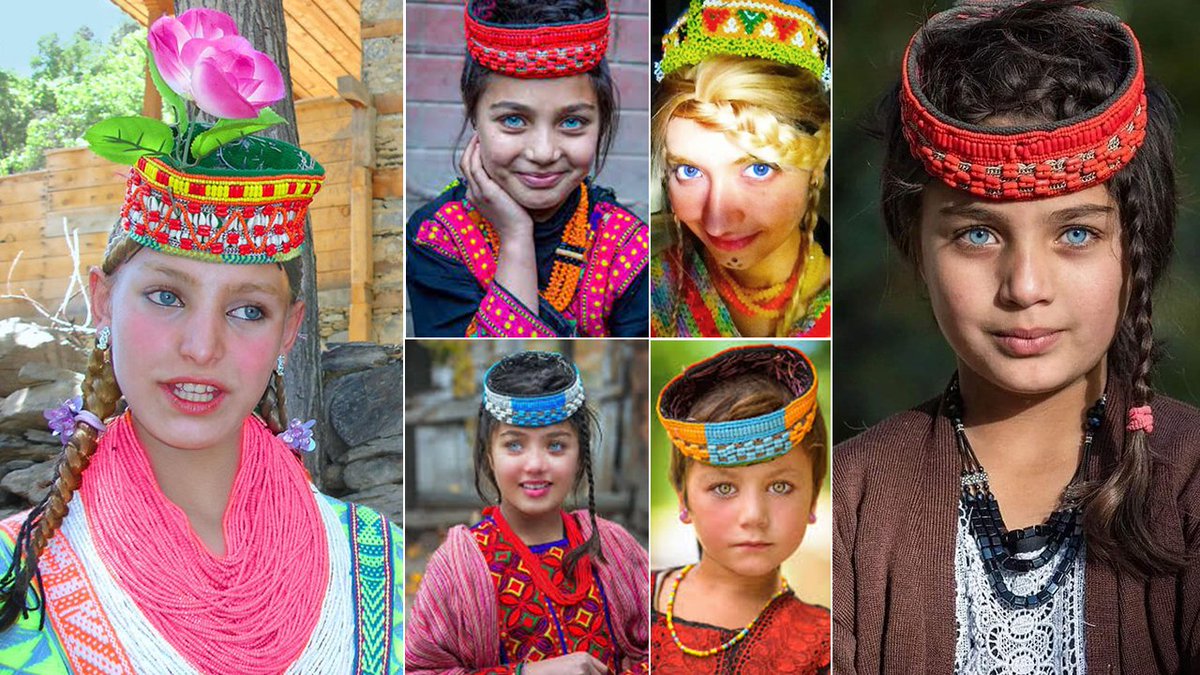
Their religion seemed to be Indo-Aryan in fashion also:

https://en.wikipedia.org/wiki/List_of_L ... al_figures

Added in 49 minutes 13 seconds:
"
Gods and goddesses
edit

Ašvieniai, the divine twins who pulled the chariot of the Sun (the Vedic Hindu Ashwins).
Aušrinė, the Morning Star, a goddess, a daughter of the God ("dievaitė"). She was the goddess of the morning. Alternatively her name is given as Aušra ("dawn"). Ushas in Vedic hinduism.
Auštaras (Auštra), the god of the northeast wind, who stands at the gates of paradise and lights the way for those going to paradise. His function of shining this beacon makes him similar to Aušrinė; some consider him to be her cousin.
Bangpūtys, the god of the seas and storms ––he is two-faced like the Roman god Janus.
Dalia, goddess of fate and weaving.
Deivės Valdytojos (Lithuanian: Governing Goddesses), were the goddesses who made garments from human's lives. They were seven sisters: Verpiančioji (who spun the threads of life), Metančioji (who threw rims [clarification needed] of life), Audėja (the weaver), Gadintoja (who broke the thread), Sergėtoja (who scolded Gadintoja, and instigated war between people), Nukirpėja (who cut the cloth of life), and Išskalbėja (the laundress). They have similarities with the Greek Fates and the Norse Norns. Deivės Valdytojos were associated with Dalia and Laima.
Dievas ("God"), the supreme deity
Dievas Senelis ("God Old Man"), a teacher of people and judge of their morality. He looks like an old traveling beggar. Dievas Senelis is proficient at magic and medicine. Epithet of Dievas.
Gabija, the foster of the Holy Fire, a goddess, a daughter of Dievas ("dievaitė").
Laima, goddess of Fate and pregnant women.
Mėnuo, the Moon, a son of Dievas ("dievaitis").
Perkūnas, the Thunder, the main god. ("dievaitis") (Parjanya/Indra in Vedic hinduism).
Praamžius, Praamžis, Pramšans, Pramžimas, Praamžimas, an epithet of Dievas (the chief god); probably of later literary origin.[1]
Saulė, the Sun Goddess (Surya in Vedic hinduism)
Vakarinė, goddess of the Evening Star.
Vėjopatis, god of the wind and master of Dausos (paradise)
Žemyna, goddess, the deified soil (Thracian Zemele; Zamin in Persian and Hindi for "land").
Žvaigždės (singular: žvaigždė), stars. Saulė (the sun) is their mother and sometimes[when defined as?] with the Moon as their father. One of the most important stars is Aušrinė. Other stars, Aušrinė's sisters, are less important, but they sometimes appear in mythic stories too. Especially notable ones are Vakarinė or Vakarė (the evening Venus, who makes the bed for Saulė), Indraja (indra, the hindu devta) (Jupiter), Sėlija (shani, the hindu devta) (Saturn), Žiezdrė (Mars), and Vaivora (Mercury).

Heroes and heroines
edit

Pajauta, the legendary princess of Kernavė
Jūratė and Kastytis are heroes of a Lithuanian legend, which subsequently became popular, mostly because of its modern poetic interpretation by Maironis. The queen of the amber palace Jūratė may be considered a manifestation of the goddess of Sea in this legend.

Local and nature spirits
edit

Ežerinis, a spirit of lakes
Javinė, a household goddess who protects grain in barns.
Jievaras, a household spirit who protects grain. Sacrifices to Jievaras are made after the rye harvest. While cutting grain, women would leave a few grain tufts uncut, which would later be braided into plaits. They would also leave some bread and salt under the plait, and would say: Davei manei, Žemele, duodame ir tau ([You] gave for us, Mother Earth, we are giving for you too), a request for the land to continue to be fruitful.
Kupolė, the spirit of springtime vegetation and flowers. The Festival of Kupolė (Kupolinės) was associated with Feast of St. John the Baptist (Joninės). In this festival, women picked sacral herbs, danced and sang songs. Kupolinės is also known as Rasos. Compare this with Ziedu māte in Latvian mythology, Kupala in Polish mythology and Ivan Kupala in Russian mythology
Laukų dvasios (spirits of fields), spirits, who were running through the fields. When crops in the fields waved in the wind, people saw them as being the actions of spirits. Laukų dvasios include Nuogalis, Kiškis (hare), Meška (bear), Lapė (fox), Katinas (tomcat), Bubis, Bubas, Bubė, Baubas, Babaužis, Bobas, Maumas (bugaboo), Raudongalvis (red-headed), Raudongerklis (red-throated), Žaliaakis (green-eyed), Paplėštakis, Guda, Dizikas, Smauglys (boa), Ruginis (spirit of rye), Papiokė, Pypalas, Žebris, Arklys (horse), Vilkas (wolf).
Upinis, a spirit of rivers

Various lower beings
edit

Kaukas, spirits similar to leprechauns.
Laumė, a fairy-like female creature (pixies). Described as white and blue as the sky itself. Good spirit, very friendly with the Earth and Nature gods. However, if anyone tried to use them for personal gain, their punishment would be severe.
Nykštukas, gnomes.
Vėlės, spirits of dead human beings.

"Demonic" beings
edit

Aitvaras, a household spirit bringing both good and bad luck
Baubas [lt], an evil spirit with long lean arms, wrinkly fingers and red eyes. He harasses people and tears their hair or stifles them. To children, he is the equivalent of the boogeyman of the English-speaking countries. A misbehaving child could be told by the parents: "Behave, or baubas will come and get you". Also it could be described as a dark or black creature living under the carpet or in some dark spot of the house.
Giltinė [lt] – goddess of death, also The Reaper. Other names include Kaulinyčia, Maras (black death or the Plague), Maro mergos, Kolera, Pavietrė, Kapinių žmogus.[2] Her sacred bird is the owl. Sometimes she was considered to be a sister of Laima (luck).
Ragana [lt; lv], Lithuanian and Latvian word for witch.
Slogutis means pain, misery or nightmare. Also can mean fear or bad feelings.
Pinčiukas or Pinčukas; the word literally means "inhabitant of Pinsk" in Lithuanian (cf. "Pinchuk"). Bronislava Kerbelytė, in her work on classification of "devilish" beings in Lithuanian folklore remarks that often a stranger was seen as an evil being; on particular, "pinchuks" from Belarus were seen as strangers. She writes that in one East Lithuanian legend a pinčiukas is portrayed as a mischievous being.[3] The devil Pinčiukas was popularized by the novel Baltaragis's Mill by Kazys Boruta, especially when it was turned into the first Soviet rock opera and musical film Devil's Bride. There Pinčiukas is a comic character: lazy, easily deceived, vengeful.[4]
Žiburinis [lt], a scary forest spirit that appears as a phosphorescent skeleton.

Holy places and things
edit

Dausos [lt] or Dangus ("heaven"), the home of good souls. Dausos is on a high mountain (Latvian Debeskalns, or Norse Valhalla), between two rivers. Like the Greek Garden of the Hesperides, the garden of Dausos contains trees which bear golden apples. Day in the garden is perpetual but outside its confines lies perpetual night. Master of Dausos is Vėjopatis (Lord of the wind) or Vėjas (Wind) who is also one of the oldest gods in Lithuanian mythology. Vėjas is identical to Vayu of Hinduism. Auštaras and Vėjopatis are the gatekeepers of Dausos (Dausų Vartai). While Auštaras acts as the psychopomp of good souls, Vėjas (Vėjopatis) blows bad souls into oblivion.[citation needed]

Names by written sources
edit
Earliest Rus' chronicles
edit

Some names from Lithuanian mythology are also found in Kievan Rus' chronicles of the 13th century. These deities were secretly worshiped by King of Lithuania Mindaugas after his baptism. Rus' chronicles are considered the best source of information about the ancient Lithuanian pantheon worshiped by nobles and the military.

Sovijus in 13th-century Rus' chronicles was a person who introduced the pagan custom of burning bodies after death, according to studies by Gintaras Beresnevičius.
Žvoruna (Zvoruna) was a euphemism for the hunting and forest goddess like Roman Diana. Her name is connected with wild animals. There was mentioned in chronicle that she is a bitch, it means that her zoomorphic shape is female dog.
Medeina (Medeinė) is another euphemism of the hunting and forest goddess. Medeina also was mentioned in the 16th century by J. Lasicki. She was worshiped by King Mindaugas and represented military interest of warriors.
Teliavelis (Televelis) was a powerful smith who made the sun and threw it to the sky. This myth survived in folk tales in the beginning of the 20th century. Some scholars, like K. Būga, tried to prove that Televelis is incorrectly written Kalvelis (smith diminutive in Lithuanian). Teliavelis has connections with Finnish Ilmarinen.
Andajus (Andajas, Andojas, etc.) was mentioned in medieval chronicles as the supreme deity. It may be euphemism for Dievas. It is mentioned in chronicle that warriors invoke Andajus in battle.
Nonadievis (Nunadievis; etimologized by some scholars as Numadievis) is an incorrectly written name of the supreme god or just another euphemism.
Perkūnas was the god of thunder, one of the most powerful deities. Perkūnas survived in popular belief and folk tales until the 20th century.
Diviriks is thought to be one of Perkūnas' euphemisms, meaning "leader of gods".

Martynas Mažvydas
edit

Martynas Mažvydas in his Latin introduction to Catechismusa Prasty Szadei (1547) urged the people to abandon their pagan ways and mentioned the following gods:[5][6]

Perkūnas (Percuno) – god of thunder
Laukosargas (Laucosargus) – god of grains and other agricultural plants
Žemėpatis (Semepates) – god of cattle and other farm animals
Aitvaras and kaukas (Eithuaros and Caucos) – evil spirits

Maciej Stryjkowski
edit

Maciej Stryjkowski (1547–1593) – Polish–Lithuanian historian and author of Chronicle of Poland, Lithuania, Samogitia and all Russia. In this work, Stryjkowski provided two lists of gods, one Old Prussian and another Lithuanian. He listed 16 Lithuanian gods:[7]

Prakorimas (Prokorimos) – the supreme deity. Stryjkowski elaborated that people used to sacrifice white cocks to Prakorimas. Their flesh was divided into three pieces: one for peasants, another for pagan priests (Lithuanian: žynys), and a third for burning. Stryjkowski pointed out that Prakorimas was similar to the Prussian supreme god Okopirmas.
Rūgutis (Ruguczis) – god of fermentation and fermented foods
Žemininkas (Ziemennik) – god of land and agriculture. The cult of the žaltys (grass snake) is associated with the cult of Žemininkas.
Krūminė (Kruminie Pradziu Warpu) – deity of ears, provider of crops
Lietuvonis (Lituwanis) – god of rain
Kauriraris (Chaurirari) – deity of war and warhorses. The name etymology is unclear. Vladimir Toporov suggested that it is derived from the Lithuanian word kaurai (fur), while Wilhelm Mannhardt argued it stems from karas (war).[8]
Sutvaras (Sotwaros) – god of all cattle
Šeimos dievas (Seimi Dewos) – god of family
Upinis dievas (Upinis Dewos) – god of rivers
Bubilas – god of honey and bees
Didis Lado (Dzidzis Lado) – the great god. Festivities, songs, and dances in his honor lasted from May 25 to June 25. There are doubts whether this represents an actual god.[9]
Gulbis (Gulbi Dzievos) – the good spirit of every human, guardian angel
Ganiklis (Goniglis Dziewos) – god of herds and shepherds
Šventpaukštinis (Swieczpunscynis) – god of all domesticated and wild birds. People did not offer sacrifices to him as he was a free spirit.
Kelių dievas (Kielu Dziewos) – god of roads, trade and travel
Pušaitis or Puškaitis (Puszajtis) – deity of land, dwelling in elder bushes and commanding chthonic dwarfs (barstukas)

Jan Łasicki
edit

Jan Łasicki (Lasicius) was a Polish Protestant activist. He wrote a treatise on idolatry About the gods of Samogitians, other Sarmatians, and false Christians (De diis Samagitarum caeterorumque Sarmatarum et falsorum Christianorum, written ca. 1582 and published in 1615). This 18-page treatise contained a lists of 76 Lithuanian gods with brief description of their functions. Łasicki obtained most of his information from Łaszkowski, a Polish lesser noble who worked as a royal land surveyor. The list contained very minor deities, representing everyday household items. Łasicki was also not intimately familiar with Lithuanian culture or language. Therefore, the academic opinion on the list ranges from a valuable resource to a practical joke designed to poke fun of Christian saints through an inverted mirror. Deities mentioned by Jan Łasicki were:[10]

Aukštėjas (Auxtheias Vissagistis) – a euphemism for the supreme god. Derived from the Lithuanian word aukštas (high).
Žemėpatis (Zemopacios)
Perkūnas (Percunos) – god of thunder
Audros – god of storms
Algis
Aušra (Ausca) – the morning star (Venus). Her other name was Aušrinė.
Bežlėja (Bezlea)
Brėkšta (Breksta) – goddess of twilight. Also could be a euphemism for Vakarė.
Ligyčius (Ligiczus)
Datanus
Kirnis (Kirnus) – local god of cherries
Kremata – god of hogs[11]
Pyzius (Pizio) – god of spouses
Medeina (Modeina et Ragaina) – goddess of forest and hunting
Kerpyčius and Šilinytis (Kierpiczus and Siliniczus) – gods of forest, mosses and lichens
Tavalas (Tavvals) – deity of physical strength. Gintaras Beresnevičius noted that this deity could be the same as medieval Teliavelis.
Orthus
Ežerinis (Ezernim) – spirit or deity of lakes. Derived from ežeras (lake).
Sidžius, Simonaitis and Ventis Rekičionis (Simonaitem, Sidzium, Ventis Rekicziouum) – spirits worshiped by individual noble families
Karvaitis Ėraitinis (Kurvvaiczin Eraiczin) – deity of calves and lambs[11]
Gardūnytis (Gardunithis) – protector of newly born lambs[12]
Prigirstytis (Prigirstitis) – can hear whispers
Derintojas (Derfintos)
Bentis
Laukpatis (Lavukpatimo)
Priparšis (Priparscis)
Ratainyčia (Ratainicza) – god of horses[8]
Valgina (Walgina) – god of cattle[11]
Krikštas (Kriksthos) – protector of tombstones[11]
Apydėmė (Apidome) – deity of changed residence. The name is also known from hand-written collection of sermons from 1573.[13]
Kriukis (Krukis) – deity of pigs
Lazdona (Lasdona) – goddess of hazelnuts
Bubilas (Babilos) – household god of bees, husband of Austėja
Žemyna (Zemina) – goddess of land and agriculture
Austėja (Austheia) – household goddess of bees, often presented as wife of Bubilas
Deuoitis
Vetustis
Guboi and Tvverticos
Veliuona (Vielona) – goddess of death
Warpulis
Salaus – no function recorded by Łasicki.
Šluotražis (Szlotrazis) – no function recorded by Łasicki. The name is derived from šluota (broom).[14]
Tiklis – no function recorded by Łasicki.
Beržulis (Birzulis) – no function recorded by Łasicki. Based on etymology, it could be a god of birches and birch sap.
Šeryčius (Siriczus) – no function recorded by Łasicki. The name is possibly derived from šerti (feed).[14]
Dvargantis (Dvvargonth) – no function recorded by Łasicki.
Klamals – no function recorded by Łasicki.
Atlaibas (Atlaibos) – no function recorded by Łasicki.
Numeias
Ublanyčia (Vblanicza) – patron of beggars[15]
Dugnai – spirit of flour
Pesseias
Trotytojas kibirkščių (Tratitas Kirbixtu) – deity of spark, fire
Alabathis
Polengabia
Užpelenė (Aspelenie)
Budintojas (Budintaia)
Matergabiae
Raugo Žemėpatis (Rauguzemapati) – deity of sourdough, leaven and fermentation
Luibegeldas
Ziemennik
Vaižgantas (Waizganthos) – a god of flax
Gabija (Gabie) – goddess of household fire
Smik smik per velėną (Smik Smik Perleuenu) – a phrase rather than a being
Ežiagalis (Ezagulis) – god of death
Aitvaras (Aitvvaros)
Kaukas (Kaukie)
Gyvatė (Giuoitos) – black snake (see also žaltys)
Srutis and Miechutele – deities of paint and color[14]

Matthäus Prätorius
edit

Deities mentioned by Matthäus Prätorius (1635–1704) were:[14]

Žalius (Zallus) – god of disagreement
Žėlius (Zelus) – god of grass
Šulininis (Szullinnijs) – god of wells
Bangpūtys, Vėjopatis, Bičbirbis, Giltinė, Gota, Jaučių Baubis, Karvaitis, Ėraitis, Skalsa, Biržulis / Beržulis, Prigirstytis / Girystis, Ligyčius / Lygėjus, Kelio dievas / Kelukis
Drebkulis and Magyla - Prussian Lithuanian
Gabjauja (Gabvartas)[16]

Theodor Narbutt
edit

Polish-Lithuanian historian Teodor Narbutt wrote the ten-volume work History of the Lithuanian Nation (Dzieje starożytne narodu litewskiego) between 1835 and 1841. The first volume contained a description of Lithuanian mythology. However, modern historians have accused Narbutt of falsifying historical facts and reporting speculations. Thus, some gods mentioned only by Narbutt and unknown from other sources are usually treated as inventions of the author.
Male deities
edit

Praamžius (Pramżimas) – highest god, determines the fate of people, world, and other gods
Ukapirmas (Okkapirmas) – preceded time, his feast is celebrated on December 25
Viršaitis (Wirszajtos) – protected household, domestic animals. Narbutt claimed that he was equivalent to Auxtejas Wissagistis mentioned by Łasicki and to Roman Saturn
Perkūnas (Perkunas) – thunder god
Kovas (Kawas) – god of war
Ragutis – god of beer, vodka, mead
Santvaras or Sotvaras (Sotwaros) – god of daylight, poets, doctors
Atrimpas (Atrimpos) – god of sea and water
Gardaitis (Gardeoldiis) – god of wind, storm, protector of ships
Poklius (Poklus) – god of death and underworld
Kriukis (Krugis) – god of smiths
Žiemininkas (Ziemienikas) – god of earth, harvest, and darkness
Patelas (Patelo) – flying god of air, similar to an angel
Šneibratas (Sznejbrato) – god of birds and hunting
Kibirai (Kabiry) – a trinity

Female deities
edit
Goddess Milda by Kazimierz Alchimowicz (1910), National Museum in Warsaw

Praurimė (Praurime) – goddess of sacred fire, she was served by vaidilutės
Lada (Lado) – the great goddess, Rasos festival is dedicated to her
Budtė (Budte) – goddess of wisdom
Laima (Lajma) – goddess of fate
Pelenų Gabija (Polengabia) – goddess of fireplaces
Moterų Gabija (Matergabia) – goddess of bread and bakery
Perkūnaitėlė (Perkunatele) – wife of Perkūnas
Pilvytė (Pilwite) – goddess of money, riches, and good luck
Lietuva (Liethua) – goddess of freedom, pleasure, joy
Veliuona (Wellona) – goddess of eternity, afterlife
Pergrubė (Pergrubie) – goddess of spring, flowers, gardens
Milda – goddess of love, courtship
Krūminė (Krumine) – goddess of grain, agriculture
Nijolė (Nijola) – mistress of the underworld, wife of Poklius
Alabatis – goddess of flax
Aušra (Ausssra) – morning goddess
Bezelea – evening goddess
Brėkšta (Brekszta) – goddess of darkness and dreams
Kruonis (Kronis) – goddess of time
Užsparinė (Usparinia) – goddess of land borders
Verpėja (Werpeja) – weaver of the thread of life
Gondu – goddess of weddings
Upinė (Upine) – goddess of rivers, springs
Ratainyčia (Ratajniczu) – goddess protecting horses
Valginė (Walgina) – goddess protecting domestic animals
Luobo gelda (Lajbegelda) – goddess of knowledge and rumors
Mėšlų boba (Mahslu baba) – goddess of garbage
Budintoja – spirit that wakes sleeping people
Austėja (Austheja) – goddess of bees
Ragutiene Pati (Ragutenapati) – wife of Ragutis
Žemės Motina (Zemmes mahti) – goddess of underground, responsible for lost items
Gaila (Gajla) – spirit torturing people and animals
Neris – nymph of Neris River
Dugnė (Dugna) – nymph of rivers
Ragana – goddess of trees
Lazdona – goddess of hazelnut
Medziojna – goddess of forests
Pajauta – worshiped woman, daughter of Duke Kernius, wife of Živinbudas
Birutė (Biruta) – worshiped woman, wife of Kęstutis

Other written sources
edit

This section contains those names of Lithuanian and Prussian gods or other mythical beings that are mentioned in old treatises on history or philosophy, sometimes accompanied by brief descriptions, and which are known from a few independent sources or from their counterparts under different names in later collections of myths and tales.

Dimstipatis (mentioned by Jokūbas Lavinskis), is a masculine deity (genius loci). It is a household god, the guardian of houses and caretaker of the hearth. People sacrificed roosters and black hens to the deity. The birds were boiled; later people would gather around the kettle and eat the birds. The bones were burned. Sometimes Dimstipatis is reconstructed as a god of housewives, to whom pigs were sacrificed. Dimstipatis was also seen as a power protecting from fires.[5]
Dirvolika, Nosolus (Jesuit reports from 1605)[17]
Pagirnis (Jesuit reports from 1605)[5]
Baukuris (Kraziu kolegijos)[18]
Velinas (mentioned by Konstantinas Sirvydas)[2]
Javinė (Jawinne by Jacob Brodowski)[17]
Laima (Daniel Klein in 1666)[19]

Other names
edit

Names of figures that were more marginal in Lithuanian mythology or less known from existing sources are put here. In fact they denote some spirits or local deities that do not play a main role in the mythology of Lithuanians.

Blizgulis, a god of snow. His name means "He who sparkles."
Junda, Goddess of War
Baubis, a household god of meat and cattle.
Divytis, a god-like hero of fishermen legends. Fishermen at sea sang songs about Divytis.
Gardaitis, a god (a spirit?) of ships and sailors.
Jagaubis, a household spirit of fire and the furnace.
Rasa, Kupolė's and Kaupolis' daughter. She is the goddess of summer's greenage and flowers.
Mokas, a stone with an ability to teach people, sometimes they are found in families - with wife Mokienė and children Mokiukas
"

https://www.hinduismtoday.com/hpi/2021/ ... -of-india/

"
BELGRADE, SERBIA, January 27, 2021 (Bharata Bharati by Zvonimir Kostic): Of all the Indo-European people, Slavs are the ones who inhabit the largest territory on the Euro-Asian continent today. Also, Slavs are the most numerous ethno-linguistic group on the European continent. There are about 300 million of them today. Slavic peoples are traditionally divided into Eastern Slavs (Russians, Belarus, Ukrainians), Western Slavs (Polish, Czech, Slovakians, Lusatian Sorbs, Kashubians) and Southern Slavs (Serbs, Croatians, Slovenians, Macedonians, Bulgarians). In the current religious division, the Slavs are divided into: Orthodox (Russians, Ukrainians, Belarus, Serbs, Macedonians and Bulgarians), Catholic (Polish, Czech, Slovakians, Croatians and Slovenians) and Muslim (Bosniaks). Despite their numbers and the huge territory they inhabit, Slavs are the people about whose pre-Christian history and religion there are the fewest published scientific papers in English and there is little general knowledge about them overall.

When it comes to Eastern Slavs, we have the main testimony in the form of Nestor’s Chronicle, as well as the secondary testimonies in the forms of Novgorod Chronicle, The Tale of Igor’s Campaign and The Hypatian Codex, which describe the faith in Kievan Rus near the end of the tenth century. Eastern Slavic Gods mentioned there include Perun, Xors, Dazhbog, Simargl, Veles, Stribog, Swarog, the Goddess Mokosh, etc. Of these, the primary spot undoubtedly belonged to Perun, the God of thunder, as the supreme Deity of the Eastern Slavs. Like many other Slavic Gods, Perun is etymologically related to the Vedic God Parjanya from whom he likely originated). But, aside from Perun (the Slavic Parjanya), two other Eastern-Slavic Deities have often been considered to be of Indian origin based on the words from Sanskrit. Those two Deities are the God Swarog, whose name comes from Sanskrit Svarga (meaning turbulent, cloudy, dim sky) and the Goddess Mokosh, whose name most likely originates from the Sanskrit word moksha (meaning “liberation from the eternal circle of reincarnation”).
"

https://en.wikipedia.org/wiki/List_of_Slavic_deities

https://www.wisdomlib.org/definition/paryana

https://www.wisdomlib.org/definition/parnana

https://en.wikipedia.org/wiki/Parjanya

"
The deity can be identified with various other Indo-European Gods such as Slavic Perun, Lithuanian Perkūnas, Latvian Pērkons and Finnish Perkele "god of thunder", Gothic fairguni "mountain", and Mordvin language Pur'ginepaz.[8]
"

"


RV 5.83 in the translation of Jamison and Brereton:[9]

1 áchā vada tavásaṃ gīrbhír ābhí stuhí parjányaṃ námasâ vivāsa
kánikradad vṛṣabhó jīrádānū réto dadhāty óṣadhīṣu gárbham
Address the powerful one with these hymns. Praise Parjanya. With reverence seek to entice him here.
The constantly roaring bull of lively drops deposits his semen as embryo in the plants.

2 ví vṛkṣân hanty utá hanti rakṣáso víśvam bibhāya bhúvanam mahâvadhāt
utânāgā īṣate vŕṣṇyāvato yát parjánya stanáyan hánti duṣkŕtaḥ
He smashes apart the trees and also smashes the demons. All creation fears him who has the mighty weapon.
And (even) the blameless one shrinks from the one of bullish powers, when Parjanya, thundering, smashes those who do ill.

3 rathîva káśayâśvāṁ abhikṣipánn āvír dūtân kṛṇute varṣyāaàṁ áha
dūrât siṁhásya stanáthā úd īrate yát parjányaḥ kṛṇuté varṣyàṃ nábhaḥ
Like a charioteer lashing out at his horses with a whip, he reveals his rain-bearing messengers.
From afar the thunderings of the lion rise up, when Parjanya produces his rain-bearing cloud.

4 prá vâtā vânti patáyanti vidyúta úd óṣadhīr jíhate pínvate svàḥ
írā víśvasmai bhúvanāya jāyate yát parjányaḥ pṛthivîṃ rétasâvati
The winds blow forth; the lightning bolts fly. The plants shoot up; the sun swells.
Refreshment arises for all creation, when Parjanya aids the earth with his semen

5 yásya vraté pṛthivî nánnamīti yásya vraté śaphávaj járbhurīti
yásya vratá óṣadhīr viśvárūpāḥ sá naḥ parjanya máhi śárma yacha
At whose commandment the earth bobs up and down, at whose commandment the hoofed (livestock) quivers,
at whose commandment the plants take on all forms—you, Parjanya— extend to us great shelter.

6 divó no vṛṣṭím maruto rarīdhvam prá pinvata vŕṣṇo áśvasya dhârāḥ
arvâṅ eténa stanayitnúnéhy apó niṣiñcánn ásuraḥ pitâ naḥ
Grant us rain from heaven, o Maruts; make the streams of the bullish stallion swell forth.
(Parjanya,) come nearby with this thundering, pouring down the waters as the lord, our father.

7 abhí kranda stanáya gárbham â dhā udanvátā pári dīyā ráthena
dŕtiṃ sú karṣa víṣitaṃ nyàñcaṃ samâ bhavantūdváto nipādâḥ
Roar! Thunder! Set an embryo! Fly around with your water-bearing chariot.
Drag the water-skin unleashed, facing downward. Let uplands and lowlands become alike.

8 mahântaṃ kóśam úd acā ní ṣiñca syándantāṃ kulyâ víṣitāḥ purástāt
ghṛténa dyâvāpṛthivî vy ùndhi suprapāṇám bhavatv aghnyâbhyaḥ
The great bucket—turn it up, pour it down. Let the brooks, unleashed, flow forward.
Inundate Heaven and Earth with ghee. Let there be a good watering hole for the prized cows.

9 yát parjanya kánikradat stanáyan háṁsi duṣkŕtaḥ
prátīdáṃ víśvam modate yát kíṃ ca pṛthivyâm ádhi
When, o Parjanya, constantly roaring, thundering you smash those who do ill,
all of this here, whatever is on the earth, rejoices in response.

10a ávarṣīr varṣám úd u ṣû gṛbhāyâkar dhánvāny átyetavâ u
10c ájījana óṣadhīr bhójanāya kám utá prajâbhyo 'vido manīṣâm
You have rained rain: (now) hold it back. You have made the wastelands able to be traversed.
You have begotten the plants for nourishment, and you have found (this?) inspired thought for the creatures.
"

https://www.academia.edu/26262290/Iranian_Goddesses

Multiple of these Indo-European and Indo-Aryan references and symbols appear throughout the Qur'an but are overlooked due to people having narrow specializations and thinking that these somehow couldn't appear from a region with strong ties to both the Indus and Iran as well as to the Ancient cultures which permeated the entire region, and there is even evidence that some of the tribes called "Arab" were Indo-European as well while others may have adopted things from Indo-European and Indo-European influenced cultures over many centuries, as even the influential Assyrians and people in Syria show signs of both Indo-European genetics and culture, and so much of the information currently accepted which ignores or denied these things is negatively impacted by identity politics and similar concerns.

Genetically, Kurds are supposed to be most similar to J, but the "S" people are all jumbled together due to the separated language families mixed with Imperialist concerns and racist prejudices and agendas and groups vying for territories, most annoyingly from far away woth very little "quantum" to justify territorial claims:


https://pmc.ncbi.nlm.nih.gov/articles/PMC3941118/

https://digitalcommons.law.ou.edu/cgi/v ... c_articles

https://en.wikipedia.org/wiki/Kulturkampf

"
In the late 19th century, cultural wars arose over issues of prohibition and education in the United States.[93] The Bennett Law was a highly controversial state law passed in Wisconsin in 1889 that required the use of English to teach major subjects in all public and private elementary and high schools. Because Wisconsin German Catholics and Lutherans each operated large numbers of parochial schools where German was used in the classroom, it was bitterly resented by German-American (and some Norwegian) communities. Although the law was ultimately repealed, there were significant political repercussions, with the Republicans losing the governorship and the legislature, and the election of Democrats to the Senate and House of Representatives.[94][95]

In the United States, the term "culture war(s)" has been used to refer to conflict in the late 20th and early 21st centuries between religious social conservatives and secular social liberals.[96][97] This theme of "culture war" was the basis of Patrick Buchanan's keynote speech at the 1992 Republican National Convention.[98] It has also been used to refer to neoconservative reaction to the New Left[99] and the ideological battles playing out in the country's public schools.[100]

Throughout the 1980s, there were battles in Congress and the media regarding federal support for the National Endowment for the Arts and the National Endowment for the Humanities that amounted to a war over high culture between neoconservatives and paleoconservatives.[101] Justice Antonin Scalia referenced the term in the Supreme Court case Romer v. Evans, 517 U.S. 620 (1996), saying "the Court has mistaken a Kulturkampf for a fit of spite". The case concerned an amendment to the Colorado state constitution that prohibited any subdepartment from acting to protect individuals on the basis of sexual orientation. Scalia believed that the amendment was a valid move on the part of citizens who sought "recourse to a more general and hence more difficult level of political decision making than others". The majority disagreed, holding that the amendment violated the Equal Protection clause of the Fourteenth Amendment.[citation needed]

The term, translated to H as Milhemet Tarbut (מלחמת תרבות) is also frequently used, with similar connotations, in the political debates of Is—having been introduced by J who fled Nazi Germany in the 1930s.[102]
"

https://en.wikipedia.org/wiki/Culture_war

https://www.mdpi.com/2313-5778/9/4/146

https://en.wikipedia.org/wiki/Scholasticide

"
Scholasticide, often used interchangeably with the terms educide and epistemicide,[1][2][3] refers to the intended mass destruction of education in a specific place.[4]

Educide has been used to describe the mass destruction in the Iraq War (2003–2011) and the Gaza war (2023–present).[5]

Between 2013 and 2017 the educational infrastructure suffered again due to the war against Daesh (also known as "IS", "ISIS", or "ISIL"). According to the Norwegian Council for the Displaced the war led to the Iraqi government reducing or cutting assistance to 5.2 million children. Since 2023, 770,000 children have been displaced.[23] Between 2013 and 2017, in places under Daesh control, the curriculum was changed. Classes such as history or literature were replaced with religious education. The change of curriculum resulted in parents taking their children out of school to prevent indoctrination. Girls were disadvantaged in their access to education, with an adapted curriculum based on gender and having access to education only up up to the age of 15. Girls dropped out due to marrying young, as this could prevent them from being forcefully married to Daesh fighters. Refworld reports that between 2013 and 2017, there were that more than 100 attacks on schools in which 300 people students and staff were injured. Additionally, there were targeted murders, kidnappings, and threats which harmed 60 students and over 100 staff. The UN reported that at least 350 schools were damaged or destroyed in Iraq. In addition, buildings of educational institutions were used for military purposes, such as Mosul University.[24]
"

Is is Is.

"
As a result of the war on Gaza, most educational institutions have been destroyed, including 80% of all schools in Gaza.[31] Critics have claimed that Is systematically and intentionally destroyed all the universities in Gaza.[32][33] Some of the educational buildings were converted into military bases by Is.[34] In addition to the material infrastructure, Israel has targeted those connected to the educational infrastructure, such as students and academics. As of April 2024, 5,479 students, 261 teachers, and 95 university professors were killed and 7819 students and 756 teachers injured. The numbers have been increasing ever since.[35][31] According to the Ministry of Education and Higher Education of Gaza, 625,000 students could not access education as a result of the conflict.[36]
"

https://en.wikipedia.org/wiki/Cultural_genocide

"

u/lagerdalek avatar
lagerdalek

13y ago

To quote Tacitus "Auferre, trucidare, rapere, falsis nominibus imperium; atque, ubi solitudinem faciunt, pacem appellant"

They plunder, they slaughter, and they steal: this they falsely name Empire, and where they make a desert, they call it peace.
"

https://orca.cardiff.ac.uk/id/eprint/10 ... ldjphd.pdf

https://discovery.ucl.ac.uk/id/eprint/1 ... nocide.pdf

"
While Alexander the Great's campaigns involved significant destruction, enslavement (like selling 30,000 people into slavery after Thebes), and mass killings, historians don't typically label his actions as "genocide" in the modern sense of systematic extermination of a group, but rather as brutal warfare, with
genocide being a modern term for targeting entire peoples. His army inflicted immense suffering, but the concept of systematic ethnic cleansing as seen in later periods (like the Circassian or Armenian genocides) wasn't the defining feature of Alexander's conquests, which focused more on empire-building and Hellenization.
Key Events & Brutality:

Thebes (335 BC): Alexander destroyed the city and sold its population into slavery, a horrific act but a singular event against one rebellious city, not a widespread ethnic group.
Sack of Gaza (332 BC): Extreme violence and enslavement of the populace occurred.
Indian Campaign: The army faced mutiny due to exhaustion and fear of further battles, highlighting the brutality and hardship of the conquests.

Distinction from Modern Genocide:

Modern Definition: Genocide involves the intent to destroy, in whole or in part, a national, ethnic, racial, or religious group, often through systematic means.
Alexander's Actions: While brutal and resulting in massive death and displacement (e.g., slavery), his conquests aimed at subjugation, expansion, and spreading Greek culture (Hellenization) rather than total extermination of entire peoples as ethnic groups.

In Summary: Alexander's army committed atrocities, massacres, and enslavements, but his campaigns are generally understood as ancient warfare and imperial conquest, not "genocide" in the specific, systematic sense the term is used for events like the Circassian or Armenian genocides.
"

https://www.southcoasttoday.com/story/l ... 386015007/

Notice all the things that people try to link to something they deem as powerful and important, thus linking themselves or an identity with current socio-political implications that they want to link for modern prestige:

"
The real Alexander ,

The face of this fall is Greek -- Macedonian, to be exact.

He's young, handsome, maybe even gay. And 2,300 years old.

Blond or brunet, gay or straight, Homeric hero or paranoid genocidal conqueror, Alexander the Great turns up everywhere this month, in bookstores, in games, on video and on cable, where The History Channel and The Discovery Channel are presenting documentaries.
"

"
That view of Alexander -- as "an ancient Greek version of Stalin," as Cartledge puts it -- murdering those in his ranks whom he suspected of conspiring against him, killing as many as 750,000 enemy soldiers and civilians, has been a major bone of contention among modern historians.

Many have taken the view that the conquest was of little consequence, a bloody aberration carried out by a megalomaniac.
"

Even the "darkening" and adding grit to the perception of history as a corrective is likely severely distorting.

"
"What he is not is a one-way gay man, standing for gay triumphs as a counterculture against the heterosexual world."

Cartledge seconds that.

"If you're gay, you might want to claim a really powerful figure from history as one of your own," Cartledge says. "But the fact is that he slept with males as well as females. It was treated as a phase young men went through."
"

"
Murray has tried to get his students at USF to make and march with "sarissas," the 18-foot-long pikes that Alexander's infantry carried. He's eager to see "just what 40,000 Greeks and 150,000 Persians look like."
"

https://www.bbc.com/news/articles/cy87076pdw3o.amp


https://en.wikipedia.org/wiki/Estimates ... population

User avatar
kFoyauextlH
Posts: 1429
Joined: Sun Jun 15, 2025 3:53 pm

Re: Identity Politics

Post by kFoyauextlH »

https://www.eupedia.com/forum/threads/i ... 896/page-4

"
I have embarked on an ambitious project: attempting to determine the haplogroups of ancient Roman gentes based on the modern European surnames that belong to ancient Latin haplogroups. It may seem like an impossible quest because there is no guarantee that any ancient Roman surname survives to this day. Yet, last year I investigated many Italian surnames that match ancient Roman nonima and found out that most of them are distributed principally in and around the Latium even today. This indicates a continuity in surnames since the Antiquity.

Roman citizens typically had three names: the praenomen, nomen, and cognomen (known as the tria nomina). Old and illustrious families were often divided in branches distinguished by one, two even three additional cognomina. For example, the Cornelii had branches like the Cornelii Scipiones Nasicae, or the Cornelii Scipiones Salvidieni Orfiti. Many people were known by their cognomen (e.g. Caesar for Gaius Julius Caesar) or one of their cognomina. After the fall of the Western Roman Empire, Roman naming conventions would have progressively fallen into disuse and people would have kept only one surname - probably the most used and therefore in most cases the (last) cognomen.

Obviously many names might have been corrupted over time, especially outside Italy where the adoption of new languages or new pronunciation of Latin (like in French) would have inevitably altered names over time. Sometimes a lot of imagination is required to assess the evolution of Latin names into French, German or English. Fortunately I have quite a bit of experience in the matter as a historian, toponymist and genealogist dealing with French, Dutch and German names and seeing the progressive corruptions over many centuries.

Here are the ancient Latin samples tested to date and their Y-haplogroups.

[TABLE="class: outer_border, width: 0"]
[TR]
[TD]Sample[/TD]
[TD]Location[/TD]
[TD]Date[/TD]
[TD]Haplogroup[/TD]
[/TR]
[TR]
[TD]R1016[/TD]
[TD]Castel di Decima (Rome)[/TD]
[TD="align: center"]900-700 BCE[/TD]
[TD]R1b-Z2103[/TD]
[/TR]
[TR]
[TD]R435[/TD]
[TD]Palestrina Colombella (Praeneste)[/TD]
[TD="align: center"]600-200 BCE[/TD]
[TD]R1b-CTS6389 (Z145)[/TD]
[/TR]
[TR]
[TD]R1021[/TD]
[TD]Boville Ernica (Bovillae - Frosinone)[/TD]
[TD="align: center"]700-600 BCE[/TD]
[TD]R1b-Z2118 (L51)[/TD]
[/TR]
[TR]
[TD]R437[/TD]
[TD]Palestrina Selicata (Praeneste)[/TD]
[TD="align: center"]400-200 BCE[/TD]
[TD]R1b-PR3565 (L2>ZZ56)[/TD]
[/TR]
[TR]
[TD]R850[/TD]
[TD]Ardea[/TD]
[TD="align: center"]800-500 BCE[/TD]
[TD]T1a-L208[/TD]
[/TR]
[TR]
[TD]R851[/TD]
[TD]Ardea[/TD]
[TD="align: center"]800-500 BCE[/TD]
[TD]R1b-FGC29470 (L2>DF90)[/TD]
[/TR]
[/TABLE]


I have scrutinised the surnames for each of these haplogroups in the FTDNA projects. I could not find matches to ancient Roman names for all, but here is what I found.

R1b>L51>Z2118


Carbotti (surname found especially in Apulia, but also in Latium and northern Italy) => possibly from the cognomen Carbo found among the patrician gens Papiria.
Cominetti (rare surname found mostly in and around Lombardy) => from the gens Cominia?
Lorio (mostly from Piemonte, but the Lori variant is from Lazio) => from Loreius?


R1b-U152>Z56>Z145>CTS6389


Cecchinelli (surname found in Latium, Tuscany, Liguria and Lombardy) => possibly from Caecinus, an Etruscan gens. The Latin 'Cae' invariably becomes 'Ce' in Italian. The Latin 'ci' becomes 'chi' in Italian to keep the hard k sound. That gives the root 'Caecin' => 'Cecchin' + the '-elli' ending.


R1b-U152>Z56>Z145>PF6577


Camp (England) => from Campatius?


R1b-U152>Z56>S1523>BY38816


Rebel (France) => from Caninius Rebilus?


R1b-U152>Z56>Z43>BY3544>S1523(?)


Antes (Poland) => from Antius?
Sweeting (England) => corruption of Suetonius (Sweton => Sweeten => Sweeting)


R1b-U152>Z56>Z43>S47


Martin (France) => from Martinius?
(De) Surville (France) => could be from gens Servilia (patrician gens of Alban origin)


R1b-U152>Z56>Z43>S47>S4634


Pluis (Netherlands) => corruption of Plinius?


R1b-U152>Z56>Z43>S47>Z44>CTS2827


Livesey (England) => corruption of Livius?


R1b-U152>L2>ZZ56


Barbato (found in all Italy, with peaks in Campania, Veneto and Lazio) => from Barbatus, a cognomen found among the gens Cornelia, Horatia and Valeria (all patricians).
Curtis => from Curtius, another patrician gens.
Fulfisk (Sweden) => possible corruption of Fulvius, Fufius or Fuficius.
Lacopo (rare surname found essentially in Lazio and Calabria) => maybe from Laco, a cognomen found in the gens Cornelia.
Neese (Germany) => maybe a German dialect translation of Nasica, a cognomen of the gens Cornelia.


Here we have three names that could potentially fit within the great gens Cornelia.

I have also investigated the R1b-Z193 branch, which is most common in Italy. This one gave the most impressive matches so far.

R1b-U152>Z193


Cloudt (Netherlands) => Dutch corruption of Claudius to Claud, which is spelt Cloud(t) in Dutch. So gens Claudia.
Cowings (England), Cowan (Ireland) => a possible corruption of the cognomen Corvinus, a cognomen of the gens Valeria (patrician gens of Sabine ancestry). With the Latin v pronounced as w, and the r and w sounding similar in English, Corvinus would have become Cowinus, then Cowins as the Latin -us ending were dropped. The -ing ending was adopted in English, while the Irish Celticised it to Cowan. In fact many intermediary variants exist: Corbyn, Corbin, Corvin, Corwin, Cowin, Cowins...
Mark (UK) => from Marcius, gens Marcia (patrician gens of Sabine ancestry)
Ortensi (rare Italian surname found mostly in Lazio and Emilia-Romagna) => from Hortensius (an old plebeian gens)
Philipps (UK) => from Philippus, the cognomen of a branch of the gens Marcia maternally descended from Philip of Macedon.
Pinard (France) => from Pinarius (patrician gens of Sabine ancestry)
Probst (Germany, Switzerland) => possibly from Probus, an cognomen found in the gentes Pomponia (patrician gens of Sabine ancestry), Valeria (ditto) and Anicia.
Rane (UK) => Anglicisation of Ranius, another gens of Sabine ancestry.
White (UK) => translation of Albus or Albinus, an cognomen of the gens Postumia (patrician).


See a trend here? Many of these could be related to patrician families, mostly of Sabine ancestry, including those descended from Numa Pompilius, second king of Rome (ancestor of the gentes Pinaria, Pomponia and Marcia).

Even better, the surnames Cloudt (Claudius), Philipps (Marcius) and Ortensi (Hortensius) share a very close haplotype despite modern samples being from 3 different countries! This shows a common root in historical times.

Other candidates :

Ballard (France) => possibly from Aelius Balla.
Cleman (UK), Clemmentsso (Sweden) => related to the cognomen Clemens, found notably among the gens Pinaria and Cornelia (both patrician).
Host (Rhineland, Germany) => from Hostius?
Lambie (UK) => perhaps a corruption from Aelius Lamia (to Lamie then Lambie)
Kohlmann (Germany), Cole (UK) => possibly a translation from Carbo, an cognomen of the gens Papiria (patrician).
Pate => Anglicisation of Paetus, a cognomen of the gens Aelia.
Verras (Greece) => possibly from Verres, Verus (gens Annia) or Varus (found in gentes Atia, Plancia, Vibia and Quinctillia).
Weir (Scotland, Ireland) => English rendering of Verus (gens Annia) with the -us ending dropped.


In this series we have 3 candidates for the gens Aelia, all from different branches (Balla, Lamaia, Paetus).


UPDATE

The Z36 branch of R1b-Z36 is considered more Celtic than Italic. Nevertheless a few people have names that might betray a Latin origin. However, considering how few matches I found within Z36 and how generic the names are, I would rather believe that these are Celtic people who adopted Latin-sounding names.

R1b-U152>Z36

Anthoine (rare French version with an h, found near Italy and in Alsace), Antonini (peaks in Lazio, then central and northern Italy) => from the gens Antonia?
Alby (unknown origin, but most common in Mediterranean France and also found in Italy and Rhineland), Albrich (found mostly in South Germany and Rhineland) => from Albius?
Keller => from the cognomen Celer
Venter => from the cognomen Venter


The single Etruscan sample whose Y-DNA is known belongs to J2b-CTS6190, a branch that is today found in Italy, Switzerland, Portugal, England and the Netherlands, with an expansion in the last 2000 years. Interestingly there is a Jewish cluster within that branch. I couldn't find any potential Roman name within CTS6190, but I found some within its sister branch Z38241 (both descending from Z38240), which has a wide 'Roman-like' distribution from England to Syria and from Portugal to Germany.

J2b2-L283>Z585>Z2507>Z38240>Z38241

Allis (rare surname found in England)=> corruption from Aelius or Alienus? The latter may be of Etruscan origin.
Mattis (Germany), Mathes (Switzerland) => perhaps from the minor gens Matia or Matiena?


J2b2-L283>Z585>Z2507>Z638>Z631

Ellis (found especially around Chester, a major Roman fort) => corruption from Aelius or Alienus?
"

"
Haplogroup G2a hasn't been found among ancient Latins yet, but I am confident that some branches (U1>L13, U1>L1264 and/or L497>Z1816) will be found as a minority of Latin lineages as these lineages seem to have spread with the Indo-Europeans and are found at relatively high frequency in central Italy today. Z1816 in particular shows a strong correlation with the distribution and expansion age of R1b-U152.

G2a-L140>L497>Z1816

Canter (England) => from gens Cantia?
Clemens (Germany) => common Roman cognomen
Coelho (Portugal) => from the gens Coelia?
Cordey (Switzerland) => from the gens Cordia?
Ellis (Wales) => from Aelius?
Messier (France) from Messienus?
Quinn (Ireland) => from the gens Quintia?
Papineau (France) => from the gens Papinia (of Sabine or Samnite origin)?
Paul (Germany + Netherlands) => from Paulus?
Platt/Plott (Germany) => from Plautius
Price (Wales) => from the gens Precia?
Stacy (England) => from Statius?


G2a-L140>U1>L13

Flores (found in all Italy, with peaks in Lazio, Lombardy and Sicily) => from gens Floria or from the cognomen Florus
Horton (England)=> from Hordeonius?
Lemmond (England) => from the gens Lemonia?
Petro (Italy, mostly Lombardy) => from gens Petronia or Petreia or from the cognomen Petrus


G2a-L140>U1>L1264

Papp (Hungary) => from gens Papia (of Samnite origin)
"

"
Another haplogroup that I have associated with the ancient Romans is J2a-L26>L70>Z435, which has a coalescence age of 3400 years and is distributed almost exclusively within boundaries the Roman empire. I now think that it was not originally Italic, but was absorbed early from neighbours of the Romans, either the Etruscans or the Greeks.

J2a-L26>Z438>L70>Z435

Caruso (common surname, sample from Calabria) => maybe from Carus?


Here are two other related branches of Z438, also common in Italy.

J2a-L26>Z438>Z387>FGC35503

Côté/Cote (France) => from the cognomen Cotta? (found among gentes Aurelia, Aurunculeia, Pomponia...)
Crass (England) => hard to believe anyone would keep that surname if if wasn't inherited from Crassus, a branch of the illustrious (though plebeian) gens Licinia (which is believed to be of Etruscan origin).


J2a-L26>Z438>L70>Z2148

Auler (Germany, mostly Rhineland) => from the gens Aulia?
Louks => from Lucius?


Unknown branches of J2a-L26>L70:

Orbelian (Armenia) => from gens Orbilia?
Tiberia (from Frosinone, Lazio) + Tiberino (Chieti, Abruzzo) => surely from Tiberianus, although only one person of that name is on Wikipedia (the 2nd century legionary and poet Claudius Tiberianus).
"

"
The use of surnames may seem to have disappeared from the historical record because literacy and administration crashed after the Western Roman Empire came to an end. But that doesn't mean that people suddenly forgot what their family or clan name was. The sense of belonging to a family is deeply ingrained in the human psyche and the division of society by families and clans long predates the adoption of writing. What could have happened and surely did happen is that once people stopped writing, family names got corrupted over time, especially as Latin evolved to new languages. If all surnames vanished during the Dark Ages, how do you explain that Latin sounding names survived in Germanised regions that used to be part of the empire (England, Netherlands, Rhineland, South Germany, Austria)? And why do these names coincide with the places most heavily settled by Roman legionaries?

Why would ancient Roman names be more common today in central Italy, and especially around Lazio, than in other parts of Italy? It's not like the whole population of late medieval and Renaissance Latium, which was then heavily Christian and made mostly of uneducated peasants, suddenly took an interest in ancient Roman history and decided to adopt Roman nomina and cognomina to sound more pagan. Even today most people couldn't name 30 ancient Roman gentes. Yet, almost all gentes, hundreds of them, have matching surnames that survive today.
"

"
I understand that the majority of surnames have changed since the Late Antiquity. But most does not necessarily mean all. My method was to search the FTDNA projects within haplogroups that were confirmed to be found among ancient Latins, or that I predicted will be found among them (note that I had already correctly predicted that ancient Italics would belong to R1b-U152>Z56 and R1b-U152>Z193 many years ago). So these lineages are very probably of Roman/Latin/Italic origin, even outside of Italy. The difficulty was to find modern surnames that "might" have survived through the ages, even if in heavily corrupted form. When it comes to R1b-Z56, R1b-Z193 and R1b-L2>ZZ56, I have only found 33 surnames that could possibly qualify after searching the U152 project and all national projects for western Europe. That's barely 1% of all the current surnames of people with probable Italic Y-DNA. Really not a lot.

You say that Italian surnames were consolidated in 1564 because of the obligation to keep baptism registries. But that's only for written forms. It does not mean that surnames didn't exist before and that they were not inherited from father to son as always before. It's just that they were more likely to "evolve" like the language, with Latin names like Caecinus becoming Cechino or Cecchini or something else.

This is true especially for Spain, Portugal, Scandinavia and Slavic countries. There are exceptions like Fulfisk in Scandinavia, which I listed among the R1b-Z193 and that do not sound Germanic at all (apart from the Germanised -isk ending) and therefore are more likely to be among the ancient Roman names that ending up one way of another in Scandinavia, perhaps like the Italian Jews of Antiquity ended up in Central and Eastern Europe a few centuries ago.

In countries like the UK, France, Belgium, the Netherlands and Germany, many families can trace back their ancestors to the Middle Ages. My oldest genealogical lineage that is not from the high nobility (medieval counts, dukes, etc.) goes back to the early 11th century and that surname hasn't changed in nearly 1000 years. The same is true for British families of Norman origin. The oldest Belgian family can trace its pedigree to the 9th century. And that's just for written records that have luckily survived to this day. That doesn't mean that family names originated at that time. Just that the administration didn't keep records beforehand or that they have been lost.

I know. That's why I didn't list all those non-Italian emperors who adopted the names of famous Roman gentes in my list of prominent Roman gentes. But that's irrelevant for this thread as I only select surnames among the people who have Italic Y-DNA. I am not looking for Latin-sounding names among R1a, R1b-U106, I1, I2-Din and other obviously non-Italic haplogroups!

I completely agree. Many people changed their surnames because it was socially or culturally advantageous to do so. When people converted to Christianity, many people chose to adopt Christian surnames to replace their pagan ones. When Germanic people became the new rulers and nobility, some people dropped their old family name to adopt Germanic ones either to socio-political reasons, or simply to "fit in". Let's not forget all the non-paternity events that would have caused a lot of discrepancies between Y-DNA lineage and surnames. The advantage of having Y-DNA is that we can already reject all the Latin surnames with Germanic Y-DNA (e.g. medieval nobles of Germanic descent raping peasant girls or using their jus primae noctis).

The Roman tradition for adopted people or servants who adopted their master's cognomen was to change the -us ending to -ianus. So a servant of the Aemilii family would become an Aemilianus, and over time Emiliano or Emilani in modern central and northern Italy. In southern Italy though, these names became "Di/De + surname", as in D'Emiliani, Di Marco, Di Tullio.

Yes, but these cases are very rare. Anyway I am not saying that my method is fool-proof. We can only suppose, never be certain. Ideally we should find people from different regions and countries with similar surnames (or derived from cognomina of the same gens) and exactly the same deep clade (with a TMRCA within 2500 years). For example within a same clade I found someone in England with the surname Curtis who matched an Italian with the surname Curti or Corti and a third German individual named Curtius (the surname exist in the Rhineland and South Germany, though rare), then we would have a solid case for the gens Curtia belonging to that deep clade. For example, so far I found 3 individuals with surnames matching cognomina of the gens Cornelia who all belonged to R1b-L2>ZZ56. Evene better, all the patrician gentes of Sabine origin seem to fit within R1b-Z193! That cannot be just a coincidence.
"

"
I endings , are usually Tuscan endings ..........there are zero i endings in NE Italy in the past .........they are used later to mean many.....as an example
Ros ( popular very old surname from Ceneda ( now called Vittorio Veneto )) ....meaning Red ..............from this we got Rosso, Di Ros etc....but later got Rossi due to heritary venetian laws , which where similar to German and English laws, where the first son got everything and other sons got zero, but, in Venetian law, once the first son got his father inheritance , other siblings had to alter their surname slightly.....so as an example from a "noble" venetian family named Bon ( meaning Good )we got
Bono
Bonetto
Bonato
and many others , from siblings moving forward with their families

i endings in NE italy in the old times only meant "many" .......the Rosso families if they had many sons, where commented as the Rossi

Of course one, needs to avoid the 1870 peoples movement in Italy by the kings laws and the more volatile Mussolini displacement and moving of families in the 1920'S
"

"
That's not true. Apart from the example I gave with Latin names (e.g. Di Tullio), the use of "De/Di + given name" in Italian means "son of ..." (e.g. Di Martino) but this is never used in French or Spanish (Spanish use the -ez ending as in Martinez, while French just use the given name as it is, as in Martin).

What you mean is "Da + place name" as in Da Vinci, which is similar to the French or Spanish "De + place name". But that is only for non-nobility. Both French and Spanish nobility use "de + place name" with a lower case "de" (not "De"). The Italian equivalent is "di + place name" but it is rare. Most Italian noble families don't use the nobiliary particle, just like in the UK.
"

"
I looked though hundreds of BDM records in north-Italy pre 1805 and the only De is from french or spanish owned italian lands

I have Martin in old veneto lands circa 1600 , when they got "nobility" they changed to martinengo and Martinigo if they lived in Venice

I have cousins whose surname ends in "son" ..........and there are hundreds in italy with this surname. most veneti surname did not end in a vowel unless it was o

I never seen a Di + place

a typical record is .........Secco Giovanni di Paolo .................meaning...Giovanni Secco son of paolo and the di means Paolo was alive at the time ..............if Paolo was dead it would be written as Secco Giovanni fu Paolo

then we also have in BDM records Del Di ( the day ).....there is no Del Giorno

and yes...french , spanish and italian lands ruled by french and spanish used De for name and place ...no issue here
"

"
Further point on Di and Da in Italy is in majority where very poor families in the past, long ago

a typical system ...........my great-great-great-grandmother was a Santolin ...........whose name came from originally Di Santo.............who when the venetians started their census of the populace after taking Treviso, Padua, Vicenza and Verona from Veneti, Swabian and Bavarian families found this from my line .........What is your name Piero , from who, Santo , do you have a surname, no .........so you are, Piero Di Santo .............your surname will be Di Santo

from this surnames evolved due to wealth , ie, if you became noble or joined a guild

Romans also had Census ( only of men of military age ) ............so a census in Italy is not new
"

"
According to Gregory Clark's work on surnames, there is almost no social mobility and elites and low social class families do not change even after thousands of years. (In Japan for example Samurai descendants still run the country) The reason is probably they (different classes) usually don't mix with each other, although intrusion of a new large immigrant group into the population can change the status quo. So probably the modern elite Italian families are descendants of Ancient Patrician families.
"

"
The rule that absence of evidence does not mean evidence of absence always applies. On this I agree, it is obvious that surnames were born well before the provisions of the Council of Trent. However, it represents the term "post quem" from which we have a material - so to speak "official" and stable - to work on. Historians, archaeologists and scholars in general are forced to always do research with these stakes around. First it is all conjectural, but difficult to control. Even in Italy surnames - or something that could be equivalent to the surname modernly understood - appear in notarial deeds especially from the 11th century, but identifying a linearity in their assumption or transmission is an almost desperate task. The pitfalls are several.


Without going too far back in time and taking up one of the simplest and most banal cases: think of the surname of Raphael, the painter. His father is Giovanni Santi, but in various documents of 1493, relating to some payments for his services in Urbino, after a few months he was mentioned both as "Giovanni Sante" and as 'Giovanni de Sante'. It therefore seems to see that a sort of ablative of origin was adopted for the surname, with or without the particle "de". Raphael will further complicate things: re-Latinize the surname to the genitive when he signs the works ("Sancti") and it gives rise to a Latin nominative form "Sanctius", courtly I suppose, that in common Italian it will become "Sanzio". All this occurs over a generation, with a surname already taking on 4-5 variants, determined both by the use made by the same surname bearers and by the writers of the documents. I dare not think about what could happen over several generations.


Btw ... we have just seen a use of the particle "de", a blessing and a curse by scholars of documentary genealogy (it could be a sign of nobility when it is reported in minuscule, but this is not guaranteed). Bizzocchi, professor of history in Pisa, who has studied Italian anthroponymy in depth in recent years, reports that the "de" was a way of indicating a family, regardless of its nobility, in documents in Latin. But be careful: if in a document I find written "Paulus Martini", ie nominative + genitive, I have to tend to translate "Paolo di Martino"; if I find written "Paulus de Martinis", that is, nominative + plural ablative, I have to translate "Paolo Martini". This simply means that a patronymic is being transformed into a stable surname. In itself, the persistence of the "de" in a surname is indicative, but not conclusive.


The Veneto case is independent in the Italian anthroponymy, also because here there are very marked regional typing phenomena of the pre-existing Latin, and in addition it underwent an important Tuscan influence in the late Middle Ages - given by merchants and artisans who went and settled in the Northeast - and an equally important enrichment of the onomastic heritage given by the "imaginative" names, those conveyed by Franco-chivalric literature.

https://edizionicafoscari.unive.it/medi ... -ch-07.pdf

For example, speaking of common surnames, the Latin suffix -arius indicates a relationship of dependence / connection, Bizzocchi always explains. In the Tuscan language it is normally transformed into "-aio", but in other areas such as the Veneto area the ending changes to "-aro", or to "-ier" or "-er". Here then a surname indicating a profession, that of baker (in late Latin "furnarius") becomes "Fornaro", up to the more extreme types "Fornasier" / "Fornaser". Or there are surnames that derive from the name of a profession in dialect. For example, with "Marangoni" / "Marangon" there are certainly carpenters or ax masters. (in other cases still the Latin nexus is encrypted, see the Sardinian surname "Frau" which means blacksmith, derived from the Latin "faber", locally evolved into "Frabu" / Frau ".)


In conclusion: my "caveat" lies simply in the fact that already here in Italy it becomes extremely complex to study these phenomena, because different traditions and cultural elements of secular significance merge, often asynchronous, including the different use (or familiarity ) of Latin (already highly regionalized and not very homogeneous in antiquity) and of the derivative onomastic aspects. I don't know much about what happens outside of Italy on these studies, but some more methodological shrewdness is never out of place.

https://www.ganino.com/cognomi_italiani
"

"
Thank you for the explanations. I have also read several books about the etymology of surnames. In my genealogical research I have also seen several variants of the same surname, either for the same individual or between generations. In some older documents names are often Latinised. It doesn't really matter as we can always recognise the surname. What you explained is something that most genealogists who have dealt with medieval or Renaissance documents know from experience. This is why I have taken into account lots of names that could be heavily corrupted over time, and by the change of languages in one region. When I see a name like Cloudt in Dutch it makes me immediately think of a corruption of Claude or Claudius. When I see the name Cole in England of Kohlmann in Germany, my mind automatically translates it to Carbo in Latin. If I encounter French names like Pinard or Surville, I know instinctively (as a French speaker) that they could very well be the corrupted French rendering of Pinarius or Servilius by comparing how common Latin words evolved into modern French.

The biggest obstacle is not a linguistic one. Even if we can find strong linguistic evidence linking an ancient Latin surname to a modern one, we cannot know if wives have always been faithful over the last 30 or 40 generations. This is true even for recent genealogy. Infidelity could happen at any generation. It's hard to determine the rate of non-paternity events because of many factors, among which:

- It depends on the socio-economic class and culture (e.g. whether marriages are arranged or free)
- The rate is probably higher in cities (more opportunities) than in the countryside.
- Infidelity is probably less common among very religious Christians.
- It depends on people's personality (sociability, openness to new experiences, level of natural anxiety, etc.), which is partially hereditary, so that some lineages may suffer less infidelities than others.

30 or 40 generations gives ample time for a lineage to be affected by a non-paternity event. But not necessarily all lineages. Some lineages will have many and others none. What's more, in a family with many children the chance of a non-paternity event affecting more than one child is already much lower, and falls to almost zero when all the children are considered. That's why there will always be some lines that keep the original Y-DNA line, and inevitably some that get cuckolded.

I found about 1% of surnames belonging to Italic/Latin/Roman Y-DNA with names that could be inherited from Roman gentes. That's not a lot, but I didn't expect much more considering the potential non-paternity events, adoptions, etc. over 1500 to 2000 years. Then, even among the list I made above I expect that many will be wrong. Much more samples are needed. Once several samples consistently show the exact same deep clade matching the same surname (or a related cognomen), then we can be more confident that a ancient gens belonged to that haplogroup. What I am doing here is just preliminary work that will need to be expanded and refined over time.
"

"
Here a summary table of the Roman nomina and their presumed haplogroups. The patrician gentes are in bold.

[TABLE="class: outer_border, width: 0"]
[TR]
[TD]Gens[/TD]
[TD="align: center"]Origin[/TD]
[TD]Presumed haplogroup[/TD]
[/TR]
[TR]
[TD]*Quinctia[/TD]
[TD="align: center"]Alban[/TD]
[TD]G2a-L497>Z1816[/TD]
[/TR]
[TR]
[TD]Cantia[/TD]
[TD][/TD]
[TD]G2a-L497>Z1816[/TD]
[/TR]
[TR]
[TD]Coelia/Caelia[/TD]
[TD="align: center"]Etruscan[/TD]
[TD]G2a-L497>Z1816[/TD]
[/TR]
[TR]
[TD]Cordia[/TD]
[TD][/TD]
[TD]G2a-L497>Z1816[/TD]
[/TR]
[TR]
[TD]Papinia[/TD]
[TD][/TD]
[TD]G2a-L497>Z1816[/TD]
[/TR]
[TR]
[TD]Precia[/TD]
[TD][/TD]
[TD]G2a-L497>Z1816[/TD]
[/TR]
[TR]
[TD]Statia[/TD]
[TD][/TD]
[TD]G2a-L497>Z1816[/TD]
[/TR]
[TR]
[TD]Papia[/TD]
[TD="align: center"]Samnite[/TD]
[TD]G2a-U1>L1264[/TD]
[/TR]
[TR]
[TD]Floria[/TD]
[TD][/TD]
[TD]G2a-U1>L13[/TD]
[/TR]
[TR]
[TD]Hordeonia[/TD]
[TD][/TD]
[TD]G2a-U1>L13[/TD]
[/TR]
[TR]
[TD]Lemonia[/TD]
[TD][/TD]
[TD]G2a-U1>L13[/TD]
[/TR]
[TR]
[TD]Orbilia[/TD]
[TD][/TD]
[TD]J2a-L70[/TD]
[/TR]
[TR]
[TD]Tiberiana[/TD]
[TD][/TD]
[TD]J2a-L70[/TD]
[/TR]
[TR]
[TD]Aulia[/TD]
[TD][/TD]
[TD]J2a-Z438[/TD]
[/TR]
[TR]
[TD]Licinia[/TD]
[TD="align: center"]Etruscan?[/TD]
[TD]J2a-Z438[/TD]
[/TR]
[TR]
[TD]Lucia[/TD]
[TD][/TD]
[TD]J2a-Z438[/TD]
[/TR]
[TR]
[TD]Decimia[/TD]
[TD="align: center"]Samnite[/TD]
[TD]J2b[/TD]
[/TR]
[TR]
[TD]Matia[/TD]
[TD][/TD]
[TD]J2b2-L283>Z38241[/TD]
[/TR]
[TR]
[TD]Flaminia[/TD]
[TD="align: center"]Roman?[/TD]
[TD]R1b-L51>L151>CTS4528[/TD]
[/TR]
[TR]
[TD]Cilnia[/TD]
[TD="align: center"]Etruscan[/TD]
[TD]R1b-L51>L151>CTS4528[/TD]
[/TR]
[TR]
[TD]*Cominia[/TD]
[TD="align: center"]Aurunci?[/TD]
[TD]R1b-L51>Z2118[/TD]
[/TR]
[TR]
[TD]*Junia[/TD]
[TD="align: center"]Roman[/TD]
[TD]R1b-L51>Z2118[/TD]
[/TR]
[TR]
[TD]*Cornelia[/TD]
[TD="align: center"]Roman[/TD]
[TD]R1b-U152>L2>ZZ56[/TD]
[/TR]
[TR]
[TD]*Claudia[/TD]
[TD="align: center"]Sabine[/TD]
[TD]R1b-U152>Z193[/TD]
[/TR]
[TR]
[TD]*Marcia[/TD]
[TD="align: center"]Sabine[/TD]
[TD]R1b-U152>Z193[/TD]
[/TR]
[TR]
[TD]*Papiria[/TD]
[TD="align: center"]Alban[/TD]
[TD]R1b-U152>Z193[/TD]
[/TR]
[TR]
[TD]*Pinaria[/TD]
[TD="align: center"]Sabine[/TD]
[TD]R1b-U152>Z193[/TD]
[/TR]
[TR]
[TD]*Postumia[/TD]
[TD="align: center"]Roman[/TD]
[TD]R1b-U152>Z193[/TD]
[/TR]
[TR]
[TD]*Valeria[/TD]
[TD="align: center"]Sabine[/TD]
[TD]R1b-U152>Z193[/TD]
[/TR]
[TR]
[TD]Aelia[/TD]
[TD="align: center"]Roman?[/TD]
[TD]R1b-U152>Z193[/TD]
[/TR]
[TR]
[TD]Hortensia[/TD]
[TD="align: center"]Roman?[/TD]
[TD]R1b-U152>Z193[/TD]
[/TR]
[TR]
[TD]Hostia[/TD]
[TD][/TD]
[TD]R1b-U152>Z193[/TD]
[/TR]
[TR]
[TD]Pomponia[/TD]
[TD="align: center"]Sabine[/TD]
[TD]R1b-U152>Z193[/TD]
[/TR]
[TR]
[TD]Rania[/TD]
[TD="align: center"]Sabine[/TD]
[TD]R1b-U152>Z193[/TD]
[/TR]
[TR]
[TD]Caninia[/TD]
[TD="align: center"]Tusculum[/TD]
[TD]R1b-U152>Z56>Z43>S1523>BY38816[/TD]
[/TR]
[TR]
[TD]Antia[/TD]
[TD="align: center"]Roman?[/TD]
[TD]R1b-U152>Z56>Z43>BY3544[/TD]
[/TR]
[TR]
[TD]Suetonia[/TD]
[TD="align: center"][/TD]
[TD]R1b-U152>Z56>Z43>BY3544[/TD]
[/TR]
[TR]
[TD]*Servilia[/TD]
[TD="align: center"]Alban[/TD]
[TD]R1b-U152>Z56>Z43>S47>S4634[/TD]
[/TR]
[TR]
[TD]Plinia[/TD]
[TD][/TD]
[TD]R1b-U152>Z56>Z43>S47>S4634[/TD]
[/TR]
[TR]
[TD]Caecinia[/TD]
[TD="align: center"]Etruscan[/TD]
[TD]R1b-U152>Z56>Z43>Z145>CTS6389[/TD]
[/TR]
[TR]
[TD]Campatia[/TD]
[TD][/TD]
[TD]R1b-U152>Z56>Z43>Z145>PF6577[/TD]
[/TR]
[/TABLE]

Out of the 10 patrician gentes listed so far, 8 presumably belong to R1b-U152, one to R1b-Z2118 and one to G2a-L497>Z1816, which I had long predicted to be Celto-Italic and closely linked historically to the propagation of R1b-U152. So there is consistency with what the expected Y-DNA lineages of Italic people. But it is even more remarkable that the 6 families of Sabine origin (4 patrician and 2 plebeian) all belong to R1b-U152>Z193 !

Also consistently, all the J2a-L70 and J2b2 surnames that I could potentially match to Roman gentes belong to minor gentes, except the gens Licinia, an originally obscure plebeian gens which rose to prominence in the late Republic.
"

"
That's because J2a was not one of the original Indo-European haplogroup in the founding Italic population of the ancient Romans. J2a was presumably assimilated from neighbouring Etruscan and Greek populations. By the time the Romans conquered Gaul and Britain there would have been many J2a men among the Romans (be them legionaries, administrators or merchants).
"

"
I couldn't find any modern surname sounding like Junius (June, Juny?) in the FTNDA projects. But while looking for the existence of a anglicised form of Brutus, I found that the surname Brute exists in Britain at the border of England and Wales. Brutus could also have become Bruto in late Latin, then Bruton in English, and that name also exists and is more common. Better still, there is a FTDNA project! 70 of the 72 members are R1b. Few tested for deep clades, but among those who did, several belong to R1b-L51>Z2118 (aka PF7589). Two individuals from Cheshire (around the major Roman town of Deva Victrix, aka modern Chester) share the common deep clade is Y40983, which was formed 1150 years ago and descend from a single ancestor 450 years ago. That's for the British Bruton individuals. If we go up the phylogenetic tree, we find that the common ancestor in Roman times they would have carried the SNP Y5141 (TMRCA 2300 years) and outside Britain this clade is found only in Italy! Bingo!

So based on this evidence, it seems possible that the Brutti belong to R1b-L51>Z2118>Z2116>Y5149>Y5141. Since, as far as I know, Brutus is a cognomen only found in the gens Junia, it is indeed possible that Lucius Junius Brutus belonged to that clade too. To confirm this it would be good to find other surnames derived from Junius or one of the cognomina linked to that gens (Brutus, Bubulcus, Pera, Pennus, Silanus, Blaesus, Rusticus) and see if they also belong to that clade. Many variants of Junius exist in England (June, Junes, Juny) but are all rare and I couldn't find any Y-DNA project. Over time some Junes might have become Jones as people tend to change unfamiliar names into familiar ones. However the vast majority of Jones belong to the Celtic R1b-L21 and so far I haven't found any Jones who were R1b-Z2118.
"

"
Here is another branch of R1b that I haven't investigated yet.

R1b-L51>L151>S1200 (CTS4528)


​Flaming (Prussia/Poland) + Fleming (UK) => both could derive from the gens Flaminia.
Kellum (unknown origin but surname exist in England, though very rare) => maybe from Chilo, a cognomen of the gens Flaminia above.
Aker (England)=> from the cognomen Acer? (found notably in the gens Sedatia of Gallic origin)
Kienle (Germany) => possibly a corruption of Cilnia (to Cilne => Cinle => Kienle), an Etruscan gens
Marcelis (Netherlands) + Merkel (Germany) => possible corruption of Marcellus, a cognomen of the gens Claudia and Quinctia, among others.
Carnley (North Midlands, England) => possibly a corruption of Cornelius
Suhre (Rhineland, Germany) => from the cognomen Sura (found in the gens Cornelia and Licinia)


Note that Carnley and Suhre both fall under the same deep clade S1200>S14328>BY62339 so that clade is another potential candidate for the gens Cornelia.
"

"
A little bit curious about the DF90 ancient latin sample(800-500BC),seems that German Roman Empire Kaiser House of Habsburg is under DF90 too. Does this branch actually origin from latin roman, or german or celts?From the existing samples,seems have lower possibility from Sweden or north Germany (local celts most probably).U152 is harder to identify than R1b-Z2118,R1b-Z2118 has strong link with latin roman,maybe the real Latin language contributor.
"

"
I was wondering the same thing. Considering that the Romans did station lots of legions for 400 years along the border with Germania and that northern Switzerland where the Habsburg originated is in that area, I think that the Habsburg Y-DNA line may well be of Roman/Italian origin.

In addition to being found in Italy, France, Switzerland, southern Germany and England (locations which could be either Celtic or Italic/Roman origin), R1b-U152>L2>DF90 is also found in Algeria and Turkey, two locations that rather point at a Roman dispersal. Anyway it was found in Iron Age Latium, so that is uncontrovertible evidence that it was Roman. The question is whether is was also Celtic, or only Roman/Italic.
"

"
That's right, but it is the original Habsburg line that is R1b-L2>DF90, not the Lorraine line. According to this page, two living members of the Habsburg-Lorraine line tested their Y-DNA, but one was G2a and the other J2.
"

"
https://www.eupedia.com/forum/threads/2 ... haplogroup

''The only member of the Habsburg Project related to the Habsburg-Lorraine is also the only one with a slightly different haplotype, though he also belongs to R1b-U152. That, on the other hand, would be highly unlikely for the Carolingians if they were indeed of patrilineal Germanic descent. It is not impossible though. The first documented Carolingian was Pepin of Landen, born in 580, many centuries after the Franks settled in modern Belgium. It cannot be ruled out that Pepin was paternally descended from an assimilated Gallo-Roman rather than a German.''
"

"
FitzRandolph and Randoll

This Y-DNA is present in at least one modern lineage:

R-P312/S116 > Z40481 > ZZ11 > U152/S28 > Z56 > BY3548 > Z43/S366 > Z144 > BY28794 > PF6582 > PF6577 > FGC36902/BY3953 > FGC36897 > FGC36895 > A8380 > FGC41936

The families that have this (FitzRandolph and Randoll) are genealogically male-line descendants of Count Eudon Penteur (c999-1079), de facto Duke of Brittany from 1040 to 1057.

FGC41936 is estimated to be a 12th century mutation of A8380, which we would therefore expect to be Eudon's Y-DNA.

Eudons' children, the Eudonids, claimed descent from the Roman families Rutilius Rufus and Aurelius Cotta, specifically Rutilia, mother of Aurelia, mother of the dictator Gaius Julius Caesar.

Gildas's war-orphan hero Ambrosius Aurelianus's surname indicates that he was born an Aurelius but adopted into another (unnamed) family, just as Gaius Octavius was adopted by Julius Caesar and became Octavianus.

Some Aurelii were in Britain in the 200s as evidenced by the gravestone found at Carlisle of Aurelia Aureliana, wife of Ulpius Apolinaris.

That is particularly interesting as we know from a letter of Sidonius Apollinaris, dated before 470, that one of his friends was 'Riothamus', leader of the Romano-Britons in either Britain or Gaul or both.

Riothamus is a Latinised Brythonic title, probably meaning high king. It has been speculated that Riothamus is the same person as Ambrosius Aurelianus as they were contemporaries, performed similar roles, and both are described as exceedingly modest.

It is conceivable that Sidonius and Riothamus may have been related, through that 3rd century married couple who lived near the western extremity of Hadrian's Wall.

The Aurelii were a prolific family. Many Consuls and Emperors were Aurelii by ancient descent or by adoption. So it is not improbable for branches of the Aurelii to have descendants, even some male-line descendants, today.

The claim by the Eudonids of descent from the Aurelii is rendered plausible by their living male-line descendants' possession of ancient central Italian Y-DNA.

Had they fabricated any section of their long medieval or modern pedigree, or if non-paternal events occurred, it would be most likely for them to be R1b-L21, R1b-U106, I1 or I2, like the people who surrounded them during the many centuries they resided in Brittany, Normandy and England.
"

"
"...the fact that he belongs to the Coelia family stands out --> Quintus Coelius Cassianus (CIL II 187). Mantas advances the possibility that Coelia Mascellina, negotiatrix olearia ex Baetica, is related to the gens Coelia of Olisipo, given the relations between the port of Olisipo and Baetica, mainly in the High Empire (Mantas, 2002, p. 137)."
"

https://en.wikipedia.org/wiki/List_of_Roman_gentes

https://en.wikipedia.org/wiki/Category:Roman_gentes

https://commons.wikimedia.org/wiki/Cate ... man_gentes

http://www.novaroma.org/nr/Gens

https://www.eupedia.com/history/most_fa ... ntes.shtml

https://wiki.blognomic.com/index.php?ti ... n_surnames

https://en.wiktionary.org/wiki/Appendix ... n_surnames

https://commons.wikimedia.org/wiki/Cate ... e_surnames

https://en.wikipedia.org/wiki/Category: ... ian_origin

https://www.marxists.org/archive/marx/w ... y/ch06.htm

Added in 1 day 8 hours 52 minutes 40 seconds:
This is my sample text:

viewtopic.php?p=3753#p3753

"

It isn't too big of a deal if that is the case since I post do many sometimes and they can be annoying and take up space and be difficult to load, so on other sites I would add ?feature=shared which would make them appear only as a link without a big image, a habit which I've continued to practice in case I copy paste anything elsewhere which still doesn't load the thumbnails when that addition is present.

I use the way that the links display as thumbnails as a preview and also an interactive gallery for viewing things. In the past I would sometimes collect a large amount of illustrative YouTube music, with lyrics or a video (most ideally both for the maximum symbols being presented in a way that one might be best able to catch them), which would relate to or represent themes I would be trying to add to or characters including of especially of a spiritual nature like aspects of Deity that I was trying to flesh out or have the videos as a meditative aid to get thinking about those themes or that aspect.

I haven't been doing that lately, and have instead been posting YouTube videos that also might tend to annoy me, but which bring up something or are used as evidence or to further a discussion by bringing up some perspective even if it is not mine, and it is rarely mine ptobably as it seems do much that is online and which these people in comments and influencers ptoducing media say are always off and missing just about everything, they almost always seem oddly abnormal and that is possibly because they are trying to be different or to make what they say get attention and clicks, the exhibitionist perverts that they are. In the past, it didn't seem perhsps quite as much, or I didn't notice anyway as much, how no one eould ever say anything good or right, but it seems worse than ever now with American filth polluting the entire world with their extremist dichotomous culture war "much ado about nothing" annd "as you like it" clickbaiting sensationalist barely gonzo gossiping.

Here is an example of my usual technique:

https://en.wikipedia.org/wiki/Rosalind_(As_You_Like_It)

"
In 1905, Spenser scholar Percy Long identified Elizabeth North, the daughter of translator Thomas North, as the likely inspiration for the character Rosalinde in Edmund Spenser's Shepheardes Calendar. Long's identifcation is based partly on Spenser's explicit statement that "Rosalinde" is an anagram of this person's real name. "Rosalinde" rearranged is "Elisa Nord": Elisa being a common shortened version of Elizabeth, and Nord being French for "North". The young North was living with her powerful uncle, Roger North, 2nd Baron North, at his estate of Kirtling Tower around the time Spenser was first writing his first major poetic work and it is likely that Spenser met Elisa at festivities hosted there. Most scholars agree that As You Like It's Rosalind and Spenser's Rosalinde share a direct literary lineage, whether immediately or via Thomas Lodge's prose romance 'Rosalynde'.[2] Though there are many commonalities between the literary Rosalindes and the real-life Elisabeth North, and Thomas North's possible involvement in the Shakespearean canon has recently seen some academic support, this remains a controversial position.[3]
"

https://en.wikipedia.org/wiki/Elsa_(Frozen)

"
Attempts were made as early as 1937 by Walt Disney to adapt Hans Christian Andersen's fairy tale, "The Snow Queen", into a film. The tale focuses on two children, one named Gerda, who served as the basis for Princess Anna, and the other named Kai, who is "cursed with negativity" after his eyes are pierced with shards of glass from an enchanted mirror and is later kidnapped by the Snow Queen.[9][10] However, Disney struggled with creating a believable, multi-dimensional adaption of the fairy tale's title character,[11] who was intended to be a villain.[12] In the story, she is described as "a woman, dressed in garments of white gauze, which looked like millions of starry snow-flakes linked together. She was fair and beautiful, but made of ice—shining and glittering ice. Still she was alive and her eyes sparkled like bright stars, but there was neither peace nor rest in their glance."[11] Disney was unable to find a way to make the Snow Queen more real and eventually abandoned film plans.[11]

Several film executives later made efforts towards the project, including Paul and Gaëtan Brizzi, Dick Zondag, Glen Keane, and Dave Goetz. In 2011, director Chris Buck began work on another attempted adaption and also faced challenges with the Snow Queen character. Producer Peter Del Vecho explained that this was primarily because she was not relatable and too isolated, having no personal connections. As a result, they could not explain her motivations. After several changes were proposed, someone on the writing team suggested making the Snow Queen Anna's sister. "Once we realized that these characters could be siblings and have a relationship, everything changed," Del Vecho relayed.[11]

The Snow Queen, now given the name Elsa, continued to be cast as a villain,[13] and Disney released the following synopsis for Frozen in May 2013:

When Anna is cursed by her estranged sister, the cold-hearted Snow Queen, Anna's only hope of reversing the curse is to survive a perilous but thrilling journey across an icy and unforgiving landscape. Joined by a rugged, thrill-seeking outdoorsman, his one-antlered reindeer and a hapless snowman, Anna must race against time, conquer the elements and battle an army of menacing snowmen if she ever hopes to melt her frozen heart.[9]

Earlier manuscripts included more antagonistic actions by Elsa, such as intentionally cursing Arendelle with an eternal winter. Additionally, she is shown creating an army of snowmen similar to the original Snow Queen's army of snowflakes; the comedic character of Olaf was at the time written as a smaller snowman who was cast out by Elsa for being too unintimidating.[9][14] Within two months, however, scripts were altered to give emphasis to her lack of control over her powers.[15] Olaf was reduced to the only snowman created by Elsa, and he instead serves as a reminder of the sisters' childhood friendship.[16] In the final version, Elsa creates a single giant snow creature that Olaf nicknames "Marshmallow" to act as a guard after being branded as a monster for her powers.[15] According to director Jennifer Lee, the character ultimately became more of a composite of both Kai and the Snow Queen, enhancing her increasingly sympathetic portrayal.[10] Del Vecho added, "There are times when Elsa does villainous things but because you understand where it comes from, from this desire to defend herself, you can always relate to her."[17]
"

Elisa Nord.

"
In the Disney film adaptation, she is introduced as a princess in the fictional Scandinavian Kingdom of Arendelle
"

https://en.m.uesp.net/wiki/Lore:Nord

https://elderscrolls.fandom.com/wiki/Nords

So I click off of here, find a window to use in Firefox, type something in the address bar which takes me to Google. The likks don't copy paste nicely from the Google Search page, so I have to click the link and then I verify if it has what I want and if I want to place it first, and then I go up to the address bar and copy the link and return to this box which has hopefully saved my text and place and paste the link or the quote with " at the top and bottom of the text because sometimes the text itself might begin or end with a " so I out mine on top and under to differentiate it and create an impression of a window of text. In the case of this Nord stuff, I decided the first link I clicked would be the second, so the easiest way was to just click back and go to the other link that I wanted first and to copy paste that, since accessing my clipboard of copied text or earlier copied text has been difficult to access and sometimes disabled on this extremely glitchy and somehow organically changing google keyboard. Recently it has been doing another thing, maybe exclusively on this site, where it pops up and keeps going capital and not capital in the ketboard and not letting me click anything until it stops having a seizure and then finally I can click something, but it is often not even the correct thing that ends up being clicked. On the other forum site that is private it started doing a thing where it would just disappear convenently and an ad would often be behind it so that in mid typing I'd end up at Walmart or looking at a lawnmower suddenly.
"

This is an addition:

https://en.m.uesp.net/wiki/Skyrim:Nord

https://dokumen.pub/qdownload/the-disne ... 22111.html

https://dokumen.pub/qdownload/the-new-a ... 72634.html

"
“White supremacy in heels”: (white) feminism, white supremacy, and discursive violence

Dreama G. Moon, M. Holling
Published 2 April 2020
Sociology
Communication and Critical/Cultural Studies

ABSTRACT As a progressive intervention into patriarchy, feminism has traditionally centered (white) women's experience, yet when sex and gender are combined with race, feminism tends to lose its progressive edge. We argue that (white) feminism ideologically grounds itself in a gendered victimology that masks its participation and functionality in white supremacy. By erasing women of color, positioning women as victims of white male hegemony, and failing to hold white women accountable for the production and reproduction of white supremacy, (white) feminism manifests its allegiance to whiteness and in doing so commits “discursive violence”. We end with calling for ideological intersectionality as a possible corrective.
"

"
The next [white] thing: neocolonial white feminism in Disney’s Frozen II
Dakota J. Sandras
& Kristen Hoerl

This essay critically analyzes how Disney’s animated film Frozen II responds to the current landscape of multicultural liberal feminism by emphasizing white women’s self-discovery as a principal means to resist colonial amnesia and advance an anti-racist agenda. Drawing upon scholarship about the anti-racist white-hero movie subgenre, we argue that this turn toward consciousness demonstrates an emerging mode of strategic whiteness in popular culture that we refer to as neocolonial white feminism. This form of feminism ultimately serves structures of white supremacy and undermines Indigenous sovereignty by centering white intrapersonal experience as sine qua non for advancing decolonial justice.
"

Elisa Nord dresses as a male.

https://glreview.org/article/the-unquee ... u-like-it/

https://hannahmcknight.org/2022/06/05/t ... sdressing/

https://en.wikipedia.org/wiki/Cross-dressing

https://en.wikipedia.org/wiki/History_of_cross-dressing

https://en.wikipedia.org/wiki/Trousers_ ... s_clothing

"
From 1800 until 2013, women in Paris, France were technically forbidden from wearing trousers without permission from police, with only a few exceptions. Enforcement of this largely stopped only during World War I and after.[12][13] In the 1850s, painter Rosa Bonheur had to ask permission from the police to wear trousers, as this was her preferred attire to go to the sheep and cattle markets to study the animals she painted.[14]
"

https://dressingdykes.com/2021/09/10/cr ... spectacle/

"
In Rebecca Jenning’s A Lesbian History of Britain, she describes how

On her deathbed, [Giovanni] told Maria de Colombo, purveyor to the nuns of the order of the Immaculate Conception of the Blessed Virgin at Sienna, that ‘she was not only a female but a virgin, conjuring her, at the same time, to let no person know it until her death, and then to declare it publicly, that she might be buried in a woman’s habit, and with the garland on her head, an honorary ceremony observed among us in the burial of virgins.’10
"


"

r/Frozen icon
Go to Frozen
r/Frozen
2y ago
Adst1998galaga
Why Elsa isn’t interest in romance and why the gay things are just subtext and nothing more.

https://www.tumblr.com/localmongoose/70 ... urce=share

There are people who see Elsa as gay while there those who see her as simply not ready for a relationship.

But both of those are just incorrect. As you can see, the romance part has already been done with kristanna who weather they like it or not are a better couple in that universe than many have claim. Plus, romance does define who Anna is as a character despite her strength.

Elsa on the other hand has been hinted as non romantic, due to that childhood scene, as it forshadows that while Anna is romantic, Elsa is not (yes, children do that too but not everyone changes when grown up, and that scene is put there for a good reason.)

As for the gay rumors and demands, the directors never said anything about it. They said they didn’t make any statements about it, and they are also very clear on two things. One, they felt strongly that Elsa is not fit for a relationship at all and Jen also said that they are not sure if it ever will in the future and she also said in another sit that she hasn’t asked her that question and she’s not sure if she ever will have the courage to do so.

Two, Jen also said on another site about the fan demands, they clear that they never took any fan demands and wants into consideration and only followed what really mattered for Elsa. Because if they did do what they want, that’s building from outside in and not inside out. They don’t want to risk building Elsa the wrong way just because of how fans feel. And Chris buck, on a Facebook website in 2014, university, answers that as long as the current team has control over the franchise, Elsa will “never” get a love interest (regardless of gender). Jen mentioned before responding to questions about the rumor, she said before that “question is better off unanswered”, and how about elsa having a love interest she responded “we may never know”, turns out it’s becoming less and less likely to happen every year. And Jen also mentioned that “we know what we made but at the same time it belongs to the world”, and also “let it go is more of an empowerment than a coming out theme”.

Just because Elsa’s not interested in romance doesn’t mean she’s gay. But it doesn’t mean people can’t see her however they want. The creators don’t see Elsa the way fans see her but they also want the fans to see her however they want, even if she’s not a romantic person.

Besides, Elsa has even bigger things to worry about.
"

Added in 6 hours 23 minutes 31 seconds:


Identity stuff, I hope.
User avatar
kFoyauextlH
Posts: 1429
Joined: Sun Jun 15, 2025 3:53 pm

Re: Identity Politics

Post by kFoyauextlH »

https://en.wikipedia.org/wiki/Political_identity

https://en.wikipedia.org/wiki/Social_identity_theory

https://en.wikipedia.org/wiki/Self-concept

https://en.wikipedia.org/wiki/Self-cate ... ion_theory

https://fiveable.me/key-terms/intro-to- ... -placement


https://en.wikipedia.org/wiki/Rape_by_gender

https://en.wikipedia.org/wiki/Sexual_ha ... ted_States

https://pmc.ncbi.nlm.nih.gov/articles/PMC9298910/

https://files.eric.ed.gov/fulltext/ED246379.pdf

Scary looking document.

Added in 35 minutes 12 seconds:
https://www.scrippscollege.edu/laspa/wp ... -Wheel.pdf

https://www.dndbeyond.com/posts/426-rol ... u0OIU35deA

https://www.debatemag.com/single-post/d ... on-of-self


https://en.wikipedia.org/wiki/Role-playing

https://en.wikipedia.org/wiki/Role

https://en.wikipedia.org/wiki/Division_of_labour

https://en.wikipedia.org/wiki/Actor_(UML)

https://en.wikipedia.org/wiki/Sick_role

https://en.wikipedia.org/wiki/Social_mo ... disability

https://en.wikipedia.org/wiki/Structural_functionalism

https://en.wikipedia.org/wiki/Gender_role

https://testbook.com/ias-preparation/caste-mobility

https://www.theindiaforum.in/caste/cast ... enerations

https://en.wikipedia.org/wiki/Caste

https://en.wikipedia.org/wiki/Social_mobility

https://en.wikipedia.org/wiki/Nouveau_riche

https://en.wikipedia.org/wiki/Social_stratification

https://www.madinamerica.com/2013/03/social-vacuum/

https://en.wikipedia.org/wiki/Power_vacuum

https://en.wikipedia.org/wiki/Banditry

https://en.wikipedia.org/wiki/Piracy

https://en.wikipedia.org/wiki/Domestication

https://en.wikipedia.org/wiki/Culture_of_Domesticity

https://simple.wikipedia.org/wiki/Cult_of_domesticity

"
The cult of domesticity, also known as the cult of true womanhood, is an ideology about the roles proper for white women in the 1800s. This way of thinking promoted the ideal that wealthy white women should stay at home and should not do any work outside of the home.[1] This ideology promoted an ideal of separate spheres, in which women remained in the home and men led out in the world.[2] Four ideals were held up for women to aspire to:

Be more religious than men (piety)
Be pure in heart, mind, and body (purity)
Be deferential to their husbands (submissiveness)
Act as keepers of home and hearth, concerned chiefly with household duties (domesticity)

The idea of this domesticity was practiced in 1820. However, the ideology was not recognized and truly followed until the 1840s and 1850. Some think that this domesticity came to an end only when the Civil War had ended (in 1865) due to some changes in beliefs about women's roles.

This ideology strongly discouraged women from obtaining an education. This ideology was thought to elevate the moral status of women and benefit them in ways such as living lives of higher material comfort. It made the roles of wife and mother important in society.
"

https://simple.wikipedia.org/wiki/Ideology

"
Wikipedia has become the backbone of knowledge on the internet
"

https://simple.wikipedia.org/wiki/Fad

"
There are many different types of ideologies. Communism, socialism, and capitalism are political/economical ideologies.

Many political parties base their political action and program on an ideology. In social studies, a political ideology is a certain ethical set of values, principles, doctrines, myths, or symbols of a social movement, institution, or class which explains how society should work. It offers a political and cultural blueprint for a certain social order. A political ideology largely concerns itself with how to allocate power and to what ends it should be used. Some parties follow a certain ideology very closely, while others may take broad inspiration from a group of related ideologies without specifically embracing any one of them.

Political ideologies have two dimensions:

Goals: how society should work (or be arranged).
Methods: the most appropriate ways to achieve the ideal arrangement.

An ideology is a collection of ideas. Typically, each ideology contains certain ideas on what it considers to be the best form of government (e.g. democracy, theocracy, etc.), and the best economic system (e.g. capitalism, socialism, etc.). Sometimes the same word is used to identify both an ideology and one of its main ideas. For instance, "socialism" may refer to an economic system, or it may refer to an ideology which supports that economic system.

Ideologies also identify themselves by their position on the political spectrum (such as the left, the center or the right), though this is very often controversial. Finally, ideologies can be distinguished from political strategies (e.g. populism) and from single issues that a party may be built around (e.g. legalization of marijuana).

Today, many commentators claim that we are living in a post-ideological age,[2] in which redemptive, all-encompassing ideologies have failed. This is often associated with Francis Fukuyama's writings on "the end of history".[3]
"

"
Tutor Judith
2.0 out of 5 starsVerified Purchase
The blender of culture does not always produce a smoothie.
Reviewed in the United States on May 5, 2014
This book is lush with evidence for a phenomenon we have known since Homo sapiens migrated out of the Olduvai Gorge patch of the African continent about 200,000 years ago. Humans move. Everything moves, and affects everything else. Geological movements of the tectonic plates that relocated Gondwanaland and produced Pangaea and now our present arrangement of lands and seas, permitted movement of flora and fauna, and they're all still moving. This collection of essays, beautifully researched and eloquently written, makes the case, as only academics do, with singular focused examples of human cultures moving and cross-pollinating with local cultures to produce something more butterscotch than plain vanilla or chocolate. It's a bit self-indulgent as a book, I think, where each author takes to the podium to tell us about his and her particular experience of culture interface. Some cultures just don't get other cultures. Some do but don't like them. Some do. Huh!
"


Added in 1 minute 22 seconds:
Seriously weird move by Gorillaz.

Added in 2 hours 31 minutes 59 seconds:
https://en.wiktionary.org/wiki/tin_god

Added in 28 seconds:
https://en.wikipedia.org/wiki/Tinia

Added in 1 hour 2 minutes 57 seconds:
https://metallum.com/en/what-the-logo-stands-for

https://www.alchemywebsite.com/kollerstrom_tin.html


https://en.wikipedia.org/wiki/Tarshish

"
In 2003, Christine Marie Thompson identified the Cisjordan Corpus, a concentration of hacksilver hoards in Israel and Palestine (Cisjordan). This Corpus dates between 1200 and 586 BC, and the hoards in it are all silver-dominant. The largest hoard was found at Eshtemo'a, present-day as-Samu, and contained 26 kg of silver. Within it, and specifically in the geographical region that was part of Phoenicia, is a concentration of hoards dated between 1200 and 800 BC. There is no other known such concentration of silver hoards in the contemporary Mediterranean, and its date-range overlaps with the reigns of King Solomon (970–931 BC) and Hiram of Tyre (980–947 BC).

Hacksilver objects in these Phoenician hoards have lead isotope ratios that match ores in the silver-producing regions of Sardinia and Spain, only one of which is a large island rich in silver. Contrary to translations that have been rendering Assyrian tar-si-si as 'Tarsus' up to the present time, Thompson argues that the Assyrian tablets inscribed in Akkadian indicate tar-si-si (Tarshish) was a large island in the western Mediterranean, and that the poetic construction of Psalm 72:10 also shows that it was a large island to the very distant west of Phoenicia. The island of Sardinia was always known as a hub of the metals trade in antiquity, and was also called by the ancient Greeks as Argyróphleps nésos "island of the silver veins".

The same evidence from hacksilver is said to fit with what the ancient Greek and Roman authors recorded about the Phoenicians exploiting many sources of silver in the western Mediterranean to feed developing economies back in Israel and Phoenicia soon after the fall of Troy and other palace centers in the eastern Mediterranean around 1200 BC. Classical sources starting with Homer (8th century BC), and the Greek historians Herodotus (484–425 BC) and Diodorus Siculus (d. 30 BC) said the Phoenicians were exploiting the metals of the west for these purposes before they set up the permanent colonies in the metal-rich regions of the Mediterranean and Atlantic.[12][3]
"

"
Some 19th-century commentators believed that Tarshish was Britain, including Alfred John Dunkin who said "Tarshish demonstrated to be Britain" (1844), George Smith (1850),[20] James Wallis and David King's The British Millennial Harbinger (1861), John Algernon Clarke (1862), and Jonathan Perkins Weethee of Ohio (1887).[21] This idea stems from the fact that Tarshish is recorded to have been a trader in tin, silver, gold, and lead,[22] all of which were mined in Cornwall. This is still reputed to be the "Merchants of Tarshish" today by some[clarification needed] Christian sects.[citation needed]
"

"
Esther 1:14 mentions in passing a Persian prince named Tarshish among the seven princes of Persia.
Tarshish is the name of a village in Lebanon, about 50 km (31 mi) from Beirut. It is located in the Baabda Kadaa at 1,400 m (4,600 ft) elevation.[33]
"

"
Around 1665, some followers of Sabbatai Zvi in İzmir prophesied that "ships of Tarshish, that is, with Dutch crews", would transport them to the Holy Land.[35]
"

https://en.wikipedia.org/wiki/Tin_sourc ... _antiquity

"
Hacksilver was common among the Norsemen or Vikings, as a result of both their raiding and trade. Hacksilver may also have been used by Romans in their dealings with Pictish tribes.[1] The name of the ruble, the basic unit of modern Russian currency, is derived from the Russian verb рубить ('rubit'), meaning "to chop", from the practice of the Rus', described by Ahmad ibn Fadlan visiting the Volga Vikings in 922.[citation needed] An example of the related Viking weighing scale with weights was found on the Isle of Gigha.[2] Hacksilver may be derived from silver tableware, Roman or Byzantine, church plate and silver objects such as reliquaries or book-covers, and jewellery from a range of areas. Hoards may typically include a mixture of hacksilver, coins, ingots and complete small pieces of jewellery.
"

https://www.biblicalcyclopedia.com/T/tin.html

"
Tin (בּדַיל, bedil, from בָּדִל, to divide; so called apparently from its separation as an alloy [Isa 1; Isa 25]; Seplt κασσίτερος; Vlg. stannum), Among the various metals found among the spoils of the Midianites, tin is enumerated (Nu 31:22); It. was known to the Hebrew metal- workers as an alloy of other metals (Isa 1:25; Eze 22:18,20). The markets of Tyre were supplied with it by the ships of Tarshish (Eze 27:12). It was used for plummets (Zec 4:10, marg. "stone of tin," as the Heb. is), and was so plentiful as to furnish the writer of Ecclesiasticus (47:18) with a figure by which to express the wealth of Solomon, whom he apostrophizes thus: "Thou didst gather gold as tin, and didst multiply silver as lead." In the Homeric times the Greeks were familiar with it. Twenty lavers of tin were in Agamemnon's cuirass given him by Cinyres (Homer, II. 11:25), and twenty bosses of tin were upon his shield (ibid. 11:34). Copper, tin, and gold were used by Hephtestus in welding the famous shield of Achilles (ibid. 18:474). The fence 'round the vineyard in the device upon it was of tin (ibid. 564), and the oxen were wrought of tin and gold (ibid. 574). -The greaves of Achilles, made by Hephbestus, were of tin beaten fine, close fitting to the limb (ibid. 612; 21:592). His shield had two folds, or layers, of tin between two outer layers of bronze and inner layer of gold (ibid. 20:271). Tin was used in ornamenting chariots (ibid. 23:503), and a cuirass f bronze overlaid with tin is mentioned (ibid. 561). No allusion to it is found in the Odyssey. The melting of tin in a smelting-pot is mentioned by Hesiod (Theol. 862).

Tin is not found in Palestine (Kitto, Phys. Hist. of Palest. ch. 3, p. 73). Whence, then, did the ancient H obtain their supply ? "Only three countries are known to contain any considerable quantity of it: Spain and Portugal, Cornwall and the adjacent parts of Devonshire, and the islands of Junk, Ceylon, and Banca, in the Straits of Malacca" (Kenrick, Phoenicia, p. 212). According to Diodorus Siculus (5, 46), there were tin mines in the island of Panchaia, off the east coast of Arabia, but the metal was not exported. There can be little doubt that the mines of Britain were the chief source of supply to the ancient world.
"

https://www.sciencedirect.com/science/a ... 5X21012224

"
In the present study, micro-structural and micro-chemical investigation of archaeological bronze artefacts provided new insight about the metallurgical manufacture of defensive weapons by the Samnite’s metalsmiths in central Italy from the archaic necropolis of Barrea (AQ) and Torrebruna (CH). In particular, the metallurgical features, the chemical composition and the manufacturing process of Cu-based high-tin alloys used to produce cuirass discs were investigated. These artifacts were used to protect the warrior’s heart (i.e. the kardiophylaches) but were also and more importantly a distinctive sign of rank and role of warriors of the archaic age (VI BC). The Samnite cuirass discs are multi-material artifacts made of a decorated bronze central part with a complex metallurgical structure, due to the presence of different Cu-Sn phases, and a surrounding iron cladding to support the disk. These discs were studied by different surface and bulk techniques, namely Optical Microscopy (OM), Field Emission Scanning Electron Microscopy coupled with energy dispersive X-ray microanalysis (FE-SEM-EDS), X-ray Diffraction (XRD) and Infrared Spectroscopy (FTIR). The combined use of these techniques proved the high technological level of the Samnite metallurgists. In fact, their particular composition, having an uncommon high content of tin, made their manufacturing process difficult because of the intrinsic brittleness of the alloy. This work disclose the ability of Samnites people to successfully manipulate fragile high tin bronze alloys by inducing temporary phase changes and, thus, facilitating the mechanical shaping of the artifact.
"

https://en.wikipedia.org/wiki/Caetrati

https://pmc.ncbi.nlm.nih.gov/articles/PMC11082460/

https://x-legio.com/en/wiki/cardiophylax

https://en.wikipedia.org/wiki/Tezcatlipoca

"
A talisman related to Tezcatlipoca was a disc worn as a chest pectoral, called the anahuatl.[3] This talisman was carved out of abalone shell and depicted on the chest of both Huitzilopochtli and Tezcatlipoca in codex illustrations.[4][5]
"

https://www.researchgate.net/figure/The ... _353381623

https://www.researchgate.net/publicatio ... XJlY3QifX0

"
In Sahagún’s works another name of Xipe appears, Anaoatl
iteouh (“God of Anahuatl”), and it is attested in the general descrip-
tion of this deity in Book I of the Florentine Codex accompanying
his image (Figure 1i; Sahagún 1950–1982:bk. I, p. 39, 1979:f. 12r;
cf. Seler 1990–1998:vol. 2, p. 245) and in the mythical account of
the creation of the Sun in Teotihuacan. According to the latter,
among the gods awaiting the appearance of the Sun was “Totec,
or god of Anahuatl, Tlatlahuic [Red] Tezcatlipoca” (yoa yn totec,
anoço anavatl ytecu, yoan tlatlavic tezcatlipuca;

I will refer to the meaning of anahuatl later, but here I want to
mention another, more puzzling title of Xipe, which is
Yohuallahuan, “The one that drinks at night” (González González
2011a:209–211, 257). This appellation is used to name the priest
who sacrificed the captives whose bodies were previously literally
“scratched” (tlahuahua) to make them bleed (Sahagún 1950–1982:
bk. II, pp. 51, 53). This was done during one of the most characteristic
ceremonies of Tlacaxipehualiztli, often referred to as “gladiator sac-
rifice,” which was the uneven battle between a captive with fake arms
and a fully armed warrior (Sahagún 1950–1982:bk. II, pp. 51–53; cf.
González González 2011a:271–273).
"

"
In this last case, it is evident that the tlatoani decorated the Xipe
costume because he planned to enter the place governed by this
god (or by his ixiptla, Huemac; cf. Tomicki 1990:285–287,
290). In the case of Axayacatl, it is explicitly stated that the
attire of his mortuary bundle was that of Yoahuallahuan, another
of Xipe’s names, as previously stated. Nevertheless, the question
arises why the tlatoque, when heading to war, used to dress up
with Xipe guise and not that of another god. Again, the warrior
aspect of Xipe Totec is beyond any doubt (cf. González
González 2011a:317–390, among others), as it can be perceived
during all the ceremonies of Tlacaxipehualiztli related to warriors
and war captives (Sahagún 1950–1982:bk. II, pp. 48–56; Broda
1970; Graulich 1982:228–236). Olko (2014:200–202) states that
due to the ancestral cult of this god, the Mexica rulers chose his
attire to form their royal badge. In graphic representations, Xipe
is frequently depicted with signs that compose the metonymic
series (in earlier works called diphrasisms) referring to war, that
is to say, the shield, the war banner, arrows, and others (Borgia,
plate 49; Vaticanus B, plate 19; Borbonicus, plate 14;
Tonalamatl de Aubin, plate 14; Tudela, f. 12r; Magliabechiano,
f. 30r). The metonymic series, as defined by Dehouve (2009,
2011, 2014, 2019a) is the very Mesoamerican way of defining a
certain concept (an object, a person, or an action) through exten-
sion—that is to say, by enumerating words (in oral medium) or
graphic signs (in graphic medium), or by maneuvering material
objects or performative acts (in ritual). So, Xipe’s pectoral,
called anahuatl, is appropriate and used by other “warrior gods,”
as will be explained later (González González 2011a:72;
Vauzelle 2018:740). However, the use of tlauhquecholli bird
feathers is also meaningful, as the material used for the elaboration
of particular gods’ attributes contributes to the creation of its sym-
bolism, as proved by Vauzelle (2018).
In this aspect, the recent study of the roseate spoonbill realized
by Olivier and López Luján (2017:181–187) provides an in-depth
analysis of that bird’s symbolism. This embraces strong solar con-
notations—in central Mesoamerica, red is the color of the rising
sun—as well as of war and warriors. For the inhabitants of
central Mexico, it was meaningful that this bird was considered
a hunter (Olivier and López Luján 2017:181; cf. Figure 10h),
because even if it feeds by scooping various small aquatic
animals and swishing its bill in the water, it can also catch fish
by sight (Dumas 2000; Kaufman 1996). At the same time, the
image of this bird was used in the colonial period as the glyph
of the veintena of hunters and their god, Quecholli (Serna 1987:
324–325; cf. Olivier and López Luján 2017:164–165), because
of the proximity of its name (Quecholli and tlauhquecholli) and
because of its hunting aspect. One of the most convincing argu-
ments is that tlauhquecholli forms part of a longer metonymic
series, which is an extension of its basic diphrastic form, in
cuauhtli in ocelotl, “eagle, jaguar,” that refers to the “warrior.”
Thus, when a male child was born, in the huehuetlatolli speech
pronounced by the midwife, he was consecrated to the office of
war, and thus called: “you are an eagle, you are a jaguar, you are
a roseate spoonbill, you are a troupial” (Ca tiquauhtli, ca tocelotl,
ca tiquechol, ca tiçacuan; Sahagún 1950–1982:bk. VI, p. 171;
Olivier and López Luján 2017:182).
Moreover, according to Olivier and López Luján, the tlauhque-
cholli was perceived as one of the animals “called tlatohque or
‘kings,’ that is, the ‘leaders’ not only of their species but of a
wider animal category,” as the white deer was the “lord of the
deer” and the pelican the “lord of the aquatic birds”
"

"
A similar “cosmic” implication has another of Xipe’s attributes: the
circular red and white pectoral called anahuatl (Figure 13a). It is a
quite frequent adornment of many deities, such as Tezcatlipoca,
Tepeyollotl, Itztlacoliuhqui, Tlahuizcalpantecuhtli, Tecciztecatl,
the macuiltonaleque gods, Quetzalcoatl, and Mictlantecuhtli
(Vauzelle 2018:740), apart from Xipe. The name of this element
appears in the description of Painal (Sahagún 1993:f. 261r), but it
is Xipe who is called Anahuatl iteouh, the “god of Anahuatl”
(Sahagún 1950–1982:bk. I, p. 39, bk. VII, p. 53; cf. González
González 2011a:72, 195, 204), and Xippe anahualitec, “Inside of
Xipe is anahuatl” (Sahagún 1993:f. 263r; Vauzelle 2018:743;
Figure 13b). As González González says (2011a:72), possibly the
first in the interpretation of this attribute was Seler (1990–1998:
vol. 5, p. 3), who based it on Pomar’s description: “a golden
jewel that meant the world, at least until the ends of the earth
where they ended with the sea, because, until here, they understood
that it was the space and end of it”

. According to a subsequent
and much deeper study of anahuatl made by Vauzelle (2018:
740–749), it refers to the water that surrounds the world and the
stars, the darkness, and the night. These meanings are coherent
with each other because the sky and the ocean come together (as
ilhuicaatl) to delimit the world (cemanahuatl), horizontally and ver-
tically (Vauzelle 2018:745). In other words, this element can be
understood in both temporal and spatial terms: it indicates night
as part of the day, and the water and sky surrounding the human
space called cemanahuac. Understood like this, the anahuatl con-
notes a real “cosmic dimension” (Vauzelle 2018:749).
"

"
The corresponding images of Xipe from the codices of the Basin
of Mexico are more comprehensible, as thanks to the alphabetical
sources, more of their constituent signs have been identified.
Therefore, the representations of the 14th trecena are even more
comprehensive for us than the images from the Borgia group
codices. Thus, in the Codex Borbonicus (plate 14; Figure 20c),
the name and properties of Red Tezcatlipoca are extremely explicit,
because of the presence of the red(!) smoking mirror and the three
red lines on the god’s face. The function of dealing, as it were, on
the metaphoric border between the darkness and the dawn is
expressed by the presence of the anahuatl pectoral and the sun
shield. Neither of these elements, such as the red cloth, the atlatl as
the war instrument, the sapote skirt, or the gold sign, is missing.
Notwithstanding how tempting it is to identify the god in this repre-
sentation with only one name, either as Xipe (because of the flayed
skin and the sapote skirt, the sun shield, and the gold sign) or Red
Tezcatlipoca (because of the sign of the smoking mirror and his
cloth and the three lines on his face), he should be identified with at
least these two names at the same time.
Even so, it seems that it is still not enough information to say
definitively. Particularly revealing is the image from the Codex
Telleriano-Remensis (f. 23v; Figure 17e), in which still more
names or properties seem to be represented: the god himself is
Itztapalli/Flint knife, but also Xipe as codified by the flayed skin,
Yopi or tlauhquechol elements, the chicahuaztli rattle and sapote
skirt, as well as Red Tezcatlipoca, as codified by his facial painting.
Again, whereas in the real-life or the ritual context, the function of
the main sacrificer—and thus, the name of Yohuallahuan—was
strictly connected with Xipe Totec, it is only in particular images
of this god when this function is highlighted. Would it be legitimate
for us, looking at these images, to decide which of these identities of
the god is dominant? My point is that perhaps the identity of a god
was defined in the very moment of creating his/her image with par-
ticular graphic signs, in this way crystallizing certain of his/her
multiple properties, important at a very precise moment (or in the
ritual, when it occurred in real life). Some of these signs correspond
clearly to what we consider names of a god, but there is hardly ever
just one of them, as the distinct qualities of a god could be expressed
as different names. Perhaps we should see the Mesoamerican gods
not as distinguishable identities, but rather as a temporarily crystal-
ized mosaic of different properties sometimes expressed also as
names.
"

https://en.wikipedia.org/wiki/Xipe_Totec

"
In January 2019, Mexican archaeologists from the National Institute of Anthropology and History confirmed that they had discovered the first known surviving temple dedicated to Xipe Totec in the state of Puebla.[18] The temple was found while examining ruins of the Popoluca peoples indigenous to Mexico. The Popolucas built the temple in an area called Ndachjian-Tehuacan between AD 1000 and 1260 prior to Aztec invasion of the area.[19]
"

https://en.wikipedia.org/wiki/Popoluca

"
The reason for the terms' widespread usage for naming indigenous languages is that they are derogatory words from the Nahuatl language, meaning "to speak unintelligibly" or "babble".[3] When the Spanish invaders asked their Nahuatl-speaking allies what language was spoken in a particular locality, the Nahuas would reply "popoloca" meaning in essence "not Nahuatl". The Nahuas used the term "popolōca" much in the same way the Greeks used the term "barbaros", also meaning "gibberish", to refer to non-Greek speaking strangers.[4]
"

https://en.wikipedia.org/wiki/Mixcoatl

"
Mixcoatl was one of four children of Tonacatecutli, meaning "Lord of Sustenance," an aged creator god, and Cihuacoatl, a fertility goddess and the patroness of midwives. Sometimes Mixcoatl was worshipped as the "Red" aspect of the god Tezcatlipoca, the "Smoking Mirror," who was the god of sorcerers, rulers, and warriors. In one story, Tezcatlipoca transformed himself into Mixcoatl and invented the fire drill by revolving the heavens around their axes, bringing fire to humanity. Along with this cosmic fire drill, Mixcoatl was the first to strike fire with flint. These events made Mixcoatl a god of the Milky Way, along with war, and the hunt.
"

"
Quetzalcoatl's father Mixcoatl was murdered; Quetzalcoatl was informed by Cozcaquauhtli that "the uncles who had killed [his] father were Apanecatl, Zolton, and Cuilton."[6]

The Codex Mendieta gives Mixcoatl six giant children, counted among the Quinametzin:

Surrounded the Earth by the seas and submerged in them for a long time, the old frog, with a thousand jaws and bloody tongues, and the strange name it takes, Tlaltecuhtli; Iztac-Mixcoatl, the fierce white cloud serpent, who lives in Citlalco, joins her in sweet collusion. And six tlacame with love engender; the six brothers on earth dwell and are the trunk of various races: the first-born, the giant Xelhua, of Itzocan and Epatlan, and Cuauquechollan, the cities he founded. Tenoch, the great Aztec claudillo, in Mexico stops the march of his people, and builds the great Tenochtitlan, a lake city. The strong Cuetlachoapan founds Ulmecatl, and gives its indolent people a seat. On the shores of the gulf, Xicalancatl, the brave Mixtecatl takes refuge. Of Mixtecapan in the sour lands; Otomitl, the xocoyotl [younger son], always lives in mountains near Mexico, and there it thrives in rich populations such as Tollan, Xilotepec and Otompan[7]

— Gerónimo de Mendieta (1525–1604)
"

https://en.wikipedia.org/wiki/Tlaltecuhtli

"
At the end of the Tlacaxipehualiztli festival, gladiator sacrifice (known as tlauauaniliztli) was carried out by five Aztec warriors; two jaguar warriors, two eagle warriors and a fifth, left-handed warrior.[44]
"

"
Another instance of sacrifice was done by a group of metalworkers who were located in the town of Azcapotzalco, who held Xipe Totec in special veneration.[49] Xipe was a patron to all metalworkers (teocuitlapizque), but he was particularly associated with the goldsmiths.[50] Among this group, those who stole gold or silver were sacrificed to Xipe Totec. Before this sacrifice, the victims were taken through the streets as a warning to others.[49]
"

https://en.wikipedia.org/wiki/Itztapaltotec

"
The annual festival of Xipe Totec was celebrated on the spring equinox before the onset of the rainy season; it was known as Tlacaxipehualiztli ([t͡ɬakaʃipewaˈlist͡ɬi]; lit. "flaying of men").[34] This festival took place in March at the time of the Spanish Conquest.[35] Forty days before the festival of Xipe Totec, a slave who was captured at war was dressed to represent the living god who was honored during this period. This occurred in every ward of the city, which resulted in multiple slaves being selected.[36] The central ritual act of "Tlacaxipehualiztli" was the gladiatorial sacrifice of war prisoners, which both began and culminated the festival.[37] On the next day of the festival, the game of canes was performed in the manner of two bands. The first band were those who took the part of Xipe Totec and went dressed in the skins of the war prisoners who were killed the previous day, so the fresh blood was still flowing. The opposing band was composed of daring soldiers who were brave and fearless, and who took part in the combat with the others. After the conclusion of this game, those who wore the human skins went around throughout the whole town, entering houses and demanding that those in the houses give them some alms or gifts for the love of Xipe Totec. While in the houses, they sat down on sheaves of tzapote leaves and put on necklaces which were made of ears of corn and flowers. They had them put on garlands and give them pulque to drink, which was their wine.[38] Annually, slaves or captives were selected as sacrifices to Xipe Totec.[39] After having the heart cut out, the body was carefully flayed to produce a nearly whole skin which was then worn by the priests for twenty days during the fertility rituals that followed the sacrifice.[39] This act of putting on new skin was a ceremony called 'Neteotquiliztli' translating to "impersonation of a god".[40] The skins were often adorned with bright feathers and gold jewellery when worn.[41] During the festival, victorious warriors wearing flayed skins carried out mock skirmishes throughout Tenochtitlan, they passed through the city begging alms and blessed whoever gave them food or other offerings.[11] When the twenty-day festival was over, the flayed skins were removed and stored in special containers with tight-fitting lids designed to stop the stench of putrefaction from escaping. These containers were then stored in a chamber beneath the temple.[42]
"

https://en.wikipedia.org/wiki/Netotiliztli

https://usa.anarchistlibraries.net/libr ... annibalism

https://timevaultgallery.com/ancient-ob ... ans-pc381/

"
The Aztecas believed they were guided by a blood-thirsty deity they called Huitzilopochtli who communicated to them through four priest-chieftains called teomama. Their god called upon them for his insatiable thirst for human blood and sacrifice. As they migrated south, every indigenous Indian tribe they encountered along the way abhorred the Azteca, as they were known, as they were reviled and scorned for their violent and barbaric ways. During their migration, Huitzilopochtli gave a message to his people that their new identity would no longer be known as Azteca but as Mexica. In around 1325 A.D., as they were fleeing an altercation with the Culhuacans, they were driven to a marsh. Their god Huitzilopochtli consoled them that evening and said he would end their wandering and told them to look for a sign that he will give them that will signify their new homeland which will be "the place of the cactus and the eagle I now name Tenochtitlan". They next day they witnessed an eagle resting on a prickly pear cactus which they interpreted to be the sign they were hoping for.

This marsh, Lake Texcoco, would later become a vast canal-laced highly advanced, super city of stone pyramids and temples known as Tenochtitlan. With a population that grew to an estimated 200,000 people (three times the largest city of Spain at the time!) this became the center of the most powerful and militaristic empire of Mesoamerica - home of the Aztecs. Today, we classify their reign as occupying the Late Post Classic Period from 1250 - 1521 A.D.

The success and rise of the Aztec empire was largely attributed to their dominance through intimidation of their surrounding neighbors from whom they extracted resources from. The effect of their extreme militarism and brutality on their enemies brought a large region of peoples into submission. The highly advanced and complex Aztec social structure, as well as legal system, kept their growth intact and the society orderly. They formed an alliance with the Texcoco and Tlacopan tribes and in 1428 A.D., they defeated the Tepaneca. This triple alliance established a great empire that was predominantly ruled from Tenochtitlan. At its peak, this empire included a large, diverse group of people and spanned an area from the entire Central Mexico region south, into northern Guatemala.
"

"
A Teomama was a special Aztec priest, literally meaning "god-carrier," who carried sacred idols or bundles (teotlacualli) on their backs during migrations, acting as a living conduit for the gods, receiving divine commandments in visions and guiding the community, embodying deep spiritual authority and responsibility for the people's journey and survival.
Key Aspects:

Role: They were spiritual guides, messengers, and protectors, responsible for the sacred objects and divine will.
Meaning: "Teo-" (god) + "mama" (to carry).
Function: Received divine messages, interpreted them, and communicated them to the people, essentially carrying the gods' presence.
Context: Important during long journeys, such as the legendary Aztec migration from Aztlan, linking them to foundational myths.
Associated Terms: Sometimes referred to as tlamacazqui teomama (offering priest and god-carrier).
"

https://nahuatl.wired-humanities.org/content/teomama

https://tlacatecco.com/tag/teomama/

Added in 13 hours 46 minutes 59 seconds:
https://en.wikipedia.org/wiki/List_of_hat_styles

Added in 1 day 9 hours 33 minutes 56 seconds:


What the heck? He isn't even Italian? Everyone must think he has Italian ancestry because of the stereotypes regarding how Italians look like Mario and Luigi.


I think a good deal of Greeks and Italians from the past might have looked like the woman in the clip.


He is Italian, thank goodness.

Added in 15 hours 51 minutes 23 seconds:
This Devangari looking script style keeps coming up over the last few days:

User avatar
kFoyauextlH
Posts: 1429
Joined: Sun Jun 15, 2025 3:53 pm

Re: Identity Politics

Post by kFoyauextlH »


This is the first time I've seen this guy speaking with others on his channel, and then you can also see how they all present themselves and appear, which is interesting, and what they are saying. These are considered the young American "right" influencers that are supposedly more mild than the most extreme examples, none of them represent particularly normal or average people who don't dedicate much time or thought to any of these "culture wars", and basically just want it all to stop and everyone to shut up and go away, but it just keeps going and going because it is also getting these people on every side a lot of money and has become their (despicable) livelihood. What they all make a living through on "both sides" is spreading vitriol and poison and hatred everywhere, and don't really make anyone happy, it is non-stop negativity and making people anxious with doom and no solutions in sight or offered up, nothing towards changing ehat they profit from really, they don't want peace or even prosperity for everyone, as even "the other side" depends on the misery of certain groups to continue to do whatever they do. The projection is a bad one and this shouldn't be sustainable except with a response that is authoritarian from whichever group can put up the effort and funds for that, whether pretending to be "Right" or "Left", both are really just the same and want to silence their enemies and are being so loud that the regular people would be happy for any sort of mass silencing effort, so long as the yelling stops. Both radical groups or sides of Western Politics and dominant parties, andall their off-shoots, seem to be very corrupt, immoral, unethical, sacreligious, non-sporitual, bereft, narcissistic, villainous, and extremely dangerous to all the normal people of the planet, who are the mostly silrnt majority just about everywhere except particularly radical and brainwashed colonies and communities, eho in the grand scheme of things are an infestismal fraction of the wotld population and not the ones who would be suffering and are suffering against the whims of all authorities just about everyehere, but particularly those connected to any major eorld powers or "First World" nations.
User avatar
kFoyauextlH
Posts: 1429
Joined: Sun Jun 15, 2025 3:53 pm

Re: Identity Politics

Post by kFoyauextlH »

Weirdly, Mark Carney, a person practically no one had ever heard of before Trudeau put him in power before exiting abruptly, is becoming an international celebrity:

User avatar
kFoyauextlH
Posts: 1429
Joined: Sun Jun 15, 2025 3:53 pm

Re: Identity Politics

Post by kFoyauextlH »

This gitl in the video is also rapidly becoming very famous and has been constantly appearing in videos, interviews, and as the author of articles in big publications, and the way she speaks sounds a bit like a moron:


User avatar
kFoyauextlH
Posts: 1429
Joined: Sun Jun 15, 2025 3:53 pm

Re: Identity Politics

Post by kFoyauextlH »


Once people don't care about this, what else will they replace it with?
User avatar
kFoyauextlH
Posts: 1429
Joined: Sun Jun 15, 2025 3:53 pm

Re: Identity Politics

Post by kFoyauextlH »

User avatar
kFoyauextlH
Posts: 1429
Joined: Sun Jun 15, 2025 3:53 pm

Re: Identity Politics

Post by kFoyauextlH »

Post Reply