https://runescape.wiki/w/King_Black_Dragon
https://en.wikipedia.org/wiki/Demon_Princes
https://en.wikipedia.org/wiki/Star_King
https://www.goodreads.com/book/show/408 ... Volume_One
"
Originally the name of the first star king encountered was Grendel the Monster but in the novel released in April 1964 he was renamed Attel Malagate
"
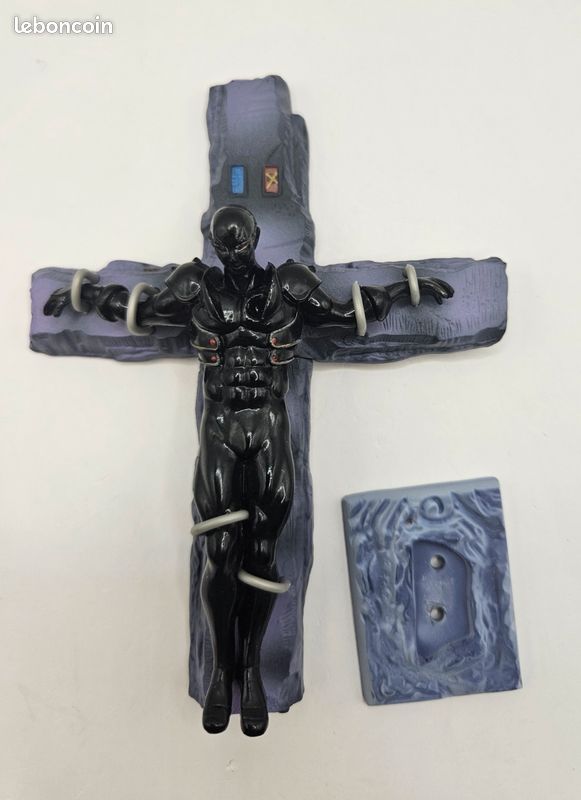
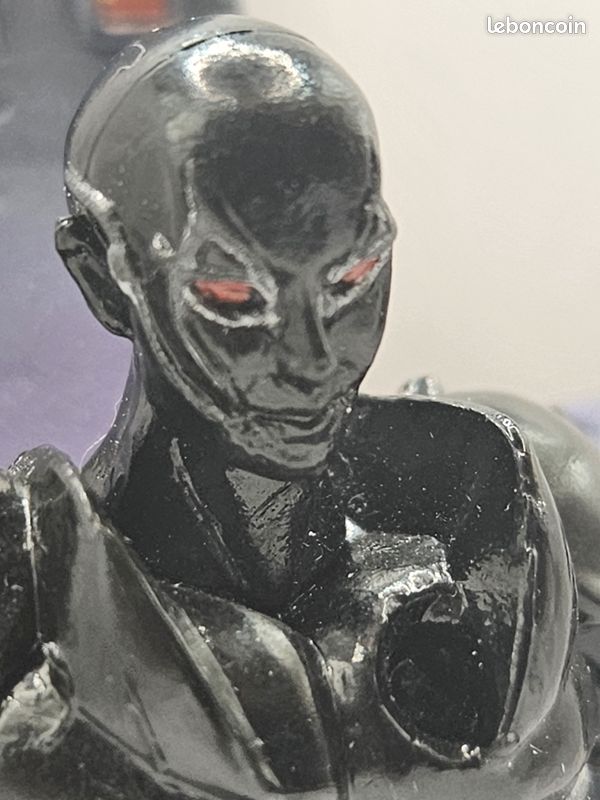
Space Adventure Cobra, Blacksword Zero
https://img.leboncoin.fr/api/v1/lbcpb1/ ... e=ad-large
https://www.infoans.org/en/sections/mes ... ctor-major
https://m.media-amazon.com/images/M/MV5 ... 5._V1_.jpg
https://img.leboncoin.fr/api/v1/lbcpb1/ ... e=ad-large
https://cdn11.bigcommerce.com/s-lyvo1qt ... mbypass=on
https://cdn11.bigcommerce.com/s-lyvo1qt ... mbypass=on
https://www.huntington.org/collections/lib-18807
https://www.texaspoetryassignment.org/p ... man-always
https://en.wikipedia.org/wiki/Bogeyman
"
Other examples include the Buhmann (who is mostly proverbial) and der schwarze Mann ("The Black Man"),[14]
"
https://en.wikipedia.org/wiki/British_bulldog_(game)
"
The playground is divided into three fields: two small opposite goals and one long middle field required for the chasing process. The distance between the goals can be increased according to the ability and the number of players. The players choose their goals, one of which the Black Man takes (Field A), while all the other players line up on the opposite goal (Field B).[60] The Black Man calls out: "Who is afraid of the Black Man?", whereupon the other players yell: "No one!" and start for the opposite goal without being caught by the Black Man, who simultaneously leaves his goal to chase the players. With three slaps on the shoulder or back, and the call "One, two, three!",[41] the Black Man must try to catch as many of the players as possible while on their way to the opposite goal. Every player tagged joins the Black Man and helps him tag the others. The Black Man and his helpers may join hands to catch the remaining players (a rule repeatedly described as Bound Hands[61]). Anyone who runs beyond the boundaries of the playing field to evade the approaching Black Man is considered caught.[41] The game continues until all have been caught. The last (sometimes the first) one caught becomes the Black Man in the new game.[41][62] Alternatively, if the last remaining player runs through three rounds undefeated, he is allowed to choose a player to be Black Man for the next game.[63]
Only the Black Man asks the questions. The advanced dialogues are:
Variant 1 Variant 2
Question: "Who is afraid of the Black Man?[64]"
Answer: "No one!"
Question: "What will you do when the Black Man comes?"
Answer: "Run through like we ought to do![60]"
Question: "Are you afraid of the Black Man?[65]"
Answer: "No! (Not of you!)"
Question: "What will you do when the Black Man comes?"
Answer: "Rush through like we always do![54]"
Due to the risk of significant injuries (e. g. if the children crowd too close to one another, accidents occur as they turn and run), Black Man was originally intended to be played by boys only. In the late 19th century the game also became a part of the physical education of girls in public schools,[67][68] although it became more and more highly controversial.
"At the beginning of the school the only outdoor game that the children played was "black man," a game that stimulated vulgarity, called out roughness and brutality, and allowed too much mauling of one another."
— Evelyn Dewey, New York City, April 1919.[69]
Comparable games and derivatives from the 19th century were Black Tom, Blackthorn, Pom-Pom-Pull-Away, Rushing Bases (also known as King Cæsar) and Hill Dill, mostly with different dialogues and with the catcher placed in the middle of the field.
"
https://villains.fandom.com/wiki/Black_Phillip
https://www.hollywoodreporter.com/news/ ... nd-871974/
https://en.wikipedia.org/wiki/The_Screwfly_Solution
"
The story begins with an exchange of letters and news clippings between Alan, a scientist working on parasite eradication by releasing sterile insects in Colombia, and his wife, Anne Alstein, at home in the U.S., concerning an epidemic of organized murder of women by men.
The murderers feel that their killings are driven by natural instincts and have constructed elaborate, misogynistic rationalizations for their acts. For example, a new religious movement, the Sons of Adam, is spreading along with the murders. The Sons of Adam believe that women are evil, that the Garden of Eden was a paradise before women were created, that God is telling them to get rid of all of the women, and that once women are eliminated, God will either make everyone live forever or reveal a better way to reproduce (the movement is unclear about what exactly would happen). When the religion initially arises, prior to the organized murders, little is done to stop the ideology's spread, nor is the movement's actions of evicting women from the areas the men control prevented.
Initially, some women fight back, such as three women who steal an Air Force plane and bomb Dallas, but organized resistance fails to materialize. There is extensive censoring of the news, as the government believes that it is a case of mass psychological hysteria that can be snuffed out by suppressing the news. However, a minority of scientists figure out the truth: Some kind of infectious agent is spreading in the atmosphere, turning human male sexual impulses into violent ones.
Alan, a sensitive, kindly man, realizes that he is succumbing to the infection and tries to resist the impulses and isolate himself from women. While he does this, his wife and teenage daughter argue: the daughter, faithful to her father, refuses to believe her mother's warnings about him. She sneaks off to visit her father, and he murders her, then kills himself in horror over his actions.
Anne flees north, to Canada, since the disease had begun in the tropical zones and is spreading toward temperate zones. In the end, Anne, pursued by an entire society bent on femicide, discovers the source and motivation behind the plague: an alien species is intentionally causing the human race to destroy itself so that the aliens can have Earth for themselves.
"The Screwfly Solution" explores the link between sex and death. Sarah LeFanu wrote that Tiptree associates the male sexual drive with violence. Veronica Hollinger wrote that "The Screwfly Solution" demonstrates "Tiptree's determination to follow the implications of gender difference to their grimly logical conclusions".[2]
Lewis Call points out that the story establishes the link between sex and violence as a characteristic of the species, not of a single sex. Call also draws attention to the fact the women and girls were not the only victims in the story; young boys and other men were also killed. He concludes: "But heterosexuality is not the problem in 'Screwfly'. The problem is power; more specifically, it is the basic, fundamental connection between violence and the erotic that is to be found in every sexual relationship, whether the relationship in question is heterosexual, homosexual, or transhuman." Call speculates that proposing the idea that sex and violence are linked for everyone had to be written by Raccoona because it would not have been accepted coming from the male persona of Tiptree.[2]
Analyzing Tiptree's writings in the context of postcolonialism versus sociobiology, David Galef compares the aliens' interference with human biological drives in "The Screwfly Solution" to the Army giving Indians blankets that had been exposed to smallpox.[3]
"
https://en.wikipedia.org/w/index.php?ti ... prov=rarw1
https://en.wikipedia.org/wiki/Up_the_Walls_of_the_World
"
At Syfy.com, A. M. Dellamonica praised the story's "upbeat tone (and) lack of cynicism", with "rock-solid characterization", "a pleasingly chewy ethical complexity", an "indisputably rich" setting, and the "bright optimism of Golden Age SF", with the Tyree being "one of SF's most convincing alien races."[1] In the Guardian, Gwyneth Jones likewise commended the Tyree as "the most convincing non-humanoid aliens I've ever met" and overall found the novel to be "joyous and positively starry-eyed SF, with great characters".[2]
James Nicoll considered it "atypical" and "oddly un-Tiptreeian", noting his own "increasing amazement" that, despite the characters being "people doing terrible things for what seem to them sufficient reasons", they nonetheless "manage to fumble towards (...) a happy ending;" ultimately, he emphasized, although he felt that the book "suffers in comparison to Tiptree's short [stories]", it is nonetheless a "competent novel".[3]
Writing in the SF Encyclopedia, John Clute called it a "tour de force" and an "extraordinarily full-blown space opera" whose various plot threads "interpenetrate complexly and with considerable narrative impact" but observed that the novel was "apparently written around the time [Tiptree's] health began to break", such that "stresses – particularly a sense that the whole structure was willed into existence – do show".[4]
In Reactor, Bogi Takács analyzed the novel's approach to gender, noting that it is "filled to the brim with gender- and sexuality-related topics, in non-straightforward ways that in many respects make it fascinating even today... and in some others, have aged the text quite painfully." Takács particularly commended Tiptree for addressing the interaction between gender identity and body swaps "much more sensitively and insightfully than many present-day authors" but could not "unambiguously endorse" the novel, due to its portrayal of racial issues: the character of Margaret Omali is a black woman who was subjected to female genital mutilation during a trip to Kenya when she was 13, which "is portrayed crudely, becomes the explanation and focus for her entire personality, and also turns upside down all the aspects of Margaret's character that could have been considered subversive".[5]
"
Dead.
It may sometimes seem like all the things I post together are unrelated but they are meant to be tied together as part of the themes collected in a thread.
"
In his video, Saunders’ father reflected on his son’s difficult life and his complicated relationship with his online presence. “I got on today to delete all of his social media… because ‘f*** you’ is how I’m feeling,” he admitted. “But I realized that would not be fair to his fans, and it’s certainly nothing he would want. As you all know, Josh was harassed and bullied terribly his whole life. From the time he was 3, it was just nonstop. It was like he had a neon sign that said ‘Please pick on me.’”
On his channel, Saunders described himself simply: “My artist name is King Cobra. I play and compose my own music, am [a] fan of Metal and Rock and a little bit of grunge and punk and some Alternative… I am also a firm believer in the Paranormal such as ghosts and poltergeists and things that go bump in the night.”
"
https://www.bollywoodshaadis.com/articl ... x-gf-67410
Incabulos
Moderator: atreestump
Forum rules
No Abusive Behavior. No Spam. No Porn. No Gore. It's that simple.
No Abusive Behavior. No Spam. No Porn. No Gore. It's that simple.