Thank You! I'll check those out on the main site, just in case it helps, here is how links from there appear here on the forum site currently:
https://i.postimg.cc/9f9NjwQ1/1000144355.png
History is Imaginary
Moderator: atreestump
Forum rules
No Abusive Behavior. No Spam. No Porn. No Gore. It's that simple.
No Abusive Behavior. No Spam. No Porn. No Gore. It's that simple.

-
atreestump

- Posts: 924
- Joined: Sun Jun 15, 2025 3:53 pm
History is Imaginary
Yeah attachments uploaded on Atrium are only accessible in Atrium.
-
atreestump
- Posts: 924
- Joined: Sun Jun 15, 2025 3:53 pm
History is Imaginary
[quote]kFoyauextlH wrote:
https://www.facebook.com/groups/parasolprotectorate/posts/7270956916250674/[/quote]
I think that demonstrates a [i]lack[/i] of imagination!
https://www.facebook.com/groups/parasolprotectorate/posts/7270956916250674/[/quote]
I think that demonstrates a [i]lack[/i] of imagination!
-
kFoyauextlH

- Posts: 1983
- Joined: Sun Jun 15, 2025 3:53 pm
Re: History is Imaginary
There aren't too many books on the subject of polychromy and accurate reconstruction based on checking for pigment residue, but it might be a relatively new science, still they seem to be moving very slowly on the matter and seem satisfied by the lie of colorless, unpainted, sculptures, as if color is something of our times, like the transition from black and white film to color. Also the colors used for the costumes in black and white film is of interest to me.
I noticed a trend in history to keep suggesting periods that lack much of anything when they don't have records or simply don't want to look at them, creating false dark ages and periods which appear almost post apocalyptic, even though no such sudden changes occurred. Many artists tend to make things as dull as they possibly can, during all phases, and that might really just be for the sake of clear, repeatable designs, but doesn't tell the truth. The falsehood is then transferred to people reading these things and looking at the images, presented as truth, and then defended as if dogma. Peoplle talking about color and all the details are pushed to the fringes and mainly ignored.
https://www.chemistryworld.com/features ... 37.article
I noticed a trend in history to keep suggesting periods that lack much of anything when they don't have records or simply don't want to look at them, creating false dark ages and periods which appear almost post apocalyptic, even though no such sudden changes occurred. Many artists tend to make things as dull as they possibly can, during all phases, and that might really just be for the sake of clear, repeatable designs, but doesn't tell the truth. The falsehood is then transferred to people reading these things and looking at the images, presented as truth, and then defended as if dogma. Peoplle talking about color and all the details are pushed to the fringes and mainly ignored.
https://www.chemistryworld.com/features ... 37.article
-
kFoyauextlH
- Posts: 1983
- Joined: Sun Jun 15, 2025 3:53 pm
Re: History is Imaginary
This sort of thing may be difficult to trace or keep track of:
-
kFoyauextlH
- Posts: 1983
- Joined: Sun Jun 15, 2025 3:53 pm
Re: History is Imaginary
Maybe this is how things really are.
What the game and these videos probably have in common are the human desperation for resources acquired in low effort ways, but in any way at all if necessary, which is the true terror and the dread of death that permeates most life and experienced time.
-
kFoyauextlH
- Posts: 1983
- Joined: Sun Jun 15, 2025 3:53 pm
Re: History is Imaginary
https://c8.alamy.com/comp/2D88DGY/bronz ... D88DGY.jpg
They made up all these statues of ancestors and apparently rub this one's genital area for luck or something.
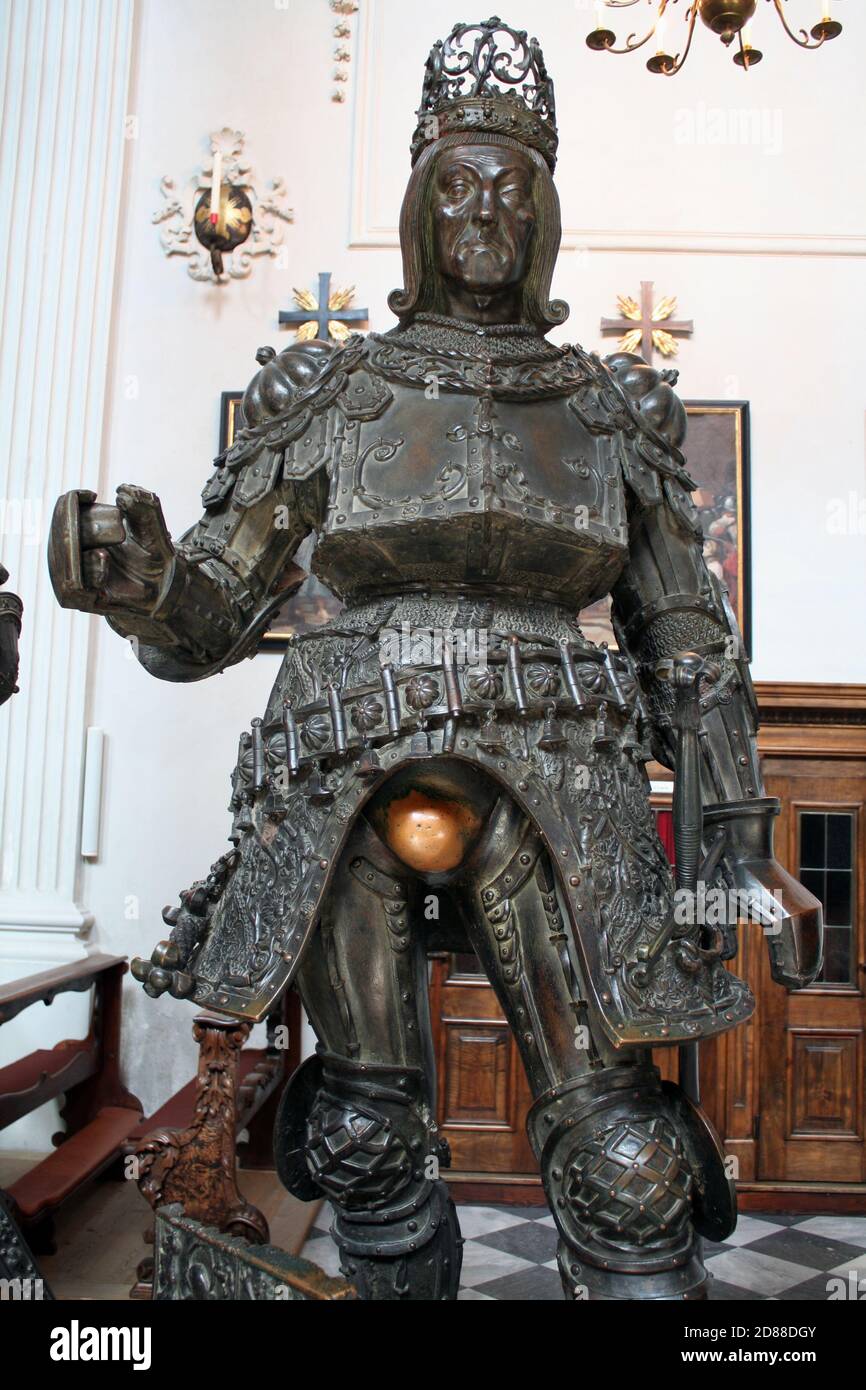
They made up all these statues of ancestors and apparently rub this one's genital area for luck or something.
-
kFoyauextlH
- Posts: 1983
- Joined: Sun Jun 15, 2025 3:53 pm
Re: History is Imaginary
So, I'm going to bend things a little in this thread with dome of my posts, to include the version of "imaginary histories" also, and the nature of "kitsch" and "junk", as well as the newer term "slop".
https://en.wikipedia.org/wiki/Kitsch
"
As a descriptive term, kitsch originated in the art markets of Munich, Germany in the 1860s and the 1870s, describing cheap, popular, and marketable pictures and sketches.[5] In Das Buch vom Kitsch (The Book of Kitsch), published in 1936, Hans Reimann defined it as a professional expression "born in a painter's studio".[page needed]
The study of kitsch was done almost exclusively in Germany until the 1970s, with Walter Benjamin being an important scholar in the field.[6]
Kitsch is regarded as a modern phenomenon, coinciding with social changes in recent centuries such as the Industrial Revolution, urbanization, mass production, modern materials and media such as plastics, radio and television, the rise of the middle class and public education—all of which have factored into a perception of oversaturation of art produced for the popular taste.
Kitsch in art theory and aesthetics
edit
Modernist writer Hermann Broch argues that the essence of kitsch is imitation: kitsch mimics its immediate predecessor with no regard to ethics—it aims to copy the beautiful, not the good.[7] According to Walter Benjamin, kitsch, unlike art, is a utilitarian object lacking all critical distance between object and observer. According to critic Winfried Menninghaus, Benjamin's stance was that kitsch "offers instantaneous emotional gratification without intellectual effort, without the requirement of distance, without sublimation".[6] In a short essay from 1927, Benjamin observed that an artist who engages in kitschy reproductions of things and ideas from a bygone age deserved to be called a "furnished man"[8] (in the way that someone rents a "furnished apartment" where everything is already supplied).
Kitsch is less about the thing observed than about the observer.[9] According to Roger Scruton, "Kitsch is fake art, expressing fake emotions, whose purpose is to deceive the consumer into thinking he feels something deep and serious."[10]
A nautical-themed clock and lamp ornament
Tomáš Kulka, in Kitsch and Art, starts from two basic facts that kitsch "has an undeniable mass-appeal" and "considered (by the art-educated elite) bad", and then proposes three essential conditions:
Kitsch depicts a beautiful or highly emotionally charged subject;
The depicted subject is instantly and effortlessly identifiable;
Kitsch does not substantially enrich our associations related to the depicted subject.[11][12]
Kitsch in Milan Kundera's The Unbearable Lightness of Being
edit
The concept of kitsch is a central motif in Milan Kundera's 1984 novel The Unbearable Lightness of Being. Towards the end of the novel, the book's narrator posits that the act of defecation (and specifically, the shame that surrounds it) poses a metaphysical challenge to the theory of divine creation: "Either/or: either shit is acceptable (in which case don't lock yourself in the bathroom!) or we are created in an unacceptable manner".[13] Thus, in order for us to continue to believe in the essential propriety and rightness of the universe (what the narrator calls "the categorical agreement with being"), we live in a world "in which shit is denied and everyone acts as though it did not exist". For Kundera's narrator, this is the definition of kitsch: an "aesthetic ideal" which "excludes everything from its purview which is essentially unacceptable in human existence".
The novel goes on to relate this definition of kitsch to politics, and specifically—given the novel's setting in Prague around the time of the 1968 invasion by the Soviet Union—to communism and totalitarianism. He gives the example of the Communist May Day ceremony, and of the sight of children running on the grass and the feeling this is supposed to provoke. This emphasis on feeling is fundamental to how kitsch operates:
Kitsch causes two tears to flow in quick succession. The first tear says: How nice to see children running on the grass! The second tear says: How nice to be moved, together with all mankind, by children running on the grass! It is the second tear that makes kitsch kitsch.[14]
According to the narrator, kitsch is "the aesthetic ideal of all politicians and all political parties and movements"; however, where a society is dominated by a single political movement, the result is "totalitarian kitsch":
When I say "totalitarian," what I mean is that everything that infringes on kitsch must be banished for life: every display of individualism (because a deviation from the collective is a spit in the eye of the smiling brotherhood); every doubt (because anyone who starts doubting details will end by doubting life itself); all irony (because in the realm of kitsch everything must be taken quite seriously).[14]
Kundera's concept of "totalitarian kitsch" has since been invoked in the study of the art and culture of regimes such as Stalin's Soviet Union, Nazi Germany, Fascist Italy and Iraq under Saddam Hussein.[15] Kundera's narrator ends up condemning kitsch for its "true function" as an ideological tool under such regimes, calling it "a folding screen set up to curtain off death".[16]
Melancholic kitsch vs. nostalgic kitsch
edit
A souvenir snow globe with an underwater motif
In her 1999 book The Artificial Kingdom: A Treasury of the Kitsch Experience, cultural historian Celeste Olalquiaga develops a theory of kitsch that situates its emergence as a specifically nineteenth-century phenomenon, relating it to the feelings of loss elicited by a world transformed by science and industry.[17] Focusing on examples such as paperweights, aquariums, mermaids and the Crystal Palace, Olalquiaga uses Benjamin's concept of the "dialectical image" to argue for the utopian potential of "melancholic kitsch", which she differentiates from the more commonly discussed "nostalgic kitsch".[18]
These two types of kitsch correspond to two different forms of memory. Nostalgic kitsch functions through "reminiscence", which "sacrifices the intensity of experience for a conscious or fabricated sense of continuity":
Incapable of tolerating the intensity of the moment, reminiscence selects and consolidates an event's acceptable parts into a memory perceived as complete. […] This reconstructed experience is frozen as an emblem of itself, becoming a cultural fossil.[19]
In contrast, melancholic kitsch functions through "remembrance", a form of memory that Olalquiaga links to the "souvenir", which attempts "to repossess the experience of intensity and immediacy through an object".[20] While reminiscence translates a remembered event to the realm of the symbolic ("deprived of immediacy in favour of representational meaning"), remembrance is "the memory of the unconscious", which "sacrific[es] the continuity of time for the intensity of the experience".[21] Far from denying death, melancholic kitsch can only function through a recognition of its multiple "deaths" as a fragmentary remembrance that is subsequently commodified and reproduced. It "glorifies the perishable aspect of events, seeking in their partial and decaying memory the confirmation of its own temporal dislocation".[22]
Thus, for Olalquiaga, melancholic kitsch is able to function as a Benjaminian dialectical image: "an object whose decayed state exposes and reflects its utopian possibilities, a remnant constantly reliving its own death, a ruin".[20]
"
Junk:
"
It was extended to "old refuse from boats and ships" (1660s), then to "old or discarded articles of any kind" (1884), usually with a suggestion of reusability. Meaning "salt meat used on long voyages" is from 1762. Meaning "narcotic drug" is from 1925. Junk food is from 1971; junk art is from 1961; junk mail first attested 1954; junk bond from 1979.
"
https://blog.oup.com/2021/03/trash-and- ... -part-one/
https://en.wikipedia.org/wiki/Scrap
https://en.wikipedia.org/wiki/AI_slop
I am using these in the context of History Is Imaginary, Imaginary Histories, History, Histories Of Items, Pieces Of History or Relics and Shards, Remnants, Imagination From Fragments, Fragments In Reconstructions, Inaccurate Reconstructions, Creativity From Memory, Invention From Misuse, and all dorts of related ideas that I see as very closely tied together and looping through each other.
Part of all that are things that were scrapped and their parts put to other uses, ideas that weren't as good in the firms that they appeared in, changes of history, retconning of fictional histories, imaginary and faux reconstructions of the past, the vague memories that might occur from a combination of all these things while they are memories of constructions in the mind that never had any physical or shared presence, though others may have pieced together similar things in their imaginations, Mandela Effects, the impact of fictional and mythological and polemical histories on popular thinking and products and advertising. For me, the topic is vast, and it is a "place" that I am often in, the historical imaginary and imagining the historical and histories of the imaginary, both the production histories and records and the fictional histories they present, even if left incomplete or abandoned, it is a place that is full of potential, energy, and materials for producing more and more, and has loosened the strictures of canon, dogma, official and finalized forms that end up in many ways properly "dead on arrival" as soon as they are "born" and "consumed" as a proper product, whether an academically approved of standard history or a product related to a fictional history or the official story of a world as part of a franchise, a modern commercialized myth, woth increasingly less apparent value or chewing involved before it is spit out with little extracted, or the most superficial purposes or topical agenda being all anyone senses from it before it is trashed. It is that dumpster of things thrown away that I look to pretty often for better uses of what was rejected, forgotten, and wasted.
I'd also include senses of histories that don't exist from pieces of things repurposed into imaginary objects, such as how the props were produced for the Original Trilogy of Star Wars and seemed to imply a lot of stories and history, even an aging and tarnishing given to the objects to make them look well worn and to imply even more age and time for stories to accumulate around and in relation to the objects.
https://en.wikipedia.org/wiki/Space_debris
https://en.wikipedia.org/wiki/Kessler_syndrome
Junk is increasingly accumulating inside and outside.
https://en.wikipedia.org/wiki/Emergence
https://www.forbes.com/sites/ganeskesar ... e-sorting/
https://en.wikipedia.org/wiki/Wrecking_yard
https://fallout.fandom.com/wiki/Scrapyard
https://fallout.fandom.com/wiki/Timeline#2277
https://fallout.fandom.com/wiki/Capital_Wasteland
https://fallout.fandom.com/wiki/United_ ... _of_Canada
https://jacobin.com/2026/02/fallout-tv- ... apocalypse
They sped up the Fallout Timeline 200 years? 2027 instead of 2277, or maybe that isn't counted like that.
There is also the story of Metal Slug, which seems to predict some of these pretty unexpected things being threatened these days:
https://metalslug.fandom.com/wiki/Timeline
https://en.wikipedia.org/wiki/Kitsch
"
As a descriptive term, kitsch originated in the art markets of Munich, Germany in the 1860s and the 1870s, describing cheap, popular, and marketable pictures and sketches.[5] In Das Buch vom Kitsch (The Book of Kitsch), published in 1936, Hans Reimann defined it as a professional expression "born in a painter's studio".[page needed]
The study of kitsch was done almost exclusively in Germany until the 1970s, with Walter Benjamin being an important scholar in the field.[6]
Kitsch is regarded as a modern phenomenon, coinciding with social changes in recent centuries such as the Industrial Revolution, urbanization, mass production, modern materials and media such as plastics, radio and television, the rise of the middle class and public education—all of which have factored into a perception of oversaturation of art produced for the popular taste.
Kitsch in art theory and aesthetics
edit
Modernist writer Hermann Broch argues that the essence of kitsch is imitation: kitsch mimics its immediate predecessor with no regard to ethics—it aims to copy the beautiful, not the good.[7] According to Walter Benjamin, kitsch, unlike art, is a utilitarian object lacking all critical distance between object and observer. According to critic Winfried Menninghaus, Benjamin's stance was that kitsch "offers instantaneous emotional gratification without intellectual effort, without the requirement of distance, without sublimation".[6] In a short essay from 1927, Benjamin observed that an artist who engages in kitschy reproductions of things and ideas from a bygone age deserved to be called a "furnished man"[8] (in the way that someone rents a "furnished apartment" where everything is already supplied).
Kitsch is less about the thing observed than about the observer.[9] According to Roger Scruton, "Kitsch is fake art, expressing fake emotions, whose purpose is to deceive the consumer into thinking he feels something deep and serious."[10]
A nautical-themed clock and lamp ornament
Tomáš Kulka, in Kitsch and Art, starts from two basic facts that kitsch "has an undeniable mass-appeal" and "considered (by the art-educated elite) bad", and then proposes three essential conditions:
Kitsch depicts a beautiful or highly emotionally charged subject;
The depicted subject is instantly and effortlessly identifiable;
Kitsch does not substantially enrich our associations related to the depicted subject.[11][12]
Kitsch in Milan Kundera's The Unbearable Lightness of Being
edit
The concept of kitsch is a central motif in Milan Kundera's 1984 novel The Unbearable Lightness of Being. Towards the end of the novel, the book's narrator posits that the act of defecation (and specifically, the shame that surrounds it) poses a metaphysical challenge to the theory of divine creation: "Either/or: either shit is acceptable (in which case don't lock yourself in the bathroom!) or we are created in an unacceptable manner".[13] Thus, in order for us to continue to believe in the essential propriety and rightness of the universe (what the narrator calls "the categorical agreement with being"), we live in a world "in which shit is denied and everyone acts as though it did not exist". For Kundera's narrator, this is the definition of kitsch: an "aesthetic ideal" which "excludes everything from its purview which is essentially unacceptable in human existence".
The novel goes on to relate this definition of kitsch to politics, and specifically—given the novel's setting in Prague around the time of the 1968 invasion by the Soviet Union—to communism and totalitarianism. He gives the example of the Communist May Day ceremony, and of the sight of children running on the grass and the feeling this is supposed to provoke. This emphasis on feeling is fundamental to how kitsch operates:
Kitsch causes two tears to flow in quick succession. The first tear says: How nice to see children running on the grass! The second tear says: How nice to be moved, together with all mankind, by children running on the grass! It is the second tear that makes kitsch kitsch.[14]
According to the narrator, kitsch is "the aesthetic ideal of all politicians and all political parties and movements"; however, where a society is dominated by a single political movement, the result is "totalitarian kitsch":
When I say "totalitarian," what I mean is that everything that infringes on kitsch must be banished for life: every display of individualism (because a deviation from the collective is a spit in the eye of the smiling brotherhood); every doubt (because anyone who starts doubting details will end by doubting life itself); all irony (because in the realm of kitsch everything must be taken quite seriously).[14]
Kundera's concept of "totalitarian kitsch" has since been invoked in the study of the art and culture of regimes such as Stalin's Soviet Union, Nazi Germany, Fascist Italy and Iraq under Saddam Hussein.[15] Kundera's narrator ends up condemning kitsch for its "true function" as an ideological tool under such regimes, calling it "a folding screen set up to curtain off death".[16]
Melancholic kitsch vs. nostalgic kitsch
edit
A souvenir snow globe with an underwater motif
In her 1999 book The Artificial Kingdom: A Treasury of the Kitsch Experience, cultural historian Celeste Olalquiaga develops a theory of kitsch that situates its emergence as a specifically nineteenth-century phenomenon, relating it to the feelings of loss elicited by a world transformed by science and industry.[17] Focusing on examples such as paperweights, aquariums, mermaids and the Crystal Palace, Olalquiaga uses Benjamin's concept of the "dialectical image" to argue for the utopian potential of "melancholic kitsch", which she differentiates from the more commonly discussed "nostalgic kitsch".[18]
These two types of kitsch correspond to two different forms of memory. Nostalgic kitsch functions through "reminiscence", which "sacrifices the intensity of experience for a conscious or fabricated sense of continuity":
Incapable of tolerating the intensity of the moment, reminiscence selects and consolidates an event's acceptable parts into a memory perceived as complete. […] This reconstructed experience is frozen as an emblem of itself, becoming a cultural fossil.[19]
In contrast, melancholic kitsch functions through "remembrance", a form of memory that Olalquiaga links to the "souvenir", which attempts "to repossess the experience of intensity and immediacy through an object".[20] While reminiscence translates a remembered event to the realm of the symbolic ("deprived of immediacy in favour of representational meaning"), remembrance is "the memory of the unconscious", which "sacrific[es] the continuity of time for the intensity of the experience".[21] Far from denying death, melancholic kitsch can only function through a recognition of its multiple "deaths" as a fragmentary remembrance that is subsequently commodified and reproduced. It "glorifies the perishable aspect of events, seeking in their partial and decaying memory the confirmation of its own temporal dislocation".[22]
Thus, for Olalquiaga, melancholic kitsch is able to function as a Benjaminian dialectical image: "an object whose decayed state exposes and reflects its utopian possibilities, a remnant constantly reliving its own death, a ruin".[20]
"
Junk:
"
It was extended to "old refuse from boats and ships" (1660s), then to "old or discarded articles of any kind" (1884), usually with a suggestion of reusability. Meaning "salt meat used on long voyages" is from 1762. Meaning "narcotic drug" is from 1925. Junk food is from 1971; junk art is from 1961; junk mail first attested 1954; junk bond from 1979.
"
https://blog.oup.com/2021/03/trash-and- ... -part-one/
https://en.wikipedia.org/wiki/Scrap
https://en.wikipedia.org/wiki/AI_slop
I am using these in the context of History Is Imaginary, Imaginary Histories, History, Histories Of Items, Pieces Of History or Relics and Shards, Remnants, Imagination From Fragments, Fragments In Reconstructions, Inaccurate Reconstructions, Creativity From Memory, Invention From Misuse, and all dorts of related ideas that I see as very closely tied together and looping through each other.
Part of all that are things that were scrapped and their parts put to other uses, ideas that weren't as good in the firms that they appeared in, changes of history, retconning of fictional histories, imaginary and faux reconstructions of the past, the vague memories that might occur from a combination of all these things while they are memories of constructions in the mind that never had any physical or shared presence, though others may have pieced together similar things in their imaginations, Mandela Effects, the impact of fictional and mythological and polemical histories on popular thinking and products and advertising. For me, the topic is vast, and it is a "place" that I am often in, the historical imaginary and imagining the historical and histories of the imaginary, both the production histories and records and the fictional histories they present, even if left incomplete or abandoned, it is a place that is full of potential, energy, and materials for producing more and more, and has loosened the strictures of canon, dogma, official and finalized forms that end up in many ways properly "dead on arrival" as soon as they are "born" and "consumed" as a proper product, whether an academically approved of standard history or a product related to a fictional history or the official story of a world as part of a franchise, a modern commercialized myth, woth increasingly less apparent value or chewing involved before it is spit out with little extracted, or the most superficial purposes or topical agenda being all anyone senses from it before it is trashed. It is that dumpster of things thrown away that I look to pretty often for better uses of what was rejected, forgotten, and wasted.
I'd also include senses of histories that don't exist from pieces of things repurposed into imaginary objects, such as how the props were produced for the Original Trilogy of Star Wars and seemed to imply a lot of stories and history, even an aging and tarnishing given to the objects to make them look well worn and to imply even more age and time for stories to accumulate around and in relation to the objects.
https://en.wikipedia.org/wiki/Space_debris
https://en.wikipedia.org/wiki/Kessler_syndrome
Junk is increasingly accumulating inside and outside.
https://en.wikipedia.org/wiki/Emergence
https://www.forbes.com/sites/ganeskesar ... e-sorting/
https://en.wikipedia.org/wiki/Wrecking_yard
https://fallout.fandom.com/wiki/Scrapyard
https://fallout.fandom.com/wiki/Timeline#2277
https://fallout.fandom.com/wiki/Capital_Wasteland
https://fallout.fandom.com/wiki/United_ ... _of_Canada
https://jacobin.com/2026/02/fallout-tv- ... apocalypse
They sped up the Fallout Timeline 200 years? 2027 instead of 2277, or maybe that isn't counted like that.
There is also the story of Metal Slug, which seems to predict some of these pretty unexpected things being threatened these days:
https://metalslug.fandom.com/wiki/Timeline