http://www.naplesldm.com/strega.php
https://www.paoloportone.it/flyer/benevento.htm
"
Torna all'indice
Benevento, Walnut Tree of
Provincial capital of Campania, ancient Lombard principality, and part of the Papal States until 1860, Benevento is still legendary as a land of witches, who met under the walnut tree. For centuries it has been regarded as the principal location of Italian witches’ Sabbats, similar to Blocksberg (or Brocken) in Germany, Blåkulla in Sweden, and Mount St. Gellért in Hungary. Judicial records, demonological literature, and popular fables suggested Valtelline (Valtellina; Veltlin), Emilia, Val d’Adige, and Val Camonica as additional meeting places for Italian witches. No other place, however, could compete in notoriety with Benevento, the fame of which extended far enough to come to the attention of the celebrated demonologist Martín Del Rio, who wrote of the noce di Benevento (Walnut Tree of Benevento) in his Disquisitiones Magicae libri sex (Six Books on Investigations into Magic, on 1599/1600) (Cocchiara 1980, 193). Echoes of the diabolical legend are found in the works of numerous late medieval and early modern Italian authors such as Agnolo Firenzuola, Giambattista Basile, Tommaso Garzoni, Francesco Redi, Ippolito Neri, Lorenzo Lippi, Gerolamo Tartarotti, Ludovico Antonio Muratori, and Gioacchino Belli, and in comedies by playwrights such as Pietro Aretino, Anton Francesco Grazzini, and Nicolò Piperno, who wrote and produced the play La noce Maga di Benevento Estirpata da San Barbato (The Magical Walnut Tree of Benevento uprooted by St. Barbato) in 1665.
Among the most interesting descriptions of the Sabbat was a nineteenth-century poem, published in Naples, entitled Storia della Famosa Noce di Benevento (History of the Famous Walnut Tree of Benevento). This work definitively established the central nucleus of the diabolical legend of Benevento: a “large snake” twisting around a walnut tree of “immense size,” “in the shadows of its leaves, the witches’ Sabbats take place, with the participation of a great number of witches, wizards, and devils from hell,” dedicated to “far del male” (practice evil), and “unapproachable by the profane, bound by Satan” (Cocchiara 1980, 188). Among the principal elements of the legend, the walnut tree (Juglans regia) represents a constant of Italian Sabbats. Numerous medieval testimonials from both learned and popular sources documented the tree’s evil reputation. Medieval tradition derived its assumed toxicity from the etymology of its name, supposedly taken from the Latin verb nocere (to harm). Popular tales contributed to spread its sinister reputation, such as the account of the poor Umbrian who awakened paralyzed after napping under a walnut tree and was then miraculously healed by Saint Francis. In particular, the tree was said to have the power to infect the brain of any person who might carelessly fall asleep under its damp shade. In his Quaestio de Strigis (An Investigation of Witches, ca. 1470), Giordano da Bergamo claimed that under the shadow of the walnut tree by the “virtue of the Devil the witch’s humors can become mixed-up and her fantasy can create illusory images,” because “being so damp,” the tree is “well-suited to our brain, which is very damp” (Abbiati, Agnoletto, and Lazzati 1984, 82–83).
A sacred tree (not a walnut tree) worshipped by the Lombards of Benevento was mentioned in a work written after the ninth century, the Vita Barbati Episcopi Beneventani (The Life of Barbato, Bishop of Benevento). Bishop Barbato uprooted the tree after obtaining a promise from Lombard duke Romualdo to renounce the pagan cult in exchange for victory over the Byzantine army that besieged Benevento in 663. The pagan rite consisted of a competition testing the abilities of knights, who were required to gallop toward the sacred tree, grab a small part of a snake’s skin hanging from it, and then “superstitiously” eat the skin. In the next few centuries, the myth of the evil tree was grafted onto the traditions of this tree-worshiping cult according to a typical pattern in which Christians associated preexisting religious traditions with the Devil. However, not all scholars agree that the legend of the walnut tree is tied exclusively to a distorted version of this Lombard rite. Other indications suggest multiple sources for the legend; for example, the cult of the snake, an intercultural element spread throughout other areas of Europe, or the cult of Isis, a goddess particularly venerated in Benevento, where a magnificent temple was erected to her under the Roman emperor Domitian. An urn of the cult of Isis with a lid adorned with images of the sacred serpent, discovered in 1903, convinced some scholars that the Beneventans worshipped snakes through the cult of Isis, and that this tradition was bequeathed to the pagan Lombards.
Among the first to discuss the Beneventan Sabbats was Mariano Sozzini in a letter of 1420 to the humanist Antonio Tridentone. Also in the 1420s, St. Bernardino of Siena spoke in his sermons of the witches’ assemblies in Benevento, but without mentioning a walnut tree. In the 1428 trial of Umbrian healer Matteuccia da Todi, which was connected to St. Bernardino’s sermons, we find the first description of the Sabbat under the noce di Benevento, preceded by the nocturnal flying brought about by anointing with a magic salve and by the recitation of a spell that, with slight regional variations, recurred frequently in other late medieval and early modern trials and is found in the popular saying, “Salve, salve / Send me to the noce di Benevento / Over the water and over to the wind / And over all bad weather” (Mammoli 1969, 31). From this point forward, in the minds of inquisitors and demonologists and of their victims, the legend of Benevento as a diabolical place was consolidated, combining elements from the mythical Lombard sacra arbor (sacred tree) and the sacred snake of the cult of Isis. In demonological literature, the work of distinguished papal theologian Silvestro Prierias concerning the noce di Benevento is particular noteworthy (Abbiati, Agnoletto, and Lazzati 1984, 226). Echoes of the Campanian Sabbat can also be found in the Tractatus de haereticis et sortilegiis (Treatise on Heretics and Sorcerers), written around 1524 by Paolo Grillando, which referred to the Sabbat under the “extremely cold noce di Benevento” (Grillando 1592, 111–112).
However, the definitive systematization of this legend came from Pietro Piperno, author of De Nuce Maga Beneventana (On the Magical Walnut Tree of Benevento, 1634), subsequently translated into Italian as Della Superstiziosa Noce di Benevento (On the Superstitious Walnut Tree of Benevento, 1640). In this tract, a true and proper demonological work, the Beneventan medical examiner not only identified the sacred tree venerated by the Lombards with the evil walnut tree, but also tried to demonstrate that its Sabbats were a product of diabolical knowledge that could make it appear illusively at any moment (Piperno 1640, 96). Piperno claims that witches did not gather under the diabolical tree in their dreams, but in corpore (physically), and thereby advises secular and religious authorities to guard more attentively against such gatherings. Requests for greater penalties against superstitious acts did not result in local witch hunts, except for a series of perhaps as many as 200 trials, mentioned in later sources, that were dispersed in 1860, and an event in which three women were reportedly handed over to secular authorities in 1506 (Di Gesaro 1988, 385).
Paolo Portone; Translated by Shannon Veneble
See also:
bernardino of siena; blåkulla; drama, italian; grillando, paolo; italy; piperno, pietro; prierias, silvestro; sabbat; todi, witch of.
References and further reading:
Abbiati Sergio, Attilio Agnoletto, and Maria Rosario Lazzati. 1984. La stregoneria. Milan: Mondadori.
Bonomo Giuseppe. 1971. Caccia alle streghe. La credenza nelle streghe dal secolo XIII al XIX con particolare riferimento all’Italia. Palermo: Palumbo.
Cocchiara Giuseppe. 1980. Il paese di Cuccagna. Turin: Boringhieri.
De Blasio, Abele. 1900. Inciarmatori, maghi e streghe di Benevento. Naples: Pierro. Reprint, 1976. Bologna: Forni.
Di Gesaro Pinuccia. 1988. Streghe.L’ossessione del diavolo. Il repertorio dei malefizi. La repressione. Bolzano: Praxis.
Grillando Paolo. 1592. Tractatus duo: unus De sortilegiis d. Pauli Grillandi Castellionis, iureconsulti florentinii excellentissimi . . .alter De Lamiis. Francoforti ad Moenum: Martinum Lechlerum.
Mammoli Domenico. 1969. Processo alla strega Matteuccia di Francesco 20 marzo 1428. Todi: Res Tudertinae.
Montesano Marina. 1996. Streghe. Florence: Giunti.
Piperno Pietro. 1640. Della superstitiosa noce di Benevento. Naples: Giacomo Gaffaro.
Portone Paolo. 1990. Il noce di Benevento. Milan: Xenia.
Summers Montague. 1929. The History of Witchcraft and Demonology. London: Mystic.
"
Added in 1 hour 4 minutes 41 seconds:
https://italiangems.wordpress.com/2014/ ... s-witches/
https://en.wikipedia.org/wiki/The_Walnut_Tree
"
The Walnut Tree is one of Aesop's fables and numbered 250 in the Perry Index. It later served as a base for a misogynistic proverb, which encourages the violence against walnut trees, asses and women.
"
"
The Greek fable was later the subject of an epigram by Antipater of Thessalonica:
They planted me, a walnut-tree, by the road-side
to amuse passing boys, as a mark for their well-aimed stones.
All my twigs and flourishing shoots are broken,
hit as I am by showers of pebbles.
It is no advantage for trees to be fruitful; I, indeed,
bore fruit only for my own undoing.[4]
"
"
Inspired by Alciato's emblem,[8] the poem is presented as the nut tree's soliloquy and goes on to make the wider point that the ingratitude of returning evil for generosity is a malaise that infects all social relations.
"
"
The Italian proverb based on this lore was perpetuated in Britain for the next two centuries. George Pettie's translation of the Civil Conversations of Stefano Guazzo (1530–93), a book first published in Italy in 1574, records that he had once come across the proverb 'A woman, an ass and a walnut tree, Bring more fruit, the more beaten they be'. What is now the better known English version appears shortly after in the works of John Taylor,
A woman, a spaniel and a walnut tree,
The more they're beaten the better still they be.
Roger L'Estrange includes Abstemius' story in his Fables of Aesop and Other Eminent Mythologists a century later. His shortened version runs: 'A Good Woman happen'd to pass by, as a Company of Young Fellows were Cudgelling a Wallnut-Tree, and ask'd them what they did that for? This is only by the Way of Discipline, says one of the Lads, for 'tis natural for Asses, Women, and Wallnut-Trees to Mend upon Beating.'[12] L'Estrange's idiomatic comment, 'Spur a Jade a Question, and he'll Kick ye an Answer,' indicates his opinion of the sentiment.
"
"
Whatever may have been people's opinion of how well a woman, ass or dog respond to punishment, the belief that this was beneficial in the case of walnut trees persisted. One encyclopaedia of superstitions reports that in country districts 'it was a common persuasion that whipping a walnut tree tended to increase the produce and improve the quality of the fruit' and that this took place in early spring.[14] Another explanation is that 'the old custom of beating a walnut-tree was carried out firstly to fetch down the fruit and secondly to break the long shoots and so encourage the production of short fruiting spurs.'[15]
"
https://www.mimisbrunnr.info/ksd-tree-grove
https://thedruidsgarden.com/2016/11/06/ ... qualities/
"
Walnut Lore: Beating and Ingratitude (Greek, Roman, European): Let’s now turn to the other side of the world, where we can see stories from the European subcontinent. In fact, walnut features prominently in many tales. There is a long history of discussion of the “beating” of walnut trees to gain their huts—where folks went at walnut trees with sticks showing ingratitude for the nuts that are produced and harming the tree. These fables and references span quite some time. Two Greek Fables, for example, illustrate the plight of the walnut tree; later, Antipater of Thessalonica offered this epigram:
“They planted me, a walnut-tree, by the road-side
to amuse passing boys, as a mark for their well-aimed stones
All my twigs and flourishing shots are broken,
Hit as I am by showers of pebbles.
It is of no advantage for trees to be fruitful; I, indeed
Bore fruit only for my own undoing”
This same principle weaves its way into other early Roman poems as well as Aesop’s fable of the Walnut Tree, where it is treated with no respect. Into the 1500’s, a horrible proverb about how women, dogs, and walnuts all benefited from beating was widely circulated. This proverb continued to propagate the idea of the walnut trees benefiting from beatings with sticks and rods to produce more nuts.
I’m not honestly sure what to make with this. Some trees benefit from regular pruning, but this is the first instance I’ve seen any reference to just beating the tree with sticks. Part of me wants to question, again, the difficult relationship we have between humans and nature. I’ve translated this as “gratitude” below (but I’m open to other interpretations and suggestions!)
The Wise Walnut: Hermit Philosopher. In Georgian Folk Tales by Marjory Waldrop (1894), a wise man who lived in solitude came to a old walnut tree in his garden. He questioned why the walnut tree was so tall, growing for over 100 years, yet never producing bigger fruit, while the melons and pumpkins on the ground were so massive. He thought about it, eventually falling asleep under the walnut tree. A few nuts rain down from the tree, and he marvels in how his head would have been “broken” if not for the small size of the walnut. In this tale, we see the walnut offering wisdom.
Small Beings and Things Hidden in Walnut Shell. In the traditional story of Thumbelina, a woman who wants a tiny daughter visits a witch and gets some magic barley-corn. From this corn sprouts a flower, and within the flower is Thumbelina. The woman gives Thumbelina a beautifully polished walnut shell (my guess is an English walnut) for a cradle. Thumbelina is later whisked away, shell and all, by an ugly toad. Thumbelina’s tale is quite similar to Tom Thumb, who also lives in a walnut shell due to his tiny size. In another tale, called Puddocky, the princes of the kingdom are given a magical mission of finding a small dog that can fit comfortably in a walnut shell, among other tasks, to become the king’s heir. In yet another story, a walnut contains a wasp whose sting is made of a diamond; and the walnut can contain the wasp within.
In another tale, this one from Popular Tales from the Norse by George Webbe Dasnet (1904), we hear the tale of “Boots and his Brothers.” A king in the land has offered his daughter and half his kingdom if the ancient oak (that grows each time it gets taken to the axe) can be felled and a well dug to hold water. As John (Boots) walks in the forest, he finds a magic ax, a magic pick, and a walnut that spills forth water. He takes these things up, plugging the hole in the walnut shell with a bit of moss. He is able to fell the tree, dig the well, and fill it with water from the walnut—thus securing half the kingdom and the princess. In each of these tales, something important or precious is kept safe within the hard shell of the walnut, suggesting some protective qualities.
Overall Magical Themes
Drawing upon all of the above lore and material, I would like to propose the following magical themes and uses for the Walnut tree. These can certainly be added to, over time, but I hope this is a good start for those of us who want to work with walnut.
Walnut as a “container” for many things and as a protector. The stories of Thumbelina, Boots and his Brothers, and Tom Thumb all speak to the magical nature of the walnut to contain or hold those small things which may otherwise get lost. Now, these stories talk about English walnuts, but there is a long tradition of hiding things or keeping them safe within a walnut. This speaks to some protective quality that walnuts have. One of the ways we might see this is using a visualization of walnut surrounding us to protect us. I can also see us using a whole walnut as a protective object to carry.
Walnut as an expeller. Just as walnut has its protective “within” quality, it also has a very strong “expelling” quality without. Walnut, through its very nature of producing juglone, expels things away. Walnut’s same medicinal qualities expel parasites from the body. We see this same expelling quality in the lore and magical lore of walnut. Given all of these parallels, it is reasonable to connect these to the spirit world: I would certainly want walnut as an ally on my side when there were things I wanted to be rid of, especially spirit activity. I’m sure there are many ways you can use walnut for this–what comes to mind most immediately is planting walnuts around a property, or taking a bit of walnut tincture to work to remove something unwanted (like sadness, depression, etc).
Walnut and gratitude. The long history of people “beating” walnuts to make them grow better and the problem of over-harvesting the walnut teaches us an important lesson in gratitude. We humans are so quick to take without consideration: the walnut reminds us of the important lesson of honoring the earth, harvesting that which is offered but doing so in kindness, respect, and care for the living earth.
"
https://en.wikipedia.org/wiki/Sacred_tr ... _mythology
https://www.worldanvil.com/w/greyhawk-m ... ut-article
https://amycampion.com/the-myth-of-the- ... lnut-tree/
https://en.wikipedia.org/wiki/Juglone
"
The allelopathic effects of walnut trees on other plants were observed as far back as the 1st century CE.[2] Juglone itself was first isolated from black walnut in 1856, and was identified as the compound responsible for its allelopathic effects in 1881.[2]
In 1921, a study observed that tomato plants near black walnut trees exhibited wilted leaves, suggesting an adverse interaction.[3] In 1926, instances of apple tree damage caused by both Juglans nigra and Juglans cinerea (butternut) trees were reported in northern Virginia.[4] Certain apple tree varieties displayed varying levels of resistance to walnut toxicity.
In 1926, it was observed that walnut trees in alfalfa fields resulted in crop death, while grass remained unaffected.[5] Subsequent experiments indicated that the toxic compound within walnut trees exhibited limited solubility in water, implying that the compound underwent chemical changes upon leaving the tree. It was only in 1928 that the phytotoxic nature of the compound was identified for other plant species.[6]
The scientific community faced controversy when the harmful effects of walnut trees on certain crops and trees were initially reported, following claims that the trees damaging apple trees in northern Virginia were not walnut trees at all.[7]
In 1942 it was demonstrated that tomato and alfalfa germination and seedling growth were inhibited by contact with pieces of walnut roots, providing additional scientific evidence of juglone's phytotoxicity.[8]
Juglone was used medicinally in America during the early 1900s, prescribed for the treatment of various skin diseases.[9]
"
"
Some plants and trees are resistant to juglone including some species of maple (Acer), birch (Betula), and beech (Fagus).[citation needed]
It is highly toxic to many insect herbivores. However, some of them, example Actias luna (Luna moth), can detoxify juglone (and related naphthoquinones) to non-toxic 1,4,5-trihydroxynaphthalene. It has also shown anthelmintic (expelling parasitic worms) activity on mature and immature Hymenolepis nana in mice.[23] Naphthoquinonic compounds also exhibit antimicrobial activity.[24][25][26]
"
"
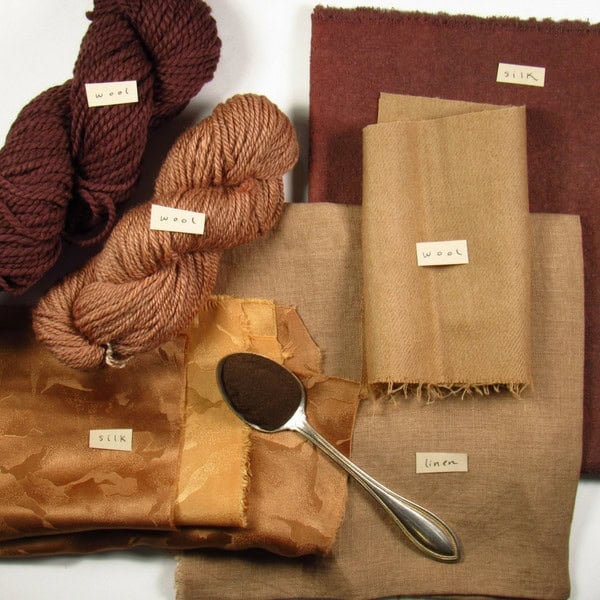
Juglone is occasionally used as an herbicide. Traditionally, juglone has been used as a natural dye for clothing and fabrics, particularly wool, and as ink. Because of its tendency to create dark orange-brown stains, juglone has also found use as a coloring agent for foods and cosmetics, such as hair dyes.
"
"
It is an isomer of lawsone, which is the active dye compound in the henna leaf.
"
https://en.wikipedia.org/wiki/Henna
https://thefoxandtheknight.com/walnut-tree-dyeing/
https://www.medievalists.net/2011/05/dy ... nut-husks/
https://botanicalcolors.com/wp-content/ ... Square.jpg
https://blog.ellistextiles.com/2016/09/ ... ut-season/
"
Medieval people used walnut hulls (the green outer part) and bark to dye hair brown
, often simmering them with other ingredients like alum, oak apples, or even urine to achieve various shades, from light to dark brown or even black, a practice used since Roman times for fabric and hair, providing a natural, long-lasting color.
"
https://www.thehistoricaldyer.com/about_dyes.php
https://persephones.home.blog/2019/02/0 ... r-removal/
https://www.medieval.eu/medieval-hair-colours/
https://paganheim.com/blogs/culture-rel ... InMuOk1CYX
https://www.daimonas.com/pages/snake-worship.html
https://www.studylight.org/encyclopedia ... rship.html
https://en.wikipedia.org/wiki/Draco_(constellation)
"
Thuban (α Draconis) was the northern pole star from 3942 BC, when it moved farther north than Theta Boötis, until 1793 BC. The Egyptian Pyramids were designed to have one side facing north, with an entrance passage geometrically aligned so that Thuban would be visible at night.[3] Due to the effects of precession, it will again be the pole star around the year AD 21000. It is a blue-white giant star of magnitude 3.7, 309 light-years from Earth. The traditional name of Alpha Draconis, Thuban, means "head of the serpent".[2]
"
https://thecomradegeneral.wordpress.com ... innili.jpg
"
The Golden Fleece serpent, known as the Drakôn Kolkhikos, was the fierce, sleepless dragon guarding the magical Golden Fleece in the sacred grove of Ares in Colchis, central to the Greek myth of Jason and the Argonauts. This immense creature, a child of Typhon and Echidna, had a crest and multiple tongues, but was eventually subdued by Medea's magic or Orpheus's lyre, allowing Jason to seize the Fleece, a symbol of kingship and authority.
"
https://www.theoi.com/Ther/DrakonKholkikos.html
"
THE DRAKON KHOLKIKOS (Colchian Dragon) was a giant, watchful serpent which guarded the Golden Fleece in the sacred grove of Ares in Kolkhis (Colchis).
"
"
The monster's teeth were harvested by King Aeetes for their magical properties. He commanded Jason sow them in a sacred field of Ares with a plough drawn by fire-breathing bulls. When they were seeded a tribe of warlike men (Spartoi) sprang up full-grown from the earth. The teeth of the closely related Ismenian Drakon of Thebes, sown by Kadmos (Cadmus), produced a similar crop of men.
"
"
Draco was identified with several different dragons in Greek mythology. Gaius Julius Hyginus in De Astronomica reports that it was one of the Gigantes, who battled the Olympian gods for ten years in the Gigantomachy, before the goddess Athena killed it and tossed it into the sky upon his defeat. As Athena threw the dragon, it became twisted on itself and froze at the cold north celestial pole before it could right itself.[12][13] Aelius Aristides names him Aster or Asterius ('star' or 'starry') and says that Athens' Great Panathenaea festival celebrated Athena's victory over him.[14][15] The festival coincided with the culmination of the constellation's head as seen from the Athenian Acropolis.[15]
"
https://en.wikipedia.org/wiki/Asterius_(giant)
"
Asterius's name translates to 'starry',[1] and thus 'glitterer, bright'.[2] His name is also spelled Aster (Ancient Greek: Ἀστήρ, romanized: Astḗr, lit. 'star'),[3] and another number of ways (see below). All variants derive from the word ἀστήρ, meaning 'star',[4] which is itself inherited from the Proto-Indo-European root *h₂ster- (“star”), from *h₂eh₁s-, "to burn".[5] Asterius' name thus shares an etymology with the names of Astraeus, Astraea, and Asteria.
"
"
A Giant opponent of Athena is depicted on the Siphnian Treasury, a sixth century BC marble depiction of the Gigantomachy from Delphi, labelled 'Astarias'.[6] Astarias lies dead on the ground near a male figure that has been identified as either Ares or Achilles, as Athena goes on to fight another Giant named Erictypus.[7]
In the epic poem Meropis, the Giant, here spelled as Asterus, is presented as an invulnerable warrior from the Aegean island of Kos, who battles Heracles during his fight against the Meropes, the Koan race of Giants;[3] Athena intervenes to save Heracles from demise and kills Asterus by flaying him.[8][9][10] This is paralleled in Apollodorus's account, who wrote that during the fight against the Giants, Athena flayed and killed Pallas, and then used his skin for her aegis.[11] Euripides, in his play Ion also mentions a Giant that Athena flayed during the Gigantomachy and then proceeded to wear his hide, but he names him Gorgon.[12]
Pausanias also tells of Asterius, a son of Anax who was the son of Earth (the goddess Gaia), buried on the island of Asterius, near the Island of Lade, off the coast of Miletus, having bones ten cubits in length.[13][14]
"
https://en.wikipedia.org/wiki/Gorgons
"
Asterius's killing by Athena was celebrated by the Athenians during the Panathenaea, a festival in honour of Athena;[15][16][17] the Athenians claimed that the early inhabitants had set the festival up following the death of Asterius.[2] The victory of the gods over the Giants was woven on the robe of the Panathenaea, perhaps with special emphasis on Athena's killing of Asterius, or maybe Enceladus.[18]
"
https://en.wikipedia.org/wiki/Enceladus_(Giant)
https://en.wikipedia.org/wiki/Aristaeus_(giant)
https://en.wikipedia.org/wiki/Panathenaea
https://en.wikipedia.org/wiki/Picolous
"
Moly, the plant that sprang from Picolous's death, moly, has been linked to the Prometheion, the special plant that Circe's niece Medea used for her potion, which has a similar origin story as both were said to have grown from blood, that of Picolous and Prometheus respectively, as well as the Κιρκαῖον, "Circe's plant", another magical herb connected to Circe.[11][12]
As for real-world plant identifications, the flower that grew from Picolous's blood has been suggested to be the snowdrop, a white flower that counteracts amnesia, hallucinations, and delusions, which are hypothesized to be the real physics behind Circe's magic.[13]
"
https://www.proantic.com/en/1123392-19t ... ronze.html
https://www.1stdibs.com/furniture/dinin ... _24512842/
https://en.wikipedia.org/wiki/Porphyrion
https://en.wikipedia.org/wiki/Vanir
"
In the Poetic Edda, the Vanir, as a group, are specifically referenced in the poems Völuspá, Vafþrúðnismál, Skírnismál, Þrymskviða, Alvíssmál, and Sigrdrífumál. In Völuspá, a stanza describes the events of the Æsir–Vanir War, noting that during the war the Vanir broke the walls of the stronghold of the Æsir, and that the Vanir were "indomitable, trampling the plain".[3]
In Vafþrúðnismál, Gagnráðr (the god Odin in disguise) engages in a game of wits with the jötunn Vafþrúðnir. Gagnráðr asks Vafþrúðnir where the Van god Njörðr came from, for though he rules over many hofs and hörgrs, Njörðr was not raised among the Æsir. Vafþrúðnir responds that Njörðr was created in Vanaheimr ("home of the Vanir") by "wise powers" and details that during the Æsir–Vanir War, Njörðr was exchanged as a hostage. In addition, when the world ends (Ragnarök), Njörðr "will return to the wise Vanir".[4]
Alvíssmál consists of question and answer exchanges between the dwarf Alvíss and the god Thor. In the poem, Alvíss supplies terms that various groups, including the Vanir, use to refer to various subjects. Alvíss attributes nine terms to the Vanir; one for Earth ("The Ways"), Heaven ("The Weaver of Winds"), clouds ("Kites of the Wind"), calm ("The Hush of the Winds"), the sea ("The Wave"), fire ("Wildfire"), wood ("The Wand"), seed ("growth"), and ale ("The Foaming").[5]
The poem Þrymskviða states that the god Heimdallr possesses foreknowledge, "as the Vanir also can".[6] Sigrdrífumál records that the Vanir are in possession of a "sacred mead". In the poem, the valkyrie Sigrdrífa provides mystical lore about runes to the hero Sigurd. Sigrdrífa notes that runes were once carved on to various creatures, deities, and other figures, and then shaved off and mixed with a "sacred mead". This mead is possessed by the Æsir, the elves, mankind, and the Vanir.[7]
In Skírnismál, the beautiful jötunn Gerðr first encounters the god Freyr's messenger Skírnir, and asks him if he is of the elves, of the Æsir, or of the "wise Vanir". Skírnir responds that he is not of any of the three groups.[8] Later in the poem, Skírnir is successful in his threats against Gerðr (to have Gerðr accept Freyr's affections), and Gerðr offers Skírnir a crystal cup full of mead, noting that she never thought that she would love one of the Vanir.[9]
"
"
Richard North theorizes that glossing Latin vanitates ("vanities", "idols") for "gods" in Old English sources implies the existence of *uuani (a reconstructed cognate to Old Norse Vanir) in Deiran dialect and hence that the gods that Edwin of Northumbria and the northern Angles worshiped in pre-Christian Anglo-Saxon England were likely to have been the *uuani. He comments that they likely "shared not only the name but also the orgiastic character of the [Old Icelandic] Vanir".[26]
"
"
In a 2010 piece building on an earlier proposal by Lotte Motz, Rudolf Simek argues that vanir was originally nothing more than a general term for deities like æsir, and that its employment as a name for a distinct group of deities was an invention of Snorri, whom he identifies as the author of the Prose Edda. According to Simek, the Vanir are therefore "a figment of imagination from the 13th to 20th centuries". Simek states that he "believe[s] that these are not mistakes that we are dealing with here, but a deliberate invention on the part of Snorri".[28]
Simek's argument receive some level of support from Frog and Jonathan Roper (2011), who analyze the small corpus of poetic usages of Vanir. The authors suggest that this implies that vanir was a "suspended archaism" used as a metrical alternative to Æsir but with the caveat that "These observations should not, however, be considered to present a solution to the riddle of vanir".[29] In a collection of papers in honor of Simek, Frog (2021) states support for Simek's proposal.[30]
However, Simek's proposal has been rejected by several scholars, including Clive Tolley,[31] Leszek P. Słupecki,[32] Jens Peter Schjødt,[33] and Terry Gunnell.[34] Tolley argues that the term must have originated in historical usage, and that "it is something of a misrepresentation of the evidence to suggest that Snorri is the main source for the vanir". Tolley continues:
"the evidence affords opportunity to interpret the vanir as a class of beings with a cohesive functionality, as I have attempted to show. In turn, since this functionality can be shown to mirror concerns with a widespread occurrence within comparative religious studies, there is good reason for maintaining the importance of the vanir as a discrete group of divine beings. I would even venture to suggest that—far from being minor characters in the Norse pantheon, as Simek and others believe—the vanir are likely to have been involved in the most intimate and central aspects of human existence, as my analysis of their functions shows.
It may well be for this very reason that Christian missionaries such as St. Óláfr were intent upon their eradication, leaving us so little information. If, as Vǫluspá intimates, the vanir were particularly the "sweet scent", the darlings, of women, there may have been even greater incentive for the new muscular and masculine Christianity to ensure their demise, as a cult fostered by the guardians of the home would be a serious threat to the spread of the new religion."[35]
Słupecki argues that the Vanir remained distinct from the Æsir – except for Freyja and Freyr, whom he follows the Prose Edda in seeing as having been born after Njörðr became a hostage among the Æsir, and thus regards as Æsir – and therefore that Ragnarök "[has] no importance for their world".[36]
According to Jens Peter Schjødt,
"even if the term Vanir were not in existence in pagan times, it does not change substantially the fact that in pre-Christian Scandinavian mythology we deal with two groups of gods who sometimes overlap, whereas at other times they are clearly distinguished, just as to be expected in an anthropomorphic mythology. It would be wrong to look for coherence in any mythology. As I have considered in more detail elsewhere, what we can realistically hope to reconstruct is not a coherent mythological or theological system, as this seems to be more of an ideal dream among scholars who are strongly influenced by an older sort of theology, but rather a set of variants that may be part of a deep structure, although with internal contradictions among the various myth-complexes and various 'loose ends'. In the real world, among real people, such coherence is, as a general rule, absent."
Schjødt, in response to Simek's piece, says:
"the conclusion, in relation to Simek's article would be, then, that even if he should be right about the Vanir, we would still be better off if we had a designation for the gods we have traditionally seen as belonging to the Vanir group. And perhaps Vanir, then, in spite of all the uncertainties that accrue to it, would still be the most convenient term."[37]
Terry Gunnell proposes that the Vanir's
"recurring patterns in the narratives nonetheless imply that in the oral traditions of Norway and Iceland, people seem to have viewed the religious activities connected with the 'Vanir' (with their center in Sweden) as having been different in nature to those encountered elsewhere. They also seem to have been envisioned closer connections between the Vanir and the landscape than existed between the Æsir and the natural environment."
Gunnell concludes that
"this evidence lends weight to the argument that, in spite of recent arguments to the contrary, the religion associated with the Vanir and Æsir gods had a different nature and origin."[34]
"
Added in 10 minutes 34 seconds:
https://en.wikipedia.org/wiki/J%C3%B6r%C3%B0