Arch
Moderator: atreestump
Forum rules
No Abusive Behavior. No Spam. No Porn. No Gore. It's that simple.
No Abusive Behavior. No Spam. No Porn. No Gore. It's that simple.
-
atreestump

- Posts: 924
- Joined: Sun Jun 15, 2025 3:53 pm
Arch
Thanks for posting i often find Domition one of the most interesting emperors - the people loved him snd built statues in tribute to him.
-
kFoyauextlH
- Posts: 1983
- Joined: Sun Jun 15, 2025 3:53 pm
Re: Arch
His name was whispered into my mind for some reason and then I saw how things were changed under him, it was juxtaposed with the pivotal change between Pompey and Caesar. The question in that case would be if Pompey had won againdt Caesar, if the course of events would have led to the famous Imperial style of governance which Domitian later made even more specifically centralized.
I'm very pleased with the disturbances and disruption created by Trump these days, but in comparison to what is claimed of people like Pompey and Domitian, it really seems like the modern politicians are of a different sort over all and with different interests, as those other two so long ago supposedly ran various reforms that seemed to also be more interested in the population. There is even less generally from other populations, so it often feels like one of the few chances for any kind of slightly more radical changes occurs under Trump and his appointees and supporters in the Supreme Court. I would like him to do even more, particularly since I'm not directly facing the things he is doing and I'm not in Anerica and would not dare to step foot in that place with all this going on. I'd like an attempt at extreme cultural reforms and adjustments, and a major overhaul of the education system, to also try to shift things away from their course in Europe. He has 3 more years, and some claim he will try to extend that and change things to even more years, which is only mainly bad or worse for whoever may try to use a further extended time to do nuch more harm later. Trump's actions are not nearly as useful as they could be, but they seem to be much more than others have done to create disruptions with global reverberations and big changes in trade schemes and alliances and how certain nations are bonding more due to trying to compensate for what is going on eith their U.S. deals. Europe, with their direction of increased monitoring, policing, and pro-evil policies has been headed in a total nightmare direction so far, and the people, as they seemed to have been historically in many cases, are letting things really get out of hand, even though the focus is heavily on Trump instead of finding means to reverse the horrible power grabs and crushing of the populace going on in Europe.
I have no real hope for any good news overall so long as these people continue to be in powerful positions or to be around to influence things, and the people have never truly been prone to do anything that would dramatically change things on their own. My preference is for governance and policing to be made unecessary for the most part, only ever in favor of assisting and never interfering or restricting mainly except to curb any groups or organizations that are imbalancung or abusing things like hurting people in some way or putting them in bad situations or conditions. I never want to see, speak yo, or hear from any governing body or policing force, they should just be maintenance workers and custodians, street sweepers, chimney cleaners, not people who interfere with our lives. There should not even be so many complicated and convoluted laws or so many ways in which a consequence for an action can turn out.
The Lombards in Northern Italy had a different system of laws and governance where their leaders were called "Judges" in many cases and would sit to resolve issues brought to them by people and community members. Anywhere that an exclusive group has too much power and ability to work things in favor of their own interests and their own rlite group or kin, it becomes rapidly corrupt because predatory people just think "how can I put myself in a position where I just take whatever I want and withhold it from everyone else", and those prople are shortsighted with a tendency to view everyone else as "other" and quickly to count them as enemies.
As a thought experiment, I've been thinking of alternative histories where figures credited as making major changes are given a different life or death and to calculate how the outcomes may have changed.
I also enjoy calculating other things, for example how certain social changes impact mating choices and so even how a population ends up appearing in just a generation or two, and one of the most pronounced examples of that might be how European and Victorian, and then American Trans-Atlantic Slave Trade and Imperialism, World Domination, Art, and Media spread colorist ideas further than ever before and really emphasized that fair and light skin is an ideal representing nobility and aristocracy, wealth and power, giving one better treatment snd opportunities locally and worldwide, so that the whole world must have shifted what qualities they are willing to accept or reject or prioritize in whatever pool of mates they could select from and breed with, bending things towards "beautiful white" choices increasingly and lightening entire nations from what thry may have been before.
This also goes through the minds of people and what they then tend to produce, whitewashing and changing the way they imagine the past, even if very recently it was not so.
One example of this is the likelihood of hogher levels of skin pigmentation and thus tolerance to the extreme sun in certain places, like the mediteranean. The people, further bolstered by the statues of the Greeks and their Roman recreations being made of light colored material when the paint that they were painted with has gone away, and other colors have faded over long periods of time and exposure, think of people who were even very recently and even currently at times extremely darkly pigmented as very light skinned, completely contrary to the conditions under which they lived and worked without much knowledge of skin protection except for sun stroke possibly. They would not only have most likely reported constant sun burns, but also a higher frequency of skin cancer, but those living oprnly in and under the sun were not likely as vulnerable to it as people who have far less natursl protection from the sun, because they didn't look the way that the people are now thinking they did, they very likely tended to look more like what people now imagine as darker and by consequrnce of modern associations "third world" people of the "Global South", namely Indians of all the various types across the world and the darker sorts of "Bedouins".
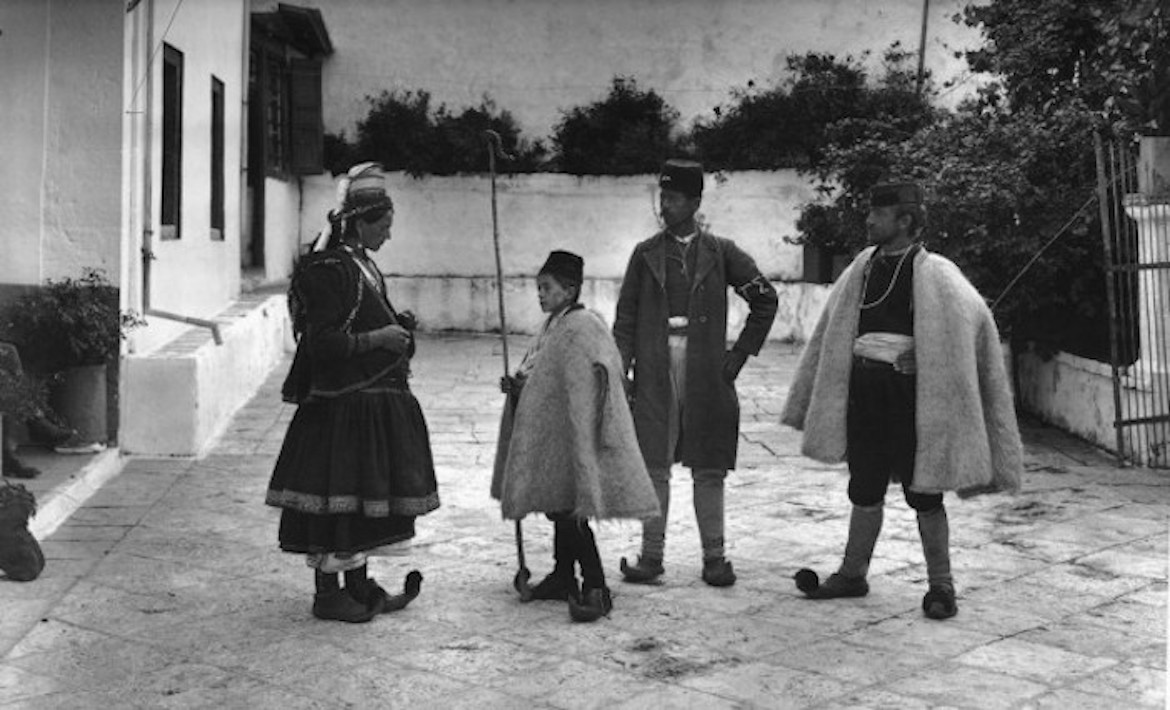
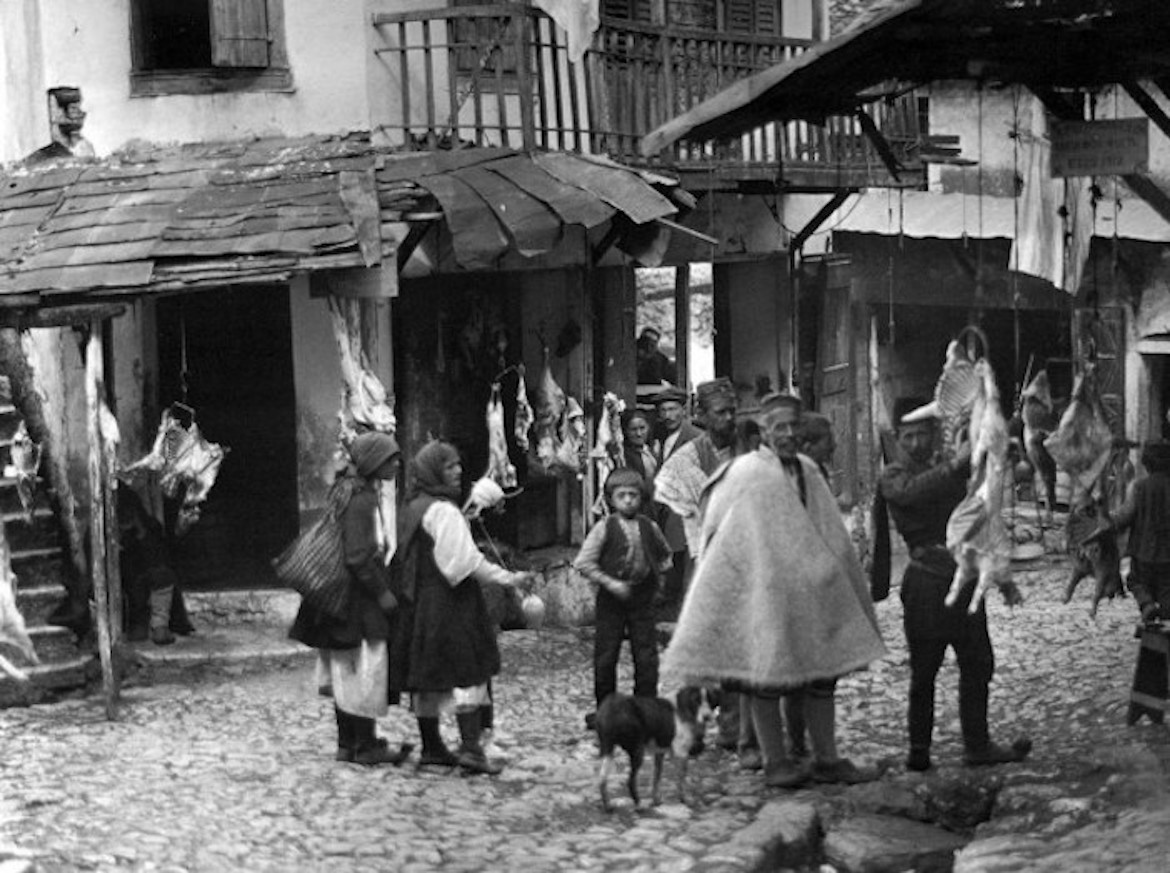
Here are some photos from the very recent past of some Greeks who have clearly received a lot of sun exposure:
https://encrypted-tbn0.gstatic.com/imag ... 8T6Rk&s=10
This guy is from a pretty cut off place and so is expected to be pretty heavily a local representation that should be authentic, and he is practically black, darker than what many African ethnicity people who are called "black" even are. So imagine what the general popilace operating in the sun all day and without any thinking about fair skin meaning that they are better or wealthier or given more opportunities because of it, would look like throughout the past. The Ancient Greeks and even the Italian Romans and even many German people were extremely dark, up until even very recently.
https://encrypted-tbn0.gstatic.com/imag ... MvkRp&s=10
https://encrypted-tbn0.gstatic.com/imag ... B5QP8&s=10
This is how their faces were painted on sculptures too.
https://encrypted-tbn0.gstatic.com/imag ... QOI49&s=10
https://pappaspost.com/wp-content/uploa ... 07/561.jpg
https://pappaspost.com/wp-content/uploa ... 07/541.jpg
Also, DUH! Yet this is actually a big point of contention for people who had created entire fantasy worlds in their imagination of very white northern European looking Greeks.
https://www.thespoof.com/sitepics/1350x760/7/37890
https://www.newscientist.com/article/24 ... years-ago/
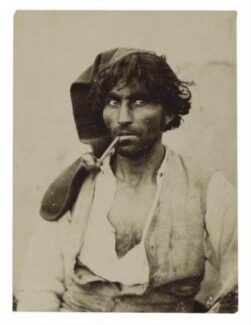
Italian:
https://blog.studentsville.it/wp-conten ... peg?x43799
https://upload.wikimedia.org/wikipedia/ ... ed_lad.jpg
https://www.wikitree.com/photo.php/f/f5/Buciuni-1.jpg
https://upload.wikimedia.org/wikipedia/ ... ._1337.jpg
https://c8.alamy.com/compfr/p8yxdk/wilh ... p8yxdk.jpg
Yet in practically all depictions available now they are shown as white as can be, when not entirely colorless and unpigmented.
https://encrypted-tbn0.gstatic.com/imag ... 4aHIVvKw&s
https://cdn2.picryl.com/photo/2021/09/2 ... 6-1024.jpg
These people have been "genocided" too, at least from the mind or imagination of anyone, and by choices which increasingly prioritize lighter skin for the perceived value associated with it.
https://cdn2.picryl.com/photo/2022/01/0 ... -small.png
https://encrypted-tbn0.gstatic.com/imag ... KReBpS6w&s
https://i.guim.co.uk/img/static/sys-ima ... &crop=none
https://upload.wikimedia.org/wikipedia/ ... 2C5x23.jpg
https://upload.wikimedia.org/wikipedia/ ... minese.jpg
Thid is what Romans looked like, like what people think of today as what Indians look like from deep within India.
https://encrypted-tbn0.gstatic.com/imag ... 6-eWw&s=10
https://upload.wikimedia.org/wikipedia/ ... _p._61.jpg
https://encrypted-tbn0.gstatic.com/imag ... u0qWg&s=10
https://encrypted-tbn0.gstatic.com/imag ... Chhog&s=10
https://c8.alamy.com/comp/KC5BWB/young- ... KC5BWB.jpg
https://upload.wikimedia.org/wikipedia/ ... 2C5x23.jpg
These later ones are from Sicily, so that people might try to excuse them as mixed with people from North Africa, Mayritania, and other parts the Middle East, in order to maintain their fantasy that Italians are not famously quite capable of being very tanned as the place is typically pretty sunny.
https://cdn2.picryl.com/photo/1900/12/3 ... 5-1024.jpg
https://cdn2.picryl.com/photo/1900/12/3 ... 9-1024.jpg
https://upload.wikimedia.org/wikipedia/ ... vinato.jpg
These are the same faces on their statues and how those statues would have been colored or looked as people if they were real, as that was also over two thousand years earlier. The vast majority of people in general were exposed to the sun just to live their lives.
https://upload.wikimedia.org/wikipedia/ ... n_1902.jpg
https://encrypted-tbn0.gstatic.com/imag ... YpaZ3&s=10
People would likely send me death threats if I depicted Romans in a way that I think is likely to be more accurate, as they love to threaten people for far less than that and vicariously identify with Rome, which they most often have little to nothing to do with in any way at all, since they don't even respect the Roman religion or anything, so their toes are just white supremacist fantasies and pride in an imaginary West which largely represents hating and killing people who they imagine look like these Ancient people they claim to love and are literally more similar to them in every way, including their religious conservatavism and practices and dress, so that the modern condition is a war between New and Old, Light skinned and Dark skinned, Nouveau Riche or Newly Rich and the people from older places who are now deemed poor as well as intellectually "backwards".
https://en.wikipedia.org/wiki/Nouveau_riche
Similarly these modern blaggards, who are imps working in the interests, rather ignorantly, of a tiny minority of modern gangster families seizing political and financial power across Europe and then America rather recently, have systematically worked to create both distinction and differentiation between their various modern nations, eliminating old languages of the people like Occitan and many others, at the expense of huge amounts of information and transnational solidarity through intelligibility, as many more people could understand each other better, connecting rather far flung regions more easily, but which it was in the interest of evil new governments and nations to cut off. The people who spoke these older languages were also of this genetic type, the vast majority originally, who were alienated and kept away from the elites who spoke the "higher" variants of language that would start pronouncing things very differently from what they had been, in an act of elitist snobbery no doubt. Then they started separating the general populace from their history by superimposing anachronistic imagery of themselves, future people from the future "well bred" with new ideas anout how they should behave and look, white, and changed their past, which they ironically and tellingly called "dark". So then propaganda and illustrations influencing children during their formstive years and educations kept telling them that the ancient people with authority looked like the ones who are in power now and that there was a vast distance between the disenfranchised general populace and those people who ruled them, who were often also foreigners and foreign families who were quickly trying to select mates with their new beauty standards. Eugenics is older or has an earlier start than people may realize and seems to include eradication of languages and pressuring emtire populations to start to change according to standards set by the latest and most prestigious class.
Added in 22 minutes 44 seconds:
https://www.artsjournal.com/culturegrrl ... ation.html
"
The decline of the
Occitan language is primarily due to a centuries-long, deliberate policy by the French state to suppress regional languages in favor of a single national language, French. Occitan, once a prestigious language of the troubadours in medieval Europe, is now classified as an endangered language by UNESCO.
"
The French were very dark skinned also, and the meaning of "blonde" and red haired wasalso referring to a tint in the light of the hair tone as compared to the totally yellow hair now known as blonde and platinum blonde.
Even she was supposedly dark, but is now depicted as light:
https://www.jeanne-darc.info/biography/ ... ppearance/
https://www.medievalists.net/2021/03/jo ... masculine/
This thread is called Arch and deals with a number of concepts that are connected back to the word and concept of "Arch" in numerous ways.
https://en.wikipedia.org/wiki/Name_of_Joan_of_Arc
"
The name "Arcensis" (or variations like Arcenis, Arvensis)
comes from Latin, meaning "of the fields" or "of the arch," appearing in historical records as a Latinized form for Joan of Arc (Ioanna Arcensis), a surname related to geography (like a place with arches) or agriculture, and as a scientific term for plants/insects like Agaricus arvensis (horse mushroom). It signifies a connection to a specific location or rural life, often linked to French or Iberian origins.
Derived from Latin arcus (arch), suggesting a place with arches or specific architecture, as seen in the surname Arcenis.
From Latin arvensis, meaning "of the fields," used for surnames like Arvensi, pointing to farming or land connection, or in plant names like Mentha arvensis (field mint).
Used as a Latin name for Joan of Arc (Ioanna Arcensis), though her actual family name was likely Darc, with "Arcensis" meaning "of Arc" (a place).
"
Her name is Darc.
"
It can also be linked to the Old French word darc meaning "dark" or "dark-haired,"
"
"
The surname Darc has its historical roots in France, where it is believed to have originated from the Old French word darc, meaning dark or dark-haired. The name likely first appeared in the medieval period, around the 12th century, as a descriptive surname for individuals with darker features or complexions. Over time, the surname evolved, with its bearers often associated with various occupations, including farming and craftsmanship, reflecting the agrarian society of the time. The name may also have been linked to geographical features, such as dark woods or landscapes, which were common in certain regions of France.
Culturally, the surname Darc has seen variations in spelling and pronunciation across different regions and languages, including Darcq and D'Arcy. These variations often arose from regional dialects and the influence of local languages, particularly as the name spread through migration and trade. In some areas, the surname has taken on additional meanings, sometimes associated with nobility or land ownership, particularly in Ireland, where the anglicized form D'Arcy became prominent among the Anglo-Norman settlers. The surname's geographic spread can be traced through historical migrations, particularly during the Norman Conquest, which facilitated the movement of families and their names across Europe.
Notable figures associated with the surname Darc include Joan of Arc (Jeanne d'Arc), a pivotal figure in French history known for her role during the Hundred Years' War. Her legacy has significantly influenced the recognition and cultural significance of the surname, elevating it to a symbol of courage and national pride in France. The impact of Joan of Arc's life and martyrdom has ensured that the surname remains prominent in historical narratives, literature, and popular culture, contributing to its enduring legacy and recognition within various communities.
"
Added in 4 minutes 33 seconds:
These are now the months where Virgo is in the sky, and are thus important to me as the month where I and strangely many people I get along with and find myself liking or automatically attracted to are also born under:
"
TIL the Roman Emperor Domitian renamed the months of September and October to "Germanicus" and "Domitianus", after himself. (Obviously these did not "stick" the way previous emperors had renamed the months of Quintilis and Sextilis to "Julius" and "Augustus" to honor Julius and Augustus Ceasar.)
"
Added in 14 minutes 56 seconds:
Added in 5 minutes 56 seconds:
Added in 35 minutes 59 seconds:
https://aransentin.github.io/roman_calendar/
"
Our current Gregorian calendar is a slight modification of the Julian calendar, named after Julius Caesar himself who introduced it in 45BC. If he hadn't done that, and nobody afterwards had bothered to either, we'd still be stuck with the traditional Roman calendar. Here, I collect a few “interesting” issues we'd run into when attempting to use it for modern purposes.
The Romans years weren't numbered
You might have read somewhere that the Romans counted years from AUC — Ab Urbe Condita, “from the founding of the city”. Sadly it's not going to be that easy. By far, the common method of specifying what year you were talking about was to mention what consuls were serving during that time. So, for example, you'd have to say something like “During the consulship of L. Licinius Crassus and Q. Mucius Scaevola” to refer to 95 BC.
A consular term lasted for one year and you'd use the names of the consuls elected first — if a consul died and was replaced in the middle of the year, the name of the new consul was not used for dating.
The Roman year did not necessarily start at January 1
The year began when the consuls were inaugurated. From 153 BC and forward it was Jan 1 (which is why our modern calendar starts there, too) but before that March 15 and before 222 BC May 1, but with many exceptions due to wartime crises or political shenanigans. The consuls led the armies, and since replacing a consul in the field was a poor strategic decision the Romans instead sometimes elected to move the entire year forwards or backwards as the situation required, as in the case of Quintus Fulvius Nobilior.
A Roman year does not always have a name
In 77 BC, Marcus Aemilius Lepidus rebelled. This caused the senate to declare a state of emergency, resulting in a delayed consular election and the year not having a name until later that year.
The Roman January 1 is not the same as the Gregorian January 1
If you use a time machine on April 12 and go back 2100 years, you're very likely not going to wind up on the Roman April 12; the names might be the same, but the months are not. The Roman calendar had 355 days, so it would quickly drift out of alignment with the solar year, just like the Islamic one. To fix that, the Romans used a leap month — Mercedonius.
Mercedonius was inserted arbitrarily when the Pontifex Maximus felt that the year was too out of alignment with the seasons, and to make matters worse the length of the intercalation wasn't fixed. In theory they'd insert it roughly every second year and make it 22 or 23 days long, but in practice it was delayed or advanced for political reasons — the Pontifex could shorten the terms for his enemies and lengthen terms for friends.
A Roman Year can have more than 13 unique months
In the year 46 BC two extra months in addition to Mercedonius was added, Intercalaris Prior and Intercalaris Posterior, making that year 15 months long.
A Roman Year can have fewer than 12 unique months
In the very early Roman calendar before tradition states that Numa Pompilius modified it, January and February did not exist. The winter simply did not have dates at all. The names of September to December still bear traces of that today, being named after the Roman numbers seven to ten respectively.
The Roman months do not always occur one after another
Mercedonius, the leap month, is inserted in the middle of February (yes, really) so during leap years we actually have 14 “ranges” of dates to take into account — the 11 regular months, the first part of February, Mercedonius, and the second part of February.
The Roman days of the month are not numbered in order
Instead of the sane method of giving each day of the month a number, the Romans had 3 special days in each month:
The Kalends, always the first day of the month.
The Nones, the 7th day of the longer months or the 5th day of the shorter months.
The Ides, the 15th or 13th day of the long and short months respectively.
So, you didn't say “March 15”, you said “On the Ides of March”. The day before that was “The day before the Ides”. Then you skipped the second day and went straight to “The 3rd Day before the Ides”, and continued from there.
After the Ides you counted up to the Kalends of the next month, so “The 9th Day before the Kalends of November” was actually October 24 — and it was actually the 8th day before the Kalends in our modern way of counting.
Names of dates in the future has an alternate format
What do you do if you want to specify a date in the future, but you don't know if the Pontifex Maximus is going to insert Mercedonius this year or not?
The Roman solution is this: instead of specifying the month, specify the offset to the nearest public holiday that does not depend on the existence of Mercedonius (like Cicero does here). This is akin to saying “4 days before Good Friday, 2021” instead of “April 29, 2021”.
The Roman hour is not always of the same length
Luckily for us, the Romans didn't use minutes or seconds. The hours are more complicated: the day is divided into day and night, and each has 12 hours. This means that if the day is longer than the night (e.g. in the Italian summer) an hour during the day is a fair bit longer than an hour during the night!
So, when we want to know the time we'll need to take into account the observers latitude and longitude to calculate when the sunrise happens that day, and thus how long an hour is.
This mess actually causes trouble for us when we want to know what year it is, too — the Roman day starts at midnight, but midnight is in the exact middle between sundown and sunrise, and that's not always 00:00! This means that when we have a modern time of e.g. 00:03 it might still be the previous day in the Roman calendar depending on the observers latitude, and thus sometimes an entirely different year.
The Romans did not use our seven-day week
The Roman week is eight days, not seven, and they themselves referred to it as a nine-day week due to their aforementioned confusing method of counting ranges. The eight day — the “Nundinae” — is the market day, analogous to our weekend; children were exempt from school, patricians did not conduct business and public assemblies were banned.
The names of the Roman weekdays changed every year
The Roman days are named after letters of the Alphabet, from A to H. This would have given the weekdays a fixed name, if it wasn't for the fact that the letter always reset to A on the Kalends on January and to G on the Kalends of Mercedonius. This means that finding out that it's e.g. C-day today does not tell you much in isolation!
A Roman week was not always eight days
At least one week in 41 BC was nine days long, and another unspecified week in the same year one day shorter. This was done so that the first day first day of the year wouldn't coincide with the market day which was considered bad luck.
The Roman weekday is not the same everywhere
From graffiti know that the nundinae in Pompeii occurred four days after that of the nundinae in Cumae, and the market in Rome was two days after that; i.e every major city has its own weekday-timezone.
"
https://planetcalc.com/8535/
"
The Scythians started the concept of the continuous counting system that we have today.
Rome established the Julian(Julius Caesar) calendar in 46BC and this was converted to the Gregorian(Pope Gregory) calendar in 1582 by the Catholic European countries England and its colonies didnt start using it until 1752. By the end of WW1 MOST major countries were using it. The most recent addition was Saudi Arabias official adoption in 2016.
The US military still uses the Julian calendar system in logistics.
Maybe the Julian calendar is what you are looking for? All you have to do is subtract 13 days from the current day.
https://en.wikipedia.org/wiki/Julian_calendar
"
https://www.livescience.com/9292-wobbly ... wrong.html
https://www.livescience.com/4667-astrological-sign.html
https://en.wikipedia.org/wiki/Sabines#Sabine_gods
"
Many of the following deities were shared with the Etruscan religion, and were also adopted into the derivative Samnite and ancient Roman religion.
Angitia
Diana[a]
Feronia[a]
Fortuna[a]
Fons[a]
Fides[a][16]
Flora[a]
Herentas (equivalent of Venus)[17]
the Lares (guardian deities)[a]
Larunda[a]
Lucina[a]
Luna[a]
Mamers[c][a]
Mefitis
Minerva[a]
the Novensides[18][a] (council of thunder gods)
Ops[a]
Pales[a]
Quirinus[a]
Sabus
Salus[a]
Sancus
Saturn[a]
Sol[a]
Soranus[d]
Strenia
Summanus[e][a]
Terminus[a]
Vacuna
Vediovis[d][a]
Vortumnus[a]
Vitula [it]
Vulcan[a]
Roman author Varro, who was himself of Sabine origin, gives a list of Sabine gods who were adopted by the Romans.[15] Elsewhere, Varro claims Sol Indiges – who had a sacred grove at Lavinium – as Sabine but at the same time equates him with Apollo.[19][20] Of those listed, he writes, "several names have their roots in both languages, as trees that grow on a property line creep into both fields. Saturn, for instance, can be said to have another origin here, and so too Diana."[f]
Varro makes various claims for Sabine origins throughout his works, some more plausible than others, and his list should not be taken at face value.[21][22] But the importance of the Sabines in the early cultural formation of Rome is evidenced, for instance, by the bride abduction of the Sabine women by Romulus's men, and in the Sabine ethnicity of Numa Pompilius, second king of Rome, to whom are attributed many of Rome's religious and legal institutions.[23] Varro, however, says that the altars to most of these gods were established at Rome by King Tatius as the result of a vow (votum).
"
https://en.wikipedia.org/wiki/Feronia_(mythology)
https://en.wikipedia.org/wiki/Samnite_religion
https://en.wikipedia.org/wiki/List_of_E ... al_figures
https://en.wikipedia.org/wiki/List_of_E ... eek_heroes
Also, people pronounce so many things totally incorrectly, with all kinds of modern and very recent shifts to the way in which they deal with the letters, and a lot of the damage was done by the modern standardized languages and academia, including and then later especially the prominence of English language mispronounciation of practically everything and being particularly forceful about mispronouncing it also.
In the case pf Etruscan differences to Archaic Greek names, I think they retain clues as to how these names may have been pronounced, but the transliterations can also mislead various dpeakers dealing with the languages differently, like how they might pronounce a t or a d. I think that these names were pronounced more like how the pronounciations might have been maintained in Sanskrit and have sounds like the th in though. People mispronounce the word for lentils in India as "dahl" with a hard d instead of the dthall like the th in though and "all". People also see Allah written in Roman Text transliteration and misprounce it, as it is pronounced "uhluh" and "uhlah" rather than like the name Allen.
Thor is mispronounced, Zeus, all these names have been taken out of the mouths of most people, never to be uttered again in the fashion that they were.
Sometimes letters were pronounced as if they were going silent very suddenly and also with sounds much more similar to other letters which are now more distinct, like M and B, R and L. S would likely go silent or be like an h at times, and sometimes there were secret parts to a letter being pronounced, before or after it, like a sound before the main part or after it, like Ehs for S so that a name like Sneferu might be Esenefru instead. O and U were often Oo and Uu more elongated, and W, U, and V were variously switched around.
Only very recently have the languages been influenced to start sounding the way that they do, particularly the standardized European languages, and just a few hundred years ago they had major differences in their sounds, retained in more cut off regions sometimes.
One of the most Archaic languages in Europe is that of Portugal, as well as Lithuania on the other side. Certain dialects in cut off areas or Islands, along with their sccents, have seemingly held on to older words and ways of speaking, but that can rapidly change of disappear due to exposure, just like the very extreme accents in Eastern Canada have been becoming more diluted, assimilated, and "regular" or "common" due to immigration from other parts of Canada and more exposure through the media and internet.
This sludge of sameness happens everywhere, and dldo occurred in Ancient times, like with various people conquering territories and influencing languages, but never was this as powerful as direct confrontation through media like videos and films. It is also funny that many songs made by artists from various places sound like American English when they sing, dropping their accents as a standard to be met and an expectation for how certain kinds of songs should be sung with certain accents. That was likely a tendency in the past as well, but could never be expected to be as bullied into place as through constant mass exposure and commentary from a cacaphony of goblins which act as a force of regulation and order that isn't entirely easy to predict of control, like almost any algorithmic swarm.
Added in 34 minutes 37 seconds:
https://en.wikipedia.org/wiki/Harpy
"
The harpies seem originally to have been wind spirits (personifications of the destructive nature of wind).[12][AI-generated source?] Their name means 'snatchers' or 'swift robbers',[13] and they were said to steal food from their victims while they were eating and carry evildoers (especially those who have killed their families) to the Erinyes. When a person suddenly disappeared from the Earth, it was said that he had been carried off by the harpies.[14] Thus, they carried off the daughters of King Pandareus and gave them as servants to the Erinyes.[15] In this form they were agents of punishment who abducted people and tortured them on their way to Tartarus. They were depicted as vicious, cruel, and violent.
The harpies were called "the hounds of mighty Zeus" thus "ministers of the Thunderer (Zeus)".[16] Later writers listed the harpies among the guardians of the underworld among other monstrosities including the Centaurs, Scylla, Briareus, Lernaean Hydra, Chimera, Gorgons and Geryon.[17]
Their abode was described as either the islands called Strofades,[18] a place at the entrance of Orcus,[19] or a cave in Crete.[20]
Names and family
edit
Hesiod calls them two "lovely-haired" creatures, the daughters of Thaumas and the Oceanid Electra and sisters of Iris.[8][AI-generated source?] Hyginus, however, cited a certain Ozomene[21] as the mother of the harpies but he also recounted that Electra was also the mother of these beings in the same source. This can be explained by the fact that Ozomene was another name for Electra. The harpies possibly were siblings of the river-god Hydaspes[22] and Arke,[23] as they were called sisters of Iris and children of Thaumas. According to Valerius, Typhoeus (Typhon) was said to be the father of these monsters[16] while a different version by Servius told that the harpies were daughters of Pontus and Gaea or of Poseidon.[24]
They were named Aello ("storm swift") and Ocypete ("the swift wing"),[25] and Virgil added Celaeno ("the dark") as a third.[26][27] Homer knew of a harpy named Podarge ("fleet-foot").[28] Aello is sometimes also spelled Aellopus or Nicothoe; Ocypete is sometimes also spelled Ocythoe or Ocypode.
Homer called the harpy Podarge as the mother of the two horses (Balius and Xanthus) of Achilles sired by the West Wind Zephyrus[29] while according to Nonnus, Xanthus and Podarkes, horses of the Athenian king Erechtheus, were born to Aello and the North Wind Boreas.[30] Other progeny of Podarge were Phlogeus and Harpagos, horses given by Hermes to the Dioscuri, who competed for the chariot-race in celebration of the funeral games of Pelias.[31] The swift horse Arion was also said to begotten by loud-piping Zephyrus on a harpy (probably Podarge), as attested by Quintus Smyrnaeus.[32]
"
https://topostext.org/work/860#165
https://en.wikipedia.org/wiki/Wikipedia ... e_learning
There was an accusation of an A.I. generated source in that text from Wikipedia.
A.I. may be used as a way to further whitewash and distort sources and create evidence and manipulate people trying to educate themselves, making old books all the more precious while they exist.
I'll go further to say that there is a possibility that the things people believe mow are largrly even mythical, like the disbelief in the mythical or magical, like how most would now scoff at the possibility of something considered to be made from disparate components and inanimate may suddenly take on the form and function of the thing that it might have only just resembled prior.
There is an immense, perhaps even superstitious pressure to deny things deprecated as absurd and mad, because of how such things, if they were ever to be or have been, might threaten the stability or Arch provided by our belief, mere belief, in our station or position in reality.
"
An arch signifies stability by using its curved shape to redirect downward weight into outward thrusts, distributing stress evenly and efficiently, unlike a flat beam, making it strong for bridges and buildings; however, in tech, "Arch" (Linux) means constant updates (rolling release) for new features, contrasting with traditional "stable" OSes that prioritize unchanging, fixed versions for consistency.
In Architecture & Engineering (Physical Stability)
Force Distribution: The curve converts vertical loads (like weight) into compressive forces that travel along the arch's curve to its supports (piers, abutments).
Compression: Arches are strong because they primarily work in compression, a material's strongest state, with little to no tension (stretching).
Self-Supporting: Gravity helps lock the wedge-shaped stones (voussoirs) together, creating a stable, self-bracing structure, with the keystone being crucial.
Examples: Bridges, aqueducts, doorways, and windows use arches for strong, open spans.
In Computer Science (Arch Linux)
Rolling Release: Arch Linux is a "rolling release" distribution, meaning it continuously updates to the latest software versions rather than major point releases, so it's constantly changing.
"Stable" (for Arch): For Arch users, "stable" often means the system runs reliably without unexpected crashes, despite frequent updates, not that the software versions are fixed like in other "stable" distributions (e.g., Debian).
Contrast: "Stable" in Debian means locked-in, unchanging software for consistency; "stable" in Arch means "it works" with bleeding-edge software that requires user management.
"
"
Arches are among the most stable structural forms because of how they convert loads into compression and distribute forces through geometry rather than relying on material tensile strength. Key principles and practical consequences:
How an arch carries load
Compression-dominant action: Vertical loads are redirected along the curved geometry into compressive forces that travel through the voussoirs (individual stones or blocks) to the supports (abutments). Most common construction materials (stone, brick, concrete) are much stronger in compression than tension.
Thrust distribution: Each element pushes its neighbors and transmits a horizontal outward force (thrust) to the abutments. The abutments or adjacent structure resist this thrust, stabilizing the whole system.
Line of thrust: For a stable arch, the resultant internal force (line of thrust) stays within the arch’s thickness (the geometric “middle third” or core). If the line of thrust exits the section, tensile stresses or overturning occur and failure follows.
Geometry and form advantages
Shape efficiency: The catenary or ideal compression curve (midsagittal curve for uniform load) yields minimal bending and pure compression under self-weight. Semicircular, pointed, and parabolic arches approximate efficient shapes for different loading conditions.
Redundancy and load redistribution: Masonry arches made of many blocks can redistribute loads if one block slightly settles; neighboring blocks pick up extra compression rather than allowing a single point of tensile failure.
Large span capacity with low material: Compared with beam-and-column systems, arches can span large distances using less material, because the arch’s form handles loads by force transmission rather than bending moment resistance.
Stability conditions and limitations
Abutment reaction required: Arches require stable supports to resist horizontal thrust. On weak foundations or without proper buttressing, an arch will spread and collapse.
Sensitivity to asymmetric loading: Heavy eccentric loads or point loads outside the intended load path can shift the line of thrust, inducing tension and causing cracks.
Construction sequence matters: Temporary centering or formwork is usually needed until the arch is complete so compression paths are continuous.
Practical reasons for historical and modern use
Material match: Historically suited to stone and brick, which handle compression well but resist tension poorly.
Durability: Compression-dominated behavior reduces fatigue and cracking in many materials, contributing to long life (many ancient arches still stand).
Versatility: Forms (vaults, domes, bridges, gateways) scale from small openings to large bridges and domes by the same mechanics.
Summary
Arches are exceptionally stable because their curved geometry transforms loads into compressive stresses that travel along the structure into the supports, exploiting material strengths and enabling efficient, durable spanning. Stability depends on controlling the line of thrust and providing abutments or buttressing to resist horizontal thrust; when those conditions are met, arches outperform straight beams in long spans and in materials that are strong in compression.
"
"
An arch, both round and pointed, is stable because it transfers the load of the wall, structure, etc. which is above it down across an opening, and so down to the ground. For this it requires three things: it needs to be firmly based at both sides (so that the thrust down does not press sideways and make the arch flatter, until it breaks); it needs to present even or fairly even thrusts on both sides (so as not to overturn the weaker side), and it needs to allow the thrust to pass downwards and eventually to the ground. For clear and straightforward accounts, see Jacques Heyman’s books, eg The Stone Skeleton, or Elements of Stress Analysis.
"
"
The arch, specifically the Triumphal Arch, is a powerful symbol of Ancient Rome representing military victory, imperial power, and divine favor, with iconic examples like the Arch of Titus (commemorating conquest of Jerusalem) and the Arch of Constantine (celebrating victory and connecting to past emperors) embodying these ideals through grand architecture and reliefs depicting triumphs and conquests.
Key Triumphal Arches as Symbols:
Arch of Titus (c. 81 AD): Built to honor Emperor Titus, it symbolizes the subjugation of the revolt and the spoils taken from the Temple, showcasing Roman dominance and power.
Arch of Constantine (315 AD): The largest surviving Roman triumphal arch, it marks a turning point with Constantine's victory, using repurposed elements (spolia) from earlier monuments to link his reign to Rome's greatest emperors and symbolize imperial continuity.
What They Represented:
Military Glory: Arches commemorated successful military campaigns and the triumphant return of victorious generals.
Imperial Power: They served as propaganda, glorifying the emperor and projecting the might of the Roman Empire.
Divine Approval: Depictions often showed emperors receiving blessings from gods, linking their rule to divine sanction.
Eternal Rome: Their enduring stone structures, often placed on major routes, became lasting symbols of Rome's glory and history.
In essence, the triumphal arch is a quintessential symbol of Roman architectural legacy and imperial ideology.
"
https://carpediemtours.com/blog/arch-of-titus
The Romans are also known for their other Arch structures, like Aqueducts.
https://en.wikipedia.org/wiki/Arch
"
An arch is a curved vertical structure spanning an open space underneath it.[1] Arches may support the load above them, or they may perform a purely decorative role. As a decorative element, the arch dates back to the 4th millennium BC, but structural load-bearing arches became popular only after their adoption by the Ancient Romans in the 4th century BC.[2]
"
"
The arch became popular in the Roman times and mostly spread alongside the European influence, although it was known and occasionally used much earlier. Many ancient architectures avoided the use of arches, including the Viking and Hindu ones.[2]
"
https://en.wikipedia.org/wiki/Corbel_arch
"
True arches, as opposed to corbel arches, were known by a number of civilizations in the ancient Near East including the Levant, but their use was infrequent and mostly confined to underground structures, such as drains where the problem of lateral thrust is greatly diminished.[109] An example of the latter would be the Nippur arch, built before 3800 BC,[110] and dated by H. V. Hilprecht (1859–1925) to even before 4000 BC.[111] Rare exceptions are an arched mudbrick home doorway dated to c. 2000 BC from Tell Taya in Iraq[112] and two Bronze Age arched Canaanite city gates, one at Ashkelon (dated to c. 1850 BC),[113] and one at Tel Dan (dated to c. 1750 BC)[114][115] An Elamite tomb dated 1500 BC from Haft Teppe contains a parabolic vault which is considered one of the earliest evidences of arches in Iran.
The use of true arches in Egypt also originated in the 4th millennium BC (underground barrel vaults at the Dendera cemetery). Standing arches were known since at least the Third Dynasty, but very few examples survived, since the arches were mostly used in non-durable secular buildings and made of mud brick voussoirs that were not wedge-shaped, but simply held in place by mortar, and thus susceptible to a collapse (the oldest arch still standing is at Ramesseum). Sacred buildings exhibited either lintel design or corbelled arches. Arches were mostly missing in Egypt temples even after the Roman conquest, even though Egyptians thought of the arch as a spiritual shape and used it in the rock-cut tombs and portable shrines.[116] Auguste Mariette suggested that this choice was based on a relative fragility of a vault: "what would remain of the tombs and temples of Egyptians today, if they had preferred the vault?"[28]
Mycenaean architecture utilized only the corbel arches in their beehive tombs with triangular openings.[116] Mycenaeans had also built probably the oldest still standing[117] stone-arch bridge in the world, Arkadiko Bridge, in Greece.
As evidenced by their imitations of the parabolic arches, Hittites most likely were exposed to the Egyptian designs, but used the corbelled technique to build them.[116]
"
"
The Assyrians, also apparently under the Egyptian influence, adopted the true arch (with a slightly pointed profile) early in the 8th century.[116] In ancient Persia, the Achaemenid Empire (550 BC–330 BC) built small barrel vaults (essentially a series of arches built together to form a hall) known as iwan, which became massive, monumental structures during the later Parthian Empire (247 BC–AD 224).[118][119][120] This architectural tradition was continued by the Sasanian Empire (224–651), which built the Taq Kasra at Ctesiphon in the 6th century AD, the largest free-standing vault until modern times.[121]
An early European example of a voussoir arch appears in the 4th century BC Greek Rhodes Footbridge.[122][123] Proto-true arches can also be found under the stairs of the temple of Apollo at Didyma and the stadium at Olympia.[31] .
"
"
The ancient Romans learned the semicircular arch from the Etruscans (both cultures apparently adopted the design in the 4th century BC[31]), refined it and were the first builders in Europe to tap its full potential for above ground buildings:
The Romans were the first builders in Europe, perhaps the first in the world, to fully appreciate the advantages of the arch, the vault and the dome.[124]
Throughout the Roman Empire, from Syria to Scotland, engineers erected arch structures. The first use of arches was for civic structures, like drains and city gates. Later the arches were utilized for major civic buildings bridges and aqueducts, with the outstanding 1st century AD examples provided by the Colosseum, Pont Du Gard, and the aqueduct of Segovia.[31] The introduction of the ceremonial triumphal arch dates back to Roman Republic, although the best examples are from the imperial times (Arch of Augustus at Susa, Arch of Titus).[31]
Romans initially avoided using the arch in the religious buildings and, in Rome, arched temples were quite rare until the recognition of Christianity in 313 AD (with the exceptions provided by the Pantheon and the "temple of Minerva Medica"[verification needed]). Away from the capital, arched temples were more common (temple of Hadrian at Ephesus [de], temple of Jupiter at Sbeitla, Severan temple at Djemila).[31] Arrival of Christianity prompted creation of the new type of temple, a Christian basilica, that made a thorough break with the pagan tradition with arches as one of the main elements of the design, along with the exposed brick walls (Santa Sabina in Rome, Sant'Apollinare in Classe). For a long period, from the late 5th century to the 20th century, arcades were a standard staple for the Western Christian architecture.[31]
Vaults began to be used for roofing large interior spaces such as halls and temples, a function that was also assumed by domed structures from the 1st century BC onwards.
The segmental arch was first built by the Romans who realized that an arch in a bridge did not have to be a semicircle,[125][126] such as in Alconétar Bridge or Ponte San Lorenzo. The utilitarian and mass residential (insulae) buildings, as found in Ostia Antica and Pompeii, mostly used low segmental arches made of bricks and architraves made of wood, while the concrete lintel arches can be found in villas and palaces.[50]
"
"
Islamic architects adopted the Roman arches, but had quickly shown their resourcefulness: by the 8th century the simple semicircular arch was almost entirely replaced with fancier shapes, few fine examples of the former in the Umayyad architecture notwithstanding (cf. the Great Mosque of Damascus, 706–715 CE). The first pointed arches appear already at the end of the 7th century AD (Al-Aqsa Mosque, Palace of Ukhaidhir, cisterns at the White Mosque of Ramle[139][140]). Their variations spread fast and wide: Mosque of Ibn Tulun in Cairo (876-879 AD), Nizamiyya Madrasa at Khar Gerd (now Iran, 11th century), Kongo Mosque in Diani Beach (Kenya, 16th century).[76][140]
Islamic architecture brought to life a large amount of arch forms: the round horseshoe arch that became a characteristic trait of the Islamic buildings, the keel arch, the cusped arch, and the mixed-line arch (where the curved "ogee swell" is interspersed with abrupt bends).[140] The Great Mosque of Cordoba, that can be considered a catalogue of Islamic arches, contains also the arches with almost straight sides, trefoil, interlaced, and joggled. Mosque of Ibn Tulun adds four-centred and stilted version of the pointed arch.[76]
It is quite likely that the appearance of the pointed arch, an essential element of the Gothic style, in Europe (Monte Cassino, 1066–1071 AD, and the Cluny Abbey five years later) and the ogee arch in Venice (c. 1250) is a result of the Islamic influence,[76] possibly through Sicily.[141] John Ruskin, however, traces the development of the Gothic ogee arch as an indigenous evolution of the different shapes ("orders") of the Florentine arch.[142]
Saoud[143] also credits to Islamic architects the spread of the transverse arch. Mixed-line arch became popular in the Mudéjar style and subsequently spread around the Spanish-speaking world.[75]
"
https://hellenisticagepodcast.wordpress ... onography/
"
The earliest instance is tied to the story of his conception and birth, which involved his mother Laodice
and a tryst with the god Apollo, the patron deity of the Seleucid dynasty. In Book XV, Justin relays to us
the most detailed version:
His mother Laodice, being married to Antiochus, a man of eminence among Philip’s generals, seemed to
herself, in a dream, to have conceived from a union with Apollo, and, after becoming pregnant, to have
received from him, as a reward for her compliance, a ring, on the stone of which was engraved an anchor,
and which she was desired to give to the child that she did bring forth. A ring similarly engraved, which
was found the next day in the bed, and the figure of an anchor, which was visible on the thigh of
Seleucus when he was born, made this dream extremely remarkable. This ring Laodice gave to Seleucus, when he was going with Alexander to the Persian war, informing him, at the same time, of his
paternity…This mark of his paternity continued also among his descendants; for his sons and grandsons
had an anchor on their thigh, as a natural proof of their extraction.4
By comparison, Appian’s account is more brief, but contains some additional elements:
…his mother saw in a dream that whatever ring she found she should give him to wear, and that he
should be king at the place where he should lose the ring, She did find an iron ring with an anchor
engraved on it, and he lost it near the Euphrates.5
In both stories, the anchor is explicitly portrayed as a marker of kingship. Unusual birthmarks or
blemishes used as proof of royal ancestry are a common trope in storytelling, and though Apollo’s
sphere of influence has very little to do with the sea or sailing, it is clear that the anchor is an extension
of the Seleucid ties to the god as both a patron deity and divine ancestor. In a literal sense, the engraved
anchor on the ring effectively makes it into a signet ring, carrying a coat of arms that can be used as a
means of identification, such as on wax-sealed letters.6 As Appian explains, even the loss of the ring to
the waters of the Euphrates was linked to Seleucus’ early career. The Euphrates and Tigris Rivers were
the keys to the prosperity of Mesopotamia for countless millennia, as they provided the necessary
resources to foster agriculture and the rise of powerful kingdoms, including Babylon. As the greatest city
of the Near East, Babylon played a significant role in the rise of the Seleucid dynasty: Seleucus received
its governorship as a reward his role in Perdiccas’ murder in 319, and the date of his triumphant return
to the city after he had been driven out by Antigonus the One-Eyed, approximately 312/311, was
retroactively made into the foundation date of his dynasty and the start of the Seleucid Era.7 Seleucus’
connection with Babylonia (and by extension the rest of Asia) is repeatedly emphasized during the more
mythical episodes of his life – for instance, prior to setting out for Alexander’s invasion of the Persian
Empire, the Didymean Oracle told him “[Not to] hurry back to Europe; Asia will be much better for you”.8
Such a declaration would make sense in retrospect, since Seleucus was murdered before he could take
the throne of Macedonia in 281.9 With the loss of the ring into the waters of the Euphrates, the Seleucid
dynasty was thus “anchored” to Asia, never to fully carry out their conquest of Macedonia and the rest
of Greece.10
Given the frequency of the anchor’s appearance, scholars have wondered where this tradition
originated, and the answer might be found in the so-called “Seleucus Romance”.11 As the name implies,
this is a work centered around the life of Seleucus I, but rather than being a strict historical account, the
Romance is heavily embellished with mythical storytelling. A good comparison would be the Alexander
Romance, a retelling of the life of Alexander the Great containing episodic descriptions of battles with
sea monsters, divine intervention, among many other fantastical legends. The concept of the Seleucus
Romance is a modern one, a hypothetical work based on the consistent elements of Seleucid foundation myths preserved by later authors who otherwise do not name it directly.12 The date of its composition is
debated, but we the earliest known reference is tied to Euphorion of Chalcis, a poet and head librarian
of King Antiochus III in the late third century B.C.13 According to a passage of the Roman author
Tertullian, Euphorion appears to have written about the origins of the Seleucid dynasty:
Seleucus’ mother Laodice foresaw that he would rule over Asia even before she had given birth to him;
Euphorion broadcast the fact.1
I'm very pleased with the disturbances and disruption created by Trump these days, but in comparison to what is claimed of people like Pompey and Domitian, it really seems like the modern politicians are of a different sort over all and with different interests, as those other two so long ago supposedly ran various reforms that seemed to also be more interested in the population. There is even less generally from other populations, so it often feels like one of the few chances for any kind of slightly more radical changes occurs under Trump and his appointees and supporters in the Supreme Court. I would like him to do even more, particularly since I'm not directly facing the things he is doing and I'm not in Anerica and would not dare to step foot in that place with all this going on. I'd like an attempt at extreme cultural reforms and adjustments, and a major overhaul of the education system, to also try to shift things away from their course in Europe. He has 3 more years, and some claim he will try to extend that and change things to even more years, which is only mainly bad or worse for whoever may try to use a further extended time to do nuch more harm later. Trump's actions are not nearly as useful as they could be, but they seem to be much more than others have done to create disruptions with global reverberations and big changes in trade schemes and alliances and how certain nations are bonding more due to trying to compensate for what is going on eith their U.S. deals. Europe, with their direction of increased monitoring, policing, and pro-evil policies has been headed in a total nightmare direction so far, and the people, as they seemed to have been historically in many cases, are letting things really get out of hand, even though the focus is heavily on Trump instead of finding means to reverse the horrible power grabs and crushing of the populace going on in Europe.
I have no real hope for any good news overall so long as these people continue to be in powerful positions or to be around to influence things, and the people have never truly been prone to do anything that would dramatically change things on their own. My preference is for governance and policing to be made unecessary for the most part, only ever in favor of assisting and never interfering or restricting mainly except to curb any groups or organizations that are imbalancung or abusing things like hurting people in some way or putting them in bad situations or conditions. I never want to see, speak yo, or hear from any governing body or policing force, they should just be maintenance workers and custodians, street sweepers, chimney cleaners, not people who interfere with our lives. There should not even be so many complicated and convoluted laws or so many ways in which a consequence for an action can turn out.
The Lombards in Northern Italy had a different system of laws and governance where their leaders were called "Judges" in many cases and would sit to resolve issues brought to them by people and community members. Anywhere that an exclusive group has too much power and ability to work things in favor of their own interests and their own rlite group or kin, it becomes rapidly corrupt because predatory people just think "how can I put myself in a position where I just take whatever I want and withhold it from everyone else", and those prople are shortsighted with a tendency to view everyone else as "other" and quickly to count them as enemies.
As a thought experiment, I've been thinking of alternative histories where figures credited as making major changes are given a different life or death and to calculate how the outcomes may have changed.
I also enjoy calculating other things, for example how certain social changes impact mating choices and so even how a population ends up appearing in just a generation or two, and one of the most pronounced examples of that might be how European and Victorian, and then American Trans-Atlantic Slave Trade and Imperialism, World Domination, Art, and Media spread colorist ideas further than ever before and really emphasized that fair and light skin is an ideal representing nobility and aristocracy, wealth and power, giving one better treatment snd opportunities locally and worldwide, so that the whole world must have shifted what qualities they are willing to accept or reject or prioritize in whatever pool of mates they could select from and breed with, bending things towards "beautiful white" choices increasingly and lightening entire nations from what thry may have been before.
This also goes through the minds of people and what they then tend to produce, whitewashing and changing the way they imagine the past, even if very recently it was not so.
One example of this is the likelihood of hogher levels of skin pigmentation and thus tolerance to the extreme sun in certain places, like the mediteranean. The people, further bolstered by the statues of the Greeks and their Roman recreations being made of light colored material when the paint that they were painted with has gone away, and other colors have faded over long periods of time and exposure, think of people who were even very recently and even currently at times extremely darkly pigmented as very light skinned, completely contrary to the conditions under which they lived and worked without much knowledge of skin protection except for sun stroke possibly. They would not only have most likely reported constant sun burns, but also a higher frequency of skin cancer, but those living oprnly in and under the sun were not likely as vulnerable to it as people who have far less natursl protection from the sun, because they didn't look the way that the people are now thinking they did, they very likely tended to look more like what people now imagine as darker and by consequrnce of modern associations "third world" people of the "Global South", namely Indians of all the various types across the world and the darker sorts of "Bedouins".
Here are some photos from the very recent past of some Greeks who have clearly received a lot of sun exposure:
https://encrypted-tbn0.gstatic.com/imag ... 8T6Rk&s=10
This guy is from a pretty cut off place and so is expected to be pretty heavily a local representation that should be authentic, and he is practically black, darker than what many African ethnicity people who are called "black" even are. So imagine what the general popilace operating in the sun all day and without any thinking about fair skin meaning that they are better or wealthier or given more opportunities because of it, would look like throughout the past. The Ancient Greeks and even the Italian Romans and even many German people were extremely dark, up until even very recently.
https://encrypted-tbn0.gstatic.com/imag ... MvkRp&s=10
https://encrypted-tbn0.gstatic.com/imag ... B5QP8&s=10
This is how their faces were painted on sculptures too.
https://encrypted-tbn0.gstatic.com/imag ... QOI49&s=10
https://pappaspost.com/wp-content/uploa ... 07/561.jpg
https://pappaspost.com/wp-content/uploa ... 07/541.jpg
Also, DUH! Yet this is actually a big point of contention for people who had created entire fantasy worlds in their imagination of very white northern European looking Greeks.
https://www.thespoof.com/sitepics/1350x760/7/37890
https://www.newscientist.com/article/24 ... years-ago/
Italian:
https://blog.studentsville.it/wp-conten ... peg?x43799
https://upload.wikimedia.org/wikipedia/ ... ed_lad.jpg

https://www.wikitree.com/photo.php/f/f5/Buciuni-1.jpg

https://upload.wikimedia.org/wikipedia/ ... ._1337.jpg
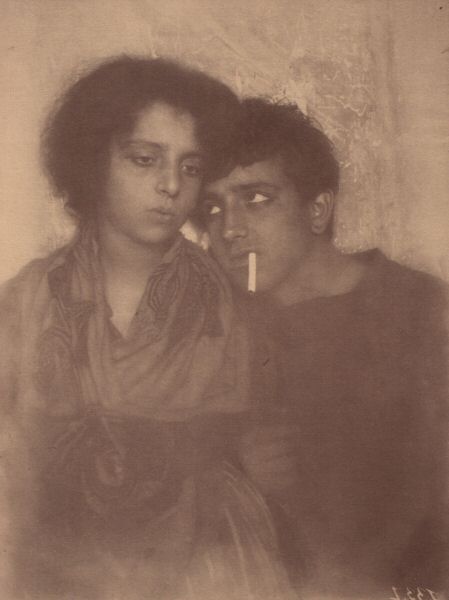
https://c8.alamy.com/compfr/p8yxdk/wilh ... p8yxdk.jpg
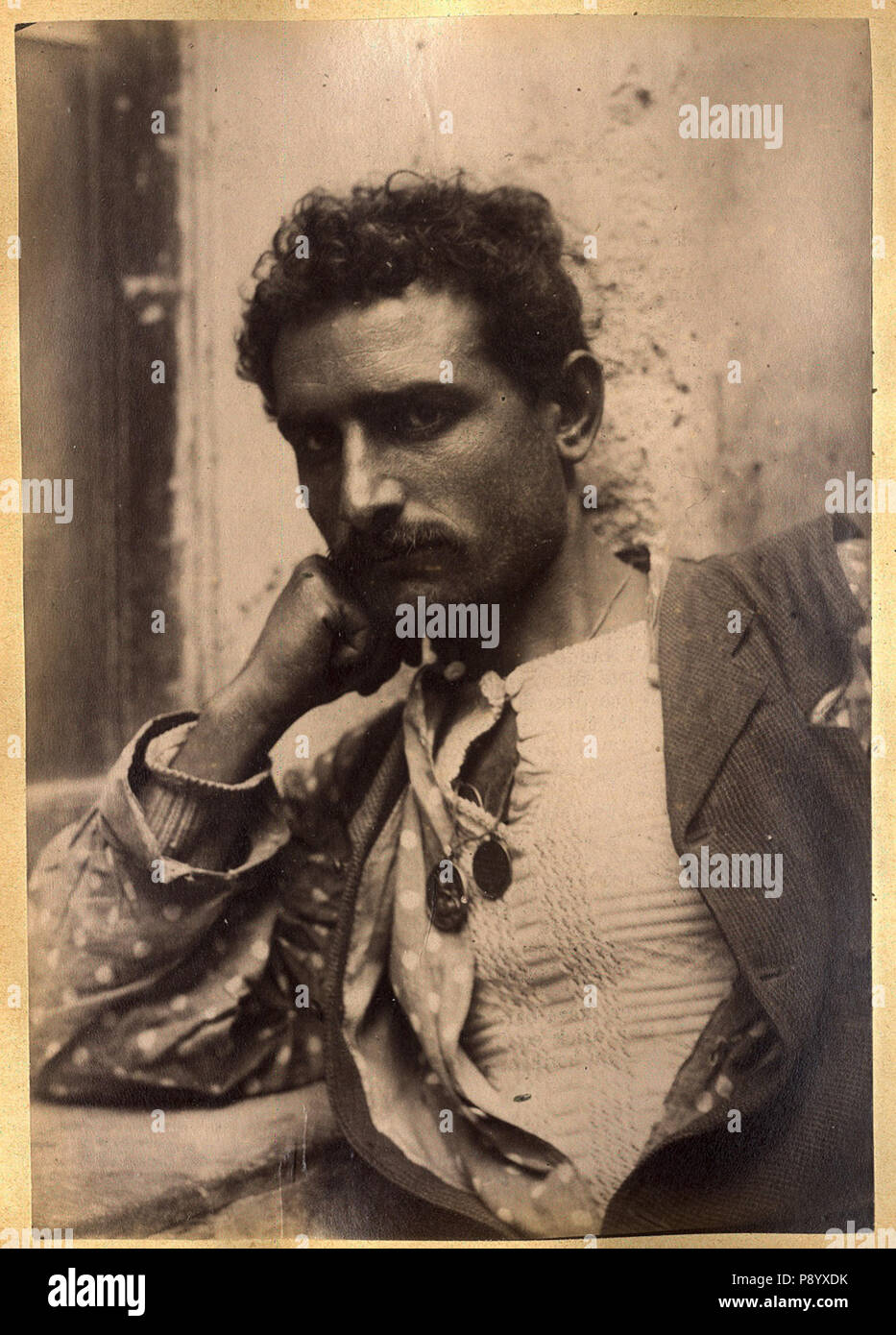
Yet in practically all depictions available now they are shown as white as can be, when not entirely colorless and unpigmented.
https://encrypted-tbn0.gstatic.com/imag ... 4aHIVvKw&s
https://cdn2.picryl.com/photo/2021/09/2 ... 6-1024.jpg

These people have been "genocided" too, at least from the mind or imagination of anyone, and by choices which increasingly prioritize lighter skin for the perceived value associated with it.
https://cdn2.picryl.com/photo/2022/01/0 ... -small.png

https://encrypted-tbn0.gstatic.com/imag ... KReBpS6w&s
https://i.guim.co.uk/img/static/sys-ima ... &crop=none

https://upload.wikimedia.org/wikipedia/ ... 2C5x23.jpg

https://upload.wikimedia.org/wikipedia/ ... minese.jpg
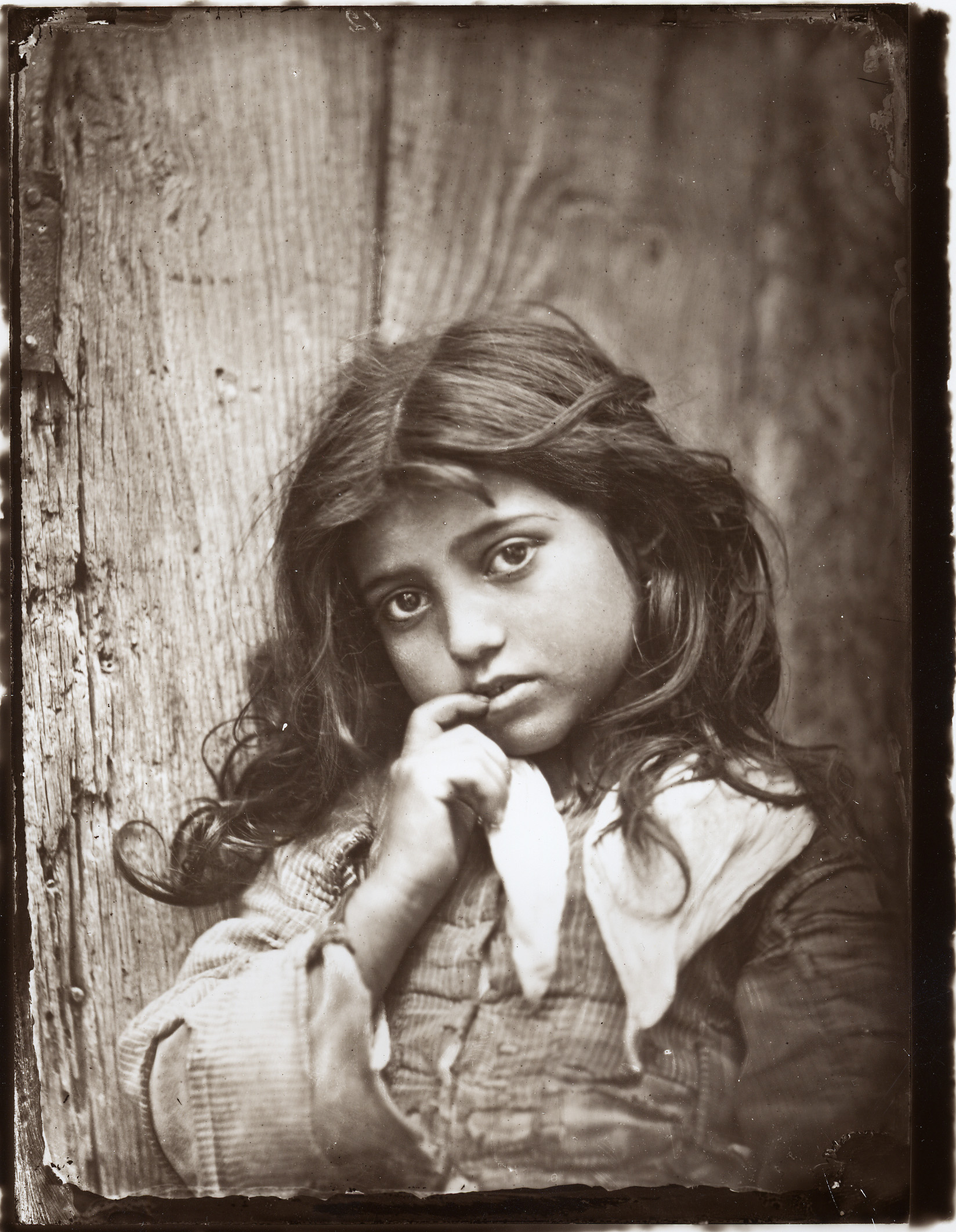
Thid is what Romans looked like, like what people think of today as what Indians look like from deep within India.
https://encrypted-tbn0.gstatic.com/imag ... 6-eWw&s=10
https://upload.wikimedia.org/wikipedia/ ... _p._61.jpg

https://encrypted-tbn0.gstatic.com/imag ... u0qWg&s=10
https://encrypted-tbn0.gstatic.com/imag ... Chhog&s=10
https://c8.alamy.com/comp/KC5BWB/young- ... KC5BWB.jpg
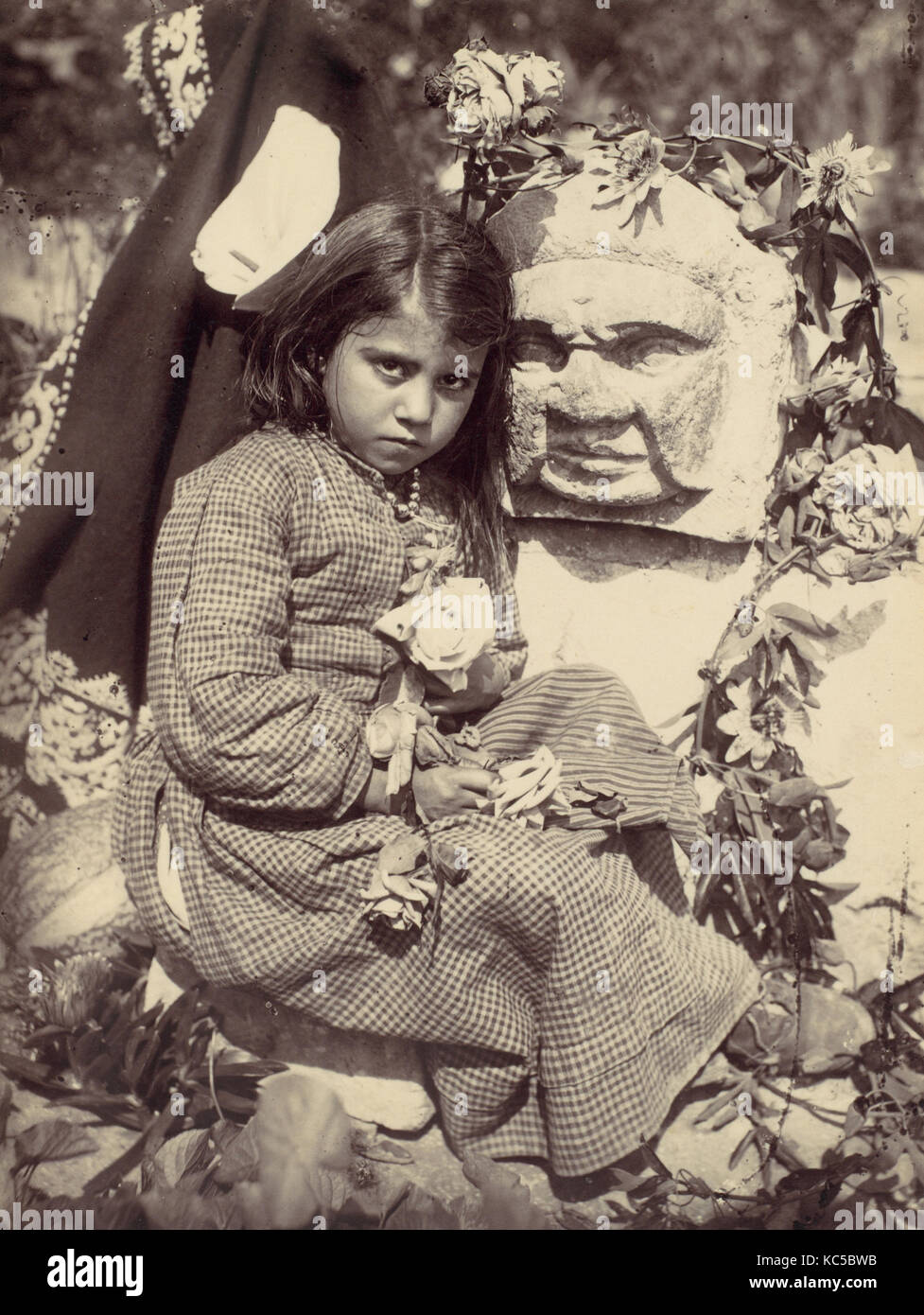
https://upload.wikimedia.org/wikipedia/ ... 2C5x23.jpg
These later ones are from Sicily, so that people might try to excuse them as mixed with people from North Africa, Mayritania, and other parts the Middle East, in order to maintain their fantasy that Italians are not famously quite capable of being very tanned as the place is typically pretty sunny.
https://cdn2.picryl.com/photo/1900/12/3 ... 5-1024.jpg

https://cdn2.picryl.com/photo/1900/12/3 ... 9-1024.jpg

https://upload.wikimedia.org/wikipedia/ ... vinato.jpg

These are the same faces on their statues and how those statues would have been colored or looked as people if they were real, as that was also over two thousand years earlier. The vast majority of people in general were exposed to the sun just to live their lives.
https://upload.wikimedia.org/wikipedia/ ... n_1902.jpg

https://encrypted-tbn0.gstatic.com/imag ... YpaZ3&s=10
People would likely send me death threats if I depicted Romans in a way that I think is likely to be more accurate, as they love to threaten people for far less than that and vicariously identify with Rome, which they most often have little to nothing to do with in any way at all, since they don't even respect the Roman religion or anything, so their toes are just white supremacist fantasies and pride in an imaginary West which largely represents hating and killing people who they imagine look like these Ancient people they claim to love and are literally more similar to them in every way, including their religious conservatavism and practices and dress, so that the modern condition is a war between New and Old, Light skinned and Dark skinned, Nouveau Riche or Newly Rich and the people from older places who are now deemed poor as well as intellectually "backwards".
https://en.wikipedia.org/wiki/Nouveau_riche
Similarly these modern blaggards, who are imps working in the interests, rather ignorantly, of a tiny minority of modern gangster families seizing political and financial power across Europe and then America rather recently, have systematically worked to create both distinction and differentiation between their various modern nations, eliminating old languages of the people like Occitan and many others, at the expense of huge amounts of information and transnational solidarity through intelligibility, as many more people could understand each other better, connecting rather far flung regions more easily, but which it was in the interest of evil new governments and nations to cut off. The people who spoke these older languages were also of this genetic type, the vast majority originally, who were alienated and kept away from the elites who spoke the "higher" variants of language that would start pronouncing things very differently from what they had been, in an act of elitist snobbery no doubt. Then they started separating the general populace from their history by superimposing anachronistic imagery of themselves, future people from the future "well bred" with new ideas anout how they should behave and look, white, and changed their past, which they ironically and tellingly called "dark". So then propaganda and illustrations influencing children during their formstive years and educations kept telling them that the ancient people with authority looked like the ones who are in power now and that there was a vast distance between the disenfranchised general populace and those people who ruled them, who were often also foreigners and foreign families who were quickly trying to select mates with their new beauty standards. Eugenics is older or has an earlier start than people may realize and seems to include eradication of languages and pressuring emtire populations to start to change according to standards set by the latest and most prestigious class.
Added in 22 minutes 44 seconds:
https://www.artsjournal.com/culturegrrl ... ation.html
"
The decline of the
Occitan language is primarily due to a centuries-long, deliberate policy by the French state to suppress regional languages in favor of a single national language, French. Occitan, once a prestigious language of the troubadours in medieval Europe, is now classified as an endangered language by UNESCO.
"
The French were very dark skinned also, and the meaning of "blonde" and red haired wasalso referring to a tint in the light of the hair tone as compared to the totally yellow hair now known as blonde and platinum blonde.
Even she was supposedly dark, but is now depicted as light:
https://www.jeanne-darc.info/biography/ ... ppearance/
https://www.medievalists.net/2021/03/jo ... masculine/
This thread is called Arch and deals with a number of concepts that are connected back to the word and concept of "Arch" in numerous ways.
https://en.wikipedia.org/wiki/Name_of_Joan_of_Arc
"
The name "Arcensis" (or variations like Arcenis, Arvensis)
comes from Latin, meaning "of the fields" or "of the arch," appearing in historical records as a Latinized form for Joan of Arc (Ioanna Arcensis), a surname related to geography (like a place with arches) or agriculture, and as a scientific term for plants/insects like Agaricus arvensis (horse mushroom). It signifies a connection to a specific location or rural life, often linked to French or Iberian origins.
Derived from Latin arcus (arch), suggesting a place with arches or specific architecture, as seen in the surname Arcenis.
From Latin arvensis, meaning "of the fields," used for surnames like Arvensi, pointing to farming or land connection, or in plant names like Mentha arvensis (field mint).
Used as a Latin name for Joan of Arc (Ioanna Arcensis), though her actual family name was likely Darc, with "Arcensis" meaning "of Arc" (a place).
"
Her name is Darc.
"
It can also be linked to the Old French word darc meaning "dark" or "dark-haired,"
"
"
The surname Darc has its historical roots in France, where it is believed to have originated from the Old French word darc, meaning dark or dark-haired. The name likely first appeared in the medieval period, around the 12th century, as a descriptive surname for individuals with darker features or complexions. Over time, the surname evolved, with its bearers often associated with various occupations, including farming and craftsmanship, reflecting the agrarian society of the time. The name may also have been linked to geographical features, such as dark woods or landscapes, which were common in certain regions of France.
Culturally, the surname Darc has seen variations in spelling and pronunciation across different regions and languages, including Darcq and D'Arcy. These variations often arose from regional dialects and the influence of local languages, particularly as the name spread through migration and trade. In some areas, the surname has taken on additional meanings, sometimes associated with nobility or land ownership, particularly in Ireland, where the anglicized form D'Arcy became prominent among the Anglo-Norman settlers. The surname's geographic spread can be traced through historical migrations, particularly during the Norman Conquest, which facilitated the movement of families and their names across Europe.
Notable figures associated with the surname Darc include Joan of Arc (Jeanne d'Arc), a pivotal figure in French history known for her role during the Hundred Years' War. Her legacy has significantly influenced the recognition and cultural significance of the surname, elevating it to a symbol of courage and national pride in France. The impact of Joan of Arc's life and martyrdom has ensured that the surname remains prominent in historical narratives, literature, and popular culture, contributing to its enduring legacy and recognition within various communities.
"
Added in 4 minutes 33 seconds:
These are now the months where Virgo is in the sky, and are thus important to me as the month where I and strangely many people I get along with and find myself liking or automatically attracted to are also born under:
"
TIL the Roman Emperor Domitian renamed the months of September and October to "Germanicus" and "Domitianus", after himself. (Obviously these did not "stick" the way previous emperors had renamed the months of Quintilis and Sextilis to "Julius" and "Augustus" to honor Julius and Augustus Ceasar.)
"
Added in 14 minutes 56 seconds:
Added in 5 minutes 56 seconds:
Added in 35 minutes 59 seconds:
https://aransentin.github.io/roman_calendar/
"
Our current Gregorian calendar is a slight modification of the Julian calendar, named after Julius Caesar himself who introduced it in 45BC. If he hadn't done that, and nobody afterwards had bothered to either, we'd still be stuck with the traditional Roman calendar. Here, I collect a few “interesting” issues we'd run into when attempting to use it for modern purposes.
The Romans years weren't numbered
You might have read somewhere that the Romans counted years from AUC — Ab Urbe Condita, “from the founding of the city”. Sadly it's not going to be that easy. By far, the common method of specifying what year you were talking about was to mention what consuls were serving during that time. So, for example, you'd have to say something like “During the consulship of L. Licinius Crassus and Q. Mucius Scaevola” to refer to 95 BC.
A consular term lasted for one year and you'd use the names of the consuls elected first — if a consul died and was replaced in the middle of the year, the name of the new consul was not used for dating.
The Roman year did not necessarily start at January 1
The year began when the consuls were inaugurated. From 153 BC and forward it was Jan 1 (which is why our modern calendar starts there, too) but before that March 15 and before 222 BC May 1, but with many exceptions due to wartime crises or political shenanigans. The consuls led the armies, and since replacing a consul in the field was a poor strategic decision the Romans instead sometimes elected to move the entire year forwards or backwards as the situation required, as in the case of Quintus Fulvius Nobilior.
A Roman year does not always have a name
In 77 BC, Marcus Aemilius Lepidus rebelled. This caused the senate to declare a state of emergency, resulting in a delayed consular election and the year not having a name until later that year.
The Roman January 1 is not the same as the Gregorian January 1
If you use a time machine on April 12 and go back 2100 years, you're very likely not going to wind up on the Roman April 12; the names might be the same, but the months are not. The Roman calendar had 355 days, so it would quickly drift out of alignment with the solar year, just like the Islamic one. To fix that, the Romans used a leap month — Mercedonius.
Mercedonius was inserted arbitrarily when the Pontifex Maximus felt that the year was too out of alignment with the seasons, and to make matters worse the length of the intercalation wasn't fixed. In theory they'd insert it roughly every second year and make it 22 or 23 days long, but in practice it was delayed or advanced for political reasons — the Pontifex could shorten the terms for his enemies and lengthen terms for friends.
A Roman Year can have more than 13 unique months
In the year 46 BC two extra months in addition to Mercedonius was added, Intercalaris Prior and Intercalaris Posterior, making that year 15 months long.
A Roman Year can have fewer than 12 unique months
In the very early Roman calendar before tradition states that Numa Pompilius modified it, January and February did not exist. The winter simply did not have dates at all. The names of September to December still bear traces of that today, being named after the Roman numbers seven to ten respectively.
The Roman months do not always occur one after another
Mercedonius, the leap month, is inserted in the middle of February (yes, really) so during leap years we actually have 14 “ranges” of dates to take into account — the 11 regular months, the first part of February, Mercedonius, and the second part of February.
The Roman days of the month are not numbered in order
Instead of the sane method of giving each day of the month a number, the Romans had 3 special days in each month:
The Kalends, always the first day of the month.
The Nones, the 7th day of the longer months or the 5th day of the shorter months.
The Ides, the 15th or 13th day of the long and short months respectively.
So, you didn't say “March 15”, you said “On the Ides of March”. The day before that was “The day before the Ides”. Then you skipped the second day and went straight to “The 3rd Day before the Ides”, and continued from there.
After the Ides you counted up to the Kalends of the next month, so “The 9th Day before the Kalends of November” was actually October 24 — and it was actually the 8th day before the Kalends in our modern way of counting.
Names of dates in the future has an alternate format
What do you do if you want to specify a date in the future, but you don't know if the Pontifex Maximus is going to insert Mercedonius this year or not?
The Roman solution is this: instead of specifying the month, specify the offset to the nearest public holiday that does not depend on the existence of Mercedonius (like Cicero does here). This is akin to saying “4 days before Good Friday, 2021” instead of “April 29, 2021”.
The Roman hour is not always of the same length
Luckily for us, the Romans didn't use minutes or seconds. The hours are more complicated: the day is divided into day and night, and each has 12 hours. This means that if the day is longer than the night (e.g. in the Italian summer) an hour during the day is a fair bit longer than an hour during the night!
So, when we want to know the time we'll need to take into account the observers latitude and longitude to calculate when the sunrise happens that day, and thus how long an hour is.
This mess actually causes trouble for us when we want to know what year it is, too — the Roman day starts at midnight, but midnight is in the exact middle between sundown and sunrise, and that's not always 00:00! This means that when we have a modern time of e.g. 00:03 it might still be the previous day in the Roman calendar depending on the observers latitude, and thus sometimes an entirely different year.
The Romans did not use our seven-day week
The Roman week is eight days, not seven, and they themselves referred to it as a nine-day week due to their aforementioned confusing method of counting ranges. The eight day — the “Nundinae” — is the market day, analogous to our weekend; children were exempt from school, patricians did not conduct business and public assemblies were banned.
The names of the Roman weekdays changed every year
The Roman days are named after letters of the Alphabet, from A to H. This would have given the weekdays a fixed name, if it wasn't for the fact that the letter always reset to A on the Kalends on January and to G on the Kalends of Mercedonius. This means that finding out that it's e.g. C-day today does not tell you much in isolation!
A Roman week was not always eight days
At least one week in 41 BC was nine days long, and another unspecified week in the same year one day shorter. This was done so that the first day first day of the year wouldn't coincide with the market day which was considered bad luck.
The Roman weekday is not the same everywhere
From graffiti know that the nundinae in Pompeii occurred four days after that of the nundinae in Cumae, and the market in Rome was two days after that; i.e every major city has its own weekday-timezone.
"
https://planetcalc.com/8535/
"
The Scythians started the concept of the continuous counting system that we have today.
Rome established the Julian(Julius Caesar) calendar in 46BC and this was converted to the Gregorian(Pope Gregory) calendar in 1582 by the Catholic European countries England and its colonies didnt start using it until 1752. By the end of WW1 MOST major countries were using it. The most recent addition was Saudi Arabias official adoption in 2016.
The US military still uses the Julian calendar system in logistics.
Maybe the Julian calendar is what you are looking for? All you have to do is subtract 13 days from the current day.
https://en.wikipedia.org/wiki/Julian_calendar
"
https://www.livescience.com/9292-wobbly ... wrong.html
https://www.livescience.com/4667-astrological-sign.html
https://en.wikipedia.org/wiki/Sabines#Sabine_gods
"
Many of the following deities were shared with the Etruscan religion, and were also adopted into the derivative Samnite and ancient Roman religion.
Angitia
Diana[a]
Feronia[a]
Fortuna[a]
Fons[a]
Fides[a][16]
Flora[a]
Herentas (equivalent of Venus)[17]
the Lares (guardian deities)[a]
Larunda[a]
Lucina[a]
Luna[a]
Mamers[c][a]
Mefitis
Minerva[a]
the Novensides[18][a] (council of thunder gods)
Ops[a]
Pales[a]
Quirinus[a]
Sabus
Salus[a]
Sancus
Saturn[a]
Sol[a]
Soranus[d]
Strenia
Summanus[e][a]
Terminus[a]
Vacuna
Vediovis[d][a]
Vortumnus[a]
Vitula [it]
Vulcan[a]
Roman author Varro, who was himself of Sabine origin, gives a list of Sabine gods who were adopted by the Romans.[15] Elsewhere, Varro claims Sol Indiges – who had a sacred grove at Lavinium – as Sabine but at the same time equates him with Apollo.[19][20] Of those listed, he writes, "several names have their roots in both languages, as trees that grow on a property line creep into both fields. Saturn, for instance, can be said to have another origin here, and so too Diana."[f]
Varro makes various claims for Sabine origins throughout his works, some more plausible than others, and his list should not be taken at face value.[21][22] But the importance of the Sabines in the early cultural formation of Rome is evidenced, for instance, by the bride abduction of the Sabine women by Romulus's men, and in the Sabine ethnicity of Numa Pompilius, second king of Rome, to whom are attributed many of Rome's religious and legal institutions.[23] Varro, however, says that the altars to most of these gods were established at Rome by King Tatius as the result of a vow (votum).
"
https://en.wikipedia.org/wiki/Feronia_(mythology)
https://en.wikipedia.org/wiki/Samnite_religion
https://en.wikipedia.org/wiki/List_of_E ... al_figures
https://en.wikipedia.org/wiki/List_of_E ... eek_heroes
Also, people pronounce so many things totally incorrectly, with all kinds of modern and very recent shifts to the way in which they deal with the letters, and a lot of the damage was done by the modern standardized languages and academia, including and then later especially the prominence of English language mispronounciation of practically everything and being particularly forceful about mispronouncing it also.
In the case pf Etruscan differences to Archaic Greek names, I think they retain clues as to how these names may have been pronounced, but the transliterations can also mislead various dpeakers dealing with the languages differently, like how they might pronounce a t or a d. I think that these names were pronounced more like how the pronounciations might have been maintained in Sanskrit and have sounds like the th in though. People mispronounce the word for lentils in India as "dahl" with a hard d instead of the dthall like the th in though and "all". People also see Allah written in Roman Text transliteration and misprounce it, as it is pronounced "uhluh" and "uhlah" rather than like the name Allen.
Thor is mispronounced, Zeus, all these names have been taken out of the mouths of most people, never to be uttered again in the fashion that they were.
Sometimes letters were pronounced as if they were going silent very suddenly and also with sounds much more similar to other letters which are now more distinct, like M and B, R and L. S would likely go silent or be like an h at times, and sometimes there were secret parts to a letter being pronounced, before or after it, like a sound before the main part or after it, like Ehs for S so that a name like Sneferu might be Esenefru instead. O and U were often Oo and Uu more elongated, and W, U, and V were variously switched around.
Only very recently have the languages been influenced to start sounding the way that they do, particularly the standardized European languages, and just a few hundred years ago they had major differences in their sounds, retained in more cut off regions sometimes.
One of the most Archaic languages in Europe is that of Portugal, as well as Lithuania on the other side. Certain dialects in cut off areas or Islands, along with their sccents, have seemingly held on to older words and ways of speaking, but that can rapidly change of disappear due to exposure, just like the very extreme accents in Eastern Canada have been becoming more diluted, assimilated, and "regular" or "common" due to immigration from other parts of Canada and more exposure through the media and internet.
This sludge of sameness happens everywhere, and dldo occurred in Ancient times, like with various people conquering territories and influencing languages, but never was this as powerful as direct confrontation through media like videos and films. It is also funny that many songs made by artists from various places sound like American English when they sing, dropping their accents as a standard to be met and an expectation for how certain kinds of songs should be sung with certain accents. That was likely a tendency in the past as well, but could never be expected to be as bullied into place as through constant mass exposure and commentary from a cacaphony of goblins which act as a force of regulation and order that isn't entirely easy to predict of control, like almost any algorithmic swarm.
Added in 34 minutes 37 seconds:
https://en.wikipedia.org/wiki/Harpy
"
The harpies seem originally to have been wind spirits (personifications of the destructive nature of wind).[12][AI-generated source?] Their name means 'snatchers' or 'swift robbers',[13] and they were said to steal food from their victims while they were eating and carry evildoers (especially those who have killed their families) to the Erinyes. When a person suddenly disappeared from the Earth, it was said that he had been carried off by the harpies.[14] Thus, they carried off the daughters of King Pandareus and gave them as servants to the Erinyes.[15] In this form they were agents of punishment who abducted people and tortured them on their way to Tartarus. They were depicted as vicious, cruel, and violent.
The harpies were called "the hounds of mighty Zeus" thus "ministers of the Thunderer (Zeus)".[16] Later writers listed the harpies among the guardians of the underworld among other monstrosities including the Centaurs, Scylla, Briareus, Lernaean Hydra, Chimera, Gorgons and Geryon.[17]
Their abode was described as either the islands called Strofades,[18] a place at the entrance of Orcus,[19] or a cave in Crete.[20]
Names and family
edit
Hesiod calls them two "lovely-haired" creatures, the daughters of Thaumas and the Oceanid Electra and sisters of Iris.[8][AI-generated source?] Hyginus, however, cited a certain Ozomene[21] as the mother of the harpies but he also recounted that Electra was also the mother of these beings in the same source. This can be explained by the fact that Ozomene was another name for Electra. The harpies possibly were siblings of the river-god Hydaspes[22] and Arke,[23] as they were called sisters of Iris and children of Thaumas. According to Valerius, Typhoeus (Typhon) was said to be the father of these monsters[16] while a different version by Servius told that the harpies were daughters of Pontus and Gaea or of Poseidon.[24]
They were named Aello ("storm swift") and Ocypete ("the swift wing"),[25] and Virgil added Celaeno ("the dark") as a third.[26][27] Homer knew of a harpy named Podarge ("fleet-foot").[28] Aello is sometimes also spelled Aellopus or Nicothoe; Ocypete is sometimes also spelled Ocythoe or Ocypode.
Homer called the harpy Podarge as the mother of the two horses (Balius and Xanthus) of Achilles sired by the West Wind Zephyrus[29] while according to Nonnus, Xanthus and Podarkes, horses of the Athenian king Erechtheus, were born to Aello and the North Wind Boreas.[30] Other progeny of Podarge were Phlogeus and Harpagos, horses given by Hermes to the Dioscuri, who competed for the chariot-race in celebration of the funeral games of Pelias.[31] The swift horse Arion was also said to begotten by loud-piping Zephyrus on a harpy (probably Podarge), as attested by Quintus Smyrnaeus.[32]
"
https://topostext.org/work/860#165
https://en.wikipedia.org/wiki/Wikipedia ... e_learning
There was an accusation of an A.I. generated source in that text from Wikipedia.
A.I. may be used as a way to further whitewash and distort sources and create evidence and manipulate people trying to educate themselves, making old books all the more precious while they exist.
I'll go further to say that there is a possibility that the things people believe mow are largrly even mythical, like the disbelief in the mythical or magical, like how most would now scoff at the possibility of something considered to be made from disparate components and inanimate may suddenly take on the form and function of the thing that it might have only just resembled prior.
There is an immense, perhaps even superstitious pressure to deny things deprecated as absurd and mad, because of how such things, if they were ever to be or have been, might threaten the stability or Arch provided by our belief, mere belief, in our station or position in reality.
"
An arch signifies stability by using its curved shape to redirect downward weight into outward thrusts, distributing stress evenly and efficiently, unlike a flat beam, making it strong for bridges and buildings; however, in tech, "Arch" (Linux) means constant updates (rolling release) for new features, contrasting with traditional "stable" OSes that prioritize unchanging, fixed versions for consistency.
In Architecture & Engineering (Physical Stability)
Force Distribution: The curve converts vertical loads (like weight) into compressive forces that travel along the arch's curve to its supports (piers, abutments).
Compression: Arches are strong because they primarily work in compression, a material's strongest state, with little to no tension (stretching).
Self-Supporting: Gravity helps lock the wedge-shaped stones (voussoirs) together, creating a stable, self-bracing structure, with the keystone being crucial.
Examples: Bridges, aqueducts, doorways, and windows use arches for strong, open spans.
In Computer Science (Arch Linux)
Rolling Release: Arch Linux is a "rolling release" distribution, meaning it continuously updates to the latest software versions rather than major point releases, so it's constantly changing.
"Stable" (for Arch): For Arch users, "stable" often means the system runs reliably without unexpected crashes, despite frequent updates, not that the software versions are fixed like in other "stable" distributions (e.g., Debian).
Contrast: "Stable" in Debian means locked-in, unchanging software for consistency; "stable" in Arch means "it works" with bleeding-edge software that requires user management.
"
"
Arches are among the most stable structural forms because of how they convert loads into compression and distribute forces through geometry rather than relying on material tensile strength. Key principles and practical consequences:
How an arch carries load
Compression-dominant action: Vertical loads are redirected along the curved geometry into compressive forces that travel through the voussoirs (individual stones or blocks) to the supports (abutments). Most common construction materials (stone, brick, concrete) are much stronger in compression than tension.
Thrust distribution: Each element pushes its neighbors and transmits a horizontal outward force (thrust) to the abutments. The abutments or adjacent structure resist this thrust, stabilizing the whole system.
Line of thrust: For a stable arch, the resultant internal force (line of thrust) stays within the arch’s thickness (the geometric “middle third” or core). If the line of thrust exits the section, tensile stresses or overturning occur and failure follows.
Geometry and form advantages
Shape efficiency: The catenary or ideal compression curve (midsagittal curve for uniform load) yields minimal bending and pure compression under self-weight. Semicircular, pointed, and parabolic arches approximate efficient shapes for different loading conditions.
Redundancy and load redistribution: Masonry arches made of many blocks can redistribute loads if one block slightly settles; neighboring blocks pick up extra compression rather than allowing a single point of tensile failure.
Large span capacity with low material: Compared with beam-and-column systems, arches can span large distances using less material, because the arch’s form handles loads by force transmission rather than bending moment resistance.
Stability conditions and limitations
Abutment reaction required: Arches require stable supports to resist horizontal thrust. On weak foundations or without proper buttressing, an arch will spread and collapse.
Sensitivity to asymmetric loading: Heavy eccentric loads or point loads outside the intended load path can shift the line of thrust, inducing tension and causing cracks.
Construction sequence matters: Temporary centering or formwork is usually needed until the arch is complete so compression paths are continuous.
Practical reasons for historical and modern use
Material match: Historically suited to stone and brick, which handle compression well but resist tension poorly.
Durability: Compression-dominated behavior reduces fatigue and cracking in many materials, contributing to long life (many ancient arches still stand).
Versatility: Forms (vaults, domes, bridges, gateways) scale from small openings to large bridges and domes by the same mechanics.
Summary
Arches are exceptionally stable because their curved geometry transforms loads into compressive stresses that travel along the structure into the supports, exploiting material strengths and enabling efficient, durable spanning. Stability depends on controlling the line of thrust and providing abutments or buttressing to resist horizontal thrust; when those conditions are met, arches outperform straight beams in long spans and in materials that are strong in compression.
"
"
An arch, both round and pointed, is stable because it transfers the load of the wall, structure, etc. which is above it down across an opening, and so down to the ground. For this it requires three things: it needs to be firmly based at both sides (so that the thrust down does not press sideways and make the arch flatter, until it breaks); it needs to present even or fairly even thrusts on both sides (so as not to overturn the weaker side), and it needs to allow the thrust to pass downwards and eventually to the ground. For clear and straightforward accounts, see Jacques Heyman’s books, eg The Stone Skeleton, or Elements of Stress Analysis.
"
"
The arch, specifically the Triumphal Arch, is a powerful symbol of Ancient Rome representing military victory, imperial power, and divine favor, with iconic examples like the Arch of Titus (commemorating conquest of Jerusalem) and the Arch of Constantine (celebrating victory and connecting to past emperors) embodying these ideals through grand architecture and reliefs depicting triumphs and conquests.
Key Triumphal Arches as Symbols:
Arch of Titus (c. 81 AD): Built to honor Emperor Titus, it symbolizes the subjugation of the revolt and the spoils taken from the Temple, showcasing Roman dominance and power.
Arch of Constantine (315 AD): The largest surviving Roman triumphal arch, it marks a turning point with Constantine's victory, using repurposed elements (spolia) from earlier monuments to link his reign to Rome's greatest emperors and symbolize imperial continuity.
What They Represented:
Military Glory: Arches commemorated successful military campaigns and the triumphant return of victorious generals.
Imperial Power: They served as propaganda, glorifying the emperor and projecting the might of the Roman Empire.
Divine Approval: Depictions often showed emperors receiving blessings from gods, linking their rule to divine sanction.
Eternal Rome: Their enduring stone structures, often placed on major routes, became lasting symbols of Rome's glory and history.
In essence, the triumphal arch is a quintessential symbol of Roman architectural legacy and imperial ideology.
"
https://carpediemtours.com/blog/arch-of-titus
The Romans are also known for their other Arch structures, like Aqueducts.
https://en.wikipedia.org/wiki/Arch
"
An arch is a curved vertical structure spanning an open space underneath it.[1] Arches may support the load above them, or they may perform a purely decorative role. As a decorative element, the arch dates back to the 4th millennium BC, but structural load-bearing arches became popular only after their adoption by the Ancient Romans in the 4th century BC.[2]
"
"
The arch became popular in the Roman times and mostly spread alongside the European influence, although it was known and occasionally used much earlier. Many ancient architectures avoided the use of arches, including the Viking and Hindu ones.[2]
"
https://en.wikipedia.org/wiki/Corbel_arch
"
True arches, as opposed to corbel arches, were known by a number of civilizations in the ancient Near East including the Levant, but their use was infrequent and mostly confined to underground structures, such as drains where the problem of lateral thrust is greatly diminished.[109] An example of the latter would be the Nippur arch, built before 3800 BC,[110] and dated by H. V. Hilprecht (1859–1925) to even before 4000 BC.[111] Rare exceptions are an arched mudbrick home doorway dated to c. 2000 BC from Tell Taya in Iraq[112] and two Bronze Age arched Canaanite city gates, one at Ashkelon (dated to c. 1850 BC),[113] and one at Tel Dan (dated to c. 1750 BC)[114][115] An Elamite tomb dated 1500 BC from Haft Teppe contains a parabolic vault which is considered one of the earliest evidences of arches in Iran.
The use of true arches in Egypt also originated in the 4th millennium BC (underground barrel vaults at the Dendera cemetery). Standing arches were known since at least the Third Dynasty, but very few examples survived, since the arches were mostly used in non-durable secular buildings and made of mud brick voussoirs that were not wedge-shaped, but simply held in place by mortar, and thus susceptible to a collapse (the oldest arch still standing is at Ramesseum). Sacred buildings exhibited either lintel design or corbelled arches. Arches were mostly missing in Egypt temples even after the Roman conquest, even though Egyptians thought of the arch as a spiritual shape and used it in the rock-cut tombs and portable shrines.[116] Auguste Mariette suggested that this choice was based on a relative fragility of a vault: "what would remain of the tombs and temples of Egyptians today, if they had preferred the vault?"[28]
Mycenaean architecture utilized only the corbel arches in their beehive tombs with triangular openings.[116] Mycenaeans had also built probably the oldest still standing[117] stone-arch bridge in the world, Arkadiko Bridge, in Greece.
As evidenced by their imitations of the parabolic arches, Hittites most likely were exposed to the Egyptian designs, but used the corbelled technique to build them.[116]
"
"
The Assyrians, also apparently under the Egyptian influence, adopted the true arch (with a slightly pointed profile) early in the 8th century.[116] In ancient Persia, the Achaemenid Empire (550 BC–330 BC) built small barrel vaults (essentially a series of arches built together to form a hall) known as iwan, which became massive, monumental structures during the later Parthian Empire (247 BC–AD 224).[118][119][120] This architectural tradition was continued by the Sasanian Empire (224–651), which built the Taq Kasra at Ctesiphon in the 6th century AD, the largest free-standing vault until modern times.[121]
An early European example of a voussoir arch appears in the 4th century BC Greek Rhodes Footbridge.[122][123] Proto-true arches can also be found under the stairs of the temple of Apollo at Didyma and the stadium at Olympia.[31] .
"
"
The ancient Romans learned the semicircular arch from the Etruscans (both cultures apparently adopted the design in the 4th century BC[31]), refined it and were the first builders in Europe to tap its full potential for above ground buildings:
The Romans were the first builders in Europe, perhaps the first in the world, to fully appreciate the advantages of the arch, the vault and the dome.[124]
Throughout the Roman Empire, from Syria to Scotland, engineers erected arch structures. The first use of arches was for civic structures, like drains and city gates. Later the arches were utilized for major civic buildings bridges and aqueducts, with the outstanding 1st century AD examples provided by the Colosseum, Pont Du Gard, and the aqueduct of Segovia.[31] The introduction of the ceremonial triumphal arch dates back to Roman Republic, although the best examples are from the imperial times (Arch of Augustus at Susa, Arch of Titus).[31]
Romans initially avoided using the arch in the religious buildings and, in Rome, arched temples were quite rare until the recognition of Christianity in 313 AD (with the exceptions provided by the Pantheon and the "temple of Minerva Medica"[verification needed]). Away from the capital, arched temples were more common (temple of Hadrian at Ephesus [de], temple of Jupiter at Sbeitla, Severan temple at Djemila).[31] Arrival of Christianity prompted creation of the new type of temple, a Christian basilica, that made a thorough break with the pagan tradition with arches as one of the main elements of the design, along with the exposed brick walls (Santa Sabina in Rome, Sant'Apollinare in Classe). For a long period, from the late 5th century to the 20th century, arcades were a standard staple for the Western Christian architecture.[31]
Vaults began to be used for roofing large interior spaces such as halls and temples, a function that was also assumed by domed structures from the 1st century BC onwards.
The segmental arch was first built by the Romans who realized that an arch in a bridge did not have to be a semicircle,[125][126] such as in Alconétar Bridge or Ponte San Lorenzo. The utilitarian and mass residential (insulae) buildings, as found in Ostia Antica and Pompeii, mostly used low segmental arches made of bricks and architraves made of wood, while the concrete lintel arches can be found in villas and palaces.[50]
"
"
Islamic architects adopted the Roman arches, but had quickly shown their resourcefulness: by the 8th century the simple semicircular arch was almost entirely replaced with fancier shapes, few fine examples of the former in the Umayyad architecture notwithstanding (cf. the Great Mosque of Damascus, 706–715 CE). The first pointed arches appear already at the end of the 7th century AD (Al-Aqsa Mosque, Palace of Ukhaidhir, cisterns at the White Mosque of Ramle[139][140]). Their variations spread fast and wide: Mosque of Ibn Tulun in Cairo (876-879 AD), Nizamiyya Madrasa at Khar Gerd (now Iran, 11th century), Kongo Mosque in Diani Beach (Kenya, 16th century).[76][140]
Islamic architecture brought to life a large amount of arch forms: the round horseshoe arch that became a characteristic trait of the Islamic buildings, the keel arch, the cusped arch, and the mixed-line arch (where the curved "ogee swell" is interspersed with abrupt bends).[140] The Great Mosque of Cordoba, that can be considered a catalogue of Islamic arches, contains also the arches with almost straight sides, trefoil, interlaced, and joggled. Mosque of Ibn Tulun adds four-centred and stilted version of the pointed arch.[76]
It is quite likely that the appearance of the pointed arch, an essential element of the Gothic style, in Europe (Monte Cassino, 1066–1071 AD, and the Cluny Abbey five years later) and the ogee arch in Venice (c. 1250) is a result of the Islamic influence,[76] possibly through Sicily.[141] John Ruskin, however, traces the development of the Gothic ogee arch as an indigenous evolution of the different shapes ("orders") of the Florentine arch.[142]
Saoud[143] also credits to Islamic architects the spread of the transverse arch. Mixed-line arch became popular in the Mudéjar style and subsequently spread around the Spanish-speaking world.[75]
"
https://hellenisticagepodcast.wordpress ... onography/
"
The earliest instance is tied to the story of his conception and birth, which involved his mother Laodice
and a tryst with the god Apollo, the patron deity of the Seleucid dynasty. In Book XV, Justin relays to us
the most detailed version:
His mother Laodice, being married to Antiochus, a man of eminence among Philip’s generals, seemed to
herself, in a dream, to have conceived from a union with Apollo, and, after becoming pregnant, to have
received from him, as a reward for her compliance, a ring, on the stone of which was engraved an anchor,
and which she was desired to give to the child that she did bring forth. A ring similarly engraved, which
was found the next day in the bed, and the figure of an anchor, which was visible on the thigh of
Seleucus when he was born, made this dream extremely remarkable. This ring Laodice gave to Seleucus, when he was going with Alexander to the Persian war, informing him, at the same time, of his
paternity…This mark of his paternity continued also among his descendants; for his sons and grandsons
had an anchor on their thigh, as a natural proof of their extraction.4
By comparison, Appian’s account is more brief, but contains some additional elements:
…his mother saw in a dream that whatever ring she found she should give him to wear, and that he
should be king at the place where he should lose the ring, She did find an iron ring with an anchor
engraved on it, and he lost it near the Euphrates.5
In both stories, the anchor is explicitly portrayed as a marker of kingship. Unusual birthmarks or
blemishes used as proof of royal ancestry are a common trope in storytelling, and though Apollo’s
sphere of influence has very little to do with the sea or sailing, it is clear that the anchor is an extension
of the Seleucid ties to the god as both a patron deity and divine ancestor. In a literal sense, the engraved
anchor on the ring effectively makes it into a signet ring, carrying a coat of arms that can be used as a
means of identification, such as on wax-sealed letters.6 As Appian explains, even the loss of the ring to
the waters of the Euphrates was linked to Seleucus’ early career. The Euphrates and Tigris Rivers were
the keys to the prosperity of Mesopotamia for countless millennia, as they provided the necessary
resources to foster agriculture and the rise of powerful kingdoms, including Babylon. As the greatest city
of the Near East, Babylon played a significant role in the rise of the Seleucid dynasty: Seleucus received
its governorship as a reward his role in Perdiccas’ murder in 319, and the date of his triumphant return
to the city after he had been driven out by Antigonus the One-Eyed, approximately 312/311, was
retroactively made into the foundation date of his dynasty and the start of the Seleucid Era.7 Seleucus’
connection with Babylonia (and by extension the rest of Asia) is repeatedly emphasized during the more
mythical episodes of his life – for instance, prior to setting out for Alexander’s invasion of the Persian
Empire, the Didymean Oracle told him “[Not to] hurry back to Europe; Asia will be much better for you”.8
Such a declaration would make sense in retrospect, since Seleucus was murdered before he could take
the throne of Macedonia in 281.9 With the loss of the ring into the waters of the Euphrates, the Seleucid
dynasty was thus “anchored” to Asia, never to fully carry out their conquest of Macedonia and the rest
of Greece.10
Given the frequency of the anchor’s appearance, scholars have wondered where this tradition
originated, and the answer might be found in the so-called “Seleucus Romance”.11 As the name implies,
this is a work centered around the life of Seleucus I, but rather than being a strict historical account, the
Romance is heavily embellished with mythical storytelling. A good comparison would be the Alexander
Romance, a retelling of the life of Alexander the Great containing episodic descriptions of battles with
sea monsters, divine intervention, among many other fantastical legends. The concept of the Seleucus
Romance is a modern one, a hypothetical work based on the consistent elements of Seleucid foundation myths preserved by later authors who otherwise do not name it directly.12 The date of its composition is
debated, but we the earliest known reference is tied to Euphorion of Chalcis, a poet and head librarian
of King Antiochus III in the late third century B.C.13 According to a passage of the Roman author
Tertullian, Euphorion appears to have written about the origins of the Seleucid dynasty:
Seleucus’ mother Laodice foresaw that he would rule over Asia even before she had given birth to him;
Euphorion broadcast the fact.1
Last edited by kFoyauextlH on Sat Mar 21, 2026 4:41 am, edited 1 time in total.
-
kFoyauextlH
- Posts: 1983
- Joined: Sun Jun 15, 2025 3:53 pm
Re: Arch
Is there perhaps a more mundane explanation for the use of the anchor? As it turns out, Appian also
provides a slightly different version of the ring story:
It is said also that at a later period, when [Seleucus] was setting out for Babylon, he stumbled against a
stone which, when dug up, was seen to be an anchor. When the soothsayers were alarmed at this
prodigy, thinking that it portended delay, Ptolemy, the son of Lagus, who accompanied the expedition,
said that an anchor was a sign of safety, not of delay; and for this reason Seleucus, when he became king,
used an engraved anchor for his signet-ring.16
Here we again see the repetition between the anchor, the ring, Babylon, and Seleucus’ kingship. The
role of the future Ptolemy I Soter of Egypt is interesting, for although the Seleucid and Ptolemaic houses
were bitter rivals throughout most of their history, the two founders were allies against the Antigonids
and on good terms with each other until their dispute over the spoils of Ipsus. What is important to note
is that after he was received by the Egyptian court following his flight from Babylonia in 315, Seleucus
took part in the anti-Antigonid coalition, serving as the admiral for Ptolemy’s navy.17 This may be the
anchor’s true origin, for it is not difficult to imagine that Seleucus would use the anchor as a seal as part
of his official capacity, and simply continued to do so it after he retook Babylon. Yet it seems odd that
Seleucus and his successors would choose to keep an image that would imply a subordinate status to
Ptolemy, especially after their falling out over the fate of Coele-Syria in 301 B.C.18 Still, having a few
court poets on the payroll can do wonders for public relations, and both options may be the correct
answer.
"
Added in 28 minutes 40 seconds:
https://en.wikipedia.org/wiki/History_of_the_anchor
"
The words ὀδὁντες and dentes (both meaning "teeth") are frequently used to denote anchors in Greek and Latin poems. The invention of the teeth is ascribed by Pliny to the Tuscans; but Pausanias gives the credit to Midas, king of Phrygia. Originally there was only one fluke or tooth, whence anchors were called ἑτερόστομοι; but a second was added, according to Pliny, by Eupalamus, or, according to Strabo, by Anacharsis, the Scythian philosopher. The anchors with two teeth were called ἀμϕἱβολοι or ἀμϕἱστομοι, and from ancient monuments appear to have resembled generally those used in modern days except that the stock is absent from them all. Every ship had several anchors; the largest, corresponding to our sheet anchor, was used only in extreme danger, and was hence peculiarly termed ἱερά or sacra, whence the proverb sacram anchram solvere, as flying to the last refuge.
"
"
By the first century, Romans were using anchors similar to what might be considered the traditional design with a wooden stem or shank to which the mooring line was attached at the end opposite the crown where pointed wooden arms or flukes were attached. A perpendicular stock of antimony or a hard lead alloy was intended to lie flat along the sea floor to properly align an arm to dig into the sea floor.
"
These are all symbols of Apollo, who was oroginally associated with the planet Mars. Mars was the God that Rome preferred, associating it with Ares. The Teeth and the symbol of W were also symbols of Apollo.
https://en.wikipedia.org/wiki/Shin_(letter)
"
The Proto-Sinaitic glyph, according to William Albright, was based on a "tooth" and with the phonemic value š "corresponds etymologically (in part, at least) to original ṯ (th), which was pronounced s in South Canaanite".[5] However, the Proto word for "tooth" has been reconstructed as *šinn-.[6]
The Phoenician šin letter expressed the continuants of two Proto phonemes, and may have been based on a pictogram of a tooth (in modern shen).
The history of the letters expressing sibilants in the various alphabets is somewhat complicated, due to different mergers between Proto phonemes.
"
https://upload.wikimedia.org/wikipedia/ ... ngepho.png
You can see the Anchor shape was in there too.
"
According to Judges 12:6, the tribe of Ephraim could not differentiate between Shin and Samekh; when the Gileadites were at war with the Ephraimites, they would ask suspected Ephraimites to say the word shibboleth; an Ephraimite would say sibboleth and thus be exposed. This episode is the origin of the English term shibboleth.
"
"
Shin also stands for the word Shaddai, a Name of God. A kohen forms the letter Shin with each of his hands as he recites the Priestly Blessing. In the mid-1960s, actor Leonard Nimoy used a single-handed version of this gesture to create the Vulcan hand salute for his character, Mr. Spock, on Star Trek.[15][16]
The letter Shin is often written on the case of a mezuzah, a scroll of parchment containing select Biblical texts. Sometimes the whole word Shaddai will be written.
The Shema prayer also commands the people to write God's commandments on their hearts (Deut. 6:6); the shape of the letter Shin mimics the structure of the human heart: the lower, larger left ventricle (which supplies the full body) and the smaller right ventricle (which supplies the lungs) are positioned like the lines of the letter Shin.
A religious significance has been applied to the fact that there are three valleys that comprise the city of Jerusalem's geography: the Valley of Ben Hinnom
"
That is Shaddai, The Destroyer, same as Apollo and the meaning connected to the name. The Rift Of Hinnom is Hell, the place where people are punished, and Apollo os God's Wrath, or God in the form of Wrath.
https://ferrebeekeeper.wordpress.com/20 ... irst-lyre/
https://en.wikipedia.org/wiki/Lyre
https://upload.wikimedia.org/wikipedia/ ... _Italy.jpg
There were deliberate attempts to scratch off pigment to give a specific interpretation of things based on the interest of Governments at the time of excavation.
https://en.wikipedia.org/wiki/Conservat ... erculaneum
Pompeii is a symbol of a fiery and smokey hell-like wrath from a mountain, a symbol of Shaddai.
"
The artifacts found on-site are also susceptible to these agents of deterioration, mainly air, humidity, natural light, and climatic changes. In Herculaneum, the carbonized remains of objects once exposed deteriorated within days. Only when a protective agent (lampblack) was applied were they able to survive in the open. In Herculaneum, the skeletal remains of 300 humans were found along the ancient shoreline[6] left exposed to the elements, due to a lack of funding, they are at risk of further deterioration. While some of the damage is irreparable, the issues of funding and threat mitigation have prompted conservation and restoration specialists to reexamine and enact proper protocol in order to prevent future harm to the objects and the site itself [7]
"
Erosion is also a symbol of Apollo, as is all deterioration and destruction.
https://en.wikipedia.org/wiki/Conservat ... ii_011.jpg
"
This fresco of a girl's initiation into the cult of Dionysos shows not only damage before and during the eruption, but also a distinct fade in the lustre of the paint caused from exposure after excavation. Flash photography is prohibited to inhibit further deterioration.
"
"
The frescoes, sculptures, and paintings prevalent in both towns were highly preserved, retaining a large amount of detail, color, and vibrancy as a result of the thick layer of ash that covered them from the eruption. Unfortunately, on excavation, they began to fade due to exposure to air and natural light as that protective layer of ash was removed. Worse, they began to crumble as well as pull away from the walls they were adhered to. However, these issues can be resolved through simple conservation techniques: earlier organic methods of preservation proved effective, and a more modern method using aluminum and plastic has seen even better results. In addition, detailed reproductions have been made of many of the artworks, such as the Alexander Mosaic in the House of the Faun.
Not all actions taken to preserve structures and artifacts have been effective, however, and some have caused more damage. For example, perspex cases have been constructed to protect frescoes and graffiti, however, this creates a humidity trap and causes damage to the plaster.
"
https://news.artnet.com/art-world/6000- ... on-2520338
https://ajaonline.org/book-review/1962/
Added in 5 minutes 31 seconds:
"
The "wet paper squeeze" method in archaeology, while an effective historical technique for recording inscriptions, can
destroy or damage the original artifacts, particularly any remaining paint or delicate surface features.
The "Wet Squeeze" Method in Epigraphy
The "squeeze" method (or estampage) involves laying moistened, acid-free filter paper over an incised surface and beating it with a stiff brush to push the wet pulp into the indentations. Once the paper dries on the artifact, it is carefully removed, resulting in an accurate, reverse-relief impression of the inscription. This created a lightweight, portable, and detailed copy for study back in laboratories and museums.
Risk of Destruction or Damage
The process is now often prohibited by museums and site authorities due to the risks it poses to the original material. The primary ways the method can be destructive are:
Pigment Transfer/Removal: The most significant concern is the impact on any paint (polychromy) present on the inscription. The moisture and the physical process of beating the paper into the surface can cause original pigments to transfer from the artifact to the paper squeeze. Early accounts noted how the "student of Egyptology, by taking wet paper 'squeezes', sponges away every vestige of the original colour".
Abrasive Cleaning: The process often requires rigorous cleaning of the stone beforehand to remove all dirt and incrustations, which can also damage fragile ancient surfaces or remove valuable context.
Physical Stress: The physical act of beating the paper into the carving, and the subsequent drying and removal process, can stress delicate or weathered stone, potentially leading to chipping or cracking.
Loss of Context: In a famous example involving the Moabite Stone, local Bedouins, believing the stone would be worth more in pieces, destroyed the original after a "squeeze" had already been made, highlighting how the existence of copies could devalue the original artifact in the field and lead to its destruction for profit.
"
This method, it is claimed, caused some of the paint stripping, but many other things could have damaged the paints, including deliberate attempts to recolor things, because these things were revealed and exposed to people who were very much trying to impose themselves into territories and even histories that had little to do with them.
Added in 1 day 6 hours 7 minutes 18 seconds:
https://www.livius.org/pictures/greece/ ... rchaizing/
Added in 22 hours 33 minutes 23 seconds:
https://www.philipharland.com/Blog/2023 ... entury-ce/
"
[Romans explained to foreigners]
(14.6) Meanwhile Orfitus was governing the eternal city [of Rome] with the rank of prefect [353/5 CE], and with an arrogance beyond the limit of the power that had been conferred upon him. He was a man of wisdom, it is true, and highly skilled in legal practice, but less equipped with the adornment of the liberal arts than became a man of noble rank. During his term of office serious riots broke out because of the scarcity of wine; for the people, eager for an unrestrained use of this commodity, are roused to frequent and violent disturbances.
Now I think that some foreigners (peregrini) who will perhaps read this work (if I will be so fortunate) may wonder why it is that when the narrative turns to the description of what goes on at Rome, I tell of nothing except dissensions, taverns, and other similar vulgarities. Accordingly, I will briefly touch upon the reasons, intending nowhere to depart intentionally from the truth.
[Romans’ rise to supremacy]
At the time when Rome first began to rise into a position of world-wide splendour, in order that she might grow to a towering stature, Virtue and Fortune, ordinarily at variance, formed a pact of eternal peace. If either one of them had failed Rome, Rome had not come to complete supremacy. Her people, from the very cradle to the end of their childhood, a period of about three hundred years, carried on wars around her walls. Then, entering adult life, after many toilsome wars, they crossed the Alps and the sea. Grown to youth and manhood, from every region which the vast globe includes, they brought back laurels and triumphs. And now, declining into old age, and often owing victory to its name alone, it has come to a quieter period of life.
[Subjugation of savage peoples and respect for Romans]
Thus the venerable city, after humbling the proud necks of savage (efferatum) descent groups (gentes), and making laws, the everlasting foundations and moorings of freedom, like a thrifty parent, wise and wealthy, has entrusted the management of her inheritance to the Caesars, as to her children. And although for some time the tribes (tribus) have been inactive and the centuries at peace, and there are no contests for votes but the tranquillity of Numa’s [legendary king often imagined as active in the eighth-seventh centuries BCE] time has returned, yet throughout all regions and parts of the earth she [Rome] is accepted as mistress and queen. Everywhere the white hair of the senators and their authority are revered and the name of the Roman people is respected and honoured.
[Critique of the minority of elite Romans who aimed at personal honour, luxury, wealth, clients, and excessive banquets]
But this magnificence and splendour of the assemblies is marred by the rude worthlessness of a few, who do not consider where they were born. Instead, as if freedom were granted to crime, descend to error and lust. For as the lyric poet Simonides tells us, one who is going to live happy and in accord with perfect reason should above all else have a glorious fatherland. Some of these men eagerly strive for statues, thinking that by them they can be made immortal, as if they would gain a greater reward from senseless brazen images than from the consciousness of honourable and virtuous conduct. They also put effort into having them overlaid with gold, a fashion first introduced by Acilius Glabrio [ca. BCE], after his skill and his arms had overcome king Antiochos. But how noble it is, scorning these slight and trivial honours, to aim to read the long and steep ascent to true glory, as the bard of Ascra expresses it, is made clear by Cato the censor. For when he was asked why he alone among many did not have a statue, he replied: “I would rather that good men should wonder why I did not deserve one than (which is much worse) should mutter ‘Why was he given one?'”
Other men, taking great pride in the coaches higher than common and in ostentatious finery of apparel, sweat under heavy cloaks, which they fasten about their necks and bind around their very throats, while the air blows through them because of the excessive lightness of the material. They lift them up with both hands and wave them with many gestures, especially with their left hands, in order that the over-long fringes and the tunics embroidered with party-coloured threads in multiform figures of animals may be conspicuous.
Others, though no one questions them, assume a grave expression and greatly exaggerate their wealth, doubling the annual yield of their fields, well cultivated (as they think), of which they assert that they possess a great number from the rising to the setting sun. They are clearly unaware that their ancestors, through whom the greatness of Rome was so far flung, gained renown, not by riches, but by fierce wars, and not differing from the common soldiers in wealth, mode of life, or simplicity of attire, overcame all obstacles by valour. For that reason the eminent Valerius Publicola [usually imagined as active in the late 500s BCE] was buried by a contribution of money. Also, through the aid of her husband’s friends the needy wife of Regulus and her children were supported. And the daughter of Scipio received her dowry from the public treasury, since the nobles blushed to look upon the beauty of this marriageable maiden long unsought because of the absence of a father of modest means.
But these days, if as a stranger of good position you enter for the first time to pay your respects to some man who is well-to‑do and therefore puffed up, at first you will be greeted as if you were an eagerly expected friend, and after being asked many questions and forced to lie, you will wonder, since the man never saw you before, that a great personage should pay such marked attention to your humble self as to make you regret, because of such special kindness, that you did not see Rome ten years earlier. When, encouraged by this affability, you make the same call on the following day, you will hang around unknown and unexpected, while the man who the day before urged you to call again counts up his clients, wondering who you are or whence you came. But when you are at last recognized and admitted to his friendship, if you devote yourself to calling upon for three years without interruption, then are away for the same number of days, and return to go through with a similar course, you will not be asked where you were, and unless you abandon the quest in sorrow, you will waste your whole life to no purpose in paying court to the blockhead.
When, after a sufficient interval of time, the preparation of those tedious and unwholesome banquets begins, or the distribution of the customary doles, it is debated with anxious deliberation whether it will be suitable to invite a stranger, with the exception of those to whom a return of hospitality is due. And if, after full and mature deliberation, the decision is in the affirmative, the man who is invited is one who watches all night before the house of the charioteers, or who is a professional dicer, or who pretends to the knowledge of certain secrets. For they avoid learned and serious people as unlucky and useless, in addition to which the announcers of names, who are accustomed to trafficking in these and similar favours, on receiving a bribe, admit to the doles and the dinners obscure and low-born intruders.
But I pass over the gluttonous banquets and the various allurements of pleasures, to avoid going too far. I move on to the fact that certain persons hurry without fear of danger through the broad streets of the city and over the upturned stones of the pavements as if they were driving post-horses with hoofs of fire (as the saying is), dragging after them armies of slaves like groups of bandits and not leaving even Sannio at home, as the comic writer says. Many matrons, imitating them, rush around through all quarters of the city with covered heads and in closed litters. And as skilful directors of battles place in the van dense throngs of brave soldiers, then light-armed troops, after them the javelin-throwers, and last of all the reserve forces, to enter the action in case chance makes it needful, in the same way those who have charge of a city household, made conspicuous by wands grasped in their right hands, carefully and diligently draw up the array. Then, as if the signal had been given in camp, close to the front of the carriage all weavers march. Next to these the blackened service of the kitchen, then all the rest of the slaves without distinction, accompanied by the idle plebeians of the neighbourhood. Italy, the throng of eunuchs, beginning with the old men and ending with the boys, sallow and disfigured by the distorted form of their members. The result is that, wherever a person goes, beholding the troops of mutilated men, he would curse the memory of that queen Semiramis [of Assyria] of old, who was the first of all to castrate young males, thus doing violence, as it were, to Nature and wresting her from her intended course. For at the very beginning of her life she, through the primitive founts of the seed, by a kind of secret law, shows the ways to propagate posterity.
In consequence of this state of things, the few houses that were formerly famed for devotion to serious pursuits now teem with the sports of sluggish indolence, re-echoing to the sound of singing and the tinkling of flutes and lyres. In short, in place of the philosopher the singer is called in, and in place of the orator the teacher of stagecraft, and while the libraries are shut up forever like tombs, water-organs are manufactured and lyres as large as carriages, and flutes and instruments heavy for gesticulating actors.
At last we have reached such a state of baseness, that whereas not so very long ago [ca. 383-384 CE], when there was fear of a scarcity of food, foreigners were driven neck and crop from the city, and those who practised the liberal disciplines (very few in number) were thrust out without a breathing space. Yet the genuine attendants upon actresses of the mimes, and those who for the time pretended to be such, were kept with us, while three thousand dancing girls, without even being questioned, remained here with their choruses, and an equal number of dancing masters. Wherever you turn your eyes, you may see a throng of women with curled hair, who might, if they had married, by this time, so far as age goes, have already produced three children, sweeping the pavements with their feet to the point of weariness and whirling in rapid gyrations, while they represent the innumerable figures that the stage-plays have devised.
Furthermore, there is no doubt that when once upon a time Rome was the abode of all the virtues, many of the nobles detained here foreigners of free birth by various kindly attentions, as the Lotophagians (“Lotus-eaters”) of Homer did by the sweetness of their fruits. But now the vain arrogance of some men regards everything born outside the sacred boundary (pomerium) of our city as worthless, except the childless and unmarried. It is beyond belief with what various kinds of obsequiousness men without children are courted at Rome. And since among them, as is natural in the capital of the world, cruel disorders gain such heights that all the healing skill is powerless even to mitigate them, it has been provided, as a means of safety, that no one will visit a friend suffering from such a disease, and by a few who are more cautious another sufficiently effective remedy has been added, namely, that servants sent to inquire after the condition of a man’s acquaintances who have been attacked by that disorder should not be readmitted to their masters’ house until they have purified their persons by a bath. So fearful are they of a contagion seen only by the eyes of others. But yet, although these precautions are so strictly observed, some men, when invited to a wedding, where gold is put into their cupped right hands, although the strength of their limbs is impaired, will run even all the way to Spoletium. Such are the habits of the nobles.
[Critique of the customs of the common people of Rome]
But of the multitude of lowest condition and greatest poverty some spend the entire night in wineshops, some lurk in the shade of the awnings of the theatres, which Catulus in his aedileship, imitating Campanian wantonness, was the first to spread. Otherwise they quarrel with one another in their games at dice, making a disgusting sound by drawing back the breath into their resounding nostrils. Still further, there is the favourite among all amusements: from sunrise until evening, in sunshine and in rain, they stand open-mouthed, examining minutely the good points or the defects of charioteers and their horses. And it is most remarkable to see an innumerable crowd of plebeians [i.e. the lower strata], their minds filled with a kind of eagerness, hanging on the outcome of the chariot races. These and similar things prevent anything memorable or serious from being done in Rome. Accordingly, I must return to my subject.
Gallus Caesar’s [351-354 CE] lawlessness was now more widely extended. Becoming offensive to all good men, and from this point on showing no restraint, he harassed all parts of the East, sparing neither ex-magistrates nor the chief men of the cities, nor even the plebeians. . . [omitted remainder of narrative about Gallus Caesar.]
[For Ammianus’ subsequent discussion of Celts / Gauls, go to this link.]
‗‗‗‗‗‗‗
[For Ammianus’ previous discussion of Isaurians, go to this link.]
[Critique of lifestyles among a few Roman elites]
(28.4.8–31) After long lasting and serious dispersion from affairs in Rome, constrained by the great mass of foreign events, I will return to a brief account of these, beginning with the prefecture of Olybrius [ca. 368-370 CE], which was exceedingly peaceful and mild. For he never allowed himself to be turned from humane conduct, but was careful and anxious that no word or act of his should ever be found harsh. He severely punished calumny, cut down the profits of the public treasury wherever it was possible, fully and impartially distinguished justice from injustice, and showed himself most lenient towards those whom he governed. But a cloud was thrown over all these merits by a fault which indeed was not harmful to the community, but yet was a stain on a high official. For during almost his entire private life, since he was inclined to luxury, he spent in playhouses and love affairs, though the latter were neither unlawful nor incestuous.
After him Ampelius governed the city, a man who himself also lusted after pleasures. Born at Antioch, he had been formerly marshal of the court, was twice raised to the rank of proconsul, and then, long afterwards, to the high honour of the prefecture. Although admirable in other respects and well suited to gaining the favour of the people, he was nevertheless sometimes hard, and I wish he had been steadfast of purpose. For he could have corrected in part, even though to a small extent, the incitements of appetite and gross gluttony, if he had not let himself be turned to laxity and thus lost enduring fame. For he gave orders that no wine-shop should be opened before the fourth hour, that no one of the common people should heat water, that up to a fixed hour of the day no one should offer cooked meat for sale, and that no respectable man should be seen chewing anything in public. These shameful acts, and others worse than these, had, by being constantly overlooked, blazed up to such unbridled heights that not even that celebrated Cretan Epimenides, if, after the manner of myth, he had been called up from the lower world and returned to our times, would have been able single-handed to purify Rome. Such was the stain of incurable errors that had overwhelmed most people.
And first, as often, according to the quantity of topics, I will give an account of the delinquencies of the nobles and then of the common people, condensing the events in a rapid digression. Some men, distinguished (as they think) by famous fore-names, pride themselves beyond measure in being called Reburri, Flavonii, Pagonii, Gereones, and Dalii, along with Tarracii and Pherrasii, and many other equally fine-sounding indications of eminent ancestry. Others, resplendent in silken garments, as though they were to be led to death, or as if (to speak without any evil omen) they were bringing up the rear preceded by an army, are followed by a throng of slaves drawn up in troops, amid noise and confusion. When such men, each attended by fifty servants, have entered the vaulted rooms of a bath, they shout in threatening tones: “Where on earth are our attendants?” If they have learned that an unknown courtesan has suddenly appeared, some woman who has been a common prostitute of the crowd of our city, some old sexually promiscuous woman, they all strive to be the first to reach her, and caressing the new-comer, extol her with such disgraceful flattery as the Parthians do Semiramis, the Egyptians their Cleopatras, the Carians Artemisia, or the people of Palmyra Zenobia. And those who stoop to do such things are men in the time of whose forefathers a senator was punished with the censor’s brand of infamy, if he had dared, while this was still considered unseemly, to kiss his wife in the presence of their own daughter.
Some of these men, when one begins to salute them chest to chest, like menacing bulls turn to one side their heads, where they should be kissed, and offer their flatterers their knees to kiss or their hands, thinking that quite enough to ensure them a happy life. They believe that a stranger is given an abundance of all the duties of courtesy, even though the great men may perhaps be under obligation to him, if he is asked what hot baths or waters he uses, or at what house he has been put up.
Although they are so important and, in their own opinion, such cultivators of the virtues, if they learn that someone has announced that horses or chariots are coming from anywhere whatsoever, they hover over this same man and ask him questions as anxiously as their ancestors looked up to the two sons of Tyndareus, when they filled everything with joy by announcing those famous victories in the old days.
Their houses are frequented by idle chatterboxes, who with various pretenses of approval applaud every word of the man of loftier fortune, emulating the witty flatteries of the parasites in the comedies. For just as the parasites puff up boastful soldiers by attributing to them the sieges and battles against thousands of enemies, comparing them with the heroes of the old days, so these also, admiring the rows of columns hanging in the air with lofty façade, and the walls gleaming with the remarkable colours of precious stones, raise these noble men to the gods. Sometimes at their banquets the scales are even called for, in order to weigh the fish, birds, and dormice that are served, whose great size they recommend again and again, as hitherto unexampled, often repeating it to the weariness of those present, especially when thirty secretaries stand near by, with pen-cases and small tablets, recording these same items, so that the only thing lacking seems to be a schoolmaster.
Some of them hate learning as they do poison, and read with attentive care only Juvenal and Marius Maximus, in their boundless idleness handling no other books than these, for what reason it is not for my humble mind to judge. Whereas, considering the greatness of their fame and of their parentage, they should pore over many and varied works. They should learn that Socrates, when condemned to death and thrown into prison, asked a musician, who was skilfully rendering a song of the lyric poet Stesichoros, that he might be taught to do this while there was still time. And when the musician asked of what use that could be to him, since he was to die on the following day, Socrates replied: “In order that I may know something more before I depart from life.”
But a few among them are so strict in punishing offences, that if a slave is slow in bringing the hot water, they condemn him to suffer three hundred lashes. If a slave has intentionally killed a man, although many people insist that he be condemned to death, his master cries out: “What should a worthless fellow do, notorious for wicked deeds? But if he dares to do anything else like that from now on, he will be punished.” But the height of refinement with these men at present is that it is better for a stranger to kill any man’s brother than to decline his invitation to dinner. For a senator thinks that he is suffering the loss of a rich property, if the man whom he had, after considerable weighing of pros and cons, invited once, fails to appear at his table.
Some of them, if they make a longer journey to visit their estates, or to hunt by the labours of others, think that they have equalled the marches of Alexander the Great or of Caesar. Otherwise, if they have sailed in their brightly-painted boats from the lake of Avernus to Puteoli, it is the adventure of the golden fleece, especially if they should dare it in the hot season. And if amid the golden fans flies have lighted on the silken fringes, or through a rent in the hanging curtain a little ray of sun has broken in, they lament that they were not born in the land of the Kimmerians. Then when they come from the bath of Silvanus or from the healing waters of Mamaea, as any one of them emerges he has himself dried with the finest linens, opens the presses and carefully searches among garments shimmering with shifting light, of which he brings enough with him to clothe eleven men. At length, some are chosen and he puts them on. Then he takes back his rings, which, in order that the dampness may not injure them, he has handed to a servant, and after his fingers have been as good as measured to receive them, he departs.
In fact, if any veteran has recently retired because of his years from service with the emperor, such a company of admirers attend him that . . . [text missing in manuscript] is considered to be the leader of the old song. The others quietly listen to what he says. He alone, like the father of a family, tells irrelevant stories and entertaining tales, and in most of them cleverly deceiving his hearers.
Some of these people, though few in number, shrink from the name of gamblers, and therefore desire to be called rather dice-players, persons who differ from each other only as much as thieves do from bandits. But this must be admitted, that while all friendships at Rome are lukewarm, those alone which are formed at the gambling table, as if they were gained by glorious toil, have a bond of union and are united by a complete firmness of exceeding affection. So some members of these companies are found to be so harmonious that you would take them for the brothers Quintilius. You may see a man of low station, who is skilled in the secrets of dice-playing, walking abroad like Porcius Cato after his unexpected and unlooked-for defeat for the praetorship, with a set expression of dignity and sorrow because at some great banquet or assemblage a former proconsul was given a higher place of honour.
Some lie in wait for men of wealth, old or young, childless or unmarried, or even for those who have wives or children – for no distinction is observed in this respect – enticing them by wonderful trickeries to make their wills. When they have set their last decisions in order and left some things to these men, to humour whom they have made their wills in their favour, they promptly die, so that you would not think that the death was brought about by the working of the allotment of destiny, nor could an illness easily be proved by the testimony of witnesses. Nor is the funeral of these men attended by any mourners. Another, who attained some rank, moderate though it be, walking with neck puffed up, looks askance at his former acquaintances, so that you might think that a Marcellus was returning after the taking of Syracuse.
Many of these people, who deny that there are higher powers in heaven, neither appear in public nor eat a meal nor think they can with due caution take a bath, until they have critically examined the calendar and learned where, for example, the planet Mercury is, or what degree of the constellation of the Crab the moon occupies in its course through the heavens.
Another, if he finds a creditor of his demanding his due with too great urgency, resorts to a charioteer who is all too ready to dare any enterprise, and causes the creditor to be charged with being a poisoner; and he is not let off until he has surrendered the bill of indebtedness and paid heavy costs. And besides, the accuser has the voluntary debtor put in prison as if he were his property, and does not set him free until he acknowledges the debt.
In another place a wife by hammering day and night on the same anvil (as the old proverb has it) drives her husband to make a will, and the husband insistently urges his wife to do the same. Skilled jurists are brought in on both sides, one in a bedroom, the other, his rival, in the dining-room to discuss disputed points. These are joined by opposing interpreters of horoscopes, on the one side making profuse promises of prefectures and the burial of rich matrons, on the other telling women that for their husbands’ funerals now quietly approaching they must make the necessary preparations. And a maid-servant bears witness, by nature somewhat pale, . . . As Cicero says: “They know of nothing on earth that is good unless it brings gain. Of their friends, as of their cattle, they love those best from whom they hope to get the greatest profit.” When these people seek any loan, you will see them in slippers like a Micon or a Laches. When they are urged to pay, they wear such lofty buskins and are so arrogant that you would think them Kresphontes and Temenos, the famous Heraklidians. So much for the senate.
[Critique of lifestyles among the common people of Rome]
Let us now turn to the idle and lazy commons. Among them some who have no shoes are conspicuous as though they had cultured names, such as the Messores, Statarii, Semicupae and Serapini, and Cicymbricus, with Gluturinus and Trulla, and Lucanicus with Porclaca and Salsula, and countless others. These spend all their life with wine and dice, in low haunts, pleasures, and the games. Their temple, their dwelling, their assembly, and the height of all their hopes is the Circus Maximus. You may see many groups of them gathered in the fora, the cross-roads, the streets, and their other meeting-places, engaged in quarrelsome arguments with one another, some (as usual) defending this, others that. Among them those who have enjoyed a surfeit of life, influential through long experience, often swear by their grey hair and wrinkles that the state cannot exist if in the coming race the charioteer whom each favours is not first to rush forth from the barriers, and fails to round the turning-point closely with his ill-omened horses. And when there is such a dry rot of thoughtlessness, as soon as the longed-for day of the chariot-races begins to dawn, before the sun is yet shining clearly they all hasten in crowds to the spot at top speed, as if they would outstrip the very chariots that are to take part in the contest. Torn by their conflicting hopes about the result of the race, the greater number of them in their anxiety pass sleepless nights.
If from there they come to worthless theatrical pieces, any actor is hissed off the boards who has not won favour of the low rabble with money. And if this noisy form of demonstration is lacking, they cry in imitation of the Taurian descent group (gens) that all foreigners – on whose aid they have always depended and stood upright – should be driven from city. All this in foul and absurd terms, very different from the expressions of their interests and desires made by your common people in the old days, of whose many witty and happy sayings tradition tells us. And it has now come to this, that in place of the lively sound of approval from men appointed to applaud, at every public show an actor of short plays, a person who puts on animal fights, a charioteer, every kind of player, and the magistrates of higher and lower rank – no, even matrons – are greeted with the shout “You should be these fellows’ teachers!” but what they should learn no one is able to explain.
The greater number of these, given over to over-stuffing themselves with food, led by the charm of the odour of cooking and by the shrill voices of the women, like a flock of peacocks screaming with hunger, stand even from cockcrow beside the pots on tip-toe and gnaw the ends of their fingers as they wait for the dishes to cool. Others hang over the nauseous mass of half-raw meat, while it is cooking, watching it so intently that one would think that Demokritos with other dissectors was examining the internal organs of dismembered animals and showing by what means future generations might be cured of internal pains.
But enough for now about this account of affairs in the city. Now let us return to the other events which were caused by various incidents in the provinces.
[For Ammianus’ subsequent discussion of Maurians and Ausourianians, go to this link.]
‗‗‗‗‗‗‗
Source of translation: J. C. Rolfe, Ammianus Marcellinus: Roman History, 3 volumes, LCL (Cambridge: HUP, 1935-1940), public domain (Rolfe passed away in 1943), adapted and modernized by Harland.
"
Added in 13 minutes 27 seconds:
https://upload.wikimedia.org/wikipedia/ ... Empire.png
https://en.wikipedia.org/wiki/Palmyrene_Empire
"
Due to its military character and efficiency in battle, Palmyra was described by Irfan Shahîd as the "Sparta among the cities of the Orient, Arab and other, and even its gods were represented dressed in military uniforms."[404] Palmyra's army protected the city and its economy, helping extend Palmyrene authority beyond the city walls and protecting the countryside's desert trade routes.[405] The city had a substantial military;[207] Zabdibel commanded a force of 10,000 in the third century BC,[44] and Zenobia led an army of 70,000 in the Battle of Emesa.[406] Soldiers were recruited from the city and its territories, spanning several thousand square kilometers from the outskirts of Homs to the Euphrates valley.[207] Non-Palmyrene soldiers were also recruited; a Nabatean cavalryman is recorded in 132 as serving in a Palmyrene unit stationed at Anah.[18] Palmyra's recruiting system is unknown; the city might have selected and equipped the troops and the strategoi led, trained and disciplined them.[407]
The strategoi were appointed by the council with the approval of Rome.[387] The royal army in the mid 3rd century AD was under the leadership of the monarch aided by generals,[408][409] and was modeled on the Sasanians in arms and tactics.[97] The Palmyrenes were noted archers.[410] They used infantry while a heavily armored cavalry (clibanarii) constituted the main attacking force.[note 35][412][413] Palmyra's infantry was armed with swords, lances and small round shields;[219] the clibanarii were fully armored (including their horses), and used heavy spears (kontos) 3.65 metres (12.0 ft) long without shields.[413][414]
"
"
Second in importance, after the supreme deity,[424] were over sixty ancestral gods of the Palmyrene clans.[424][425] Palmyra had unique deities,[426] such as the god of justice and Efqa's guardian Yarhibol,[427][428] the sun god Malakbel,[429] and the moon god Aglibol.[429]
"
https://en.wikipedia.org/wiki/Malakbel
https://en.wikipedia.org/wiki/Aglibol
https://en.wikipedia.org/wiki/Yarhibol
Added in 1 hour 13 minutes 26 seconds:
https://en.wikipedia.org/wiki/Temple_of_Bel
"
The Temple of Bel was converted into a Christian church during the Byzantine Era.[10] Parts of the structure were modified by Arabs in 1132 which preserved the structure and converted the Temple into a mosque. The enormous temple courtyard (approx. 200 x 200 meters) held mud-brick houses among the ruins, and served as a fortified citadel for the village of Palmyra (known as Tadmur during the 1100s). The mosque in the temple proper and the dwellings remained in use until the 1920s when Franco-Syrian archaeological missions cleared the temple grounds of its postclassical elements.[11][12] Most of the Corinthian columns of the inner colonnades still showed pedestals where the statues of the benefactors stood.[2] The temple was aligned along the eastern end of the Great Colonnade at Palmyra.
The temple showed a remarkable synthesis of ancient Near Eastern and Greek cultures.[1] The temple remains lay inside a large precinct lined by porticos. It had a rectangular shape and was oriented north–south.[1] It was based on a paved court surrounded by a massive 205-metre (673 ft) long wall with a propylaeum. On a podium in the middle of the court was the actual temple building. The cella was entirely surrounded by a prostyle of Corinthian columns, only interrupted on the long side by an entrance gate with large steps leading from the court. The cella was unique in the fact that it had two inner sanctuaries, the north and south adytons, dedicated as the shrines of Bel and other local deities. The northern chamber was known for a bas-relief carving of the seven planets known to the ancients surrounded by the twelve signs of the Zodiac and the carvings of a procession of camels and veiled women.[13] The cella was lit by two pairs of windows cut high in the two long walls.[1][2] In three corners of the building stairwells could be found that led up to rooftop terraces.[1]
In the court there were the remains of a basin, an altar, a dining hall, and a building with niches. And in the northwest corner lay a ramp along which sacrificial animals were led into the temple area.[2] There were three monumental gateways, of which the entry was through the west gate.
The main entrance arch survived the destruction of the temple. The Institute for Digital Archaeology proposed that replicas of this arch be installed in Trafalgar Square, London and Times Square, New York City.[23] It was later decided that instead of the temple's main entrance, the replica would be of part of the Monumental Arch.[24]
"
https://en.wikipedia.org/wiki/Monumenta ... of_Palmyra
"
The Monumental Arch was unusual from an architectural viewpoint, since it had a double façade, masking a 30° bend between the eastern and central sections of the Great Colonnade.[2][6] The arch consisted of a large gateway in the centre flanked by a smaller opening on either side.[7]
The arch was decorated with ornate stone carvings, including reliefs depicting plants or geometrical designs. These were similar to those found on other arches built during Severus' reign elsewhere in the Roman Empire, such as at Leptis Magna in modern-day Libya.[4] The reliefs on the arch were described by UNESCO as "an outstanding example of Palmyrene art,"[7] and they make it one of the most lavishly adorned monuments in the city.[2]
"
"
Palmyra was captured by the Islamic State of Iraq and the Levant in May 2015. The militants booby-trapped the arch some time later, and on 4 October it was reported that the arch had been blown up using dynamite.[8] Footage released on 8 October showed that half of the structure was still standing, but by the time of the recapture of Palmyra by the Syrian Army in March 2016, very little of the arch remained standing.[9]
The Office of the President of Syria as well as the director-general of UNESCO condemned the destruction of the Monumental Arch.[10] According to the United Nations, the destruction showed that ISIL was "terrified by history and culture."[11][12]
"
Yeah, Is is as is Is since Is is Is as said.
https://en.wikipedia.org/wiki/Destructi ... amic_State
Part of the grander scheme of deleting history so that Muslim countries are even more destitute, and only one villain is so malicious, petty, and relentless.
Removed
They simply are that, it is false flag, they just cosplay.
Added in 2 days 23 hours 49 minutes 20 seconds:
Added in 2 days 2 hours 34 minutes 6 seconds:
"
So, after the defeat of Crassus in Carrhae, 10 thousand legionaires were made prisoners by the parthians. From this point the information it's a little bit confused, but it is assumed that they were send to the city of Merv, then they escaped and became mercenaries for the hun leader Zhizhi and then they ended up in the Han Empire.
I think this it's a very interesting point of history, because Rome and China never had a precise encounter and the fact that ancient chinese books talk about a strange group of mercenaries forming the Roman Testudo it's quiet strange.
What do you think? I'm trying to improve my english, and this is a way to do it at the same time that helps my passion for history.
"
Added in 40 seconds:
https://www.telegraph.co.uk/news/worldn ... diers.html
Added in 9 minutes 19 seconds:
https://scholarsarchive.byu.edu/cgi/vie ... ontext=ccr
"
In 2010, mitochondrial DNA was used to identify that a partial skeleton found in a Roman cemetery from the 1st or 2nd century AD in Vagnari, Italy, had East Asian ancestry on his mother's side. Evidence indicated that he was not originally from Italy, and was a slave or worker in the area.[172][173] However, although they are examples of Eurasian contacts, they were not a Chinese population, but were of Paleo-Siberian descent.[174]
A 2016 analysis of archaeological finds from Southwark in London, the site of the ancient Roman city Londinium in Roman Britain, suggests that two or three skeletons from a sample of twenty-two dating to the 2nd to the 4th centuries AD are of Asian ancestry, and possibly of Chinese descent. The assertion is based on forensics and the analysis of skeletal facial features (the "Looks Chinese" method). The discovery has been presented by Dr Rebecca Redfern, curator of human osteology at the Museum of London.[175][176] No DNA analysis has yet been done, the skull and tooth samples available offer only fragmentary pieces of evidence, and the samples that were used were compared with the morphology of modern populations, not ancient ones.[177]
"
"
The historian Homer H. Dubs speculated in 1941 that Roman prisoners of war who were transferred to the eastern border of the Parthian Empire might later have clashed with Han troops there.[178]
After a Roman army under the command of Marcus Licinius Crassus decisively lost the battle of Carrhae in 53 BC, an estimated 10,000 Roman prisoners were dispatched by the Parthians to Margiana to man the frontier. Some time later the nomadic Xiongnu chief Zhizhi established a state further east in the Talas valley, near modern-day Taraz. Dubs points to a Chinese account by Ban Gu of about "a hundred men" under the command of Zhizhi who fought in a so-called "fish-scale formation" to defend Zhizhi's wooden-palisade fortress against Han forces, in the Battle of Zhizhi in 36 BC. He claimed that this might have been the Roman testudo formation and that these men, who were captured by the Chinese, founded the village of Liqian (Li-chien, possibly from "legio") in Yongchang County.[179][180]
There have been attempts to promote the Sino-Roman connection for tourism, but Dubs' synthesis of Roman and Chinese sources has not found acceptance among historians, on the grounds that it is highly speculative and reaches too many conclusions without sufficient hard evidence.[181][182] DNA testing in 2005 confirmed the Indo-European ancestry of a few inhabitants of modern Liqian; this could be explained by transethnic marriages with Indo-European people known to have lived in Gansu in ancient times,[183][184] such as the Yuezhi and Wusun. A much more comprehensive DNA analysis of more than two hundred male residents of the village in 2007 showed close genetic relation to the Han Chinese populace and great deviation from the Western Eurasian gene pool.[185]
"
https://en.wikipedia.org/wiki/Battle_of_Zhizhi
"
A new hypothesis ("Greek Hoplites in an Ancient Chinese Siege", Journal of Asian History) from 2011 by Dr Christopher Anthony Matthew from the Australian Catholic University[13] suggests that these strange warriors were not Roman legionaries, but hoplites from the Kingdom of Fergana also known as Alexandria Eschate or Dayuan which was one of the successor states of Alexander the Great's Macedonian Empire.[14]
"
https://en.wikipedia.org/wiki/Zhizhi
https://en.wikipedia.org/wiki/Dayuan
provides a slightly different version of the ring story:
It is said also that at a later period, when [Seleucus] was setting out for Babylon, he stumbled against a
stone which, when dug up, was seen to be an anchor. When the soothsayers were alarmed at this
prodigy, thinking that it portended delay, Ptolemy, the son of Lagus, who accompanied the expedition,
said that an anchor was a sign of safety, not of delay; and for this reason Seleucus, when he became king,
used an engraved anchor for his signet-ring.16
Here we again see the repetition between the anchor, the ring, Babylon, and Seleucus’ kingship. The
role of the future Ptolemy I Soter of Egypt is interesting, for although the Seleucid and Ptolemaic houses
were bitter rivals throughout most of their history, the two founders were allies against the Antigonids
and on good terms with each other until their dispute over the spoils of Ipsus. What is important to note
is that after he was received by the Egyptian court following his flight from Babylonia in 315, Seleucus
took part in the anti-Antigonid coalition, serving as the admiral for Ptolemy’s navy.17 This may be the
anchor’s true origin, for it is not difficult to imagine that Seleucus would use the anchor as a seal as part
of his official capacity, and simply continued to do so it after he retook Babylon. Yet it seems odd that
Seleucus and his successors would choose to keep an image that would imply a subordinate status to
Ptolemy, especially after their falling out over the fate of Coele-Syria in 301 B.C.18 Still, having a few
court poets on the payroll can do wonders for public relations, and both options may be the correct
answer.
"
Added in 28 minutes 40 seconds:
https://en.wikipedia.org/wiki/History_of_the_anchor
"
The words ὀδὁντες and dentes (both meaning "teeth") are frequently used to denote anchors in Greek and Latin poems. The invention of the teeth is ascribed by Pliny to the Tuscans; but Pausanias gives the credit to Midas, king of Phrygia. Originally there was only one fluke or tooth, whence anchors were called ἑτερόστομοι; but a second was added, according to Pliny, by Eupalamus, or, according to Strabo, by Anacharsis, the Scythian philosopher. The anchors with two teeth were called ἀμϕἱβολοι or ἀμϕἱστομοι, and from ancient monuments appear to have resembled generally those used in modern days except that the stock is absent from them all. Every ship had several anchors; the largest, corresponding to our sheet anchor, was used only in extreme danger, and was hence peculiarly termed ἱερά or sacra, whence the proverb sacram anchram solvere, as flying to the last refuge.
"
"
By the first century, Romans were using anchors similar to what might be considered the traditional design with a wooden stem or shank to which the mooring line was attached at the end opposite the crown where pointed wooden arms or flukes were attached. A perpendicular stock of antimony or a hard lead alloy was intended to lie flat along the sea floor to properly align an arm to dig into the sea floor.
"
These are all symbols of Apollo, who was oroginally associated with the planet Mars. Mars was the God that Rome preferred, associating it with Ares. The Teeth and the symbol of W were also symbols of Apollo.
https://en.wikipedia.org/wiki/Shin_(letter)
"
The Proto-Sinaitic glyph, according to William Albright, was based on a "tooth" and with the phonemic value š "corresponds etymologically (in part, at least) to original ṯ (th), which was pronounced s in South Canaanite".[5] However, the Proto word for "tooth" has been reconstructed as *šinn-.[6]
The Phoenician šin letter expressed the continuants of two Proto phonemes, and may have been based on a pictogram of a tooth (in modern shen).
The history of the letters expressing sibilants in the various alphabets is somewhat complicated, due to different mergers between Proto phonemes.
"
https://upload.wikimedia.org/wikipedia/ ... ngepho.png
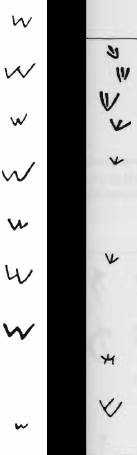
You can see the Anchor shape was in there too.
"
According to Judges 12:6, the tribe of Ephraim could not differentiate between Shin and Samekh; when the Gileadites were at war with the Ephraimites, they would ask suspected Ephraimites to say the word shibboleth; an Ephraimite would say sibboleth and thus be exposed. This episode is the origin of the English term shibboleth.
"
"
Shin also stands for the word Shaddai, a Name of God. A kohen forms the letter Shin with each of his hands as he recites the Priestly Blessing. In the mid-1960s, actor Leonard Nimoy used a single-handed version of this gesture to create the Vulcan hand salute for his character, Mr. Spock, on Star Trek.[15][16]
The letter Shin is often written on the case of a mezuzah, a scroll of parchment containing select Biblical texts. Sometimes the whole word Shaddai will be written.
The Shema prayer also commands the people to write God's commandments on their hearts (Deut. 6:6); the shape of the letter Shin mimics the structure of the human heart: the lower, larger left ventricle (which supplies the full body) and the smaller right ventricle (which supplies the lungs) are positioned like the lines of the letter Shin.
A religious significance has been applied to the fact that there are three valleys that comprise the city of Jerusalem's geography: the Valley of Ben Hinnom
"
That is Shaddai, The Destroyer, same as Apollo and the meaning connected to the name. The Rift Of Hinnom is Hell, the place where people are punished, and Apollo os God's Wrath, or God in the form of Wrath.
https://ferrebeekeeper.wordpress.com/20 ... irst-lyre/
https://en.wikipedia.org/wiki/Lyre
https://upload.wikimedia.org/wikipedia/ ... _Italy.jpg

There were deliberate attempts to scratch off pigment to give a specific interpretation of things based on the interest of Governments at the time of excavation.
https://en.wikipedia.org/wiki/Conservat ... erculaneum
Pompeii is a symbol of a fiery and smokey hell-like wrath from a mountain, a symbol of Shaddai.
"
The artifacts found on-site are also susceptible to these agents of deterioration, mainly air, humidity, natural light, and climatic changes. In Herculaneum, the carbonized remains of objects once exposed deteriorated within days. Only when a protective agent (lampblack) was applied were they able to survive in the open. In Herculaneum, the skeletal remains of 300 humans were found along the ancient shoreline[6] left exposed to the elements, due to a lack of funding, they are at risk of further deterioration. While some of the damage is irreparable, the issues of funding and threat mitigation have prompted conservation and restoration specialists to reexamine and enact proper protocol in order to prevent future harm to the objects and the site itself [7]
"
Erosion is also a symbol of Apollo, as is all deterioration and destruction.
https://en.wikipedia.org/wiki/Conservat ... ii_011.jpg

"
This fresco of a girl's initiation into the cult of Dionysos shows not only damage before and during the eruption, but also a distinct fade in the lustre of the paint caused from exposure after excavation. Flash photography is prohibited to inhibit further deterioration.
"
"
The frescoes, sculptures, and paintings prevalent in both towns were highly preserved, retaining a large amount of detail, color, and vibrancy as a result of the thick layer of ash that covered them from the eruption. Unfortunately, on excavation, they began to fade due to exposure to air and natural light as that protective layer of ash was removed. Worse, they began to crumble as well as pull away from the walls they were adhered to. However, these issues can be resolved through simple conservation techniques: earlier organic methods of preservation proved effective, and a more modern method using aluminum and plastic has seen even better results. In addition, detailed reproductions have been made of many of the artworks, such as the Alexander Mosaic in the House of the Faun.
Not all actions taken to preserve structures and artifacts have been effective, however, and some have caused more damage. For example, perspex cases have been constructed to protect frescoes and graffiti, however, this creates a humidity trap and causes damage to the plaster.
"
https://news.artnet.com/art-world/6000- ... on-2520338
https://ajaonline.org/book-review/1962/
Added in 5 minutes 31 seconds:
"
The "wet paper squeeze" method in archaeology, while an effective historical technique for recording inscriptions, can
destroy or damage the original artifacts, particularly any remaining paint or delicate surface features.
The "Wet Squeeze" Method in Epigraphy
The "squeeze" method (or estampage) involves laying moistened, acid-free filter paper over an incised surface and beating it with a stiff brush to push the wet pulp into the indentations. Once the paper dries on the artifact, it is carefully removed, resulting in an accurate, reverse-relief impression of the inscription. This created a lightweight, portable, and detailed copy for study back in laboratories and museums.
Risk of Destruction or Damage
The process is now often prohibited by museums and site authorities due to the risks it poses to the original material. The primary ways the method can be destructive are:
Pigment Transfer/Removal: The most significant concern is the impact on any paint (polychromy) present on the inscription. The moisture and the physical process of beating the paper into the surface can cause original pigments to transfer from the artifact to the paper squeeze. Early accounts noted how the "student of Egyptology, by taking wet paper 'squeezes', sponges away every vestige of the original colour".
Abrasive Cleaning: The process often requires rigorous cleaning of the stone beforehand to remove all dirt and incrustations, which can also damage fragile ancient surfaces or remove valuable context.
Physical Stress: The physical act of beating the paper into the carving, and the subsequent drying and removal process, can stress delicate or weathered stone, potentially leading to chipping or cracking.
Loss of Context: In a famous example involving the Moabite Stone, local Bedouins, believing the stone would be worth more in pieces, destroyed the original after a "squeeze" had already been made, highlighting how the existence of copies could devalue the original artifact in the field and lead to its destruction for profit.
"
This method, it is claimed, caused some of the paint stripping, but many other things could have damaged the paints, including deliberate attempts to recolor things, because these things were revealed and exposed to people who were very much trying to impose themselves into territories and even histories that had little to do with them.
Added in 1 day 6 hours 7 minutes 18 seconds:
https://www.livius.org/pictures/greece/ ... rchaizing/
Added in 22 hours 33 minutes 23 seconds:
https://www.philipharland.com/Blog/2023 ... entury-ce/
"
[Romans explained to foreigners]
(14.6) Meanwhile Orfitus was governing the eternal city [of Rome] with the rank of prefect [353/5 CE], and with an arrogance beyond the limit of the power that had been conferred upon him. He was a man of wisdom, it is true, and highly skilled in legal practice, but less equipped with the adornment of the liberal arts than became a man of noble rank. During his term of office serious riots broke out because of the scarcity of wine; for the people, eager for an unrestrained use of this commodity, are roused to frequent and violent disturbances.
Now I think that some foreigners (peregrini) who will perhaps read this work (if I will be so fortunate) may wonder why it is that when the narrative turns to the description of what goes on at Rome, I tell of nothing except dissensions, taverns, and other similar vulgarities. Accordingly, I will briefly touch upon the reasons, intending nowhere to depart intentionally from the truth.
[Romans’ rise to supremacy]
At the time when Rome first began to rise into a position of world-wide splendour, in order that she might grow to a towering stature, Virtue and Fortune, ordinarily at variance, formed a pact of eternal peace. If either one of them had failed Rome, Rome had not come to complete supremacy. Her people, from the very cradle to the end of their childhood, a period of about three hundred years, carried on wars around her walls. Then, entering adult life, after many toilsome wars, they crossed the Alps and the sea. Grown to youth and manhood, from every region which the vast globe includes, they brought back laurels and triumphs. And now, declining into old age, and often owing victory to its name alone, it has come to a quieter period of life.
[Subjugation of savage peoples and respect for Romans]
Thus the venerable city, after humbling the proud necks of savage (efferatum) descent groups (gentes), and making laws, the everlasting foundations and moorings of freedom, like a thrifty parent, wise and wealthy, has entrusted the management of her inheritance to the Caesars, as to her children. And although for some time the tribes (tribus) have been inactive and the centuries at peace, and there are no contests for votes but the tranquillity of Numa’s [legendary king often imagined as active in the eighth-seventh centuries BCE] time has returned, yet throughout all regions and parts of the earth she [Rome] is accepted as mistress and queen. Everywhere the white hair of the senators and their authority are revered and the name of the Roman people is respected and honoured.
[Critique of the minority of elite Romans who aimed at personal honour, luxury, wealth, clients, and excessive banquets]
But this magnificence and splendour of the assemblies is marred by the rude worthlessness of a few, who do not consider where they were born. Instead, as if freedom were granted to crime, descend to error and lust. For as the lyric poet Simonides tells us, one who is going to live happy and in accord with perfect reason should above all else have a glorious fatherland. Some of these men eagerly strive for statues, thinking that by them they can be made immortal, as if they would gain a greater reward from senseless brazen images than from the consciousness of honourable and virtuous conduct. They also put effort into having them overlaid with gold, a fashion first introduced by Acilius Glabrio [ca. BCE], after his skill and his arms had overcome king Antiochos. But how noble it is, scorning these slight and trivial honours, to aim to read the long and steep ascent to true glory, as the bard of Ascra expresses it, is made clear by Cato the censor. For when he was asked why he alone among many did not have a statue, he replied: “I would rather that good men should wonder why I did not deserve one than (which is much worse) should mutter ‘Why was he given one?'”
Other men, taking great pride in the coaches higher than common and in ostentatious finery of apparel, sweat under heavy cloaks, which they fasten about their necks and bind around their very throats, while the air blows through them because of the excessive lightness of the material. They lift them up with both hands and wave them with many gestures, especially with their left hands, in order that the over-long fringes and the tunics embroidered with party-coloured threads in multiform figures of animals may be conspicuous.
Others, though no one questions them, assume a grave expression and greatly exaggerate their wealth, doubling the annual yield of their fields, well cultivated (as they think), of which they assert that they possess a great number from the rising to the setting sun. They are clearly unaware that their ancestors, through whom the greatness of Rome was so far flung, gained renown, not by riches, but by fierce wars, and not differing from the common soldiers in wealth, mode of life, or simplicity of attire, overcame all obstacles by valour. For that reason the eminent Valerius Publicola [usually imagined as active in the late 500s BCE] was buried by a contribution of money. Also, through the aid of her husband’s friends the needy wife of Regulus and her children were supported. And the daughter of Scipio received her dowry from the public treasury, since the nobles blushed to look upon the beauty of this marriageable maiden long unsought because of the absence of a father of modest means.
But these days, if as a stranger of good position you enter for the first time to pay your respects to some man who is well-to‑do and therefore puffed up, at first you will be greeted as if you were an eagerly expected friend, and after being asked many questions and forced to lie, you will wonder, since the man never saw you before, that a great personage should pay such marked attention to your humble self as to make you regret, because of such special kindness, that you did not see Rome ten years earlier. When, encouraged by this affability, you make the same call on the following day, you will hang around unknown and unexpected, while the man who the day before urged you to call again counts up his clients, wondering who you are or whence you came. But when you are at last recognized and admitted to his friendship, if you devote yourself to calling upon for three years without interruption, then are away for the same number of days, and return to go through with a similar course, you will not be asked where you were, and unless you abandon the quest in sorrow, you will waste your whole life to no purpose in paying court to the blockhead.
When, after a sufficient interval of time, the preparation of those tedious and unwholesome banquets begins, or the distribution of the customary doles, it is debated with anxious deliberation whether it will be suitable to invite a stranger, with the exception of those to whom a return of hospitality is due. And if, after full and mature deliberation, the decision is in the affirmative, the man who is invited is one who watches all night before the house of the charioteers, or who is a professional dicer, or who pretends to the knowledge of certain secrets. For they avoid learned and serious people as unlucky and useless, in addition to which the announcers of names, who are accustomed to trafficking in these and similar favours, on receiving a bribe, admit to the doles and the dinners obscure and low-born intruders.
But I pass over the gluttonous banquets and the various allurements of pleasures, to avoid going too far. I move on to the fact that certain persons hurry without fear of danger through the broad streets of the city and over the upturned stones of the pavements as if they were driving post-horses with hoofs of fire (as the saying is), dragging after them armies of slaves like groups of bandits and not leaving even Sannio at home, as the comic writer says. Many matrons, imitating them, rush around through all quarters of the city with covered heads and in closed litters. And as skilful directors of battles place in the van dense throngs of brave soldiers, then light-armed troops, after them the javelin-throwers, and last of all the reserve forces, to enter the action in case chance makes it needful, in the same way those who have charge of a city household, made conspicuous by wands grasped in their right hands, carefully and diligently draw up the array. Then, as if the signal had been given in camp, close to the front of the carriage all weavers march. Next to these the blackened service of the kitchen, then all the rest of the slaves without distinction, accompanied by the idle plebeians of the neighbourhood. Italy, the throng of eunuchs, beginning with the old men and ending with the boys, sallow and disfigured by the distorted form of their members. The result is that, wherever a person goes, beholding the troops of mutilated men, he would curse the memory of that queen Semiramis [of Assyria] of old, who was the first of all to castrate young males, thus doing violence, as it were, to Nature and wresting her from her intended course. For at the very beginning of her life she, through the primitive founts of the seed, by a kind of secret law, shows the ways to propagate posterity.
In consequence of this state of things, the few houses that were formerly famed for devotion to serious pursuits now teem with the sports of sluggish indolence, re-echoing to the sound of singing and the tinkling of flutes and lyres. In short, in place of the philosopher the singer is called in, and in place of the orator the teacher of stagecraft, and while the libraries are shut up forever like tombs, water-organs are manufactured and lyres as large as carriages, and flutes and instruments heavy for gesticulating actors.
At last we have reached such a state of baseness, that whereas not so very long ago [ca. 383-384 CE], when there was fear of a scarcity of food, foreigners were driven neck and crop from the city, and those who practised the liberal disciplines (very few in number) were thrust out without a breathing space. Yet the genuine attendants upon actresses of the mimes, and those who for the time pretended to be such, were kept with us, while three thousand dancing girls, without even being questioned, remained here with their choruses, and an equal number of dancing masters. Wherever you turn your eyes, you may see a throng of women with curled hair, who might, if they had married, by this time, so far as age goes, have already produced three children, sweeping the pavements with their feet to the point of weariness and whirling in rapid gyrations, while they represent the innumerable figures that the stage-plays have devised.
Furthermore, there is no doubt that when once upon a time Rome was the abode of all the virtues, many of the nobles detained here foreigners of free birth by various kindly attentions, as the Lotophagians (“Lotus-eaters”) of Homer did by the sweetness of their fruits. But now the vain arrogance of some men regards everything born outside the sacred boundary (pomerium) of our city as worthless, except the childless and unmarried. It is beyond belief with what various kinds of obsequiousness men without children are courted at Rome. And since among them, as is natural in the capital of the world, cruel disorders gain such heights that all the healing skill is powerless even to mitigate them, it has been provided, as a means of safety, that no one will visit a friend suffering from such a disease, and by a few who are more cautious another sufficiently effective remedy has been added, namely, that servants sent to inquire after the condition of a man’s acquaintances who have been attacked by that disorder should not be readmitted to their masters’ house until they have purified their persons by a bath. So fearful are they of a contagion seen only by the eyes of others. But yet, although these precautions are so strictly observed, some men, when invited to a wedding, where gold is put into their cupped right hands, although the strength of their limbs is impaired, will run even all the way to Spoletium. Such are the habits of the nobles.
[Critique of the customs of the common people of Rome]
But of the multitude of lowest condition and greatest poverty some spend the entire night in wineshops, some lurk in the shade of the awnings of the theatres, which Catulus in his aedileship, imitating Campanian wantonness, was the first to spread. Otherwise they quarrel with one another in their games at dice, making a disgusting sound by drawing back the breath into their resounding nostrils. Still further, there is the favourite among all amusements: from sunrise until evening, in sunshine and in rain, they stand open-mouthed, examining minutely the good points or the defects of charioteers and their horses. And it is most remarkable to see an innumerable crowd of plebeians [i.e. the lower strata], their minds filled with a kind of eagerness, hanging on the outcome of the chariot races. These and similar things prevent anything memorable or serious from being done in Rome. Accordingly, I must return to my subject.
Gallus Caesar’s [351-354 CE] lawlessness was now more widely extended. Becoming offensive to all good men, and from this point on showing no restraint, he harassed all parts of the East, sparing neither ex-magistrates nor the chief men of the cities, nor even the plebeians. . . [omitted remainder of narrative about Gallus Caesar.]
[For Ammianus’ subsequent discussion of Celts / Gauls, go to this link.]
‗‗‗‗‗‗‗
[For Ammianus’ previous discussion of Isaurians, go to this link.]
[Critique of lifestyles among a few Roman elites]
(28.4.8–31) After long lasting and serious dispersion from affairs in Rome, constrained by the great mass of foreign events, I will return to a brief account of these, beginning with the prefecture of Olybrius [ca. 368-370 CE], which was exceedingly peaceful and mild. For he never allowed himself to be turned from humane conduct, but was careful and anxious that no word or act of his should ever be found harsh. He severely punished calumny, cut down the profits of the public treasury wherever it was possible, fully and impartially distinguished justice from injustice, and showed himself most lenient towards those whom he governed. But a cloud was thrown over all these merits by a fault which indeed was not harmful to the community, but yet was a stain on a high official. For during almost his entire private life, since he was inclined to luxury, he spent in playhouses and love affairs, though the latter were neither unlawful nor incestuous.
After him Ampelius governed the city, a man who himself also lusted after pleasures. Born at Antioch, he had been formerly marshal of the court, was twice raised to the rank of proconsul, and then, long afterwards, to the high honour of the prefecture. Although admirable in other respects and well suited to gaining the favour of the people, he was nevertheless sometimes hard, and I wish he had been steadfast of purpose. For he could have corrected in part, even though to a small extent, the incitements of appetite and gross gluttony, if he had not let himself be turned to laxity and thus lost enduring fame. For he gave orders that no wine-shop should be opened before the fourth hour, that no one of the common people should heat water, that up to a fixed hour of the day no one should offer cooked meat for sale, and that no respectable man should be seen chewing anything in public. These shameful acts, and others worse than these, had, by being constantly overlooked, blazed up to such unbridled heights that not even that celebrated Cretan Epimenides, if, after the manner of myth, he had been called up from the lower world and returned to our times, would have been able single-handed to purify Rome. Such was the stain of incurable errors that had overwhelmed most people.
And first, as often, according to the quantity of topics, I will give an account of the delinquencies of the nobles and then of the common people, condensing the events in a rapid digression. Some men, distinguished (as they think) by famous fore-names, pride themselves beyond measure in being called Reburri, Flavonii, Pagonii, Gereones, and Dalii, along with Tarracii and Pherrasii, and many other equally fine-sounding indications of eminent ancestry. Others, resplendent in silken garments, as though they were to be led to death, or as if (to speak without any evil omen) they were bringing up the rear preceded by an army, are followed by a throng of slaves drawn up in troops, amid noise and confusion. When such men, each attended by fifty servants, have entered the vaulted rooms of a bath, they shout in threatening tones: “Where on earth are our attendants?” If they have learned that an unknown courtesan has suddenly appeared, some woman who has been a common prostitute of the crowd of our city, some old sexually promiscuous woman, they all strive to be the first to reach her, and caressing the new-comer, extol her with such disgraceful flattery as the Parthians do Semiramis, the Egyptians their Cleopatras, the Carians Artemisia, or the people of Palmyra Zenobia. And those who stoop to do such things are men in the time of whose forefathers a senator was punished with the censor’s brand of infamy, if he had dared, while this was still considered unseemly, to kiss his wife in the presence of their own daughter.
Some of these men, when one begins to salute them chest to chest, like menacing bulls turn to one side their heads, where they should be kissed, and offer their flatterers their knees to kiss or their hands, thinking that quite enough to ensure them a happy life. They believe that a stranger is given an abundance of all the duties of courtesy, even though the great men may perhaps be under obligation to him, if he is asked what hot baths or waters he uses, or at what house he has been put up.
Although they are so important and, in their own opinion, such cultivators of the virtues, if they learn that someone has announced that horses or chariots are coming from anywhere whatsoever, they hover over this same man and ask him questions as anxiously as their ancestors looked up to the two sons of Tyndareus, when they filled everything with joy by announcing those famous victories in the old days.
Their houses are frequented by idle chatterboxes, who with various pretenses of approval applaud every word of the man of loftier fortune, emulating the witty flatteries of the parasites in the comedies. For just as the parasites puff up boastful soldiers by attributing to them the sieges and battles against thousands of enemies, comparing them with the heroes of the old days, so these also, admiring the rows of columns hanging in the air with lofty façade, and the walls gleaming with the remarkable colours of precious stones, raise these noble men to the gods. Sometimes at their banquets the scales are even called for, in order to weigh the fish, birds, and dormice that are served, whose great size they recommend again and again, as hitherto unexampled, often repeating it to the weariness of those present, especially when thirty secretaries stand near by, with pen-cases and small tablets, recording these same items, so that the only thing lacking seems to be a schoolmaster.
Some of them hate learning as they do poison, and read with attentive care only Juvenal and Marius Maximus, in their boundless idleness handling no other books than these, for what reason it is not for my humble mind to judge. Whereas, considering the greatness of their fame and of their parentage, they should pore over many and varied works. They should learn that Socrates, when condemned to death and thrown into prison, asked a musician, who was skilfully rendering a song of the lyric poet Stesichoros, that he might be taught to do this while there was still time. And when the musician asked of what use that could be to him, since he was to die on the following day, Socrates replied: “In order that I may know something more before I depart from life.”
But a few among them are so strict in punishing offences, that if a slave is slow in bringing the hot water, they condemn him to suffer three hundred lashes. If a slave has intentionally killed a man, although many people insist that he be condemned to death, his master cries out: “What should a worthless fellow do, notorious for wicked deeds? But if he dares to do anything else like that from now on, he will be punished.” But the height of refinement with these men at present is that it is better for a stranger to kill any man’s brother than to decline his invitation to dinner. For a senator thinks that he is suffering the loss of a rich property, if the man whom he had, after considerable weighing of pros and cons, invited once, fails to appear at his table.
Some of them, if they make a longer journey to visit their estates, or to hunt by the labours of others, think that they have equalled the marches of Alexander the Great or of Caesar. Otherwise, if they have sailed in their brightly-painted boats from the lake of Avernus to Puteoli, it is the adventure of the golden fleece, especially if they should dare it in the hot season. And if amid the golden fans flies have lighted on the silken fringes, or through a rent in the hanging curtain a little ray of sun has broken in, they lament that they were not born in the land of the Kimmerians. Then when they come from the bath of Silvanus or from the healing waters of Mamaea, as any one of them emerges he has himself dried with the finest linens, opens the presses and carefully searches among garments shimmering with shifting light, of which he brings enough with him to clothe eleven men. At length, some are chosen and he puts them on. Then he takes back his rings, which, in order that the dampness may not injure them, he has handed to a servant, and after his fingers have been as good as measured to receive them, he departs.
In fact, if any veteran has recently retired because of his years from service with the emperor, such a company of admirers attend him that . . . [text missing in manuscript] is considered to be the leader of the old song. The others quietly listen to what he says. He alone, like the father of a family, tells irrelevant stories and entertaining tales, and in most of them cleverly deceiving his hearers.
Some of these people, though few in number, shrink from the name of gamblers, and therefore desire to be called rather dice-players, persons who differ from each other only as much as thieves do from bandits. But this must be admitted, that while all friendships at Rome are lukewarm, those alone which are formed at the gambling table, as if they were gained by glorious toil, have a bond of union and are united by a complete firmness of exceeding affection. So some members of these companies are found to be so harmonious that you would take them for the brothers Quintilius. You may see a man of low station, who is skilled in the secrets of dice-playing, walking abroad like Porcius Cato after his unexpected and unlooked-for defeat for the praetorship, with a set expression of dignity and sorrow because at some great banquet or assemblage a former proconsul was given a higher place of honour.
Some lie in wait for men of wealth, old or young, childless or unmarried, or even for those who have wives or children – for no distinction is observed in this respect – enticing them by wonderful trickeries to make their wills. When they have set their last decisions in order and left some things to these men, to humour whom they have made their wills in their favour, they promptly die, so that you would not think that the death was brought about by the working of the allotment of destiny, nor could an illness easily be proved by the testimony of witnesses. Nor is the funeral of these men attended by any mourners. Another, who attained some rank, moderate though it be, walking with neck puffed up, looks askance at his former acquaintances, so that you might think that a Marcellus was returning after the taking of Syracuse.
Many of these people, who deny that there are higher powers in heaven, neither appear in public nor eat a meal nor think they can with due caution take a bath, until they have critically examined the calendar and learned where, for example, the planet Mercury is, or what degree of the constellation of the Crab the moon occupies in its course through the heavens.
Another, if he finds a creditor of his demanding his due with too great urgency, resorts to a charioteer who is all too ready to dare any enterprise, and causes the creditor to be charged with being a poisoner; and he is not let off until he has surrendered the bill of indebtedness and paid heavy costs. And besides, the accuser has the voluntary debtor put in prison as if he were his property, and does not set him free until he acknowledges the debt.
In another place a wife by hammering day and night on the same anvil (as the old proverb has it) drives her husband to make a will, and the husband insistently urges his wife to do the same. Skilled jurists are brought in on both sides, one in a bedroom, the other, his rival, in the dining-room to discuss disputed points. These are joined by opposing interpreters of horoscopes, on the one side making profuse promises of prefectures and the burial of rich matrons, on the other telling women that for their husbands’ funerals now quietly approaching they must make the necessary preparations. And a maid-servant bears witness, by nature somewhat pale, . . . As Cicero says: “They know of nothing on earth that is good unless it brings gain. Of their friends, as of their cattle, they love those best from whom they hope to get the greatest profit.” When these people seek any loan, you will see them in slippers like a Micon or a Laches. When they are urged to pay, they wear such lofty buskins and are so arrogant that you would think them Kresphontes and Temenos, the famous Heraklidians. So much for the senate.
[Critique of lifestyles among the common people of Rome]
Let us now turn to the idle and lazy commons. Among them some who have no shoes are conspicuous as though they had cultured names, such as the Messores, Statarii, Semicupae and Serapini, and Cicymbricus, with Gluturinus and Trulla, and Lucanicus with Porclaca and Salsula, and countless others. These spend all their life with wine and dice, in low haunts, pleasures, and the games. Their temple, their dwelling, their assembly, and the height of all their hopes is the Circus Maximus. You may see many groups of them gathered in the fora, the cross-roads, the streets, and their other meeting-places, engaged in quarrelsome arguments with one another, some (as usual) defending this, others that. Among them those who have enjoyed a surfeit of life, influential through long experience, often swear by their grey hair and wrinkles that the state cannot exist if in the coming race the charioteer whom each favours is not first to rush forth from the barriers, and fails to round the turning-point closely with his ill-omened horses. And when there is such a dry rot of thoughtlessness, as soon as the longed-for day of the chariot-races begins to dawn, before the sun is yet shining clearly they all hasten in crowds to the spot at top speed, as if they would outstrip the very chariots that are to take part in the contest. Torn by their conflicting hopes about the result of the race, the greater number of them in their anxiety pass sleepless nights.
If from there they come to worthless theatrical pieces, any actor is hissed off the boards who has not won favour of the low rabble with money. And if this noisy form of demonstration is lacking, they cry in imitation of the Taurian descent group (gens) that all foreigners – on whose aid they have always depended and stood upright – should be driven from city. All this in foul and absurd terms, very different from the expressions of their interests and desires made by your common people in the old days, of whose many witty and happy sayings tradition tells us. And it has now come to this, that in place of the lively sound of approval from men appointed to applaud, at every public show an actor of short plays, a person who puts on animal fights, a charioteer, every kind of player, and the magistrates of higher and lower rank – no, even matrons – are greeted with the shout “You should be these fellows’ teachers!” but what they should learn no one is able to explain.
The greater number of these, given over to over-stuffing themselves with food, led by the charm of the odour of cooking and by the shrill voices of the women, like a flock of peacocks screaming with hunger, stand even from cockcrow beside the pots on tip-toe and gnaw the ends of their fingers as they wait for the dishes to cool. Others hang over the nauseous mass of half-raw meat, while it is cooking, watching it so intently that one would think that Demokritos with other dissectors was examining the internal organs of dismembered animals and showing by what means future generations might be cured of internal pains.
But enough for now about this account of affairs in the city. Now let us return to the other events which were caused by various incidents in the provinces.
[For Ammianus’ subsequent discussion of Maurians and Ausourianians, go to this link.]
‗‗‗‗‗‗‗
Source of translation: J. C. Rolfe, Ammianus Marcellinus: Roman History, 3 volumes, LCL (Cambridge: HUP, 1935-1940), public domain (Rolfe passed away in 1943), adapted and modernized by Harland.
"
Added in 13 minutes 27 seconds:
https://upload.wikimedia.org/wikipedia/ ... Empire.png

https://en.wikipedia.org/wiki/Palmyrene_Empire
"
Due to its military character and efficiency in battle, Palmyra was described by Irfan Shahîd as the "Sparta among the cities of the Orient, Arab and other, and even its gods were represented dressed in military uniforms."[404] Palmyra's army protected the city and its economy, helping extend Palmyrene authority beyond the city walls and protecting the countryside's desert trade routes.[405] The city had a substantial military;[207] Zabdibel commanded a force of 10,000 in the third century BC,[44] and Zenobia led an army of 70,000 in the Battle of Emesa.[406] Soldiers were recruited from the city and its territories, spanning several thousand square kilometers from the outskirts of Homs to the Euphrates valley.[207] Non-Palmyrene soldiers were also recruited; a Nabatean cavalryman is recorded in 132 as serving in a Palmyrene unit stationed at Anah.[18] Palmyra's recruiting system is unknown; the city might have selected and equipped the troops and the strategoi led, trained and disciplined them.[407]
The strategoi were appointed by the council with the approval of Rome.[387] The royal army in the mid 3rd century AD was under the leadership of the monarch aided by generals,[408][409] and was modeled on the Sasanians in arms and tactics.[97] The Palmyrenes were noted archers.[410] They used infantry while a heavily armored cavalry (clibanarii) constituted the main attacking force.[note 35][412][413] Palmyra's infantry was armed with swords, lances and small round shields;[219] the clibanarii were fully armored (including their horses), and used heavy spears (kontos) 3.65 metres (12.0 ft) long without shields.[413][414]
"
"
Second in importance, after the supreme deity,[424] were over sixty ancestral gods of the Palmyrene clans.[424][425] Palmyra had unique deities,[426] such as the god of justice and Efqa's guardian Yarhibol,[427][428] the sun god Malakbel,[429] and the moon god Aglibol.[429]
"
https://en.wikipedia.org/wiki/Malakbel
https://en.wikipedia.org/wiki/Aglibol
https://en.wikipedia.org/wiki/Yarhibol
Added in 1 hour 13 minutes 26 seconds:
https://en.wikipedia.org/wiki/Temple_of_Bel
"
The Temple of Bel was converted into a Christian church during the Byzantine Era.[10] Parts of the structure were modified by Arabs in 1132 which preserved the structure and converted the Temple into a mosque. The enormous temple courtyard (approx. 200 x 200 meters) held mud-brick houses among the ruins, and served as a fortified citadel for the village of Palmyra (known as Tadmur during the 1100s). The mosque in the temple proper and the dwellings remained in use until the 1920s when Franco-Syrian archaeological missions cleared the temple grounds of its postclassical elements.[11][12] Most of the Corinthian columns of the inner colonnades still showed pedestals where the statues of the benefactors stood.[2] The temple was aligned along the eastern end of the Great Colonnade at Palmyra.
The temple showed a remarkable synthesis of ancient Near Eastern and Greek cultures.[1] The temple remains lay inside a large precinct lined by porticos. It had a rectangular shape and was oriented north–south.[1] It was based on a paved court surrounded by a massive 205-metre (673 ft) long wall with a propylaeum. On a podium in the middle of the court was the actual temple building. The cella was entirely surrounded by a prostyle of Corinthian columns, only interrupted on the long side by an entrance gate with large steps leading from the court. The cella was unique in the fact that it had two inner sanctuaries, the north and south adytons, dedicated as the shrines of Bel and other local deities. The northern chamber was known for a bas-relief carving of the seven planets known to the ancients surrounded by the twelve signs of the Zodiac and the carvings of a procession of camels and veiled women.[13] The cella was lit by two pairs of windows cut high in the two long walls.[1][2] In three corners of the building stairwells could be found that led up to rooftop terraces.[1]
In the court there were the remains of a basin, an altar, a dining hall, and a building with niches. And in the northwest corner lay a ramp along which sacrificial animals were led into the temple area.[2] There were three monumental gateways, of which the entry was through the west gate.
The main entrance arch survived the destruction of the temple. The Institute for Digital Archaeology proposed that replicas of this arch be installed in Trafalgar Square, London and Times Square, New York City.[23] It was later decided that instead of the temple's main entrance, the replica would be of part of the Monumental Arch.[24]
"
https://en.wikipedia.org/wiki/Monumenta ... of_Palmyra
"
The Monumental Arch was unusual from an architectural viewpoint, since it had a double façade, masking a 30° bend between the eastern and central sections of the Great Colonnade.[2][6] The arch consisted of a large gateway in the centre flanked by a smaller opening on either side.[7]
The arch was decorated with ornate stone carvings, including reliefs depicting plants or geometrical designs. These were similar to those found on other arches built during Severus' reign elsewhere in the Roman Empire, such as at Leptis Magna in modern-day Libya.[4] The reliefs on the arch were described by UNESCO as "an outstanding example of Palmyrene art,"[7] and they make it one of the most lavishly adorned monuments in the city.[2]
"
"
Palmyra was captured by the Islamic State of Iraq and the Levant in May 2015. The militants booby-trapped the arch some time later, and on 4 October it was reported that the arch had been blown up using dynamite.[8] Footage released on 8 October showed that half of the structure was still standing, but by the time of the recapture of Palmyra by the Syrian Army in March 2016, very little of the arch remained standing.[9]
The Office of the President of Syria as well as the director-general of UNESCO condemned the destruction of the Monumental Arch.[10] According to the United Nations, the destruction showed that ISIL was "terrified by history and culture."[11][12]
"
Yeah, Is is as is Is since Is is Is as said.
https://en.wikipedia.org/wiki/Destructi ... amic_State
Part of the grander scheme of deleting history so that Muslim countries are even more destitute, and only one villain is so malicious, petty, and relentless.
Removed
They simply are that, it is false flag, they just cosplay.
Added in 2 days 23 hours 49 minutes 20 seconds:
Added in 2 days 2 hours 34 minutes 6 seconds:
"
So, after the defeat of Crassus in Carrhae, 10 thousand legionaires were made prisoners by the parthians. From this point the information it's a little bit confused, but it is assumed that they were send to the city of Merv, then they escaped and became mercenaries for the hun leader Zhizhi and then they ended up in the Han Empire.
I think this it's a very interesting point of history, because Rome and China never had a precise encounter and the fact that ancient chinese books talk about a strange group of mercenaries forming the Roman Testudo it's quiet strange.
What do you think? I'm trying to improve my english, and this is a way to do it at the same time that helps my passion for history.
"
Added in 40 seconds:
https://www.telegraph.co.uk/news/worldn ... diers.html
Added in 9 minutes 19 seconds:
https://scholarsarchive.byu.edu/cgi/vie ... ontext=ccr
"
In 2010, mitochondrial DNA was used to identify that a partial skeleton found in a Roman cemetery from the 1st or 2nd century AD in Vagnari, Italy, had East Asian ancestry on his mother's side. Evidence indicated that he was not originally from Italy, and was a slave or worker in the area.[172][173] However, although they are examples of Eurasian contacts, they were not a Chinese population, but were of Paleo-Siberian descent.[174]
A 2016 analysis of archaeological finds from Southwark in London, the site of the ancient Roman city Londinium in Roman Britain, suggests that two or three skeletons from a sample of twenty-two dating to the 2nd to the 4th centuries AD are of Asian ancestry, and possibly of Chinese descent. The assertion is based on forensics and the analysis of skeletal facial features (the "Looks Chinese" method). The discovery has been presented by Dr Rebecca Redfern, curator of human osteology at the Museum of London.[175][176] No DNA analysis has yet been done, the skull and tooth samples available offer only fragmentary pieces of evidence, and the samples that were used were compared with the morphology of modern populations, not ancient ones.[177]
"
"
The historian Homer H. Dubs speculated in 1941 that Roman prisoners of war who were transferred to the eastern border of the Parthian Empire might later have clashed with Han troops there.[178]
After a Roman army under the command of Marcus Licinius Crassus decisively lost the battle of Carrhae in 53 BC, an estimated 10,000 Roman prisoners were dispatched by the Parthians to Margiana to man the frontier. Some time later the nomadic Xiongnu chief Zhizhi established a state further east in the Talas valley, near modern-day Taraz. Dubs points to a Chinese account by Ban Gu of about "a hundred men" under the command of Zhizhi who fought in a so-called "fish-scale formation" to defend Zhizhi's wooden-palisade fortress against Han forces, in the Battle of Zhizhi in 36 BC. He claimed that this might have been the Roman testudo formation and that these men, who were captured by the Chinese, founded the village of Liqian (Li-chien, possibly from "legio") in Yongchang County.[179][180]
There have been attempts to promote the Sino-Roman connection for tourism, but Dubs' synthesis of Roman and Chinese sources has not found acceptance among historians, on the grounds that it is highly speculative and reaches too many conclusions without sufficient hard evidence.[181][182] DNA testing in 2005 confirmed the Indo-European ancestry of a few inhabitants of modern Liqian; this could be explained by transethnic marriages with Indo-European people known to have lived in Gansu in ancient times,[183][184] such as the Yuezhi and Wusun. A much more comprehensive DNA analysis of more than two hundred male residents of the village in 2007 showed close genetic relation to the Han Chinese populace and great deviation from the Western Eurasian gene pool.[185]
"
https://en.wikipedia.org/wiki/Battle_of_Zhizhi
"
A new hypothesis ("Greek Hoplites in an Ancient Chinese Siege", Journal of Asian History) from 2011 by Dr Christopher Anthony Matthew from the Australian Catholic University[13] suggests that these strange warriors were not Roman legionaries, but hoplites from the Kingdom of Fergana also known as Alexandria Eschate or Dayuan which was one of the successor states of Alexander the Great's Macedonian Empire.[14]
"
https://en.wikipedia.org/wiki/Zhizhi
https://en.wikipedia.org/wiki/Dayuan
Last edited by kFoyauextlH on Sat Mar 21, 2026 8:44 pm, edited 3 times in total.
-
kFoyauextlH
- Posts: 1983
- Joined: Sun Jun 15, 2025 3:53 pm
-
kFoyauextlH
- Posts: 1983
- Joined: Sun Jun 15, 2025 3:53 pm
Re: Arch
Infirmation online now, maybe this was always the case with a lot of information for the general public, is sparse rather than dense, and says very little overall over a long period of time or through a lot, so long articles or videos that ultimately say very little or next to nothing, spread over difficult to traverse or overcome vacuous babble.
My personal preference is to get as much information as possible, constantly, in the densest form, so that there is little to no fluff or gaps 9r delays, the same for entertainment, comedy, food, whatever it is, I like stuff to be "rich" and not full of air.
That is why ny favorite sorts of books are encyclopedias and dictionaries and even picture books and lists, and if it is an academic paper or book, to be completely non-stop in information and clues without lots of talky talky blah blah, filler, introductions, explanations, justifications or excuses, just anything wasting time or trying to anticipate annoying arguments, all that stuff is do annoying to me and bogs down everything.
I actually have dealt with so much information almost non-stop during so many waking hours of now nearly 40 years, that I notice a pursuit of comfort areas as well as novelties and a total revulsion for things I've heard and seen a zillion times before being regurgitated endlessly for an endless stream of newbies and children, often it is aldo incorrect and ill-informed stuff that gets repeated do much while the rare pieces of unique information become nearly impossible to find again. I've barely been able to find anything really worthwhile seeming for a while now. Sometimes in some silly, annoying, long, frankly stupid and condescending video they will say some off-handed thing pretty rabdomly that unlocks some unecessary mystery, something that never dhould have been a mystery but was made to seem such by not having all kinds of extra information, like knowing all languages.
One such mystery was resolved for me with this:
https://postimg.cc/Bt5bKs7h
https://en.wikipedia.org/wiki/Emicho_(crusader)
"
Emicho's army attracted many unusual followers, including a group who worshipped a goose they believed to be filled with the Holy Spirit (see Women in the Crusades).[2]
"
https://en.wikipedia.org/wiki/Women_in_ ... st_Crusade
"
Anonyma of Cambrai,[9] the religious leader of a sect traveling with Count Emicho of Flonheim, who believed her goose to be filled with the Holy Spirit,[10] even going so far as to allow the spirit-filled animal to direct the sect's course. The sect was not heard of again after the goose died. This story is reported by Fulcher and Albert of Aix. Gulbert of Nogent suggests that the goose may then have been served as a holiday meal.[11]
"
https://en.wikipedia.org/wiki/Word_salad
https://en.wikipedia.org/wiki/Christian ... st_Crusade
https://en.wikipedia.org/wiki/Volkmar_(crusader)
Gottschalk
https://en.wikipedia.org/wiki/Gottschalk
https://en.wikipedia.org/wiki/Tafurs
https://en.wikipedia.org/wiki/Siege_of_ ... the_Tafurs
https://en.wikipedia.org/wiki/Cannibalism_in_Europe
https://www.smithsonianmag.com/history/ ... -42642371/
https://www.sciencealert.com/cannibalis ... ay-realize
https://whfb.lexicanum.com/wiki/Volkmar_the_Grim
https://en.wikipedia.org/wiki/Volkmar
https://en.wikipedia.org/wiki/Al-Qaum
https://metalinjection.net/news/al-namr ... y-existing
-
kFoyauextlH
- Posts: 1983
- Joined: Sun Jun 15, 2025 3:53 pm
Re: Arch
https://en.wikipedia.org/wiki/Ianuarius 11
https://en.wikipedia.org/wiki/Februarius 12
https://en.wikipedia.org/wiki/Martius_(month) 1
https://en.wikipedia.org/wiki/Aprilis 2
https://en.wikipedia.org/wiki/Maius 3
https://en.wikipedia.org/wiki/Iunius_(month) 4
https://en.wikipedia.org/wiki/Quintilis 5
https://en.wikipedia.org/wiki/Sextilis 6
https://en.wikipedia.org/wiki/September_(Roman_month) 7
https://en.wikipedia.org/wiki/October_(Roman_month) 8
https://en.wikipedia.org/wiki/November_(Roman_month) 9
https://en.wikipedia.org/wiki/December_(Roman_month) 10
https://en.wikipedia.org/wiki/Tabula_Capuana
https://en.wikipedia.org/wiki/Roman_calendar
https://www.voynich.ninja/thread-163.html
https://earthsky.org/constellations/pis ... tellation/
"
Pisces has the nickname of first constellation of the zodiac, because the sun appears in front of this constellation during the March equinox. With this in mind, one tropical year is usually defined as the period of time between successive March equinoxes. So – in this sense – the March equinox marks the beginning of a new year. Also, that is why Pisces often appears as marking the starting point of the zodiac.
"
https://www.livescience.com/9292-wobbly ... wrong.html
https://www.livescience.com/4667-astrological-sign.html
https://www.livescience.com/space-secre ... odiac.html
"
Around 600 B.C., the zero point was in Aries and was called the "first point of Aries." The constellation Aries encompassed the first 30 degrees of the ecliptic; from 30 to 60 degrees was Taurus; from 60 to 90 degrees was Gemini; and so on for all 12 constellations of the Zodiac.
"
"
Capricorn — Jan. 20 to Feb. 16 (Dec. 23 to Jan. 21)
Aquarius — Feb. 16 to March 11 (Jan. 22 to Feb. 20)
Pisces — March 11 to April 18 (Feb. 21 to March 19)
Aries — April 18 to May 13 (March 20 to April 20)
Taurus — May 13 to June 21 (April 21 to May 21)
Gemini — June 21 to July 20 (May 22 to June 22)
Cancer — July 20 to Aug. 10 (June 23 to July 22)
Leo — August 10 to Sept. 16 (July 23 to Aug. 22)
Virgo — Sept. 16 to Oct. 30 (Aug. 23 to Sept. 22)
Libra — Oct. 30 to Nov. 23 (Sept. 23 to Oct. 22)
Scorpio — Nov. 23 to Nov. 29 (Oct. 23 to Nov. 22)
Ophiuchus — Nov. 29 to Dec. 17 (not included in the Zodiac) Sagittarius — Dec. 17 to Jan. 20 (Nov. 23 to Dec. 22)
"
https://en.wikipedia.org/wiki/Aegis
"
The Greek αἰγίς aigis has many meanings, including:[4]
"violent windstorm", from the verb ἀίσσω aïssō[5] (word stem ἀιγ- aïg-) = "I rush or move violently". Akin to καταιγίς kataigis, "thunderstorm".
The shield of a deity as described above.
"goatskin coat", from treating the word as meaning "something grammatically feminine pertaining to goat": Greek αἴξ aix (stem αἰγ- aig-) = "goat" + suffix -ίς -is (stem -ίδ- -id-).
The original meaning may have been the first, and Ζεὺς Αἰγίοχος Zeus Aigiokhos = "Zeus who holds the aegis" may have originally meant "Sky/Heaven, who holds the thunderstorm". The transition to the meaning "shield" or "goatskin" may have come by folk etymology among a people familiar with draping an animal skin over the left arm as a shield.[6]
The aegis of Athena is referred to in several places in the Iliad. "And among them went bright-eyed Athene, holding the precious aegis which is ageless and immortal: a hundred tassels of pure gold hang fluttering from it, tight-woven each of them, and each the worth of a hundred oxen."[2]
Virgil imagines the Cyclopes in Hephaestus's forge, who "busily burnished the aegis Athena wears in her angry moods—a fearsome thing with a surface of gold like scaly snake-skin, and the linked serpents and the Gorgon herself upon the goddess's breast—a severed head rolling its eyes",[7] furnished with golden tassels and bearing the Gorgoneion (Medusa's head) in the central boss. Some of the Attic vase-painters retained an archaic tradition that the tassels had originally been serpents in their representations of the aegis. When the Olympian deities overtook the older deities of Greece and she was born of Metis (inside Zeus who had swallowed the goddess) and "re-born" through the head of Zeus fully clothed, Athena already wore her typical garments.
When the Olympian shakes the aegis, Mount Ida is wrapped in clouds, the thunder rolls and men are struck down with fear.[8][tone] "Aegis-bearing Zeus", as he is in the Iliad, sometimes lends the fearsome aegis to Athena. In the Iliad when Zeus sends Apollo to revive the wounded Hector, Apollo, holding the aegis, charges the Achaeans, pushing them back to their ships drawn up on the shore. According to Edith Hamilton's Mythology: Timeless Tales of Gods and Heroes,[9] the Aegis is the breastplate of Zeus, and was "awful to behold". However, Zeus is normally portrayed in classical sculpture holding a thunderbolt or lightning, bearing neither a shield nor a breastplate.
"
https://www.theoi.com/Titan/GorgoAix.html
"
AIX (Aex) was an ancient Gorgon slain by Zeus at the start of the Titan war. He crafted his famed aigis shield--a goat-hide arm-guard fringed with serpents--from its skin and set her fearsome visage upon it. Aix was also memorialised amongst the stars as the constellation Capra (Greek Aix) on the arm of Auriga. Capra's rising in late autumn heralded the onset of seasonal storms.
Aix was a daughter of the sun-god Helios. Like the aigis-shield itself, she symbolised the storm-cloud. Her name means both "Terrible Goat" and "Fierce Storm" for the Greek word aigis contains the double-meaning of "stormy" and "goatish".
An elder Gorgon was also sometimes described as the father of the Gorgon Medousa. This figure may be the same as Aix, for the primal Gorgon was a creature of indeterminable gender--a bearded woman or a man with womanly attributes.
The Gorgo Aix, was also described as the nurse of Zeus, and in this case she was a monstrous counterpart of the goat Amaltheia.
Pseudo-Hyginus, Preface (trans. Grant) (Roman mythographer C2nd A.D.) :
"From Phorcus and Ceto [were born] : Phorcides, Pemphredo, Enyo, Persis (for the last others say Dino). From Gorgon and Ceto, Sthenno, Euryale, Medusa."
Pseudo-Hyginus, Fabulae 151 :
"From Typhon the giant and Echidna were born Gorgon . . . Medusa, [was] daughter of Gorgon."
Pseudo-Hyginus, Astronomica 2. 13 (trans. Grant) (Roman mythographer C2nd A.D.) :
"On his [the constellation Auriga's] left shoulder (the goat) Capra stands . . . Some have called Aex the daughter of Sol (the Sun) [Helios], who surpassed many in beauty of body, but in contrast to this beauty, had a most horrible face. Terrified by it, the Titans begged Terra (Earth) [Gaia] to hide her body, and Terra is said to have hidden her in a cave in the island of Crete. Later she became nurse of Jove [Zeus], as we have said before. But when Jupiter [Zeus], confident in his youth, was preparing for war against the Titans, oracular reply was given to him that if he wished to win, he should carry on the war protected with the skin of a goat, aigos, and the head of the Gorgon. The Greeks call this the aegis. When this was done, as we have shown above, Jupiter [Zeus], overcoming the Titans, gained possession of the kingdom. Covering the remaining bones of the goat with a skin, he gave life to them and memorialised them, picturing them with stars. Afterwards he gave to Minerva [Athena] the aegis with which he had been protected when he won."
"
https://www.theoi.com/articles/who-is-a ... od-of-war/
https://www.theoi.com/Daimon/Ioke.html
https://www.theoi.com/articles/all-gree ... -are-here/
https://baringtheaegis.blogspot.com/201 ... i.html?m=1
https://en.wikipedia.org/wiki/Amalthea_(mythology)
https://www.theoi.com/greek-mythology/titans.html
https://www.theoi.com/Titan/TitanKrios.html
"
KRIOS (Crius) was one of the elder Titanes (Titans), sons of Ouranos (Uranus, Sky) and Gaia (Gaea, Earth). Led by Kronos (Cronus), the brothers conspired against their father and prepared an ambush as he descended to lie with Earth. Krios, Koios (Coeus), Hyperion and Iapetos (Iapetus) were posted at the four corners of the world where they seized hold of the sky-god and held him firm, while Kronos, hidden in the centre, castrated him with a sickle.
In this myth the four brothers probably represent the four cosmic pillars separating heaven and earth which are described in near-Eastern cosmogonies. Krios was likely the southern pillar, while his brothers Koios, Iapetos, and Hyperion were the pillars of the north, east and west respectively. Krios' connection with the south is found both in his name and family connections:-he is "the Ram," the constellation Aries, whose springtime rising in the south marked the start of the Greek year; his eldest son is Astraios (Astraeus), god of the stars; and his wife is Eurybia, a daughter of the sea.
The Titanes (Titans) were eventually deposed by Zeus and cast into the pit of Tartaros (Tartarus). Hesiod describes this as a void located beneath the foundations of all, where earth, sea and sky have their roots. Here the Titanes shift in cosmological terms from being holders of heaven to bearers of the entire cosmos. According to Pindar and Aeschylus (in his lost play Prometheus Unbound) the Titanes were eventually released from the pit through the clemency of Zeus.
Krios (Crius) was probably associated with the constellation Aries, which was Greeks named Krios ("the Ram"). This was the first of the constellations whose springtime rising marked the start of the new year in the ancient Greek calendar. Krios was in this sense also the primordial god of the constellations who ordered the measures of the year, just as his brother Hyperion--father of sun, dawn and moon--ordered the days and months. His mythical descent into Tartaros may have represented the descent of setting constellations beneath the horizon into the netherworld.
Krios' sons Pallas and Perses may have presided over specific constellations : Perses "the Destroyer" name associates him with either Perseus or the scorching dog-star Sirios, and the sometimes goat-skinned Titan Pallas "the spear-brandishing one" over Auriga (the Charioteer) and the storm-bringing, goat-star Capella. Perses' daughter Hekate was also connected with Sirios. The third son Astraios (Astraeus) was the god of stars in general and the seasonal winds. In the guise of the rustic Aristaios (Aristaeus) he summoned the Etesian Winds which eased the scorching heat of midsummer brought on by the dog-star.
Krios amy also be related to the old Euboian divinities Karystos (Carystus) and Sokos (Socus), fathers of the honey-men Aristaios (Aristaeus) and Melisseus. Indeed, Pausanias mentions a legend describing Krios as an Euboian god.
Krios was perhaps imagined as a ram-shaped god, or at least with ram-like features such as curled horns like the Libyan god Ammon. His sons also appear to have possessed animal-like features--Pallas, whose skin became Athene's aigis or goat-skin shield, was goatish, Perses father of the dogish Hekate (Hecate), was perhaps dog-like, and Astraios, father of horse-shaped wind-gods, may have been equine in form.
Krios' brothers Koios (Coeus) and Iapetos (Iapetus), and sons Pallas and Astraios (Astraeus), also occur in lists of combatants from the Gigantomakhia (War of the Giants), suggesting his presence also in the conflict, perhaps under another name.
"
https://en.wikipedia.org/wiki/Crius
"
Ram (krios), Ruler (kreiôn)
Great Lord (megas, mêdos)
"
https://www.theoi.com/Titan/TitanPallas.html
"
PALLAS was the Titan god of battle and warcraft. He was the father of Nike (Victory), Zelos (Rivalry), Kratos (Cratus, Strength) and Bia (Power) by Styx (Hatred), children who sided with Zeus during the Titan-War. Pallas' name was derived from the Greek word pallô meaning "to brandish (a spear)". He was vanquished by the goddess Athena who crafted her aigis (a goat-hide arm-guard) from his skin.
PALLAS (Pallas). 1. A son of Crius and Eurybia, was one of the Titans, and brother of Astraeus and Perses. He was married to Styx, by whom he became the father of Zelus, Cratos, Bia, and Nice. (Hes. Theog. 376, 383; Paus. vii. 26. § 5, viii. 18, § 1; Apollod. i. 2. § 2, 4.) 2. A son of Megamedes, and father of Selene. (Hom. Hymn. in Merc. 100.) 3. A giant, who, in the fight with the gods, was slain by Athena, and flayed by her. (Apollod. i. 6. § 2.) 4. According to some traditions, the father of Athena, who slew him as he was on the point of violating her. (Cic. De Nat. Deor. iii. 23; Tzetz. ad Lyc. 355.)
"
"
Spear-Brandishing (pallô)
"
https://www.theoi.com/Nymphe/NymphePallas.html
"
PALLAS was a nymph of Lake Tritonis in Libya (North Africa). She was raised with the goddess Athena but during one of their childhood war-games was accidentally killed. The goddess crafted a wooden statue of her friend as a memorial--the so-called Palladium, an artifact which was later ensconsed in the city of Troy.
In the mythology of the Libyan Machyles tribe "Pallas" and the "Libyan Athena" were probably twin daughters of "Triton", a Libyan sea-god identified with Poseidon, and "Tritonis", a goddess of the salt-water lake identified with Amphitrite. The story of Athena slaying Pallas was reenacted in an annual festival by the tribes living on the shores of the Tritonis.
Pallas was probably connected with the Timeosoi Libyes, the goat-skin wearing guardian-nymphs of Libya mentioned by Apollonios of Rhodes. Pallas' sister, the "Libyan Athena", was perhaps identified with Triteia, a warrior-nymph daughter of Triton worshipped in Akhaia, and Rhode, the so-called "Rhodian Athena", a daughter of Poseidon and Amphitrite.
Pseudo-Apollodorus, Bibliotheca 3. 144 (trans. Aldrich) (Greek mythographer C2nd A.D.) :
"They say that after Athene's birth, she was reared by Triton, who had a daughter named Pallas. Both girls cultivated the military life, which once led them into contentious dispute. As Pallas was about to give Athene a whack, Zeus skittishly held out the aegis, so that she glanced up to protect herself, and thus was wounded by Athene and fell. Extremely saddened by what had happened to Pallas, Athene fashioned a wooden likeness of her, and round its breast tied the aegis which had frightened her, and set the statue beside Zeus and paid it honour. Later on, [the Pleiad] Elektra (Electra), after her seduction, sought refuge at this statue, whereupon Zeus threw both her and the palladium into the Ilian land [i.e. Troy]."
Herodotus, Histories 4. 180. 1 ff (trans. Godley) (Greek historian C5th B.C.) :
"[On the tribes of Libya :] Next to the Makhlyes (Machlyes) are the Auseans; these and the Makhlyes, separated by the Triton, live on the shores of Lake Tritonis. The Makhlyes wear their hair long behind, the Auseans in front. They celebrate a yearly festival of Athena, where their maidens are separated into two bands and fight each other with stones and sticks, thus, they say, honoring in the way of their ancestors that native goddess whom we call Athena. Maidens who die of their wounds are called false virgins. Before the girls are set fighting, the whole people choose the fairest maid, and arm her with a Korinthian helmet and Greek panoply, to be then mounted on a chariot and drawn all along the lake shore. With what armor they equipped their maidens before Greeks came to live near them, I cannot say; but I suppose the armor was Egyptian; for I maintain that the Greeks took their shield and helmet from Egypt." [N.B. This festival is obviously connected with the myth of Pallas described by Apollodorus above.]
Pausanias, Description of Greece 1. 14. 6 (trans. Jones) (Greek travelogue C2nd A.D.) :
"The Libyans have a saying that the Goddess [Athene] is the daughter of Poseidon and Lake Tritonis, and for this reason has blue eyes like Poseidon."
"
https://en.wikipedia.org/wiki/Nerthus
https://www.theoi.com/Titan/TitanPerses.html
"
PERSES was the Titan god of destruction. He was the father of Hekate, goddess of witchcraft, by the Titanis Asteria ("Starry One"). Perses' name means "the Destroyer" or "the Ravager" from the Greek words persô and perthô. Hesiod inexplicably describes him as "preeminent among all men in wisdom."
PERSES (Persês). A son of the Titan Crius and Eurybia, and husband of Asteria. by whom he became the father of Hecate. (Hes. Theog. 377, 409, &c.; Apollod. i. 2. §§ 2, 4.)
Hesiod, Theogony 375 ff (trans. Evelyn-White) (Greek epic C8th or C7th B.C.) :
"And Eurybia, bright goddess, was joined in love to Krios (Crius) and bare great Astraios (Astraeus), and Pallas, and Perses who was preeminent among all men in wisdom."
Hesiod, Theogony 404 ff :
"Asteria of happy name, whom Perses once led to his great house to be called his dear wife. And she conceived and bare Hekate (Hecate)."
Homeric Hymn 2 to Demeter 25 ff (trans. Evelyn-White) (Greek epic C7th or 6th B.C.) :
"Hekate (Hecate), bright-coiffed, the daughter of Persaios (Persaeus)."
Pseudo-Apollodorus, Bibliotheca 1. 8 (trans. Aldrich) (Greek mythographer C2nd A.D.) :
"The Titanes (Titans) had children . . . To Kreios (Crius) and Eurybia, the daughter of Pontos, were born Astraios (Astraeus), Pallas, and Perses . . . Perses and Asteria [were parents] of Hekate (Hecate)."
Lycophron, Alexandra 1174 ff (trans. Mair) (Greek poet C3rd B.C.) :
"The maiden daughter of Perseos (Perses), Brimo Trimorphos [Hekate]."
Pseudo-Hyginus, Preface (trans. Grant) (Roman mythographer C2nd A.D.) :
"From . . ((lacuna)) [were born] Perses, Pallas."
Ovid, Metamorphoses 7. 74 ff (trans. Melville) (Roman epic C1st B.C. to C1st A.D.) :
"Now to the ancient shrine of Perseis [i.e. Hecate daughter of Perses] she [Medea] made her way."
Seneca, Medea 812 ff (trans. Miller) (Roman tragedy C1st A.D.) :
"I see Trivia's [Hecate's] swift gliding car . . . O Perseis [Perses' daughter]."
1. Perses was one of the three sons of the Titan Krios (Crius). The family may have been associated with a group of interconnected constellations. Perses would have presided over the like-named constellation Perseus, whose eastern rising along with the constellations of his father Krios "the Ram" (i.e. the constellation Aries) and brother Pallas (the constellation Auriga) marked the beginning of the Greek campaign season.
Alternatively Perses may have been connected with the dog-star Seirios (Sirius) of the constellation Canis Major and his brother Pallas with the storm-bringing goat-star Capella of the constellation Auriga. (In one myth Athena crafted her goat-skin aigis from the hide of a giant or titan named Pallas.) Capella was the herald of seasonal storms, and Sirius of the scorching heat and droughts of mid-summer. The third brother Astraios "the Starry One", in the guise of Aristaios, was the god who summoned the cooling Etesian Winds to relieve the scorching power of the dog-star. Krios' daughter Hekate--a goddess whose arrival was heralded by the baying of dogs--was perhaps also associated with the dog-star Sirius.
2. Perses "the Destroyer", father of the goddess of witchcraft, parallels Perseis, a mother of witches by the sun-god Helios.
3. Krios and his sons Perses, Astraios and Pallas may been envisaged as deities with animalistic features. Krios was literally "the Ram", Pallas might be the goatish giant whose hide was used to craft the aigis, Perses the canine dog-star, and Astraios (in the guise of the rustic Aristaios) an assine Seilen.
3. Perses and Pallas were also war-gods. The name Pallas was connected with the word pallô, meaning "to brandish a spear," while Perses is associated with the word persô, "to lay waste" or "sack in war."
"
https://www.theoi.com/Nymphe/NymphePerseis.html
"
PERSEIS was an Okeanid-nymph loved by the sun-god Helios. She bore him four children--the witches Kirke (Circe) and Pasiphae and magician-kings Aeetes and Perses.
Aeetes was the king of Kolkhis (Colchis), at the eastern end of the Black Sea, and Perses the ruler of the nearby kingdom of Persia. Perses was succeeded on the throne by his niece, the witch Medea, for whom the country was renamed Media. She was regarded as the ancestress of the Median royal family and probably as the founder of the order of the Magoi--the royal magicians.
Perseis' name was derived from the Greek word persô meaning "to destroy," "to slay," or "to sack with fire." Perseis was also the patronymic epithet of the goddess-witch Hekate, daughter of Perses, who was no doubt identified with the Okeanid-mother of witches. The name was later associated with the Greek words for Persia and the Persians.
PERSE (Persê), a daughter of Oceanus. and wife of Helios, by whom she became the another of Aeetes and Circe. (Hom. Od. x. 139; Hes. Theog. 356, 956.) She is further called the mother of Pasiphae (Apollod. i. 9. § 1, iii. 1. § 2 ; Hygin. Praef.), Perses (Apollod. i. 9, in fin.), and Aloeus (Tzetz. ad Lyc. 174). Homer and Apollonius Rhodius (iv. 591) call her Perse, while others call her Perseis (comp. Tzetz. ad Lyc. 798) or Persea. (Virg. Cir. 66.)
Homer, Odyssey 10. 139 ff (trans. Shewring) (Greek epic C8th B.C.) :
"We came to the island of Aiaia (Aeaea); here Kirke (Circe) dwelt, a goddess with braided hair, with human speech and with strange powers; the magician Aeetes was her brother, and both were were the radiant sun-god's [Helios'] children; their mother was Perse, Okeanos' (Oceanus') daughter."
Hesiod, Theogony 346 ff (trans. Evelyn-White) (Greek epic C8th or 7th B.C.) :
"She [Tethys] brought forth also a race apart of daughters . . . They are . . . Perseis and Ianeira [in a list of forty-one names] . . . Now these are the eldest of the daughters who were born to Tethys and Okeanos (Oceanus)."
Hesiod, Theogony 955 ff :
"To Helios, the unwearied Sun, the glorious daughter of Okeanos (Oceanus), Perseis, bore Kirke (Circe) and the King Aeetes."
Pseudo-Hyginus, Preface (trans. Grant) (Roman mythographer C2nd A.D.) :
"From Sol (the Sun) [Helios] and Persa [were born] : Circe, Pasiphae, Aeeta, Perses."
Pseudo-Hyginus, Fabulae 156 :
"Children of Sol (the Sun) [Helios]. Circe by Persis, daughter of Oceanus, and Pasiphae."
Cicero, De Natura Deorum 3. 19 (trans. Rackham) (Roman rhetorician C1st B.C.) :
"If Ino is to be deemed divine . . . because she is the daughter of Cadmus, are Circe and Pasiphae and Aeetes, the children of Perseis the daughter of Oceanus by Sol (the Sun) [Helios], to be not counted in the list of gods? . . . If these are not divine, I have my fears as to what will become of Ino, for the claims of all of them derive from the same source [i.e. Homer's Odyssey]."
Valerius Flaccus, Argonautica 5. 581 ff (trans. Mozley) (Roman epic C1st A.D.) :
"[Aeetes] the Perseia offspring of flaming Sol (the Sun) [Helios]." [N.B. "Perseia" is used as an adjective here which implies both "son of Perse" and "Persian."]
"
https://www.theoi.com/Heros/Perseus.html
"
The nymphs provided Perseus with winged sandals, a bag, and the helmet of Hades, which rendered him invisible, Hermes with a sickle, and Athena with a mirror (Hes. Scut. Her. 220, 222 ; Eurip. Elect. 460; Anthol. Palat. ix. 557; comp. Hygin. Poet. Astr. ii. 12; Theon, ad Arat. p. 29). Being thus armed, he went to the Gorgons, who dwelt near Tartessus on the coast of the Ocean, whose heads were covered, like those of serpents, with scales, and who had large tusks like boars, brazen hands, and golden wings. He found them asleep, and cut off the head of Medusa, looking at her figure through the mirror, for a look at the monster herself would have changed him into stone. Perseus put her head into the bag which he carried on his back, and as he went away, he was pursued by the winged Gorgons (Hes. Scut. Here. 230 ; Paus. v. 118. § 1). On his return he visited Aethiopia, where he saved and married Andromeda, by whom he became the father of Perses, whom he left with Cepheus. During this journey Perseus is also said to have come to the Hyperboreans, by whom he was hospitably received (Pind. Pyth. x. 50), and to Atlas, whom, by the head of Gorgo, he changed into the mountain of the same name (Ov. Met. iv. 655; Serv. ad Aen. iv. 246). Phineus, the brother of Cepheus, was likewise changed into stone, and when Perseus returned to Seriphos he found his mother with Dictys in the temple, whither she had fled from the embraces of Polydectes. Perseus found the latter at a repast, and metamorphosed him and all his guests, and, some say, the whole island, into stone (Pind. Pyth. xii. 21; Strab. x. p. 487), and presented the kingdom to Dictys. Perseus then gave the winged sandals and the helmet to Hermes, who restored them to the nymphs and to Hades, and Athena received the head of Gorgo, which was put on the shield or breast-plate of the goddess.
"
"
-
kFoyauextlH
- Posts: 1983
- Joined: Sun Jun 15, 2025 3:53 pm
Re: Arch
https://en.wikipedia.org/wiki/Mago_I_of_Carthage
"
Under Mago, Carthage established itself as the dominant Phoenician military power in the western Mediterranean. It remained economically dependent on Tyre, but acted increasingly independently. One of Mago's political achievements was an alliance with the Etruscans against Ancient Greece. This alliance lasted until around the time when Rome expelled the Etruscan kings.[3] He was also active in Sicily.[5]
In 546 BC, Phocaeans fleeing the Persian invasion established Alalia in Corsica (Greeks had been settled there since 562 BC), and began preying on Etruscan and Punic commerce. Between 540 and 535 BC, a Carthaginian-Etruscan alliance had expelled the Greeks from Corsica after the Battle of Alalia. The Etruscans took control of Corsica, and Carthage concentrated on Sardinia, ensuring that no Greek presence would be established in the island. The defeat also ended the westward expansion of the Greeks for all time.
A war with Hellenic Massalia followed. Carthage lost battles but managed to safeguard Phoenician Spain and close the Strait of Gibraltar to Greek shipping,[6] while Massalians retained their Spanish colonies in Eastern Iberia above Cape Nao.[7] Southern Spain was closed to Greeks. Carthaginians in support of the Phoenician colony of Gades in Spain[8] also brought about the collapse of Tartessos in Spain by 530 BC, either by armed conflict or by cutting off Greek trade. Carthage also besieged and took over Gades at that time. The Persians had taken over Cyrene by then, and Carthage may have been spared a trial of arms against the Persian Empire when the Phoenicians refused to lend ships to Cambyses in 525 BC for an African expedition. Carthage may have paid tribute irregularly to the Great King. It is not known if Carthage had any role in the Battle of Cumae in 524 BC, after which Etruscan power began to wane in Italy.
"
https://en.wikipedia.org/wiki/Early_Muslim_conquests
https://upload.wikimedia.org/wikipedia/ ... p.vp9.webm
The name Carthage (/ˈkɑːrθɪdʒ/ KAR-thij) is the Early Modern anglicisation of Middle French Carthage /kartaʒə/,[12] from Latin Carthāgō and Karthāgō (cf. Greek Karkhēdōn (Καρχηδών), as well as Karkhadōn (Καρχαδών), and Etruscan *Carθaza) from the Punic qrt-ḥdšt (𐤒𐤓𐤕 𐤇𐤃𐤔𐤕) "new city", implying it was a "new Tyre".[14][better source needed] The Latin adjective pūnicus, meaning "Phoenician", is reflected in English in some borrowings from Latin – notably the Punic Wars and the Punic language.
The Modern Standard Arabic form Qarṭājⓘ (قرطاج) is an adoption of French Carthage, replacing an older local toponym reported as Cartagenna that directly continued the Latin name.[15] It also traces back to the Punic name "Qart-ḥadašt", meaning "new city".
"
Carthage was one of the largest cities of the Hellenistic period and was among the largest cities in preindustrial history. Whereas by AD 14, Rome had at least 750,000 inhabitants and in the following century may have reached 1 million, the cities of Alexandria and Antioch numbered only a few hundred thousand or less.[16] According to the history of Herodian, Carthage rivaled Alexandria for second place in the Roman empire.[17]
"
"
As confirmed by archaeological excavations, Carthage was a "creation ex nihilo", built on 'virgin' land, and situated at what was then the end of a peninsula. Here among "mud brick walls and beaten clay floors" (recently uncovered) were also found extensive cemeteries, which yielded evocative grave goods like clay masks. "Thanks to this burial archaeology we know more about archaic Carthage than about any other contemporary city in the western Mediterranean." Already in the eighth century, fabric dyeing operations had been established, evident from crushed shells of murex (from which the 'Phoenician purple' was derived). Nonetheless, only a "meager picture" of the cultural life of the earliest pioneers in the city can be conjectured, and not much about housing, monuments, or defenses.[24][25] The Roman poet Virgil (70–19 BC) imagined early Carthage, when his legendary character Aeneas had arrived there:
"Aeneas found, where lately huts had been,
marvelous buildings, gateways, cobbled ways,
and din of wagons. There the Tyrians
were hard at work: laying courses for walls,
rolling up stones to build the citadel,
while others picked out building sites and plowed
a boundary furrow. Laws were being enacted,
magistrates and a sacred senate chosen.
Here men were dredging harbors, there they laid
the deep foundations of a theatre,
and quarried massive pillars... ."[26][27]
"
"
Considering the importance of the Byrsa, the citadel area to the north,[33] our knowledge of it is patchy. Its prominent heights were the scene of fierce combat during the fiery destruction of the city in 146 BC. The Byrsa was the reported site of the Temple of Eshmun (the healing god), at the top of a stairway of sixty steps.[34][35] A temple of Tanit (the city's queen goddess) was likely situated on the slope of the 'lesser Byrsa' immediately to the east, which runs down toward the sea.[36] Also situated on the Byrsa were luxury homes.[37]
South of the citadel, near the cothon was the tophet, a special and very old cemetery, which when begun lay outside the city's boundaries. Here the Salammbô was located, the Sanctuary of Tanit, not a temple but an enclosure for placing stone stelae. These were mostly short and upright, carved for funeral purposes. The presence of infant skeletons from here may indicate the occurrence of child sacrifice, as claimed in the Bible and Greco-Roman sources, although there has been considerable doubt among archeologists as to this interpretation and many consider it simply a cemetery devoted to infants.[38] Probably the tophet burial fields were "dedicated at an early date, perhaps by the first settlers."[39][40] Recent studies, on the other hand, indicate that child sacrifice was practiced by the Carthaginians.[41][42] According to K.L. Noll, many scholars believe that child sacrifice took place in Carthage.[43]
Between the sea-filled cothon for shipping and the Byrsa heights lay the agora [Greek: "market"], the city-state's central marketplace for business and commerce. The agora was also an area of public squares and plazas, where the people might formally assemble, or gather for festivals. It was the site of religious shrines, and the location of whatever were the major municipal buildings of Carthage. Here beat the heart of civic life. In this district of Carthage, more probably, the ruling suffets presided, the council of elders convened, the tribunal of the 104 met, and justice was dispensed at trials in the open air.[44][45]
Early residential districts wrapped around the Byrsa from the south to the north east. Houses usually were whitewashed and blank to the street, but within were courtyards open to the sky.[46] In these neighborhoods multistory construction later became common, some up to six stories tall according to an ancient Greek author.[47][48] Several architectural floorplans of homes have been revealed by recent excavations, as well as the general layout of several city blocks. Stone stairs were set in the streets, and drainage was planned, e.g., in the form of soakaways leaching into the sandy soil.[49] Along the Byrsa's southern slope were located not only fine old homes, but also many of the earliest grave-sites, juxtaposed in small areas, interspersed with daily life.[50]
Artisan workshops were located in the city at sites north and west of the harbours. The location of three metal workshops (implied from iron slag and other vestiges of such activity) were found adjacent to the naval and commercial harbours, and another two were further up the hill toward the Byrsa citadel. Sites of pottery kilns have been identified, between the agora and the harbours, and further north. Earthenware often used Greek models. A fuller's shop for preparing woolen cloth (shrink and thicken) was evidently situated further to the west and south, then by the edge of the city.[51] Carthage also produced objects of rare refinement. During the 4th and 3rd centuries, the sculptures of the sarcophagi became works of art. "Bronze engraving and stone-carving reached their zenith."[52]
Due to the Roman's leveling of the city, the original Punic urban landscape of Carthage was largely lost. Since 1982, French archaeologist Serge Lancel excavated a residential area of the Punic Carthage on top of Byrsa hill near the Forum of the Roman Carthage. The neighborhood can be dated back to early second century BC, and with its houses, shops, and private spaces, is significant for what it reveals about daily life of the Punic Carthage.[55]
The remains have been preserved under embankments, the substructures of the later Roman forum, whose foundation piles dot the district. The housing blocks are separated by a grid of straight streets about 6 m (20 ft) wide, with a roadway consisting of clay; in situ stairs compensate for the slope of the hill. Construction of this type presupposes organization and political will, and has inspired the name of the neighborhood, "Hannibal district", referring to the legendary Punic general or sufet (consul) at the beginning of the second century BC. The habitat is typical, even stereotypical. The street was often used as a storefront/shopfront; cisterns were installed in basements to collect water for domestic use, and a long corridor on the right side of each residence led to a courtyard containing a sump, around which various other elements may be found. In some places, the ground is covered with mosaics called punica pavement, sometimes using a characteristic red mortar.
Accordingly, the Greek author and compiler Diodorus Siculus (fl. 1st century BC), who enjoyed access to ancient writings later lost, and on which he based most of his writings, described agricultural land near the city of Carthage c. 310 BC:
It was divided into market gardens and orchards of all sorts of fruit trees, with many streams of water flowing in channels irrigating every part. There were country homes everywhere, lavishly built and covered with stucco. ... Part of the land was planted with vines, part with olives and other productive trees. Beyond these, cattle and sheep were pastured on the plains, and there were meadows with grazing horses.[72][73]
"
https://en.wikipedia.org/wiki/Salting_t ... h#Carthage
"
Carthage
edit
At least as early as 1863,[7] various texts have claimed that the Roman general Scipio Aemilianus plowed over and sowed the city of Carthage with salt after defeating it in the Third Punic War (146 BC), sacking it, and enslaving the survivors. The salting was probably modeled on the story of Shechem. Though ancient sources mention symbolically drawing a plow over various cities and salting them, none mention Carthage in particular.[3] The salting story entered the academic literature in Bertrand Hallward's chapter in the first edition of the Cambridge Ancient History (1930), and was widely accepted as factual.[8] However, there are no ancient sources for it and it is now considered apocryphal.[1][9][8]
"
"
When Pope Boniface VIII destroyed Palestrina in 1299, he ordered that it be plowed "following the old example of Carthage in Africa", and salted.[8] "I have run the plough over it, like the ancient Carthage of Africa, and I have had salt sown upon it ..."[10] The text is not clear as to whether he thought Carthage was salted. Later accounts of other saltings in the destructions of medieval Italian cities are now rejected as unhistorical: Padua by Attila (452), perhaps in a parallel between Attila and the ancient Assyrians; Milan by Frederick Barbarossa (1162); and Semifonte by the Florentines (1202).[11]
"
"
In Spain and the Spanish Empire, salt was poured onto the land owned by a convicted traitor (often one who was executed and his head placed on a picota, or pike, afterwards) after his house was demolished.[13][14]
"
"
This was done in Portugal as well. The last known event of this sort was the destruction of the Duke of Aveiro's palace in Lisbon in 1759, due to his participation in the Távora affair (a conspiracy against King Joseph I of Portugal). His palace was demolished and his land was salted.[15] A stone memorial now perpetuates the memory of the shame of the Duke, where it is written:
In this place were put to the ground and salted the houses of José Mascarenhas, stripped of the honours of Duque de Aveiro and others ... Put to Justice as one of the leaders of the most barbarous and execrable upheaval that ... was committed against the most royal and sacred person of the Lord Joseph I. In this infamous land nothing may be built for all time.[16]
"
"
In the Portuguese colony of Brazil, the leader of the Inconfidência Mineira, Tiradentes, was sentenced to death and his house was "razed and salted, so that never again be built up on the floor, ... and even the floor will rise up a standard by which the memory is preserved (preserving) the infamy of this heinous offender ..."[17] He suffered further indignities, being hanged and quartered, his body parts carried to various parts of the country where his fellow revolutionaries had met, and his children deprived of their property and honor.[17][18][19][20]
"
"
An ancient legend recounts that Odysseus feigned madness by yoking a horse and an ox to his plow and sowing salt.[21]
"
https://en.wikipedia.org/wiki/Shechem
"
Shechem was an ancient commercial center due to its position in the middle of vital trade routes through the region.[citation needed] An old "Way of the Patriarchs" trade route runs in the north–south direction.[citation needed]
"
https://en.wikipedia.org/wiki/Way_of_the_Patriarchs
"
During the Hellenistic and Roman periods, Shechem was the main settlement of the Samaritans, whose religious center stood on Mount Gerizim, just outside the town.
"
"
After Gideon's death, Abimelech was made king (Judges 9:1–45). Jotham, the youngest son of Gideon, made an allegorical speech on Mount Gerizim in which he warned the people of Shechem about Abimelech's future tyranny (Judges 9:7–20). When the city rose in rebellion three years later, Abimelech took it, utterly destroyed it, and burnt the temple of Baal-berith where the people had fled for safety.
"
https://en.wikipedia.org/wiki/Baal_Berith
"
In his euhemeristic account of the Phoenician deities, Sanchuniathon says that a certain Elioun, called also "the Most High", and a female named Berouth or Beruth dwelt in the neighbourhood of Byblos, on the coast of present-day Lebanon. They had two children—a male called Epigeius/Autochthon/Sky and a daughter called Earth. Because of the latter pair's beauty, the sky and the earth, respectively, were named after them. According to Sanchuniathon it is from Sky and Earth that El and various other deities are born, though ancient texts refer to El as creator of heaven and earth. A relationship with bərīt ("covenant") or with the city name Beirut have both been suggested for Beruth. However, Robert R. Stieglitz showed how Berouth is best connected to bʾrôt, a name for the primordial sea, tehom.[5]
"
"
R tradition equates Baʿal Berith with Beelzebub, "the lord of flies," the god of Philistine Ekron (2 Kings 1:2).[6] He was worshipped in the shape of a fly; and J tradition states that so addicted were the J to his cult that they would carry an image of him in their pockets, producing it, and kissing it from time to time. Baʿal Zebub was called Baʿal Berith because such J might be said to make a covenant of devotion with the idol, being unwilling to part with it for a single moment.[7] According to another conception, Baʿal Berith was an obscene article of idolatrous worship, possibly a simulacrum priapi.[8] This is evidently based on the later use of the word "berit" to refer to circumcision.[6]
"
"
On a later sojourn, two sons of Jacob, Simeon (Shimon) and Levi, avenged their sister Dinah's abduction and r*pe by "Shechem the son of Hamor the Hivite, the prince of the land" of Shechem. Jacob's sons said to the Shechemites that if "every male among you is circumcised, then we will give our daughters to you and take your daughters to ourselves."[25] Once the Shechemites agree to the mass circumcision, however, Jacob's sons except for Joseph exploit the following soreness, with Shimon and Levi massacring all of the city's men, and the rest robbing their treasures, and stealing their women.[26] This eventually leads to Shimon and Levi not getting a blessing from Jacob for betraying his trust, hurting innocents, misusing religious rites and endangering their tribe to the wrath of neighbouring people.
"
Circumcision connection to Covenants or Contracts and Circumcision and "berith".
https://en.wikipedia.org/wiki/Byleth_(Fire_Emblem)
https://the-demonic-paradise.fandom.com/wiki/Berith
"
Berith was the chief secretary of Hell, head of its public archives, and the demon who tempted men to blasphemy and murder. When seated among the princes of Hell, he was usually seen as the Grand pontiff for Order of the Fly. As a demon, he serves as a master of ceremonies, he notarizes Pacts with the Devil. He is respectful and worshipped by alchemists and necromancers.
"
"
He rides a gigantic red horse and burns those without manners. He is depicted as a knight or soldier wearing red armour and a golden crown wielder either a sword, lance or trident, according to other grimoires his skin is red too.
"
That is the special dye associated with the Phoenicians and which is connected to all their various names, like Canaanite:
https://www.abarim-publications.com/Meaning/Canaan.html
https://en.wikipedia.org/wiki/Tyrian_purple
"
Tyrian purple (Ancient Greek: πορφύρα porphúra; Latin: purpura), also known as royal purple, imperial purple, imperial dye, or simply tyrian, is a reddish-purple natural dye. The name Tyrian refers to the city of Tyre in ancient Phoenicia (modern-day Lebanon). It is secreted by several species of predatory sea snails in the family Muricidae, rock snails originally known by the name Murex (Bolinus brandaris, Hexaplex trunculus and Stramonita haemastoma).
"
https://upload.wikimedia.org/wikipedia/ ... hed%29.jpg
https://en.wikipedia.org/wiki/Pergamon_Altar
"
Citing the Book of Revelation 2:12-13 in the Christian Bible, many scholars have argued that the Pergamon Altar is the "Seat of Satan" mentioned by John the Apostle in his letter to the church at Pergamon.[2]
"
https://www.foundationsforfreedom.net/T ... _Ez28.html
"
"Thus says the Lord GOD, "You had the seal of perfection, Full of wisdom and perfect in beauty. 13 "You were in Eden, the garden of God; Every precious stone was your covering: The ruby, the topaz, and the diamond; The beryl, the onyx, and the jasper; The lapis lazuli, the turquoise, and the emerald; And the gold, the workmanship of your settings and sockets, Was in you. On the day that you were created They were prepared. 14 "You were the anointed cherub who covers, And I placed you there. You were on the holy mountain of God; You walked in the midst of the stones of fire. 15 "You were blameless in your ways From the day you were created, Until unrighteousness was found in you. 16 "By the abundance of your trade You were internally filled with violence, And you sinned; Therefore I have cast you as profane From the mountain of God. And I have destroyed you, O covering cherub, From the midst of the stones of fire. 17 "Your heart was lifted up because of your beauty; You corrupted your wisdom by reason of your splendor. I cast you to the ground; I put you before kings, That they may see you." (Ezekiel 28:12-17)
The prophet used a description of the devil to identify the sins of the city kingdom of Tyre. Tyre did not exist during the Garden of Eden. We know, though, of one stealthy creature that was there: the serpent. He deceived Eve. Adam assented to the evil one's plan contrary to what God the Maker had said. Let's note what Ezekiel 28:12-17 says about this evil one.
"
https://www.foundationsforfreedom.net/T ... s5_19.html
https://en.wikipedia.org/wiki/Phoenicia
"
Long regarded as a "lost" civilization due to the absence of native historical accounts, the Phoenicians became better understood only after the discovery of inscriptions in the 17th and 18th centuries. Since the mid-20th century, archaeological research has revealed their significance in the ancient world.[13] Their most enduring legacy is the development of the earliest verified alphabet, derived from the Proto-Sinaitic script,[14] which spread across the Mediterranean and gave rise to the Greek alphabet, which in turn gave rise to the Latin and Cyrillic scripts, as well as influencing Syriac and Arabic writing systems.[15][16] They also contributed innovations in shipbuilding, navigation, industry, agriculture, and governance. Their commercial networks played a foundational role in the economic and cultural development of classical Mediterranean civilization.[17][18]
"
"
Obelisks at Karnak contain references to a "land of fnḫw", fnḫw being the plural form of fnḫ, the Ancient Egyptian word for 'carpenter'. This "land of carpenters" is generally identified as Phoenicia, given that Phoenicia played a central role in the lumber trade of the Levant.[24] As an exonym, fnḫw was evidently loaned into Greek as φοῖνιξ, phoînix, which meant variably 'Phoenician person', 'Tyrian purple, crimson' or 'date palm'. Homer used it with each of these meanings.[25] The word is already attested in Linear B script of Mycenaean Greek from the 2nd millennium BC, as po-ni-ki-jo. In those records, it means 'crimson' or 'palm tree' and does not denote a group of people.[26] The name Phoenicians, like Latin Poenī (adj. poenicus, later pūnicus), comes from Greek Φοινίκη, Phoiníkē. According to Krahmalkov, Poenulus, a Latin comedic play written in the early 2nd century BC, appears to preserve a Punic term for the Phoenician/Punic language which may be reconstructed as Pōnnīm,[27] a point disputed by Joseph Naveh, a professor of West epigraphy and palaeography at the University.[28]
"
https://uscatholic.org/articles/202205/ ... carpenter/
https://en.wikipedia.org/wiki/Language
"
Language is a structured system of communication that consists of grammar and vocabulary. It is the primary means by which humans convey meaning, both in spoken and signed forms, and may also be conveyed through writing.
"
https://en.wikipedia.org/wiki/Structure
"
A structure is an arrangement and organization of interrelated elements in a material object or system, or the object or system so organized.[1] Physical structures include artifacts and objects such as buildings and machines and natural objects such as biological organisms, minerals and chemicals. Abstract structures include data structures in computer science and musical form. Types of structure include a hierarchy (a cascade of one-to-many relationships), a network featuring many-to-many links, or a lattice featuring connections between components that are neighbors in space.
"
https://en.wikipedia.org/wiki/Virus
https://morgridge.org/community/teachin ... structure/
https://www.ebsco.com/research-starters ... le-viruses
https://en.wikipedia.org/wiki/George_Burroughs
"
George Burroughs (c. 1652 – August 19, 1692) was a non-ordained Puritan preacher who was the only minister executed for witchcraft during the course of the Salem witch trials. He is remembered for reciting the Lord's Prayer flawlessly moments before his execution, something that was believed a witch could never do.
"
https://i.ebayimg.com/images/g/V34AAOSw ... -l1200.jpg
https://www.washingtonindependentreview ... n-ginsberg
"
Never get into an argument with the Devil. He always wins.
“Satan...will argue and argue and argue and argue and argue, round and round and round and round and round in circles. You never get anywhere in so far as moving anything, or changing anything. The point of an argument is to keep something in place. Never to move it or change it,” Burroughs says, gazing a supermarket tabloid.
"Is that a trick photograph? Of a two-headed guard dog bred by cops," asks Ginsberg.
"Oh my God look at that," Burroughs says.
This is the sort of discourse that occurs when two of the founding fathers of the Beat movement are hanging out together for a few days.
In March of 1992, William S. Burroughs enlisted the services of a Navajo shaman, Melvin Betsellie, to perform an exorcism to extract “the Ugly Spirit,” a demon Burroughs believed led him to fatally shoot his wife, Joan Vollmer Burroughs, during a booze-infused game of “William Tell” on September 6, 1951, in Mexico.
The event had haunted him for four decades and also set his course to becoming one of most influential writers and cultural icons of his generation. In the introduction of his novel, Queer, Burroughs wrote, “I am forced to the appalling conclusion that I would never have become a writer but for Joan’s death...the death of Joan brought me in contact with the invader, the Ugly Spirit, and maneuvered me into a lifelong struggle, in which I have had no choice except to write my way out.”
The exorcism coincided with the upcoming U.K. release of “Naked Lunch,” David Cronenberg's film adaptation of Burroughs' seminal novel. Ginsberg agreed to visit his old friend and literary brother at Burroughs' Lawrence, Kansas, home for the purpose of conducting a short interview for the London Observer. Over the course of five days, March 18 to March 22, Ginsberg recorded the proceedings, amassing 11 90-minute cassettes with more than 16 hours of kaleidoscopic chitchat.
While a brief excerpt appeared in the Observer, Don't Hide the Madness: William S. Burroughs in Conversation with Allen Ginsberg, edited by Steven Taylor, marks, for the first time, the massive exchange bound in a single text. Taylor, a musician and poet, was asked by Ginsberg to transcribe the tapes following the Burroughs visit. When he completed the task, Taylor, who collaborated with Ginsberg for more than 20 years, had more than 300 pages.
Divided into 22 chapters titled in correspondence to the tapes, the book is a literal transcription reading like a very long play, or interview, as it were, with Burroughs identified as WSB and Ginsberg as AG. There are starts and stops and stutters, which may give readers a bit a confusion. But that is one of the charms of the work. As Taylor points out in his introduction, “What is given here is a casual conversation between friends and a formal, written text.”
As would be expected, there is much discussion among the participants of Naked Lunch — both the novel and the film — as well as other works that offer insight into the literary process and influences that draw in an array of authors and artists such as Jack Kerouac, who, along with Ginsberg, went to Tangiers to assist Burroughs with editing the novel, first published in 1959. And Brion Gysin, who introduced Burroughs to the cut-up technique which he applied to his writing:
WSB: Every time you look out the window or walk down the street, your consciousness is cut by random, seemingly random...
AG: OK, this idea of the collage or cutup being closer to perception, was that Brion's idea or your evolution and rationale for it?
WSB: Oh...both, both, both.
AG: I mean, you've extended the thought of it, elaborated the…
WSB: It is closer to the facts of one's perception. Life is a cutup. And to pretend that you write or paint in a timeless vacuum is simply...not...true...
"
https://www.mainememory.net/sitebuilder ... ?use_mmn=1
That looks so similar to the Al-Idrisi maps.
"
New England Puritans believed that the wilderness was the natural habitat of the devil. Since Native-Americans belonged to the wilderness, their familiarity with the ways of the devil seemed obvious to the settlers.
The great concern of the Puritans for any captive was that exposure to Indian culture would make a friend or family member susceptible to the devil, or to those agents of the devil, the French priests. Cotton Mather noted in his work, Magnalia Christi Americana, that many more people died of contagious disease than in attacks by or on Indians, yet it was capture and to a lesser extent death, at the hands of Native-Americans that inspired tremendous dread.
Indian conflicts, disease, and the presence of the devil proved that people needed to work harder at godliness.
Relations with the Indians ebbed and flowed from the first days of exploration, as the Native-Americans and the European settlers became acquainted with each other’s cultural imperatives. The dawning realization among the New England tribes, that for the English, land had “become as gold” as Roger Williams had predicted, insured violence as the Indians struggled to maintain control of their resources.
The great fears regarding this violence spread organically through the populations of New England towns. Many of the conflicts of King Philip’s War in 1675 and 1676 took place in and around the towns of eastern Massachusetts, but the attacks reverberated throughout New England.
The death of King Philip gave eastern Massachusetts a measure of peace, but clashes continued off and on for many decades in Maine, keeping alive the memories of the earlier conflict. Reminiscences and stories continued to pass in letters, from the mouths of refugees, including Burroughs and his congregants from Maine, in tales told by older generations, and in the many published accounts of the war.
Despite the relative success of the Indians in driving out settlers from Maine in 1676 and again around 1690, after a few years the desire to accumulate land took precedence over fear as New Englanders attempted resettlement of contested areas. Some New Englanders saw it as their duty to populate and tame the wilderness, regardless of the danger of getting too far way from the established churches of Massachusetts and too close to the devil and the Indians in the wilderness.
A new town felt safer from harm, once they were able to lure a minister to join the community. More than one published captivity narrative presented capture and the death of family members as punishment from God for living too far away from a church and minister. The willingness of communities to hire the unordained George Burroughs illustrates the desire of some to have at least some access to regular religion.
Those New Englanders who took the settlement of the frontier as an opportunity to get away from the steady diet of sermons and interfering neighbors may not have been happy about the encroaching religious culture. Some of these nonconformers belonged to other religious sects; some simply wanted more space.
However, the repeated attacks by Indians forced many back to towns where they carried their fears and stories of Indian wars to people already afraid. Land speculation, some said, had encouraged the non-faithful and opened them all to divine retribution.
Indian conflicts were but one of the ways that divine anger punished the settlers. Outbreaks of supernatural occurrences likewise proved that people had become corrupted by contact with the devil.
In Maine and New Hampshire, the years between the end of King Philip’s War in 1676 and the outbreak of King William’s War, several incidents of rock throwing or lithobilia were attributed to the devil. Many people believed the rocks essentially threw themselves.
Those New Englanders who took the settlement of the frontier as an opportunity to get away from the steady diet of sermons and interfering neighbors may not have been happy about the encroaching religious culture. Some of these nonconformers belonged to other religious sects; some simply wanted more space.
However, the repeated attacks by Indians forced many back to towns where they carried their fears and stories of Indian wars to people already afraid. Land speculation, some said, had encouraged the non-faithful and opened them all to divine retribution.
Indian conflicts were but one of the ways that divine anger punished the settlers. Outbreaks of supernatural occurrences likewise proved that people had become corrupted by contact with the devil.
In Maine and New Hampshire, the years between the end of King Philip’s War in 1676 and the outbreak of King William’s War, several incidents of rock throwing or lithobilia were attributed to the devil. Many people believed the rocks essentially threw themselves.
"
"
Below is the original account of the hanging as compiled and published in 1700 by Robert Calef in More Wonders of The Invisible World, and later reprinted or relied upon by others including Charles Wentworth Upham and George Lincoln Burr:
Mr. Burroughs was carried in a cart with others, through the streets of Salem, to execution. When he was upon the ladder, he made a speech for the clearing of his innocency, with such solemn and serious expressions as were to the admiration of all present; his prayer (which he concluded by repeating the Lord's Prayer) was so well worded, and uttered with such composedness as such fervency of spirit, as was very Affecting, and drew tears from many, so that it seemed to some that the spectators would hinder the execution. The accusers said the black man [Devil] stood and dictated to him. As soon as he was turned off [hanged], Mr. Cotton Mather, being mounted upon a horse, addressed himself to the people, partly to declare that he [Mr. Burroughs] was no ordained Minister, partly to possess the people of his guilt, saying that the devil often had been transformed into the Angel of Light. And this did somewhat appease the people, and the executions went on; when he [Mr. Burroughs] was cut down, he was dragged by a Halter to a hole, or grave, between the rocks, about two feet deep; his shirt and breeches being pulled off, and an old pair of trousers of one executed put on his lower parts: he was so put in, together with Willard and Carrier, that one of his hands, and his chin, and a foot of one of them, was left uncovered.[19]
"
https://en.wikipedia.org/wiki/Thomas_Ady
"
Ady's third publication on witchcraft was published anonymously in 1676. It is a powerful rhetorical performance. To express his scorn for demonology, Ady deploys an informal style, developed from Scot's use of ridicule. Ady writes in a confrontational way:
This doctrine of the unlimited power of Devils in naturals, thus by Christians entertained, is the highest and most abominable Apostacy, that ever was or can be in respect of Christ. (Chapter V)
I Will not absolutely, positively, and definitively say it of Demonologers, That they worship the Devil directly ... Let Demonologers look out, abroad, round; but let them look home inward, and to themselves too: I fear they may find those abominable Idolators nearer home, than where they look for them. They are not simple or gross Idolators, such as worship wood and stone ... a finer, purer, neater, sprucer sort of Christians, Protestants or Papists (Angelicks as they would be thought) may take themselves by the Nose, and say, we are the Men. Is there any reason, ground, motive or hint, to fasten this to any but them? One Apostle saith, In the latter times, some will obstinately worship Devils, That will be the great villany in the latter age; The other saith, They will give heed to the doctrine of Devils: Put both together and this is the result, They that give heed to the doctrine of Devils, are the great Apostates, and obstinate worshippers of the Devil, which is the worst and most abominable Idolatry of the latter times, or ever was in any time. (Chapter XIX)
Ady is indignant that demonology makes Satan a 'greater Miracler' (in 'To the Reader') than Christ. He argues flatly against demonic possession: passages in the New Testament where Christ drives out devils from possessed people are represented by Ady as the way the gospel writers described Christ healing the mad. Nor will he have the 'hypostatical union' of godhead and human nature easily reproduced by devils combining their nature with that of a human being.
For Ady, the witch hunt is:
Bloody, Barbarous, Cruel and Murtherous Opinion, an Opinion that Butchers up Men and Women without Fear or Wit, Sense or Reason, Care or Conscience, by droves; So many in Somerset, so many in Lancashire---so many in another County, Ten, Twenty, Thirty at a clap (Chapter XXIV)
Ady insists on the fictiveness of demonology: 'this Babel of Confusion, is built merely upon the Sandy Foundation of Tales and Fables' (Chapter XXVIII). It is a product of 'Demonologistical Winter-Tales, and Witchcraftical Legendaries' (Chapter XXX), a demonologist 'would needs prove by Tale upon Tale' (XXXI).
Impatient, scornful, accusatory by turns, Ady's last book shows no diminishing of his anger.
"
"
An extract from his book, A Candle in the Dark: Or, A Treatise Concerning the Nature of Witches & Witchcraft, was used by George Burroughs, formerly the minister in the parish, in his own defense during the Salem witch trials.[3] Cotton Mather comments in hostile fashion in his Wonders of the Invisible World: 'he gave in a paper, to the Jury; wherein, altho' he had many times before, granted, not only that there are Witches, but also that the present sufferings of the Countrey are the Effect of horrible Witchcrafts, yet he now goes to, evince it, That there neither are, nor ever were, Witches that having made a compact with the Divel, Can send a Divel to Torment other people at a distance. This paper was transcribed out of Ady; which the Court presently knew, as soon as they heard it. But he said, he had taken none of it out of any Book; for which his evasion afterwards was, that a Gentleman gave him the discourse, in a manuscript, from whence he Transcribed it. The Jury brought him in guilty; But when he came to die, he utterly deny'd the Fact, whereof he had been thus convicted.' It is remarkable (if it is true) that the Court in Salem were so quick to identify an extract from such a witchcraft-sceptical text.
"
https://en.wikipedia.org/wiki/Burroughs_Corporation
"
The Burroughs Corporation was a major American manufacturer of business equipment. The company was founded in 1886 as the American Arithmometer Company by William Seward Burroughs. The company's history paralleled many of the major developments in computing. At its start, it produced mechanical adding machines, and later moved into programmable ledgers and then computers. It was one of the largest producers of mainframe computers in the world, also producing related equipment including typewriters and printers.
"
Language Manufacturers.
"
Burroughs B205 hardware has appeared as props in many Hollywood television and film productions from the late 1950s. For example, a B205 console was often shown in the television series Batman as the Bat Computer; also as the flight computer in Lost in Space. B205 tape drives were often seen in series such as The Time Tunnel and Voyage to the Bottom of the Sea.[19][20] Burroughs equipment was also featured in the movie The Angry Red Planet.
"
https://en.wikipedia.org/wiki/The_Angry_Red_Planet
Notice all the red.
"
Such financial and time constraints necessitated the use of "CineMagic", a film-processing technique that combined hand-drawn animations with live-action footage. The relatively inexpensive process was used for all scenes depicting the surface of Mars. While CineMagic proved unsatisfactory for creating visually believable special effects for The Angry Red Planet, producer Norman Maurer did reuse the process in 1962, although to a lesser extent, in the comedy film The Three Stooges in Orbit.[8]
"
"
In 1886, the American Arithmometer Company was established in St. Louis, Missouri, to produce and sell an adding machine invented by William Seward Burroughs (grandfather of Beat Generation author William S. Burroughs). In 1904, six years after Burroughs's death, the company moved to Detroit and changed its name to the Burroughs Adding Machine Company. It was soon the biggest adding machine company in America.[1]
"
"
During the trial, Cotton Mather, a minister from Boston, said that Burroughs "had been famous for the barbarous use of his two late wives, all the country over"; and a girl accuser described a nightmarish vision she had in which "she stared into the blood-red faces of his dead wives."[16]
"
https://en.wikipedia.org/wiki/The_Ugly_American
https://en.wikipedia.org/wiki/The_Ugly_American_(film)
https://en.wikipedia.org/wiki/Joan_Vollmer
"
In a 1954 letter to Ginsberg, Burroughs wrote about his fears that he had subconsciously wanted to kill Vollmer: "May yet attempt a story or some account of Joan's death. I think I am afraid. Not exactly to discover unconscious intent, it's more complex, more basic, and more horrible, as if the brain drew the bullet toward it."[24] In the introduction to Queer, Burroughs describes how Vollmer's death exposed him to the risk of possession by a malevolent entity he called "the Ugly Spirit".[26] Later in life, Burroughs described the Ugly Spirit as "Monopolistic, acquisitive evil. Ugly evil. The ugly American", and took part in a shamanic ceremony with the explicit aim of exorcising the Ugly Spirit.[27]
"
https://en.wikipedia.org/wiki/Dzunukwa
"
Some myths say that she is able to bring herself back from the dead (an ability which she uses in some myths to revive her children) and regenerate any wound. She has limited eyesight, and can be easily avoided because she can barely see. She is also said to be rather drowsy and dim-witted. She possesses great wealth and will bestow it upon those who are able to get control of her child.
In one myth a band[who?] tricks her into falling into a pit of fire. The tribe burned her for many days until nothing was left, which prevented her from reviving herself. It is said that the ashes that came off this fire turned into mosquitoes.
"
https://cryptidz.fandom.com/wiki/Ogres_of_Ni%CA%BBihau
"
Under Mago, Carthage established itself as the dominant Phoenician military power in the western Mediterranean. It remained economically dependent on Tyre, but acted increasingly independently. One of Mago's political achievements was an alliance with the Etruscans against Ancient Greece. This alliance lasted until around the time when Rome expelled the Etruscan kings.[3] He was also active in Sicily.[5]
In 546 BC, Phocaeans fleeing the Persian invasion established Alalia in Corsica (Greeks had been settled there since 562 BC), and began preying on Etruscan and Punic commerce. Between 540 and 535 BC, a Carthaginian-Etruscan alliance had expelled the Greeks from Corsica after the Battle of Alalia. The Etruscans took control of Corsica, and Carthage concentrated on Sardinia, ensuring that no Greek presence would be established in the island. The defeat also ended the westward expansion of the Greeks for all time.
A war with Hellenic Massalia followed. Carthage lost battles but managed to safeguard Phoenician Spain and close the Strait of Gibraltar to Greek shipping,[6] while Massalians retained their Spanish colonies in Eastern Iberia above Cape Nao.[7] Southern Spain was closed to Greeks. Carthaginians in support of the Phoenician colony of Gades in Spain[8] also brought about the collapse of Tartessos in Spain by 530 BC, either by armed conflict or by cutting off Greek trade. Carthage also besieged and took over Gades at that time. The Persians had taken over Cyrene by then, and Carthage may have been spared a trial of arms against the Persian Empire when the Phoenicians refused to lend ships to Cambyses in 525 BC for an African expedition. Carthage may have paid tribute irregularly to the Great King. It is not known if Carthage had any role in the Battle of Cumae in 524 BC, after which Etruscan power began to wane in Italy.
"
https://en.wikipedia.org/wiki/Early_Muslim_conquests
https://upload.wikimedia.org/wikipedia/ ... p.vp9.webm
The name Carthage (/ˈkɑːrθɪdʒ/ KAR-thij) is the Early Modern anglicisation of Middle French Carthage /kartaʒə/,[12] from Latin Carthāgō and Karthāgō (cf. Greek Karkhēdōn (Καρχηδών), as well as Karkhadōn (Καρχαδών), and Etruscan *Carθaza) from the Punic qrt-ḥdšt (𐤒𐤓𐤕 𐤇𐤃𐤔𐤕) "new city", implying it was a "new Tyre".[14][better source needed] The Latin adjective pūnicus, meaning "Phoenician", is reflected in English in some borrowings from Latin – notably the Punic Wars and the Punic language.
The Modern Standard Arabic form Qarṭājⓘ (قرطاج) is an adoption of French Carthage, replacing an older local toponym reported as Cartagenna that directly continued the Latin name.[15] It also traces back to the Punic name "Qart-ḥadašt", meaning "new city".
"
Carthage was one of the largest cities of the Hellenistic period and was among the largest cities in preindustrial history. Whereas by AD 14, Rome had at least 750,000 inhabitants and in the following century may have reached 1 million, the cities of Alexandria and Antioch numbered only a few hundred thousand or less.[16] According to the history of Herodian, Carthage rivaled Alexandria for second place in the Roman empire.[17]
"
"
As confirmed by archaeological excavations, Carthage was a "creation ex nihilo", built on 'virgin' land, and situated at what was then the end of a peninsula. Here among "mud brick walls and beaten clay floors" (recently uncovered) were also found extensive cemeteries, which yielded evocative grave goods like clay masks. "Thanks to this burial archaeology we know more about archaic Carthage than about any other contemporary city in the western Mediterranean." Already in the eighth century, fabric dyeing operations had been established, evident from crushed shells of murex (from which the 'Phoenician purple' was derived). Nonetheless, only a "meager picture" of the cultural life of the earliest pioneers in the city can be conjectured, and not much about housing, monuments, or defenses.[24][25] The Roman poet Virgil (70–19 BC) imagined early Carthage, when his legendary character Aeneas had arrived there:
"Aeneas found, where lately huts had been,
marvelous buildings, gateways, cobbled ways,
and din of wagons. There the Tyrians
were hard at work: laying courses for walls,
rolling up stones to build the citadel,
while others picked out building sites and plowed
a boundary furrow. Laws were being enacted,
magistrates and a sacred senate chosen.
Here men were dredging harbors, there they laid
the deep foundations of a theatre,
and quarried massive pillars... ."[26][27]
"
"
Considering the importance of the Byrsa, the citadel area to the north,[33] our knowledge of it is patchy. Its prominent heights were the scene of fierce combat during the fiery destruction of the city in 146 BC. The Byrsa was the reported site of the Temple of Eshmun (the healing god), at the top of a stairway of sixty steps.[34][35] A temple of Tanit (the city's queen goddess) was likely situated on the slope of the 'lesser Byrsa' immediately to the east, which runs down toward the sea.[36] Also situated on the Byrsa were luxury homes.[37]
South of the citadel, near the cothon was the tophet, a special and very old cemetery, which when begun lay outside the city's boundaries. Here the Salammbô was located, the Sanctuary of Tanit, not a temple but an enclosure for placing stone stelae. These were mostly short and upright, carved for funeral purposes. The presence of infant skeletons from here may indicate the occurrence of child sacrifice, as claimed in the Bible and Greco-Roman sources, although there has been considerable doubt among archeologists as to this interpretation and many consider it simply a cemetery devoted to infants.[38] Probably the tophet burial fields were "dedicated at an early date, perhaps by the first settlers."[39][40] Recent studies, on the other hand, indicate that child sacrifice was practiced by the Carthaginians.[41][42] According to K.L. Noll, many scholars believe that child sacrifice took place in Carthage.[43]
Between the sea-filled cothon for shipping and the Byrsa heights lay the agora [Greek: "market"], the city-state's central marketplace for business and commerce. The agora was also an area of public squares and plazas, where the people might formally assemble, or gather for festivals. It was the site of religious shrines, and the location of whatever were the major municipal buildings of Carthage. Here beat the heart of civic life. In this district of Carthage, more probably, the ruling suffets presided, the council of elders convened, the tribunal of the 104 met, and justice was dispensed at trials in the open air.[44][45]
Early residential districts wrapped around the Byrsa from the south to the north east. Houses usually were whitewashed and blank to the street, but within were courtyards open to the sky.[46] In these neighborhoods multistory construction later became common, some up to six stories tall according to an ancient Greek author.[47][48] Several architectural floorplans of homes have been revealed by recent excavations, as well as the general layout of several city blocks. Stone stairs were set in the streets, and drainage was planned, e.g., in the form of soakaways leaching into the sandy soil.[49] Along the Byrsa's southern slope were located not only fine old homes, but also many of the earliest grave-sites, juxtaposed in small areas, interspersed with daily life.[50]
Artisan workshops were located in the city at sites north and west of the harbours. The location of three metal workshops (implied from iron slag and other vestiges of such activity) were found adjacent to the naval and commercial harbours, and another two were further up the hill toward the Byrsa citadel. Sites of pottery kilns have been identified, between the agora and the harbours, and further north. Earthenware often used Greek models. A fuller's shop for preparing woolen cloth (shrink and thicken) was evidently situated further to the west and south, then by the edge of the city.[51] Carthage also produced objects of rare refinement. During the 4th and 3rd centuries, the sculptures of the sarcophagi became works of art. "Bronze engraving and stone-carving reached their zenith."[52]
Due to the Roman's leveling of the city, the original Punic urban landscape of Carthage was largely lost. Since 1982, French archaeologist Serge Lancel excavated a residential area of the Punic Carthage on top of Byrsa hill near the Forum of the Roman Carthage. The neighborhood can be dated back to early second century BC, and with its houses, shops, and private spaces, is significant for what it reveals about daily life of the Punic Carthage.[55]
The remains have been preserved under embankments, the substructures of the later Roman forum, whose foundation piles dot the district. The housing blocks are separated by a grid of straight streets about 6 m (20 ft) wide, with a roadway consisting of clay; in situ stairs compensate for the slope of the hill. Construction of this type presupposes organization and political will, and has inspired the name of the neighborhood, "Hannibal district", referring to the legendary Punic general or sufet (consul) at the beginning of the second century BC. The habitat is typical, even stereotypical. The street was often used as a storefront/shopfront; cisterns were installed in basements to collect water for domestic use, and a long corridor on the right side of each residence led to a courtyard containing a sump, around which various other elements may be found. In some places, the ground is covered with mosaics called punica pavement, sometimes using a characteristic red mortar.
Accordingly, the Greek author and compiler Diodorus Siculus (fl. 1st century BC), who enjoyed access to ancient writings later lost, and on which he based most of his writings, described agricultural land near the city of Carthage c. 310 BC:
It was divided into market gardens and orchards of all sorts of fruit trees, with many streams of water flowing in channels irrigating every part. There were country homes everywhere, lavishly built and covered with stucco. ... Part of the land was planted with vines, part with olives and other productive trees. Beyond these, cattle and sheep were pastured on the plains, and there were meadows with grazing horses.[72][73]
"
https://en.wikipedia.org/wiki/Salting_t ... h#Carthage
"
Carthage
edit
At least as early as 1863,[7] various texts have claimed that the Roman general Scipio Aemilianus plowed over and sowed the city of Carthage with salt after defeating it in the Third Punic War (146 BC), sacking it, and enslaving the survivors. The salting was probably modeled on the story of Shechem. Though ancient sources mention symbolically drawing a plow over various cities and salting them, none mention Carthage in particular.[3] The salting story entered the academic literature in Bertrand Hallward's chapter in the first edition of the Cambridge Ancient History (1930), and was widely accepted as factual.[8] However, there are no ancient sources for it and it is now considered apocryphal.[1][9][8]
"
"
When Pope Boniface VIII destroyed Palestrina in 1299, he ordered that it be plowed "following the old example of Carthage in Africa", and salted.[8] "I have run the plough over it, like the ancient Carthage of Africa, and I have had salt sown upon it ..."[10] The text is not clear as to whether he thought Carthage was salted. Later accounts of other saltings in the destructions of medieval Italian cities are now rejected as unhistorical: Padua by Attila (452), perhaps in a parallel between Attila and the ancient Assyrians; Milan by Frederick Barbarossa (1162); and Semifonte by the Florentines (1202).[11]
"
"
In Spain and the Spanish Empire, salt was poured onto the land owned by a convicted traitor (often one who was executed and his head placed on a picota, or pike, afterwards) after his house was demolished.[13][14]
"
"
This was done in Portugal as well. The last known event of this sort was the destruction of the Duke of Aveiro's palace in Lisbon in 1759, due to his participation in the Távora affair (a conspiracy against King Joseph I of Portugal). His palace was demolished and his land was salted.[15] A stone memorial now perpetuates the memory of the shame of the Duke, where it is written:
In this place were put to the ground and salted the houses of José Mascarenhas, stripped of the honours of Duque de Aveiro and others ... Put to Justice as one of the leaders of the most barbarous and execrable upheaval that ... was committed against the most royal and sacred person of the Lord Joseph I. In this infamous land nothing may be built for all time.[16]
"
"
In the Portuguese colony of Brazil, the leader of the Inconfidência Mineira, Tiradentes, was sentenced to death and his house was "razed and salted, so that never again be built up on the floor, ... and even the floor will rise up a standard by which the memory is preserved (preserving) the infamy of this heinous offender ..."[17] He suffered further indignities, being hanged and quartered, his body parts carried to various parts of the country where his fellow revolutionaries had met, and his children deprived of their property and honor.[17][18][19][20]
"
"
An ancient legend recounts that Odysseus feigned madness by yoking a horse and an ox to his plow and sowing salt.[21]
"
https://en.wikipedia.org/wiki/Shechem
"
Shechem was an ancient commercial center due to its position in the middle of vital trade routes through the region.[citation needed] An old "Way of the Patriarchs" trade route runs in the north–south direction.[citation needed]
"
https://en.wikipedia.org/wiki/Way_of_the_Patriarchs
"
During the Hellenistic and Roman periods, Shechem was the main settlement of the Samaritans, whose religious center stood on Mount Gerizim, just outside the town.
"
"
After Gideon's death, Abimelech was made king (Judges 9:1–45). Jotham, the youngest son of Gideon, made an allegorical speech on Mount Gerizim in which he warned the people of Shechem about Abimelech's future tyranny (Judges 9:7–20). When the city rose in rebellion three years later, Abimelech took it, utterly destroyed it, and burnt the temple of Baal-berith where the people had fled for safety.
"
https://en.wikipedia.org/wiki/Baal_Berith
"
In his euhemeristic account of the Phoenician deities, Sanchuniathon says that a certain Elioun, called also "the Most High", and a female named Berouth or Beruth dwelt in the neighbourhood of Byblos, on the coast of present-day Lebanon. They had two children—a male called Epigeius/Autochthon/Sky and a daughter called Earth. Because of the latter pair's beauty, the sky and the earth, respectively, were named after them. According to Sanchuniathon it is from Sky and Earth that El and various other deities are born, though ancient texts refer to El as creator of heaven and earth. A relationship with bərīt ("covenant") or with the city name Beirut have both been suggested for Beruth. However, Robert R. Stieglitz showed how Berouth is best connected to bʾrôt, a name for the primordial sea, tehom.[5]
"
"
R tradition equates Baʿal Berith with Beelzebub, "the lord of flies," the god of Philistine Ekron (2 Kings 1:2).[6] He was worshipped in the shape of a fly; and J tradition states that so addicted were the J to his cult that they would carry an image of him in their pockets, producing it, and kissing it from time to time. Baʿal Zebub was called Baʿal Berith because such J might be said to make a covenant of devotion with the idol, being unwilling to part with it for a single moment.[7] According to another conception, Baʿal Berith was an obscene article of idolatrous worship, possibly a simulacrum priapi.[8] This is evidently based on the later use of the word "berit" to refer to circumcision.[6]
"
"
On a later sojourn, two sons of Jacob, Simeon (Shimon) and Levi, avenged their sister Dinah's abduction and r*pe by "Shechem the son of Hamor the Hivite, the prince of the land" of Shechem. Jacob's sons said to the Shechemites that if "every male among you is circumcised, then we will give our daughters to you and take your daughters to ourselves."[25] Once the Shechemites agree to the mass circumcision, however, Jacob's sons except for Joseph exploit the following soreness, with Shimon and Levi massacring all of the city's men, and the rest robbing their treasures, and stealing their women.[26] This eventually leads to Shimon and Levi not getting a blessing from Jacob for betraying his trust, hurting innocents, misusing religious rites and endangering their tribe to the wrath of neighbouring people.
"
Circumcision connection to Covenants or Contracts and Circumcision and "berith".
https://en.wikipedia.org/wiki/Byleth_(Fire_Emblem)
https://the-demonic-paradise.fandom.com/wiki/Berith
"
Berith was the chief secretary of Hell, head of its public archives, and the demon who tempted men to blasphemy and murder. When seated among the princes of Hell, he was usually seen as the Grand pontiff for Order of the Fly. As a demon, he serves as a master of ceremonies, he notarizes Pacts with the Devil. He is respectful and worshipped by alchemists and necromancers.
"
"
He rides a gigantic red horse and burns those without manners. He is depicted as a knight or soldier wearing red armour and a golden crown wielder either a sword, lance or trident, according to other grimoires his skin is red too.
"
That is the special dye associated with the Phoenicians and which is connected to all their various names, like Canaanite:
https://www.abarim-publications.com/Meaning/Canaan.html
https://en.wikipedia.org/wiki/Tyrian_purple
"
Tyrian purple (Ancient Greek: πορφύρα porphúra; Latin: purpura), also known as royal purple, imperial purple, imperial dye, or simply tyrian, is a reddish-purple natural dye. The name Tyrian refers to the city of Tyre in ancient Phoenicia (modern-day Lebanon). It is secreted by several species of predatory sea snails in the family Muricidae, rock snails originally known by the name Murex (Bolinus brandaris, Hexaplex trunculus and Stramonita haemastoma).
"
https://upload.wikimedia.org/wikipedia/ ... hed%29.jpg

https://en.wikipedia.org/wiki/Pergamon_Altar
"
Citing the Book of Revelation 2:12-13 in the Christian Bible, many scholars have argued that the Pergamon Altar is the "Seat of Satan" mentioned by John the Apostle in his letter to the church at Pergamon.[2]
"
https://www.foundationsforfreedom.net/T ... _Ez28.html
"
"Thus says the Lord GOD, "You had the seal of perfection, Full of wisdom and perfect in beauty. 13 "You were in Eden, the garden of God; Every precious stone was your covering: The ruby, the topaz, and the diamond; The beryl, the onyx, and the jasper; The lapis lazuli, the turquoise, and the emerald; And the gold, the workmanship of your settings and sockets, Was in you. On the day that you were created They were prepared. 14 "You were the anointed cherub who covers, And I placed you there. You were on the holy mountain of God; You walked in the midst of the stones of fire. 15 "You were blameless in your ways From the day you were created, Until unrighteousness was found in you. 16 "By the abundance of your trade You were internally filled with violence, And you sinned; Therefore I have cast you as profane From the mountain of God. And I have destroyed you, O covering cherub, From the midst of the stones of fire. 17 "Your heart was lifted up because of your beauty; You corrupted your wisdom by reason of your splendor. I cast you to the ground; I put you before kings, That they may see you." (Ezekiel 28:12-17)
The prophet used a description of the devil to identify the sins of the city kingdom of Tyre. Tyre did not exist during the Garden of Eden. We know, though, of one stealthy creature that was there: the serpent. He deceived Eve. Adam assented to the evil one's plan contrary to what God the Maker had said. Let's note what Ezekiel 28:12-17 says about this evil one.
"
https://www.foundationsforfreedom.net/T ... s5_19.html
https://en.wikipedia.org/wiki/Phoenicia
"
Long regarded as a "lost" civilization due to the absence of native historical accounts, the Phoenicians became better understood only after the discovery of inscriptions in the 17th and 18th centuries. Since the mid-20th century, archaeological research has revealed their significance in the ancient world.[13] Their most enduring legacy is the development of the earliest verified alphabet, derived from the Proto-Sinaitic script,[14] which spread across the Mediterranean and gave rise to the Greek alphabet, which in turn gave rise to the Latin and Cyrillic scripts, as well as influencing Syriac and Arabic writing systems.[15][16] They also contributed innovations in shipbuilding, navigation, industry, agriculture, and governance. Their commercial networks played a foundational role in the economic and cultural development of classical Mediterranean civilization.[17][18]
"
"
Obelisks at Karnak contain references to a "land of fnḫw", fnḫw being the plural form of fnḫ, the Ancient Egyptian word for 'carpenter'. This "land of carpenters" is generally identified as Phoenicia, given that Phoenicia played a central role in the lumber trade of the Levant.[24] As an exonym, fnḫw was evidently loaned into Greek as φοῖνιξ, phoînix, which meant variably 'Phoenician person', 'Tyrian purple, crimson' or 'date palm'. Homer used it with each of these meanings.[25] The word is already attested in Linear B script of Mycenaean Greek from the 2nd millennium BC, as po-ni-ki-jo. In those records, it means 'crimson' or 'palm tree' and does not denote a group of people.[26] The name Phoenicians, like Latin Poenī (adj. poenicus, later pūnicus), comes from Greek Φοινίκη, Phoiníkē. According to Krahmalkov, Poenulus, a Latin comedic play written in the early 2nd century BC, appears to preserve a Punic term for the Phoenician/Punic language which may be reconstructed as Pōnnīm,[27] a point disputed by Joseph Naveh, a professor of West epigraphy and palaeography at the University.[28]
"
https://uscatholic.org/articles/202205/ ... carpenter/
https://en.wikipedia.org/wiki/Language
"
Language is a structured system of communication that consists of grammar and vocabulary. It is the primary means by which humans convey meaning, both in spoken and signed forms, and may also be conveyed through writing.
"
https://en.wikipedia.org/wiki/Structure
"
A structure is an arrangement and organization of interrelated elements in a material object or system, or the object or system so organized.[1] Physical structures include artifacts and objects such as buildings and machines and natural objects such as biological organisms, minerals and chemicals. Abstract structures include data structures in computer science and musical form. Types of structure include a hierarchy (a cascade of one-to-many relationships), a network featuring many-to-many links, or a lattice featuring connections between components that are neighbors in space.
"
https://en.wikipedia.org/wiki/Virus
https://morgridge.org/community/teachin ... structure/
https://www.ebsco.com/research-starters ... le-viruses
https://en.wikipedia.org/wiki/George_Burroughs
"
George Burroughs (c. 1652 – August 19, 1692) was a non-ordained Puritan preacher who was the only minister executed for witchcraft during the course of the Salem witch trials. He is remembered for reciting the Lord's Prayer flawlessly moments before his execution, something that was believed a witch could never do.
"
https://i.ebayimg.com/images/g/V34AAOSw ... -l1200.jpg
https://www.washingtonindependentreview ... n-ginsberg
"
Never get into an argument with the Devil. He always wins.
“Satan...will argue and argue and argue and argue and argue, round and round and round and round and round in circles. You never get anywhere in so far as moving anything, or changing anything. The point of an argument is to keep something in place. Never to move it or change it,” Burroughs says, gazing a supermarket tabloid.
"Is that a trick photograph? Of a two-headed guard dog bred by cops," asks Ginsberg.
"Oh my God look at that," Burroughs says.
This is the sort of discourse that occurs when two of the founding fathers of the Beat movement are hanging out together for a few days.
In March of 1992, William S. Burroughs enlisted the services of a Navajo shaman, Melvin Betsellie, to perform an exorcism to extract “the Ugly Spirit,” a demon Burroughs believed led him to fatally shoot his wife, Joan Vollmer Burroughs, during a booze-infused game of “William Tell” on September 6, 1951, in Mexico.
The event had haunted him for four decades and also set his course to becoming one of most influential writers and cultural icons of his generation. In the introduction of his novel, Queer, Burroughs wrote, “I am forced to the appalling conclusion that I would never have become a writer but for Joan’s death...the death of Joan brought me in contact with the invader, the Ugly Spirit, and maneuvered me into a lifelong struggle, in which I have had no choice except to write my way out.”
The exorcism coincided with the upcoming U.K. release of “Naked Lunch,” David Cronenberg's film adaptation of Burroughs' seminal novel. Ginsberg agreed to visit his old friend and literary brother at Burroughs' Lawrence, Kansas, home for the purpose of conducting a short interview for the London Observer. Over the course of five days, March 18 to March 22, Ginsberg recorded the proceedings, amassing 11 90-minute cassettes with more than 16 hours of kaleidoscopic chitchat.
While a brief excerpt appeared in the Observer, Don't Hide the Madness: William S. Burroughs in Conversation with Allen Ginsberg, edited by Steven Taylor, marks, for the first time, the massive exchange bound in a single text. Taylor, a musician and poet, was asked by Ginsberg to transcribe the tapes following the Burroughs visit. When he completed the task, Taylor, who collaborated with Ginsberg for more than 20 years, had more than 300 pages.
Divided into 22 chapters titled in correspondence to the tapes, the book is a literal transcription reading like a very long play, or interview, as it were, with Burroughs identified as WSB and Ginsberg as AG. There are starts and stops and stutters, which may give readers a bit a confusion. But that is one of the charms of the work. As Taylor points out in his introduction, “What is given here is a casual conversation between friends and a formal, written text.”
As would be expected, there is much discussion among the participants of Naked Lunch — both the novel and the film — as well as other works that offer insight into the literary process and influences that draw in an array of authors and artists such as Jack Kerouac, who, along with Ginsberg, went to Tangiers to assist Burroughs with editing the novel, first published in 1959. And Brion Gysin, who introduced Burroughs to the cut-up technique which he applied to his writing:
WSB: Every time you look out the window or walk down the street, your consciousness is cut by random, seemingly random...
AG: OK, this idea of the collage or cutup being closer to perception, was that Brion's idea or your evolution and rationale for it?
WSB: Oh...both, both, both.
AG: I mean, you've extended the thought of it, elaborated the…
WSB: It is closer to the facts of one's perception. Life is a cutup. And to pretend that you write or paint in a timeless vacuum is simply...not...true...
"
https://www.mainememory.net/sitebuilder ... ?use_mmn=1
That looks so similar to the Al-Idrisi maps.
"
New England Puritans believed that the wilderness was the natural habitat of the devil. Since Native-Americans belonged to the wilderness, their familiarity with the ways of the devil seemed obvious to the settlers.
The great concern of the Puritans for any captive was that exposure to Indian culture would make a friend or family member susceptible to the devil, or to those agents of the devil, the French priests. Cotton Mather noted in his work, Magnalia Christi Americana, that many more people died of contagious disease than in attacks by or on Indians, yet it was capture and to a lesser extent death, at the hands of Native-Americans that inspired tremendous dread.
Indian conflicts, disease, and the presence of the devil proved that people needed to work harder at godliness.
Relations with the Indians ebbed and flowed from the first days of exploration, as the Native-Americans and the European settlers became acquainted with each other’s cultural imperatives. The dawning realization among the New England tribes, that for the English, land had “become as gold” as Roger Williams had predicted, insured violence as the Indians struggled to maintain control of their resources.
The great fears regarding this violence spread organically through the populations of New England towns. Many of the conflicts of King Philip’s War in 1675 and 1676 took place in and around the towns of eastern Massachusetts, but the attacks reverberated throughout New England.
The death of King Philip gave eastern Massachusetts a measure of peace, but clashes continued off and on for many decades in Maine, keeping alive the memories of the earlier conflict. Reminiscences and stories continued to pass in letters, from the mouths of refugees, including Burroughs and his congregants from Maine, in tales told by older generations, and in the many published accounts of the war.
Despite the relative success of the Indians in driving out settlers from Maine in 1676 and again around 1690, after a few years the desire to accumulate land took precedence over fear as New Englanders attempted resettlement of contested areas. Some New Englanders saw it as their duty to populate and tame the wilderness, regardless of the danger of getting too far way from the established churches of Massachusetts and too close to the devil and the Indians in the wilderness.
A new town felt safer from harm, once they were able to lure a minister to join the community. More than one published captivity narrative presented capture and the death of family members as punishment from God for living too far away from a church and minister. The willingness of communities to hire the unordained George Burroughs illustrates the desire of some to have at least some access to regular religion.
Those New Englanders who took the settlement of the frontier as an opportunity to get away from the steady diet of sermons and interfering neighbors may not have been happy about the encroaching religious culture. Some of these nonconformers belonged to other religious sects; some simply wanted more space.
However, the repeated attacks by Indians forced many back to towns where they carried their fears and stories of Indian wars to people already afraid. Land speculation, some said, had encouraged the non-faithful and opened them all to divine retribution.
Indian conflicts were but one of the ways that divine anger punished the settlers. Outbreaks of supernatural occurrences likewise proved that people had become corrupted by contact with the devil.
In Maine and New Hampshire, the years between the end of King Philip’s War in 1676 and the outbreak of King William’s War, several incidents of rock throwing or lithobilia were attributed to the devil. Many people believed the rocks essentially threw themselves.
Those New Englanders who took the settlement of the frontier as an opportunity to get away from the steady diet of sermons and interfering neighbors may not have been happy about the encroaching religious culture. Some of these nonconformers belonged to other religious sects; some simply wanted more space.
However, the repeated attacks by Indians forced many back to towns where they carried their fears and stories of Indian wars to people already afraid. Land speculation, some said, had encouraged the non-faithful and opened them all to divine retribution.
Indian conflicts were but one of the ways that divine anger punished the settlers. Outbreaks of supernatural occurrences likewise proved that people had become corrupted by contact with the devil.
In Maine and New Hampshire, the years between the end of King Philip’s War in 1676 and the outbreak of King William’s War, several incidents of rock throwing or lithobilia were attributed to the devil. Many people believed the rocks essentially threw themselves.
"
"
Below is the original account of the hanging as compiled and published in 1700 by Robert Calef in More Wonders of The Invisible World, and later reprinted or relied upon by others including Charles Wentworth Upham and George Lincoln Burr:
Mr. Burroughs was carried in a cart with others, through the streets of Salem, to execution. When he was upon the ladder, he made a speech for the clearing of his innocency, with such solemn and serious expressions as were to the admiration of all present; his prayer (which he concluded by repeating the Lord's Prayer) was so well worded, and uttered with such composedness as such fervency of spirit, as was very Affecting, and drew tears from many, so that it seemed to some that the spectators would hinder the execution. The accusers said the black man [Devil] stood and dictated to him. As soon as he was turned off [hanged], Mr. Cotton Mather, being mounted upon a horse, addressed himself to the people, partly to declare that he [Mr. Burroughs] was no ordained Minister, partly to possess the people of his guilt, saying that the devil often had been transformed into the Angel of Light. And this did somewhat appease the people, and the executions went on; when he [Mr. Burroughs] was cut down, he was dragged by a Halter to a hole, or grave, between the rocks, about two feet deep; his shirt and breeches being pulled off, and an old pair of trousers of one executed put on his lower parts: he was so put in, together with Willard and Carrier, that one of his hands, and his chin, and a foot of one of them, was left uncovered.[19]
"
https://en.wikipedia.org/wiki/Thomas_Ady
"
Ady's third publication on witchcraft was published anonymously in 1676. It is a powerful rhetorical performance. To express his scorn for demonology, Ady deploys an informal style, developed from Scot's use of ridicule. Ady writes in a confrontational way:
This doctrine of the unlimited power of Devils in naturals, thus by Christians entertained, is the highest and most abominable Apostacy, that ever was or can be in respect of Christ. (Chapter V)
I Will not absolutely, positively, and definitively say it of Demonologers, That they worship the Devil directly ... Let Demonologers look out, abroad, round; but let them look home inward, and to themselves too: I fear they may find those abominable Idolators nearer home, than where they look for them. They are not simple or gross Idolators, such as worship wood and stone ... a finer, purer, neater, sprucer sort of Christians, Protestants or Papists (Angelicks as they would be thought) may take themselves by the Nose, and say, we are the Men. Is there any reason, ground, motive or hint, to fasten this to any but them? One Apostle saith, In the latter times, some will obstinately worship Devils, That will be the great villany in the latter age; The other saith, They will give heed to the doctrine of Devils: Put both together and this is the result, They that give heed to the doctrine of Devils, are the great Apostates, and obstinate worshippers of the Devil, which is the worst and most abominable Idolatry of the latter times, or ever was in any time. (Chapter XIX)
Ady is indignant that demonology makes Satan a 'greater Miracler' (in 'To the Reader') than Christ. He argues flatly against demonic possession: passages in the New Testament where Christ drives out devils from possessed people are represented by Ady as the way the gospel writers described Christ healing the mad. Nor will he have the 'hypostatical union' of godhead and human nature easily reproduced by devils combining their nature with that of a human being.
For Ady, the witch hunt is:
Bloody, Barbarous, Cruel and Murtherous Opinion, an Opinion that Butchers up Men and Women without Fear or Wit, Sense or Reason, Care or Conscience, by droves; So many in Somerset, so many in Lancashire---so many in another County, Ten, Twenty, Thirty at a clap (Chapter XXIV)
Ady insists on the fictiveness of demonology: 'this Babel of Confusion, is built merely upon the Sandy Foundation of Tales and Fables' (Chapter XXVIII). It is a product of 'Demonologistical Winter-Tales, and Witchcraftical Legendaries' (Chapter XXX), a demonologist 'would needs prove by Tale upon Tale' (XXXI).
Impatient, scornful, accusatory by turns, Ady's last book shows no diminishing of his anger.
"
"
An extract from his book, A Candle in the Dark: Or, A Treatise Concerning the Nature of Witches & Witchcraft, was used by George Burroughs, formerly the minister in the parish, in his own defense during the Salem witch trials.[3] Cotton Mather comments in hostile fashion in his Wonders of the Invisible World: 'he gave in a paper, to the Jury; wherein, altho' he had many times before, granted, not only that there are Witches, but also that the present sufferings of the Countrey are the Effect of horrible Witchcrafts, yet he now goes to, evince it, That there neither are, nor ever were, Witches that having made a compact with the Divel, Can send a Divel to Torment other people at a distance. This paper was transcribed out of Ady; which the Court presently knew, as soon as they heard it. But he said, he had taken none of it out of any Book; for which his evasion afterwards was, that a Gentleman gave him the discourse, in a manuscript, from whence he Transcribed it. The Jury brought him in guilty; But when he came to die, he utterly deny'd the Fact, whereof he had been thus convicted.' It is remarkable (if it is true) that the Court in Salem were so quick to identify an extract from such a witchcraft-sceptical text.
"
https://en.wikipedia.org/wiki/Burroughs_Corporation
"
The Burroughs Corporation was a major American manufacturer of business equipment. The company was founded in 1886 as the American Arithmometer Company by William Seward Burroughs. The company's history paralleled many of the major developments in computing. At its start, it produced mechanical adding machines, and later moved into programmable ledgers and then computers. It was one of the largest producers of mainframe computers in the world, also producing related equipment including typewriters and printers.
"
Language Manufacturers.
"
Burroughs B205 hardware has appeared as props in many Hollywood television and film productions from the late 1950s. For example, a B205 console was often shown in the television series Batman as the Bat Computer; also as the flight computer in Lost in Space. B205 tape drives were often seen in series such as The Time Tunnel and Voyage to the Bottom of the Sea.[19][20] Burroughs equipment was also featured in the movie The Angry Red Planet.
"
https://en.wikipedia.org/wiki/The_Angry_Red_Planet
Notice all the red.
"
Such financial and time constraints necessitated the use of "CineMagic", a film-processing technique that combined hand-drawn animations with live-action footage. The relatively inexpensive process was used for all scenes depicting the surface of Mars. While CineMagic proved unsatisfactory for creating visually believable special effects for The Angry Red Planet, producer Norman Maurer did reuse the process in 1962, although to a lesser extent, in the comedy film The Three Stooges in Orbit.[8]
"
"
In 1886, the American Arithmometer Company was established in St. Louis, Missouri, to produce and sell an adding machine invented by William Seward Burroughs (grandfather of Beat Generation author William S. Burroughs). In 1904, six years after Burroughs's death, the company moved to Detroit and changed its name to the Burroughs Adding Machine Company. It was soon the biggest adding machine company in America.[1]
"
"
During the trial, Cotton Mather, a minister from Boston, said that Burroughs "had been famous for the barbarous use of his two late wives, all the country over"; and a girl accuser described a nightmarish vision she had in which "she stared into the blood-red faces of his dead wives."[16]
"
https://en.wikipedia.org/wiki/The_Ugly_American
https://en.wikipedia.org/wiki/The_Ugly_American_(film)
https://en.wikipedia.org/wiki/Joan_Vollmer
"
In a 1954 letter to Ginsberg, Burroughs wrote about his fears that he had subconsciously wanted to kill Vollmer: "May yet attempt a story or some account of Joan's death. I think I am afraid. Not exactly to discover unconscious intent, it's more complex, more basic, and more horrible, as if the brain drew the bullet toward it."[24] In the introduction to Queer, Burroughs describes how Vollmer's death exposed him to the risk of possession by a malevolent entity he called "the Ugly Spirit".[26] Later in life, Burroughs described the Ugly Spirit as "Monopolistic, acquisitive evil. Ugly evil. The ugly American", and took part in a shamanic ceremony with the explicit aim of exorcising the Ugly Spirit.[27]
"
https://en.wikipedia.org/wiki/Dzunukwa
"
Some myths say that she is able to bring herself back from the dead (an ability which she uses in some myths to revive her children) and regenerate any wound. She has limited eyesight, and can be easily avoided because she can barely see. She is also said to be rather drowsy and dim-witted. She possesses great wealth and will bestow it upon those who are able to get control of her child.
In one myth a band[who?] tricks her into falling into a pit of fire. The tribe burned her for many days until nothing was left, which prevented her from reviving herself. It is said that the ashes that came off this fire turned into mosquitoes.
"
https://cryptidz.fandom.com/wiki/Ogres_of_Ni%CA%BBihau
Last edited by kFoyauextlH on Sat Mar 21, 2026 8:43 pm, edited 1 time in total.
-
kFoyauextlH
- Posts: 1983
- Joined: Sun Jun 15, 2025 3:53 pm
Re: Arch
Mutus Liber: Thoth, Hermes Trismegistus, Hermaeus Mora, Mercury, Nyarlathotep, The "Black Man" at The Crossroads, Metaphor: ReFantazio, Alchemy, Sub Rosa, Hero & Leander, Elpis & Spes, Banebdjedet & Heru-pa-khered, Pharas Herla Cyning
https://www.nydailynews.com/2011/12/04/ ... idge-park/
"
Robby Lomas and Artie Shibley, 6-year-old pals, must have felt like the luckiest boys in New York.
School was out on the afternoon of Jan. 12, 1910, and fresh snow made it a perfect winter day for sledding.
The boys lived in adjacent apartments at 434 W. 164th St., just a few dozen skips and bounds from rocky Highbridge Park.
School let out at noon, and soon they were scampering with Lomas’ sled along Edgecombe Ave. toward descending park terraces that allowed gleeful coasts of several hundred feet.
They had the slope all to themselves.
After a couple of giggling runs and uphill trudges, the boys stood catching their breath and enjoying the view from Coogan’s Bluffs of the Polo Grounds, the old Harlem River Speedway far below and the Bronx beyond the river.
They paid no mind when an odd-looking man ambled toward them. Wearing a fedora, he was badly in need of a shave and a haircut.
He walked up to Lomas as the boy stood over the sled. Without a word, the man pulled a pistol, put it to the boy’s breast and fired.
Robby fell atop the sled, which coasted down the slope, trailing a scarlet streak in the snow.
The man turned to Shibley and fired again, hitting the boy in the side.
As the shooter sauntered away, Artie staggered up the hill, wailing, “Mother, I’m shot!”
Mrs. Lomas ran to the slope and followed the blood to a thicket where the sled had hung up. She found her son dead, a bullet though his heart. Neighbors found the gun, a Hopkins & Allen .32, discarded in the snow.
An ambulance rushed young Shibley to Washington Heights Hospital, where he managed a whispered account of the pitiless shootings before he died.
There were no other witnesses, although Lawrence Casey, a Speedway toll-taker, saw a scraggly stranger in a fedora run past after the shootings.
Inspector James McCafferty pinned the crime on a lunatic — “a wild and motiveless murderer who gratifies some insane desire by shedding blood.”
After three days without an arrest, an unsigned letter arrived at the W. 152nd St. stationhouse. It said, “Catherine Dennison of 152 E. 128th St. … hurried an insane son away to an institution on Jan. 13 after having his hair and beard cut.”
Police went to the roominghouse and spoke with Mrs. Dennison, a dwarf-sized woman with a hunched back from disfiguring kyphosis.
She explained that her troubled son, Herbert, 28, had been a bright youngster with a knack for magic. He worked in Vaudeville as a magician while still a teenager, but his mind took a wrong turn at age 20 and got lost.
He became delusional, imagining that he was a target of assassins. And he began collecting guns for protection, including a Hopkins & Allen .32.
Mrs. Dennison said her son had spent time in a number of asylums. As his mother, she was allowed complete freedom to remove him from the institutions, and she had brought him home from a Connecticut asylum in early January.
The woman admitted she had taken a freshly shorn Herbert to the Amityville, L.I., asylum after the Highbridge shootings, but she insisted the timing was coincidental.
On Jan. 24, Inspector McCafferty took Casey, the Speedway toll-taker, to Amityville, and he picked Dennison out of the asylum crowd as the same man he saw after the murders.
McCafferty showed Dennison a newspaper clipping about the murders and asked, “Have you done anything like that, Herbert?”
Dennison replied, “I hate all children and Yankees.”
He opened his shirt to reveal a Spanish flag tattooed over his heart. His arm had another flag and the words, “Scientist,
Alchemist,
Priest,
Atheist.”
His mother said the tattoos were illustrations of his insanity. He was an American with no Spanish blood, she said.
“I am a poor woman, and my son is not right in his head, so maybe they think it will be easy to get him away as one who committed a crime,” she said. “He has been in several institutions, but it has always been stated … that he had no homicidal or suicidal mania. He would not harm anything.”
But the son was arrested after admitting the murder weapon was his. And a man who had been shot and wounded for no reason on the Harlem River Bridge days before the boys were killed identified Dennison as his assailant.
On March 24, the State Commission on Lunacy ruled that Dennison was the child-slayer. The commissioners decried a system that allowed parents to freely remove children from asylums, leaving authorities without recourse.
“At least two lives have been sacrificed by the lax methods,” they wrote.
They judged Dennison unfit for trial and ordered him confined indefinitely at Matteawan, the fortress asylum for the “furiously mad” near Fishkill.
A few days later, a coroner’s jury agreed that Dennison had killed Lomas and Shibley. Jurors suggested state law be fixed to control homicidal lunatics.
In 1912, the Legislature took steps to modernize the care and confinement of the criminally insane. Among other things, it changed the name of the Commission on Lunacy to the State Hospital Commission.
The new law saw to it that the “mad magician” never made it out of Matteawan.
"
https://villains.fandom.com/wiki/Arlecchino_(Lies_of_P)
https://lies-of-p.fandom.com/wiki/King_ ... Arlecchino
https://liesofp.wiki.fextralife.com/Arlecchino
https://lies-of-p.fandom.com/wiki/Simon_Manus
https://villains.fandom.com/wiki/Alchemists_(Lies_of_P)
"
The Isle of the Alchemists is based on the Land of Toys, a place within the book where children are free to do whatever they want but turn into donkeys because of their misbehavior.
The Land of Toys has gone by other names, such as Pleasure Island in Disney's adaptation, and Terra Magica (Magic Land) in the 1996's film.
"
https://en.wikipedia.org/wiki/Arche_(mythology)
https://www.gutenberg.org/cache/epub/14 ... l#page-209
"
XXXIV. Diogenes the Cynic used to say of Harpalus, one of the most fortunate villains of his time, that the constant prosperity of such a man was a kind of witness against the Gods. Dionysius, of whom we have before spoken, after he had pillaged the temple of Proserpine at Locris, set sail for Syracuse, and, having a fair wind during his voyage, said, with a smile, “See, my friends, what favorable winds the immortal Gods bestow upon church-robbers.” Encouraged by this prosperous event, he proceeded in his impiety. When he landed at Peloponnesus, he went into the temple of Jupiter Olympius, and disrobed his statue of a golden mantle of great weight, an ornament which the tyrant Gelo283 had given out of the spoils of the Carthaginians, and at the same time, in a jesting manner, he said “that a golden mantle was too heavy in summer and too cold in winter;” and then, throwing a woollen cloak over the statue, added, “This will serve for all seasons.” At another time, he ordered the golden beard of Æsculapius of Epidaurus to be taken away, saying that “it 350was absurd for the son to have a beard, when his father had none.” He likewise robbed the temples of the silver tables, which, according to the ancient custom of Greece, bore this inscription, “To the good Gods,” saying “he was willing to make use of their goodness;” and, without the least scruple, took away the little golden emblems of victory, the cups and coronets, which were in the stretched-out hands of the statues, saying “he did not take, but receive them; for it would be folly not to accept good things from the Gods, to whom we are constantly praying for favors, when they stretch out their hands towards us.” And, last of all, all the things which he had thus pillaged from the temples were, by his order, brought to the market-place and sold by the common crier; and, after he had received the money for them, he commanded every purchaser to restore what he had bought, within a limited time, to the temples from whence they came. Thus to his impiety towards the Gods he added injustice to man.
XXXV. Yet neither did Olympian Jove strike him with his thunder, nor did Æsculapius cause him to die by tedious diseases and a lingering death. He died in his bed, had funeral honors284 paid to him, and left his power, which he had wickedly obtained, as a just and lawful inheritance to his son.
It is not without concern that I maintain a doctrine which seems to authorize evil, and which might probably give a sanction to it, if conscience, without any divine assistance, did not point out, in the clearest manner, the difference between virtue and vice. Without conscience man is contemptible. For as no family or state can be supposed to be formed with any reason or discipline if there are no rewards for good actions nor punishment for crimes, so we cannot believe that a Divine Providence regulates the world if there is no distinction between the honest and the wicked.
351But the Gods, you say, neglect trifling things: the little fields or vineyards of particular men are not worthy their attention; and if blasts or hail destroy their product, Jupiter does not regard it, nor do kings extend their care to the lower offices of government. This argument might have some weight if, in bringing Rutilius as an instance, I had only complained of the loss of his farm at Formiæ; but I spoke of a personal misfortune, his banishment.285
XXXVI. All men agree that external benefits, such as vineyards, corn, olives, plenty of fruit and grain, and, in short, every convenience and property of life, are derived from the Gods; and, indeed, with reason, since by our virtue we claim applause, and in virtue we justly glory, which we could have no right to do if it was the gift of the Gods, and not a personal merit. When we are honored with new dignities, or blessed with increase of riches; when we are favored by fortune beyond our expectation, or luckily delivered from any approaching evil, we return thanks for it to the Gods, and assume no praise to ourselves. But who ever thanked the Gods that he was a good man? We thank them, indeed, for riches, health, and honor. For these we invoke the all-good and all-powerful Jupiter; but not for wisdom, temperance, and justice. No one ever offered a tenth of his estate to Hercules to be made wise. It is reported, indeed, of Pythagoras that he sacrificed an ox to the Muses upon having made some new discovery in geometry;286 but, for my part, I cannot believe it, because he refused to sacrifice even to Apollo at Delos, lest he should defile the altar with blood. But to return. It is universally agreed that good fortune we must ask of the Gods, but wisdom must arise from ourselves; and though temples have been consecrated to the Mind, to Virtue, and to Faith, yet that does not contradict their being 352inherent in us. In regard to hope, safety, assistance, and victory, we must rely upon the Gods for them; from whence it follows, as Diogenes said, that the prosperity of the wicked destroys the idea of a Divine Providence.
XXXVII. But good men have sometimes success. They have so; but we cannot, with any show of reason, attribute that success to the Gods. Diagoras, who is called the atheist, being at Samothrace, one of his friends showed him several pictures287 of people who had endured very dangerous storms; “See,” says he, “you who deny a providence, how many have been saved by their prayers to the Gods.” “Ay,” says Diagoras, “I see those who were saved, but where are those painted who were shipwrecked?” At another time, he himself was in a storm, when the sailors, being greatly alarmed, told him they justly deserved that misfortune for admitting him into their ship; when he, pointing to others under the like distress, asked them “if they believed Diagoras was also aboard those ships?” In short, with regard to good or bad fortune, it matters not what you are, or how you have lived. The Gods, like kings, regard not everything. What similitude is there between them? If kings neglect anything, want of knowledge may be pleaded in their defence; but ignorance cannot be brought as an excuse for the Gods.
XXXVIII. Your manner of justifying them is somewhat extraordinary, when you say that if a wicked man dies without suffering for his crimes, the Gods inflict a punishment on his children, his children’s children, and all his posterity. O wonderful equity of the Gods! What city would endure the maker of a law which should condemn a son or a grandson for a crime committed by the father or the grandfather?
Shall Tantalus’ unhappy offspring know
No end, no close, of this long scene of woe?
When will the dire reward of guilt be o’er,
And Myrtilus demand revenge no more?288
Whether the poets have corrupted the Stoics, or the Stoics given authority to the poets, I cannot easily determine. Both alike are to be condemned. If those persons 353whose names have been branded in the satires of Hipponax or Archilochus289 were driven to despair, it did not proceed from the Gods, but had its origin in their own minds. When we see Ægistus and Paris lost in the heat of an impure passion, why are we to attribute it to a Deity, when the crime, as it were, speaks for itself? I believe that those who recover from illness are more indebted to the care of Hippocrates than to the power of Æsculapius; that Sparta received her laws from Lycurgus290 rather than from Apollo; that those eyes of the maritime coast, Corinth and Carthage, were plucked out, the one by Critolaus, the other by Hasdrubal, without the assistance of any divine anger, since you yourselves confess that a Deity cannot possibly be angry on any provocation.
XXXIX. But could not the Deity have assisted and preserved those eminent cities? Undoubtedly he could; for, according to your doctrine, his power is infinite, and without the least labor; and as nothing but the will is necessary to the motion of our bodies, so the divine will of the Gods, with the like ease, can create, move, and change all things. This you hold, not from a mere phantom of superstition, but on natural and settled principles of reason; for matter, you say, of which all things are composed and consist, is susceptible of all forms and changes, and there is nothing which cannot be, or cease to be, in an instant; and that Divine Providence has the command and disposal of this universal matter, and consequently can, in any part of the universe, do whatever she pleases: from whence I conclude that this Providence either knows not the extent of her power, or neglects human affairs, or cannot judge what is best for us. Providence, you say, does not extend her care to particular men; there 354is no wonder in that, since she does not extend it to cities, or even to nations, or people. If, therefore, she neglects whole nations, is it not very probable that she neglects all mankind? But how can you assert that the Gods do not enter into all the little circumstances of life, and yet hold that they distribute dreams among men? Since you believe in dreams, it is your part to solve this difficulty. Besides, you say we ought to call upon the Gods. Those who call upon the Gods are individuals. Divine Providence, therefore, regards individuals, which consequently proves that they are more at leisure than you imagine. Let us suppose the Divine Providence to be greatly busied; that it causes the revolutions of the heavens, supports the earth, and rules the seas; why does it suffer so many Gods to be unemployed? Why is not the superintendence of human affairs given to some of those idle Deities which you say are innumerable?
This is the purport of what I had to say concerning “the Nature of the Gods;” not with a design to destroy their existence, but merely to show what an obscure point it is, and with what difficulties an explanation of it is attended.
XL. Balbus, observing that Cotta had finished his discourse—You have been very severe, says he, against a Divine Providence, a doctrine established by the Stoics with piety and wisdom; but, as it grows too late, I shall defer my answer to another day. Our argument is of the greatest importance; it concerns our altars,291 our hearths, our temples, nay, even the walls of our city, which you priests hold sacred; you, who by religion defend Rome better than she is defended by her ramparts. This is a cause which, while I have life, I think I cannot abandon without impiety.
There is nothing, replied Cotta, which I desire more than to be confuted. I have not pretended to decide this point, but to give you my private sentiments upon it; and am very sensible of your great superiority in argument. 355No doubt of it, says Velleius; we have much to fear from one who believes that our dreams are sent from Jupiter, which, though they are of little weight, are yet of more importance than the discourse of the Stoics concerning the nature of the Gods. The conversation ended here, and we parted. Velleius judged that the arguments of Cotta were truest; but those of Balbus seemed to me to have the greater probability.292
"
https://www.theoi.com/Pontios/Arke.html
"
ARKE (Arce) was the messenger of the Titan-gods and sister of the rainbow-goddess Iris. During the Titan War the two goddesses served on opposite sides--Iris became the messenger of the Olympian Gods and Arke assumed the role of messenger of the Titanes. At the end of the war, Zeus stripped her of her wings, and cast her into the pit of Tartaros. Arke may have represented the faded secondary rainbow which is sometimes seen in the sky in the shadow of the first.
According to Hesychius a deity named Ithax was the messenger of the Titanes in the lost Titanomachia poem of the Epic Cycle.
Ptolemy Hephaestion, New History Book 6 (summary from Photius, Myriobiblon 190) (trans. Pearse) (Greek mythographer C1st to C2nd A.D.) :
"It is said . . . that he [Akhilleus (Achilles)] was called Podarkes (Podarces, Swift-Footed) by the Poet [i.e. Homer], because, it is said, Thetis gave the newborn child the wings of Arke (Arce) and Podarkes means that his feet had the wings of Arke. And Arke was the daughter of Thaumas and her sister was Iris; both had wings, but, during the struggle of the gods against the Titanes (Titans), Arke flew out of the camp of the gods and joined the Titanes. After the victory Zeus removed her wings before throwing her into Tartaros and, when he came to the wedding of Peleus and Thetis, he brought these wings as a gift for Thetis."
"
https://www.theoi.com/Titan/Ithax.html
"
The English prefix/word component "arch-" (meaning chief, ruler, or first) originates from the Ancient Greek word
ἀρχή (archē - beginning, rule) or the prefix ἀρχι- (archi- - chief, principal). It is derived from the verb archein, meaning "to be the first," "to begin," or "to rule".
Key Greek roots related to "arch":
ἀρχή (archē): Means beginning, origin, ruler, or authority.
ἀρχι- (archi-): A prefix used to indicate a high-ranking or chief position, as seen in archangel (archangelos) or archbishop.
-άρχης (-archēs): A suffix derived from Greek meaning "leader" or "ruler" (e.g., monarch, patriarch).
"
https://alchemywebsite.com/
https://www.nydailynews.com/2011/12/04/ ... idge-park/
"
Robby Lomas and Artie Shibley, 6-year-old pals, must have felt like the luckiest boys in New York.
School was out on the afternoon of Jan. 12, 1910, and fresh snow made it a perfect winter day for sledding.
The boys lived in adjacent apartments at 434 W. 164th St., just a few dozen skips and bounds from rocky Highbridge Park.
School let out at noon, and soon they were scampering with Lomas’ sled along Edgecombe Ave. toward descending park terraces that allowed gleeful coasts of several hundred feet.
They had the slope all to themselves.
After a couple of giggling runs and uphill trudges, the boys stood catching their breath and enjoying the view from Coogan’s Bluffs of the Polo Grounds, the old Harlem River Speedway far below and the Bronx beyond the river.
They paid no mind when an odd-looking man ambled toward them. Wearing a fedora, he was badly in need of a shave and a haircut.
He walked up to Lomas as the boy stood over the sled. Without a word, the man pulled a pistol, put it to the boy’s breast and fired.
Robby fell atop the sled, which coasted down the slope, trailing a scarlet streak in the snow.
The man turned to Shibley and fired again, hitting the boy in the side.
As the shooter sauntered away, Artie staggered up the hill, wailing, “Mother, I’m shot!”
Mrs. Lomas ran to the slope and followed the blood to a thicket where the sled had hung up. She found her son dead, a bullet though his heart. Neighbors found the gun, a Hopkins & Allen .32, discarded in the snow.
An ambulance rushed young Shibley to Washington Heights Hospital, where he managed a whispered account of the pitiless shootings before he died.
There were no other witnesses, although Lawrence Casey, a Speedway toll-taker, saw a scraggly stranger in a fedora run past after the shootings.
Inspector James McCafferty pinned the crime on a lunatic — “a wild and motiveless murderer who gratifies some insane desire by shedding blood.”
After three days without an arrest, an unsigned letter arrived at the W. 152nd St. stationhouse. It said, “Catherine Dennison of 152 E. 128th St. … hurried an insane son away to an institution on Jan. 13 after having his hair and beard cut.”
Police went to the roominghouse and spoke with Mrs. Dennison, a dwarf-sized woman with a hunched back from disfiguring kyphosis.
She explained that her troubled son, Herbert, 28, had been a bright youngster with a knack for magic. He worked in Vaudeville as a magician while still a teenager, but his mind took a wrong turn at age 20 and got lost.
He became delusional, imagining that he was a target of assassins. And he began collecting guns for protection, including a Hopkins & Allen .32.
Mrs. Dennison said her son had spent time in a number of asylums. As his mother, she was allowed complete freedom to remove him from the institutions, and she had brought him home from a Connecticut asylum in early January.
The woman admitted she had taken a freshly shorn Herbert to the Amityville, L.I., asylum after the Highbridge shootings, but she insisted the timing was coincidental.
On Jan. 24, Inspector McCafferty took Casey, the Speedway toll-taker, to Amityville, and he picked Dennison out of the asylum crowd as the same man he saw after the murders.
McCafferty showed Dennison a newspaper clipping about the murders and asked, “Have you done anything like that, Herbert?”
Dennison replied, “I hate all children and Yankees.”
He opened his shirt to reveal a Spanish flag tattooed over his heart. His arm had another flag and the words, “Scientist,
Alchemist,
Priest,
Atheist.”
His mother said the tattoos were illustrations of his insanity. He was an American with no Spanish blood, she said.
“I am a poor woman, and my son is not right in his head, so maybe they think it will be easy to get him away as one who committed a crime,” she said. “He has been in several institutions, but it has always been stated … that he had no homicidal or suicidal mania. He would not harm anything.”
But the son was arrested after admitting the murder weapon was his. And a man who had been shot and wounded for no reason on the Harlem River Bridge days before the boys were killed identified Dennison as his assailant.
On March 24, the State Commission on Lunacy ruled that Dennison was the child-slayer. The commissioners decried a system that allowed parents to freely remove children from asylums, leaving authorities without recourse.
“At least two lives have been sacrificed by the lax methods,” they wrote.
They judged Dennison unfit for trial and ordered him confined indefinitely at Matteawan, the fortress asylum for the “furiously mad” near Fishkill.
A few days later, a coroner’s jury agreed that Dennison had killed Lomas and Shibley. Jurors suggested state law be fixed to control homicidal lunatics.
In 1912, the Legislature took steps to modernize the care and confinement of the criminally insane. Among other things, it changed the name of the Commission on Lunacy to the State Hospital Commission.
The new law saw to it that the “mad magician” never made it out of Matteawan.
"
https://villains.fandom.com/wiki/Arlecchino_(Lies_of_P)
https://lies-of-p.fandom.com/wiki/King_ ... Arlecchino
https://liesofp.wiki.fextralife.com/Arlecchino
https://lies-of-p.fandom.com/wiki/Simon_Manus
https://villains.fandom.com/wiki/Alchemists_(Lies_of_P)
"
The Isle of the Alchemists is based on the Land of Toys, a place within the book where children are free to do whatever they want but turn into donkeys because of their misbehavior.
The Land of Toys has gone by other names, such as Pleasure Island in Disney's adaptation, and Terra Magica (Magic Land) in the 1996's film.
"
https://en.wikipedia.org/wiki/Arche_(mythology)
https://www.gutenberg.org/cache/epub/14 ... l#page-209
"
XXXIV. Diogenes the Cynic used to say of Harpalus, one of the most fortunate villains of his time, that the constant prosperity of such a man was a kind of witness against the Gods. Dionysius, of whom we have before spoken, after he had pillaged the temple of Proserpine at Locris, set sail for Syracuse, and, having a fair wind during his voyage, said, with a smile, “See, my friends, what favorable winds the immortal Gods bestow upon church-robbers.” Encouraged by this prosperous event, he proceeded in his impiety. When he landed at Peloponnesus, he went into the temple of Jupiter Olympius, and disrobed his statue of a golden mantle of great weight, an ornament which the tyrant Gelo283 had given out of the spoils of the Carthaginians, and at the same time, in a jesting manner, he said “that a golden mantle was too heavy in summer and too cold in winter;” and then, throwing a woollen cloak over the statue, added, “This will serve for all seasons.” At another time, he ordered the golden beard of Æsculapius of Epidaurus to be taken away, saying that “it 350was absurd for the son to have a beard, when his father had none.” He likewise robbed the temples of the silver tables, which, according to the ancient custom of Greece, bore this inscription, “To the good Gods,” saying “he was willing to make use of their goodness;” and, without the least scruple, took away the little golden emblems of victory, the cups and coronets, which were in the stretched-out hands of the statues, saying “he did not take, but receive them; for it would be folly not to accept good things from the Gods, to whom we are constantly praying for favors, when they stretch out their hands towards us.” And, last of all, all the things which he had thus pillaged from the temples were, by his order, brought to the market-place and sold by the common crier; and, after he had received the money for them, he commanded every purchaser to restore what he had bought, within a limited time, to the temples from whence they came. Thus to his impiety towards the Gods he added injustice to man.
XXXV. Yet neither did Olympian Jove strike him with his thunder, nor did Æsculapius cause him to die by tedious diseases and a lingering death. He died in his bed, had funeral honors284 paid to him, and left his power, which he had wickedly obtained, as a just and lawful inheritance to his son.
It is not without concern that I maintain a doctrine which seems to authorize evil, and which might probably give a sanction to it, if conscience, without any divine assistance, did not point out, in the clearest manner, the difference between virtue and vice. Without conscience man is contemptible. For as no family or state can be supposed to be formed with any reason or discipline if there are no rewards for good actions nor punishment for crimes, so we cannot believe that a Divine Providence regulates the world if there is no distinction between the honest and the wicked.
351But the Gods, you say, neglect trifling things: the little fields or vineyards of particular men are not worthy their attention; and if blasts or hail destroy their product, Jupiter does not regard it, nor do kings extend their care to the lower offices of government. This argument might have some weight if, in bringing Rutilius as an instance, I had only complained of the loss of his farm at Formiæ; but I spoke of a personal misfortune, his banishment.285
XXXVI. All men agree that external benefits, such as vineyards, corn, olives, plenty of fruit and grain, and, in short, every convenience and property of life, are derived from the Gods; and, indeed, with reason, since by our virtue we claim applause, and in virtue we justly glory, which we could have no right to do if it was the gift of the Gods, and not a personal merit. When we are honored with new dignities, or blessed with increase of riches; when we are favored by fortune beyond our expectation, or luckily delivered from any approaching evil, we return thanks for it to the Gods, and assume no praise to ourselves. But who ever thanked the Gods that he was a good man? We thank them, indeed, for riches, health, and honor. For these we invoke the all-good and all-powerful Jupiter; but not for wisdom, temperance, and justice. No one ever offered a tenth of his estate to Hercules to be made wise. It is reported, indeed, of Pythagoras that he sacrificed an ox to the Muses upon having made some new discovery in geometry;286 but, for my part, I cannot believe it, because he refused to sacrifice even to Apollo at Delos, lest he should defile the altar with blood. But to return. It is universally agreed that good fortune we must ask of the Gods, but wisdom must arise from ourselves; and though temples have been consecrated to the Mind, to Virtue, and to Faith, yet that does not contradict their being 352inherent in us. In regard to hope, safety, assistance, and victory, we must rely upon the Gods for them; from whence it follows, as Diogenes said, that the prosperity of the wicked destroys the idea of a Divine Providence.
XXXVII. But good men have sometimes success. They have so; but we cannot, with any show of reason, attribute that success to the Gods. Diagoras, who is called the atheist, being at Samothrace, one of his friends showed him several pictures287 of people who had endured very dangerous storms; “See,” says he, “you who deny a providence, how many have been saved by their prayers to the Gods.” “Ay,” says Diagoras, “I see those who were saved, but where are those painted who were shipwrecked?” At another time, he himself was in a storm, when the sailors, being greatly alarmed, told him they justly deserved that misfortune for admitting him into their ship; when he, pointing to others under the like distress, asked them “if they believed Diagoras was also aboard those ships?” In short, with regard to good or bad fortune, it matters not what you are, or how you have lived. The Gods, like kings, regard not everything. What similitude is there between them? If kings neglect anything, want of knowledge may be pleaded in their defence; but ignorance cannot be brought as an excuse for the Gods.
XXXVIII. Your manner of justifying them is somewhat extraordinary, when you say that if a wicked man dies without suffering for his crimes, the Gods inflict a punishment on his children, his children’s children, and all his posterity. O wonderful equity of the Gods! What city would endure the maker of a law which should condemn a son or a grandson for a crime committed by the father or the grandfather?
Shall Tantalus’ unhappy offspring know
No end, no close, of this long scene of woe?
When will the dire reward of guilt be o’er,
And Myrtilus demand revenge no more?288
Whether the poets have corrupted the Stoics, or the Stoics given authority to the poets, I cannot easily determine. Both alike are to be condemned. If those persons 353whose names have been branded in the satires of Hipponax or Archilochus289 were driven to despair, it did not proceed from the Gods, but had its origin in their own minds. When we see Ægistus and Paris lost in the heat of an impure passion, why are we to attribute it to a Deity, when the crime, as it were, speaks for itself? I believe that those who recover from illness are more indebted to the care of Hippocrates than to the power of Æsculapius; that Sparta received her laws from Lycurgus290 rather than from Apollo; that those eyes of the maritime coast, Corinth and Carthage, were plucked out, the one by Critolaus, the other by Hasdrubal, without the assistance of any divine anger, since you yourselves confess that a Deity cannot possibly be angry on any provocation.
XXXIX. But could not the Deity have assisted and preserved those eminent cities? Undoubtedly he could; for, according to your doctrine, his power is infinite, and without the least labor; and as nothing but the will is necessary to the motion of our bodies, so the divine will of the Gods, with the like ease, can create, move, and change all things. This you hold, not from a mere phantom of superstition, but on natural and settled principles of reason; for matter, you say, of which all things are composed and consist, is susceptible of all forms and changes, and there is nothing which cannot be, or cease to be, in an instant; and that Divine Providence has the command and disposal of this universal matter, and consequently can, in any part of the universe, do whatever she pleases: from whence I conclude that this Providence either knows not the extent of her power, or neglects human affairs, or cannot judge what is best for us. Providence, you say, does not extend her care to particular men; there 354is no wonder in that, since she does not extend it to cities, or even to nations, or people. If, therefore, she neglects whole nations, is it not very probable that she neglects all mankind? But how can you assert that the Gods do not enter into all the little circumstances of life, and yet hold that they distribute dreams among men? Since you believe in dreams, it is your part to solve this difficulty. Besides, you say we ought to call upon the Gods. Those who call upon the Gods are individuals. Divine Providence, therefore, regards individuals, which consequently proves that they are more at leisure than you imagine. Let us suppose the Divine Providence to be greatly busied; that it causes the revolutions of the heavens, supports the earth, and rules the seas; why does it suffer so many Gods to be unemployed? Why is not the superintendence of human affairs given to some of those idle Deities which you say are innumerable?
This is the purport of what I had to say concerning “the Nature of the Gods;” not with a design to destroy their existence, but merely to show what an obscure point it is, and with what difficulties an explanation of it is attended.
XL. Balbus, observing that Cotta had finished his discourse—You have been very severe, says he, against a Divine Providence, a doctrine established by the Stoics with piety and wisdom; but, as it grows too late, I shall defer my answer to another day. Our argument is of the greatest importance; it concerns our altars,291 our hearths, our temples, nay, even the walls of our city, which you priests hold sacred; you, who by religion defend Rome better than she is defended by her ramparts. This is a cause which, while I have life, I think I cannot abandon without impiety.
There is nothing, replied Cotta, which I desire more than to be confuted. I have not pretended to decide this point, but to give you my private sentiments upon it; and am very sensible of your great superiority in argument. 355No doubt of it, says Velleius; we have much to fear from one who believes that our dreams are sent from Jupiter, which, though they are of little weight, are yet of more importance than the discourse of the Stoics concerning the nature of the Gods. The conversation ended here, and we parted. Velleius judged that the arguments of Cotta were truest; but those of Balbus seemed to me to have the greater probability.292
"
https://www.theoi.com/Pontios/Arke.html
"
ARKE (Arce) was the messenger of the Titan-gods and sister of the rainbow-goddess Iris. During the Titan War the two goddesses served on opposite sides--Iris became the messenger of the Olympian Gods and Arke assumed the role of messenger of the Titanes. At the end of the war, Zeus stripped her of her wings, and cast her into the pit of Tartaros. Arke may have represented the faded secondary rainbow which is sometimes seen in the sky in the shadow of the first.
According to Hesychius a deity named Ithax was the messenger of the Titanes in the lost Titanomachia poem of the Epic Cycle.
Ptolemy Hephaestion, New History Book 6 (summary from Photius, Myriobiblon 190) (trans. Pearse) (Greek mythographer C1st to C2nd A.D.) :
"It is said . . . that he [Akhilleus (Achilles)] was called Podarkes (Podarces, Swift-Footed) by the Poet [i.e. Homer], because, it is said, Thetis gave the newborn child the wings of Arke (Arce) and Podarkes means that his feet had the wings of Arke. And Arke was the daughter of Thaumas and her sister was Iris; both had wings, but, during the struggle of the gods against the Titanes (Titans), Arke flew out of the camp of the gods and joined the Titanes. After the victory Zeus removed her wings before throwing her into Tartaros and, when he came to the wedding of Peleus and Thetis, he brought these wings as a gift for Thetis."
"
https://www.theoi.com/Titan/Ithax.html
"
The English prefix/word component "arch-" (meaning chief, ruler, or first) originates from the Ancient Greek word
ἀρχή (archē - beginning, rule) or the prefix ἀρχι- (archi- - chief, principal). It is derived from the verb archein, meaning "to be the first," "to begin," or "to rule".
Key Greek roots related to "arch":
ἀρχή (archē): Means beginning, origin, ruler, or authority.
ἀρχι- (archi-): A prefix used to indicate a high-ranking or chief position, as seen in archangel (archangelos) or archbishop.
-άρχης (-archēs): A suffix derived from Greek meaning "leader" or "ruler" (e.g., monarch, patriarch).
"
https://alchemywebsite.com/
-
kFoyauextlH
- Posts: 1983
- Joined: Sun Jun 15, 2025 3:53 pm
Re: Arch
Mutus Liber: Thoth, Hermes Trismegistus, Hermaeus Mora, Mercury, Nyarlathotep, The "Black Man" at The Crossroads, Metaphor: ReFantazio, Sub Rosa, Hero & Leander, Elpis & Spes, Banebdjedet & Heru-pa-khered, Pharas Herla Cyning, Arlecchino & The Alchemists from The Lies Of P, Nioh's Kelley & The Lies Of D
https://en.wikipedia.org/wiki/Emerald_T ... _Atlantean
"
The Emerald Tablets of Thoth the Atlantean is a pseudohistorical book written by cult leader Maurice Doreal (1898–1963) and first published in the 1940s or early 1950s.[1] Influenced by ancient Egyptian texts and Lovecraftian stories about part-reptilian civilizations emerging from ancient Egypt-like ruins, it deals with Atlantis, an ancient race of serpent-headed men, alchemy, and a variety of other topics.[2]
"
https://en.wikipedia.org/wiki/Emerald_Tablet
https://en.wikipedia.org/wiki/Hermetica ... _Hermetica
https://en.wikipedia.org/wiki/Secretum_Secretorum
"
The enlarged 13th-century edition includes alchemical references and an early version of the Emerald Tablet.
"
https://en.wikipedia.org/wiki/Alchemy
https://en.wikipedia.org/wiki/Babi_(mythology)
https://www.huntmuseum.com/stories/obje ... -the-moon/
"
“His home in the afterlife known as the Mansion of Thoth provided a safe place to rest and receive magic spells to help them against the demons that would prevent them reaching paradise. His Magic was also instrumental in the revitalization of the soul which brought the dead back to life in the underworld.”
The Church father Clement of Alexandria, mentions forty-two books known as the Book of Thoth and used by Egyptian priests that he says contain
“the whole philosophy of the Egyptians”
It is evident that veneration of Thoth extended through the ages and throughout Egypt.
“Even today, Thoth is recognized as an important spiritual entity. Aside from those in the New Age, Wiccan, or Neo-Pagan communities who revere the god, he is one of the better known Egyptian deities in popular culture. The University of Cairo features Thoth on his throne as their logo and statuary of the god remains one of the most popular and recognizable, after images of King Tutankhamen Queen Nefertiti, and the goddess Bastet in the modern world.
"
https://en.wikipedia.org/wiki/Emerald_T ... _Atlantean
"
The Emerald Tablets of Thoth the Atlantean is a pseudohistorical book written by cult leader Maurice Doreal (1898–1963) and first published in the 1940s or early 1950s.[1] Influenced by ancient Egyptian texts and Lovecraftian stories about part-reptilian civilizations emerging from ancient Egypt-like ruins, it deals with Atlantis, an ancient race of serpent-headed men, alchemy, and a variety of other topics.[2]
"
https://en.wikipedia.org/wiki/Emerald_Tablet
https://en.wikipedia.org/wiki/Hermetica ... _Hermetica
https://en.wikipedia.org/wiki/Secretum_Secretorum
"
The enlarged 13th-century edition includes alchemical references and an early version of the Emerald Tablet.
"
https://en.wikipedia.org/wiki/Alchemy
https://en.wikipedia.org/wiki/Babi_(mythology)
https://www.huntmuseum.com/stories/obje ... -the-moon/
"
“His home in the afterlife known as the Mansion of Thoth provided a safe place to rest and receive magic spells to help them against the demons that would prevent them reaching paradise. His Magic was also instrumental in the revitalization of the soul which brought the dead back to life in the underworld.”
The Church father Clement of Alexandria, mentions forty-two books known as the Book of Thoth and used by Egyptian priests that he says contain
“the whole philosophy of the Egyptians”
It is evident that veneration of Thoth extended through the ages and throughout Egypt.
“Even today, Thoth is recognized as an important spiritual entity. Aside from those in the New Age, Wiccan, or Neo-Pagan communities who revere the god, he is one of the better known Egyptian deities in popular culture. The University of Cairo features Thoth on his throne as their logo and statuary of the god remains one of the most popular and recognizable, after images of King Tutankhamen Queen Nefertiti, and the goddess Bastet in the modern world.
"