Ilxendren
Moderator: atreestump
Forum rules
No Abusive Behavior. No Spam. No Porn. No Gore. It's that simple.
No Abusive Behavior. No Spam. No Porn. No Gore. It's that simple.
-
kFoyauextlH

- Posts: 1983
- Joined: Sun Jun 15, 2025 3:53 pm
Re: Ilxendren
https://fearandhunger.fandom.com/wiki/The_Gods
https://fearandhunger.wiki.gg/wiki/The_Gods
https://en.wikipedia.org/wiki/Stone_wrist-guard
https://en.wikipedia.org/wiki/Stonehenge_Archer
https://en.wikipedia.org/wiki/Germanic_ ... el_helmets
Added in 5 days 42 minutes 46 seconds:
https://en.wikipedia.org/wiki/King_Lindworm
This came up because I was looking up "Lynn", which relates to bodies of water, but then brought up the Lindwurm.
https://en.wikipedia.org/wiki/Lindworm
"
In Nordic folklore, specifically Swedish folklore, lindworms traditionally appear as giant forest serpents without limbs, living between rocks deep in the forest. They are said to be dark in color with a brighter underside. Along the spine, they are said to have either fish-like dorsal fins or a horse-like mane; for this reason, they are sometimes called a "mane snake" (Swedish: manorm). For defence and attack, lindworms can spit a foul milk-like substance that can blind enemies.[1]
Lindworm eggs are said to be laid under the bark of linden trees (Swedish: lind). Once hatched, lindworms slither away and make a home in a pile of rocks.[1] When fully grown, they can become extremely long. To counter this, during hunting they swallow their own tails to become a wheel and roll at extremely high speeds to pursue prey. This practice earned them the nickname "wheel snake" (Swedish: hjulorm).[1]
"
Prior to this, I was looking up things having to do with Germanic and before that Celtic snake lore and art, and that from other regions also.
This theme also comes up in some young adult fiction, including the Elfhame series.
I was looking it up for a few reasons, including finding useful and inspiring trinkets being sold and how to construct the imagery or which gives the impression of what might have ben recognized or popular in the past, and I was looking up the designs in the Conan The Barbarian film which features snake imagery and how I might incorporate such things or where they may appear in other forms less obvious. It has been weeks of non-stop serpent stuff, coming back repeatedly even when I'm looking for other things. This is typically the season of all the symbols having to do with snakes due to it being rainy here, water issues in the pipes requiring a snake tool, the issues caused by snake-like roots, snakes forced out of their homes by rain which floods the holes, snakes resembling drops and streaks of waters, as well as pools when coiled and rivers and streams when extended. Lynn means a body of water supposedly and was very likely also associated with serpent imagery and language.
"
Lindworm derives from early medieval Germanic languages, according to the Oxford English Dictionary, first appearing in English as lintworm in 1423.[5] The name compounds Germanic lind with worm, the latter meaning "snake, dragon"; however, the earliest known form of the word is Middle High German: lintrache ('lin-dragon'), found in Nibelungenlied, only later appearing as lintwurm, Middle Low German: lintworm, lindworm, Middle Dutch: lindeworm, Old Norse: linnormr, Old Swedish: lindormber. The actual origin is uncertain, possibly from a Proto-Germanic form akin to *linþawurmiz.
The meaning of the prefix lind is uncertain, perhaps it is from the Proto-Germanic adjective *linþia-, meaning "flexible", or perhaps it is from the Old Danish/Old Saxon lithi, Old High German lindi, "soft, mild" (Middle High and Low German linde, German lind, (ge)linde), Old English liðe (English lithe, "agile"), alternatively something akin to Old Swedish linde (modern Swedish linda), existing as prefix lind- and linn-, meaning "to wind", "to turn coils around something".[6] In Old Icelandic, the term linnormr was used to translate German sources to produce Þiðreks saga (an Old Norse chivalric saga adapted from the continent from the late 13th c.)[7][8]
"
"
Welsh Origin: Derived from the Welsh word llyn, meaning "lake," "pool," or "waterfall". This origin reflects natural elements and is the primary meaning associated with the name today.
Scottish Origin: From the Scottish Gaelic linne, also meaning "firth," "pond," or "water feature".
Connection to "Serpent"
The association with "serpent" or "snake" comes from Old English or Germanic roots as a shortened form of other names:
Old English/Germanic: In Old English, Lynn sometimes emerged as a shortened form of names containing the element lin, which signified "serpent" or "pool". The name Linda, for example, is a Germanic name thought by some to be derived from a word meaning "serpent".
"
https://www.mdpi.com/2076-0752/10/1/2
Added in 42 minutes 13 seconds:
https://en.wikipedia.org/wiki/Nixie_(fo ... %C3%A4sten
Added in 3 hours 50 minutes 25 seconds:
https://oldeuropeanculture.blogspot.com ... s.html?m=1
This guy mentions interesting clues but forces his solar connection even while very clearly saying they are opposite of that and opposed to that. The "fire-breathing" has to do with this:
https://en.wikipedia.org/wiki/Atter
This toxic stuff and the burning effect is most likely what turned into fire breathing, as older stories don't seem to have fire involved but fire is sometimes used against such things and plays parts in stories but not directly associated to the serpent as they are known to live in cold, dark, and wet places.
I read another thing with belligerent overconfidence and no spiritual guidance:
https://benedante.blogspot.com/2015/11/ ... s.html?m=1
https://en.wikipedia.org/wiki/Greco-Bactrian_Kingdom
https://en.wikipedia.org/wiki/Balkh#/me ... %9C%8B.jpg

https://en.wikipedia.org/wiki/Bactrian_language
Pretty close to Roman Text.
https://en.wikipedia.org/wiki/Kidarites
https://en.wikipedia.org/wiki/Tamga
https://en.wikipedia.org/wiki/Kidarites ... _Tamga.png

That is the symbol I've been looking for, for days now, and was led to it through this strange research path.
https://en.wikipedia.org/wiki/Kidara_I
"
In a recently discovered seal with the image of a ruler similar to those of the Kidarite coins, the ruler named himself in Bactrian "King of the Huns and Great Kushan Shah" (uonano shao o(a)zarko (k)oshanoshao). The discovery was reportedly made in Swat.[17][18]
"
https://en.wikipedia.org/wiki/Kidarites ... hran_I.jpg

https://en.wikipedia.org/wiki/Nandipada
https://i.pinimg.com/736x/e3/c8/bf/e3c8 ... 6d0d75.jpg

https://cdnb.artstation.com/p/assets/im ... 1511828544

"
The tamgha replaced the nandipada symbol which had been in use since Vasudeva I,[23] suggesting that the Kidarites had now taken control, first under their ruler Kirada.[24] Then ram horns were added to the effigy of Varahran on his coinage for a brief period under the Kidarite ruler Peroz, and raised ribbons were added around the crown ball under the Kidarite ruler Kidara.[25][26][23][24] In effect, Varahran has been described as a "puppet" of the Kidarites.[27]
"
"
They swiftly adopted Iranian imperial symbolism and titulature, as demonstrated by a seal; "Lord Ularg, the king of the Huns, the great Kushan-shah, the Samarkandian, of the Afrigan (?) family."[28]
"
Afrigan are most likely my people, from that region:
"
Herodotus, in his Histories, mentions an Indian tribe[2] named Aparytai (Ἀπαρύται) inhabiting the Achaemenid satrapy of Arachosia.[3] Thomas Holdich and Olaf Caroe have linked them with the Afridi tribe:[4][5][6][7]
The Sattagydae, Gandarii, Dadicae, and Aparytae (Ἀπαρύται) paid together a hundred and seventy talents; this was the seventh province
— Herodotus, The Histories, Book III, Chapter 91, Section 4
"
"
The Afridi tribes controlled the Khyber Pass, which has served as a corridor connecting the Indian subcontinent with Afghanistan and Central Asia. Its strategic value was not lost on the Mughals to whom the Afridis were implacably hostile.[12]
Over the course of Mughal rule, Emperors Akbar and Jahangir both dispatched punitive expeditions to suppress the Afridis, with little success.[9]
Under the leadership of Darya Khan Afridi, they engaged in protracted warfare against the Mughal army in the 1670s.[13] The Afridis once destroyed two large Mughal armies of Emperor Aurangzeb: in 1672, in a surprise attack between Peshawar and Kabul, and in the winter of 1673, in an ambush in the mountain passes.[14] The emperor sent his Rajput general Rai Tulsidas with reinforcements into the mountains to suffocate the revolt and liberate the mountain.[14][15] Allegedly, only five Mughal soldiers made it out of the battle alive and the rest of the Mughals were brutally slaughtered.[16][17][18]
"
https://www.avesta.org/mp/bundahis.html
"
27. The demon Az ('greediness') is he who swallows everything, and when, through destitution, nothing has come he eats himself; he is that fiendishness which, although the whole wealth of the world be given up to it, does not fill up and is not satisfied; as it says, that the eye of the covetous is a noose (gamand), and in it the world is naught. 28. Push is the demon who makes a hoard, and does not consume it, and does not give to any one; as it says, that the power of the demon Az is owing to that person who, not content with his own wife, snatches away even those of others.
29. The demon Nas is he who causes the pollution and contamination (nisrushtih), which they call nasai ('dead matter'). 30. The demon Friftar ('deceiver') is he who seduces mankind. 31. The demon Spazg ('slander') is he who brings and conveys discourse (milaya), and it is nothing in appearance such as he says; and he shows that mankind fights and apologizes (avakhshined), individual with individual. 32. The demon Arast ('untrue') is he who speaks falsehood. 33. The demon Aighash is the malignant-eyed fiend who smites mankind with his eye. 34. The demon But is he whom they worship among the Hindus, and his growth is lodged in idols, as one worships the horse as an idol. 35. Astwihad is the evil flyer (vae-i saritar) who seizes the life; as it says that, when his hand strokes a man it is lethargy, when he casts it on the sick one it is fever, when he looks in his eyes he drives away the life, and they call it death. 36. The demon of the malignant eye (sur-chashmih) is he who will spoil anything which men see, when they do not say 'in the name of God' (yazdan).
37. With every one of them are many demons and fiends cooperating, to specify whom a second time would be tedious; demons, too, who are furies (khashmakan), are in great multitude it is said. 38. They are demons of ruin, pain, and growing old (zvaran), producers of vexation and bile, revivers of grief (nivagih), the progeny of gloom, and bringers of stench, decay, and vileness, who are many, very numerous, and very notorious; and a portion of all of them is mingled in the bodies of men, and their characteristics are glaring in mankind.
39. The demon Apaosh and the demon Aspenjargak are those who remain in contest with the rain. 40. Of the evil spirit are the law of vileness, the religion of sorcery, the weapons of fiendishness, and the perversion (khamih) of God's works; and his wish is this, that is: 'Do not ask about me, and do not understand me! for if ye ask about and understand me, ye will not come after me.' 41. This, too, it says, that the evil spirit remains at the distance of a cry, even at the cry of a three-year-old cock (kuleng), even at the cry of an ass, even at the cry of a righteous man when one strikes him involuntarily and he utters a cry. 42. The demon Kundak is he who is the steed (barak) of wizards.
43. Various new demons arise from the various new sins the creatures may commit, and are produced for such purposes; who make even those planets rush on which are in the celestial sphere, and they stand very numerously in the conflict. 44. Their ringleaders (kamarikan) are those seven planets, the head and tail of Gochihr, and Mushpar provided with a tail, which are ten. 45. And by them these ten worldly creations, that is, the sky, water, earth, vegetation, animals, metals, wind, light, fire, and mankind, are corrupted with all this vileness; and from them calamity, captivity, disease, death, and other evils and corruptions ever come to water, vegetation, and the other creations which exist in the world, owing to the fiendishness of those ten. 46. They whom I have enumerated are furnished with the assistance and crafty (afzar-homand) nature of Ahriman.
47. Regarding the cold, dry, stony, and dark interior of mysterious (tarik den afraj-pedak) hell it says, that the darkness is fit to grasp with the hand, and the stench is fit to cut with a knife; and if they inflict the punishment of a thousand men within a single span, they (the men) think in this way, that they are alone; and the loneliness is worse than its punishment. 48. And its connection (band) is with the seven planets, be it through much cold like Saturn (Kevan), be it through much heat like Ahriman; and their food is brimstone (gandak), and of succulents the lizard (vazagh), and other evil and wretchedness (patyan).]
"
"
1. On the evildoing of Ahriman and the demons it says in revelation, that the evil which the evil spirit has produced for the creation of Ohrmazd it is possible to tell by this winter; and his body is that of a lizard (vazagh) whose place is filth (kalch). 2. He does not think, nor speak, nor act for the welfare (nadukih) of the creatures of Ohrmazd; and his business is unmercifulness and the destruction of this welfare, so that the creatures which Ohrmazd shall increase he will destroy; and his eyesight (chashm michihsn) does not refrain from doing the creatures harm. 3. As it says that, 'ever since a creature wag created by us, I, who am Ohrmazd, have not rested at ease, on account of providing protection for my own creatures; and likewise not even he, the evil spirit, on account of contriving evil for the creatures.' 4. And by their devotion to witchcraft (yatuk-dinoih) he seduces mankind into affection for himself and disaffection to Ohrmazd, so that they forsake the religion of Ohrmazd, and practice that of Ahriman. 5. He casts this into the thoughts of men, that this religion of Ohrmazd is naught, and it is not necessary to be steadfast in it. 6. Whoever gives that man anything, in whose law (dad) this saying is established, then the evil spirit is propitiated by him, that is, he has acted by his pleasure.
"
"
4. Tishtar was converted into three forms, the form of a man and the form of a horse and the form of a bull; thirty days and nights he was distinguished in brilliance, and in each form he produced rain ten days and nights; as the astrologers say that every constellation has three forms. 5. Every single drop of that rain became as big as a bowl, and the water stood the height of a man over the whole of this earth; and the noxious creatures on the earth being all killed by the rain, went into the holes of the earth.
6. And, afterwards, the wind spirit, so that it may not be contaminated (gumikht), stirs up the wind and atmosphere as the life stirs in the body; and the water was all swept away by it, and was brought out to the borders of the earth, and the wide-formed ocean arose therefrom. 7. The noxious creatures remained dead within the earth, and their venom and stench were mingled with the earth, and in order to carry that poison away from the earth Tishtar went down into the ocean in the form of a white horse with long hoofs.
8. And Apaosh, the demon, came meeting him in the likeness of a black horse with clumsy (kund) hoofs; a mile (parasang) away from him fled Tishtar, through the fright which drove him away. 9. And Tishtar begged for success from Ohrmazd, and Ohrmazd gave him strength and power, as it is said, that unto Tishtar was brought at once the strength of ten vigorous horses, ten vigorous camels, ten vigorous bulls, ten mountains, and ten rivers. 10. A mile away from him fled Apaosh, the demon, through fright at his strength; on account of this they speak of an arrow-shot with Tishtar's strength in the sense of a mile.
11. Afterwards, with a cloud for a jar (khumb) -- thus they call the measure which was a means of the work -- he seized upon the water and made it rain most prodigiously, in drops like bull's heads and men's heads, pouring in handfuls and pouring in armfuls, both great and small. 12. On the production of that rain the demons Aspenjargak and Apaosh contended with it, and the fire Vazisht turned its club over; and owing to the blow of the club Aspenjargak made a very grievous noise, as even now, in a conflict with the producer of rain, a groaning and raging are manifest. 13. And ten nights and days rain was produced by him in that manner, and the poison and venom of the noxious creatures which were in the earth were all mixed up in the water, and the water became quite salt, because there remained in the earth some of those germs which noxious creatures ever collect.
"
https://en.wikipedia.org/wiki/Peshotanu
Added in 8 seconds:
https://en.wikipedia.org/wiki/Avestan_geography
https://www.avesta.org/vendidad/vd1sbe.htm
"
AVESTAN NAME. OLD PERSIAN. GREEK MODERN NAME.
Sughdha (2) Suguda Sogdianh Soghd (Samarkand)
Mouru (3) Margu Margianh Marv
Bakhdhi (4) Bâkhtri Baktra Balkh
Haroyu (6) Haraiva `Areia Harê(rud)
Vehrkana (9) Varkâna 'Urkania Gurgân, Jorgân
Harahvaiti (10) Harauvati `Aracwsia Av-rokhaj, Arghand-(âb)
Haetumant (11) `EtumandoV Helmend
Ragha (12) Ragâ 'Ragai Raî
Hapta hindu (15) Hindava `Indoi Hind (Punjab)
"
"
AVESTAN NAME. PAHLAVI NAME. MODERN NAME.
Vaekereta (7) Kâpûl Kabul
Urva (8) Mêshan Mesene
Varena (14) Patashkhvârgar or Dailam Tabaristân or Gîlân
Rangha (16) Arvastâni Rûm Eastern Mesopotamia
"
"
The tenth of the good lands and countries which I, Ahura Mazda, created, was the beautiful Harahvaiti29.
Thereupon came Angra Mainyu, who is all death, and he counter-created a sin for which there is no atonement, the burying of the dead30.
The eleventh of the good lands and countries which I, Ahura Mazda, created, was the bright, glorious Haetumant31.
Thereupon came Angra Mainyu, who is all death, and he counter-created the evil work of witchcraft.
31. The basin of the EtumandroV or Erymanthus, now Hermend, Helmend, that is to say, the region of Saistân.
14. And this is the sign by which it is known, this is that by which it is seen at once: wheresoever they may go and raise a cry of sorcery, there32 the worst works of witchcraft go forth. From there they come to kill and strike at heart, and they bring locusts as many as they want33.
"
"
29. Harauvati; `Aracwsia; corrupted into Ar-rokhag (name of the country in the Arabic literature) and Arghand (in the modern name of the river Arghand-âb).
30. See Vd3.36 ff.
31. The basin of the EtumandroV or Erymanthus, now Hermend, Helmend, that is to say, the region of Saistân.
32. In Haetumant. — 'The plague created against Saistan is abundance of witchcraft: and that character appears from this, that all people from that place practise astrology: those wizards produce ... snow, hail, spiders, and locusts ' (Gr Bd.) Saistan, like Kabul, was half Indian (Maçoudi, II, 79-82), and Brahmans and Buddhists have the credit of being proficient in the darker sciences.
"
"
34. Ragha, transcribed Râk and identified by the Commentary with Adarbaijan and 'according to some' with Rai (the Greek 'Ragai in Media). There were apparently two Raghas, one in Atropatene, another in Media.
35. 'That means that the three classes, priests, warriors, and husbandmen, were well organised there' (Comm. and Gr. Bd.)
36. 'They doubt themselves and cause other people to doubt' (Comm.)
"
"
Sistan has a very strong connection with Zoroastrianism and during the Sasanian era Lake Hamun was one of two pilgrimage sites for followers of that religion. In Zoroastrian tradition, the lake is the keeper of Zoroaster's seed and just before the final renovation of the world, three maidens will enter the lake, each then giving birth to the saoshyans who will be the saviours of mankind at the final renovation of the world.
"
https://en.wikipedia.org/wiki/Saka
https://www.academia.edu/73218855/Reviv ... _Mythology
https://www.mdpi.com/2077-1444/14/10/1303
"
The turtle and the snake combine to form an image of the Dark Warrior (Xuanwu), the northern one of the four heraldic animals in Chinese cosmology, symbolized either by a single turtle or more commonly a turtle entwined by a snake in early Chinese sources, where the snake was perceived as a turtle in male form. The turtle’s hard shell resembles armor, symbolizing protection and defense, thus linking the turtle with martial qualities. During the Tang dynasty, the infamous Gate of the Dark Warrior, situated in the north of the Taiji Palace in the capital Chang’an, witnessed several coup d’etats and much bloodshed. The Dark Warrior is also associated with the element of water in the Five Phases of Chinese cosmology. This dual symbolism of both water and warrior aligns perfectly with Jiedi, who embodies qualities of both a water and warrior god (Chao 2011, pp. 13–21).
"
https://share.google/udaigCC6rcDOSfT4L
https://ijassonline.in/HTML_Papers/Inte ... 5-4-3.html
https://tavarikh.wordpress.com/2015/10/ ... continent/
https://internationalpubls.com/index.ph ... /5611/3159
"
Hiuen Tsang, who visited Kashmir in the 7thcentury CE, relates that according to the native records, Kashmir wasoriginally a dragon lake. A very detailed and vivid account of how the Arhat Madhyantika (Majjhantika) rescued the valley of Kashmir from the Naags, established there the religion of the Buddha and settled five hundred arhats in the country has been preserved in the Chinese Vinaya of the Mula-Sarvasti-vadin sect.10
"
"
Communications on Applied Nonlinear AnalysisISSN: 1074-133XVol 32 No. ICMASD (2025)2157https://internationalpubls.comA list of the articles used in the Naag temple areTABLEArticlesDescriptionBainch Flute ChainAlso called Kanchaie. It is a musical instrument made of silver.Diya Lamp made of brassDhol DrumsGhanti Bell , made of brasschormoothAwhisk made of yak tail hair Marchoole A fan made of pea cock feathersNagarDrumsNarsing A musical instrument made of silverShankhChonchTuri Alslo called narshaani . A musical instrument made of silverSome Important Naag Temples in Pangi valley Handsar naag cultHansan naag isan important deity in the killar village and is worshipped at time of drought. In summer month when the villagers do not have any rain they all go in a group to Handsar Naag, headed by an arya beating the drum , and worship the deity by sacrificing a goat in the temple . This deity is also worshipped during the famous fulyatra jatraeach year15.Bheer naag worshipThere are three temples in Sahali village including two snake temples and one dedicated to Bheer Nag Devta is considered as the major deity of the village. Bheer Nag Devta is believed to have seven faces. People believe that the snakes protect fields and keep green by destroying animals and harmful reptiles etc.
"
https://www.heritageuniversityofkerala. ... 230201.pdf
https://conan.fandom.com/wiki/Set
https://conan.fandom.com/wiki/Set?file=Set_666.jpg

https://www.angelfire.com/planet/pp0/hapta.htm
https://m.media-amazon.com/images/I/91bLGUgw08L.jpg
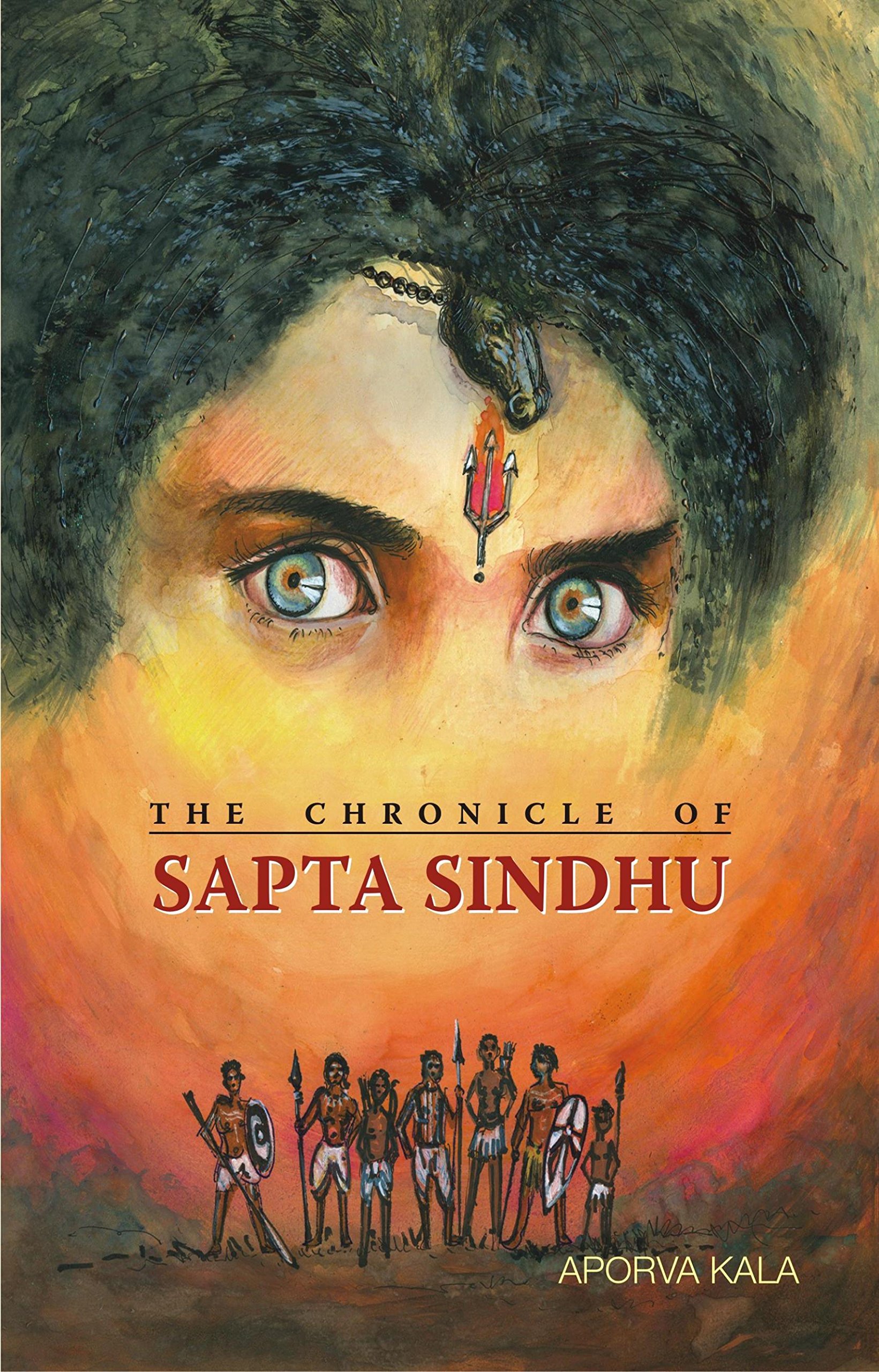
https://en.wiktionary.org/wiki/Sapta_Sindhu
https://en.wikipedia.org/wiki/Sindhu_Kingdom
https://textiletoday.com.bd/storage/upl ... ulture.jpg
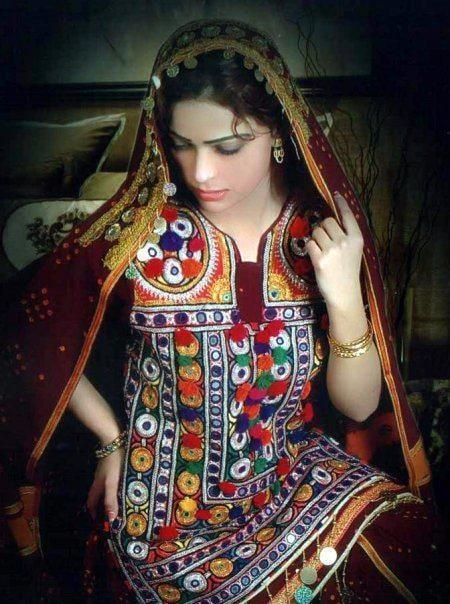
https://upload.wikimedia.org/wikipedia/ ... tunics.jpg

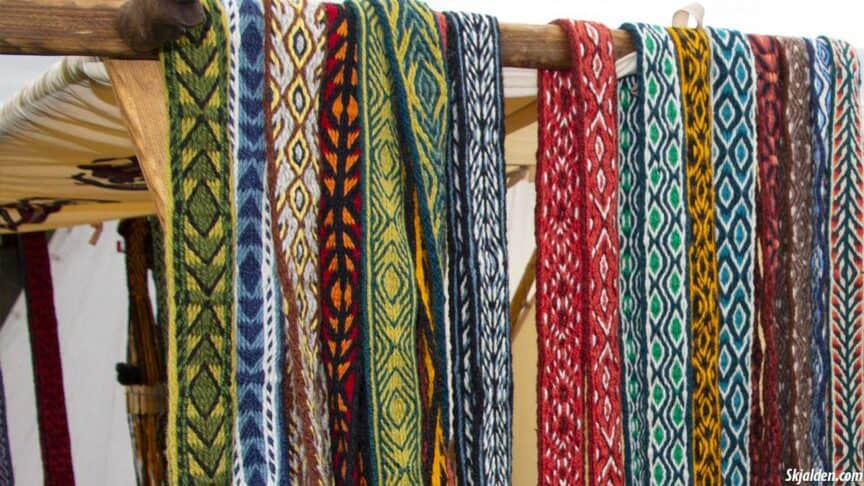
Viking:
https://skjalden.com/wp-content/uploads ... 64x486.jpg
These were famously sailors, like "Sinbad".
"
The name Sinbad is widely believed to be derived from, or directly related to, Sindh (or Sindhu), the historical native name for the Indus River region in present-day Pakistan and India.
Origin of the Name
The name "Sindbad" (originally Sindibād in Arabic) means "Lord of Sindh" or "Lord of the Sages".
"Sindh" comes from the Sanskrit word Sindhu (सिन्धु), which is the name for the Indus River.
The connection between the fictional character's name and the geographic region is explicit in certain stories and adaptations.
"
https://www.sahapedia.org/khwaja-khizr- ... eval-sindh
"
Bawarij (Sindhi: باوارج; sg. Sindhi: برجا) were pirates from India and Sindh,[2] who were named for their distinctive barja warships (which means "large vessels of war" in Arabic)[3] who were active between 251 and 865 AD.[4] They looted Arab shipping bound for the Indian subcontinent and China, but entirely converted to Islam during the rule of the Samma dynasty in Sindh (1335–1520).[5] They are mentioned by Ma'sudi as frequenting the pirate den at Socotra and other scholars describes them as pirates and sailors of Sindh.
"
https://www.illumina.com/company/news-c ... kings.html
"
“The Vikings had a lot more genes from southern and eastern Europe than we anticipated,” said Willerslev. “They frequently had children with people from other parts of the world. In fact, they also tended to be dark-haired rather than blond, which is otherwise considered an established Viking trait.”
The study also indicated Vikings may have been the jet-setting elite of their day, having little in common—genetically—with the inland peasants in their native lands.
“The Vikings traveled much farther, had lots of southern European genes and were very likely part of a much more extensive cultural exchange with the rest of the world than any contemporary peasant society,” said Willerslev.
In addition, the researchers showed the Vikings were not one cohesive group. Rather, they were three separate and genetically isolated nations with distinct territories. Genomic sequences showed Danish Vikings raided England, Swedish Vikings the Baltic and Norwegian Vikings visited Ireland, Iceland and Greenland. How they interacted is still a mystery, but we now know there was little genetic mingling.
"
https://www.cam.ac.uk/research/news/wor ... andinavian
"
“We found that Vikings weren’t just Scandinavians in their genetic ancestry, as we analysed genetic influences in their DNA from Southern Europe and Asia which has never been contemplated before,” said co-first author Professor Martin Sikora form the University of Copenhagen. “Many Vikings have high levels of non-Scandinavian ancestry, both within and outside Scandinavia, which suggest ongoing gene flow across Europe.”
The team’s analysis also found that genetically Pictish people ‘became’ Vikings without genetically mixing with Scandinavians. The Picts were Celtic-speaking people who lived in what is today eastern and northern Scotland during the Late British Iron Age and Early Medieval periods.
“Individuals with two genetically British parents who had Viking burials were found in Orkney and Norway,” said co-first author Dr Daniel Lawson from the University of Bristol. “This is a different side of the cultural relationship from Viking raiding and pillaging.”
"
"
“Scandinavian diasporas established trade and settlement stretching from the American continent to the Asian steppe,” said co-author Professor Søren Sindbæk from Moesgaard Museum in Denmark. “They exported ideas, technologies, language, beliefs and practices and developed new socio-political structures. Importantly our results show that ‘Viking’ identity was not limited to people with Scandinavian genetic ancestry. Two Orkney skeletons who were buried with Viking swords in Viking style graves are genetically similar to present-day Irish and Scottish people and could be the earliest Pictish genomes ever studied.”
"
https://legionmagazine.com/vikings-gene ... via-study/
"
The researchers compared 297 of those genomes to those of 16,638 modern-day Scandinavians and more than 9,000 people with ancestries spanning Europe and western Asia.
"
"
British-Irish ancestry was widespread in Scandinavia from the Viking period, while eastern Baltic ancestry was more localized to Gotland and central Sweden, they explained. Traces of British and Irish ancestry are still evident in modern Scandinavian genomes.
“This is perhaps not surprising, given the extent of Norse activities in the British Isles starting in the eighth century…and culminating in the 11th century North Sea Empire,” the paper noted.
But those who came to Scandinavia during the heyday of Viking raiding and trading—whether merchants, missionaries or captives—have all but vanished from the gene pool of present-day Scandinavia.
"
https://en.wikipedia.org/wiki/Haplogroup_R1a
"
Silva et al. (2017) noted that R1a in South Asia most "likely spread from a single Central Asian source pool, there do seem to be at least three and probably more R1a founder clades within the Indian subcontinent
"
"
Kivisild et al. (2003) have proposed either South or West Asia,[32][note 3] while Mirabal et al. (2009) see support for both South and Central Asia.[13] Sengupta et al. (2006) have proposed Indian origins.[33] Thanseem et al. (2006) have proposed either South or Central Asia.[34] Sahoo et al. (2006) have proposed either South or West Asia.[35] Thangaraj et al. (2010) have also proposed a South Asian origin.[36] Sharma et al.(2009) theorizes the existence of R1a in India beyond 18,000 years to possibly 44,000 years in origin.[1]
A number of studies from 2006 to 2010 concluded that South Asian populations have the highest STR diversity within R1a1a,[37][38][13][3][1][39] and subsequent older TMRCA datings.[note 4] R1a1a is present among both higher (Brahmin) castes and lower castes, and while the frequency is higher among Brahmin castes, the oldest TMRCA datings of the R1a haplogroup occur in the Saharia tribe, a scheduled caste of the Bundelkhand region of Central India.[1][39]
From these findings some researchers argued that R1a1a originated in South Asia,[38][1][note 5] excluding a more recent, yet minor, genetic influx from Indo-European migrants in northwestern regions such as Afghanistan, Balochistan, Punjab, and Kashmir.[38][37][3][note 6]
"
"
several publications point to the presence of R1a1 in the Comb Ware culture.[31][note 2]
"
https://en.wikipedia.org/wiki/Comb_Ceramic_culture
https://en.wikipedia.org/wiki/Eastern_hunter-gatherer
https://en.wikipedia.org/wiki/Dnieper%E ... ts_culture
"
Dnieper-Donets males and Yamnaya males carry the same paternal haplogroups (R1b and I2a), suggesting that the CHG and EEF admixture among the Yamnaya came through EHG and WHG males mixing with EEF and CHG females. According to Anthony, this suggests that the Indo-European languages were initially spoken by EHGs living in Eastern Europe[31]
"
https://en.wikipedia.org/wiki/Yamnaya_culture
"
The Yamnaya culture is of particular interest to archaeologists and linguists, as the widely accepted Kurgan hypothesis posits that the people who produced the Yamnaya culture spoke a stage of the Proto-Indo-European language. The speakers of the Proto-Indo-European (PIE) language embarked on the Indo-European migrations that gave rise to the widely dispersed Indo-European languages of today.
"
https://en.wikipedia.org/wiki/Chicomec%C5%8D%C4%81tl
https://share.google/A3Ms1Ztw5H2NMfY43
https://en.wikipedia.org/wiki/Seven-headed_serpent
The Rainbow.
https://en.wikipedia.org/wiki/Ba%C5%A1mu
"
It had "six mouths, seven tongues and seven ...-s on its belly".[6]
"
https://notes.nicolevanderhoeven.com/tt ... Five/Zehir
https://theapolloniantransmission.com/t ... gy-as-jem/
Added in 6 days 23 hours 46 minutes 35 seconds:
Shadows
Added in 5 minutes 46 seconds:
A note for something I may write about, probably here, but it was about how people have a very specific idea about magical things now, and are seemingly neglecting all the very strange things that might be occurring due to these pigeonholed and funneled views to only narrow and seemingly to me totally false notions that neglect apparent realities or clear descriptions of experiences as they seem to be rather than filtered into common interpretations and models.
I also wanted to write about how little control or responsibility people may have yet place so much emphasis on meaning, when it can be in many cases a "bug" up their bum, like bacteria and synbiotic reactions and things beyond their knowledge, which may be little different from ideas anthropomorphizing diseases or talk of posession, and where meaning is not really very important and is an afterthought.
Added in 2 minutes 15 seconds:
Just like the nature of the shadow, influenced by all kinds of factors we usually don't have full control of, but there were other aspects of shadows in relation to magic that wanted to discuss also as they seem to have a long history together and even I have experienced some unisual things related to shadows.
Added in 6 days 15 hours 8 minutes 39 seconds:
Added in 4 days 29 minutes 29 seconds:
Added in 2 days 3 hours 28 minutes 1 second:
Added in 2 days 14 hours 31 minutes 36 seconds:
https://www.goodreads.com/book/show/219 ... en_s_world
"
A reread for me, but, for anyone who enjoys Tolkien and also appreciates smart analysis, this is worth reading twice. It would be fascinating to compare Helms's examination of Tolkien's moral structure with Shippey's. Both are very enlightening, and they complement each other. Helms makes two points that I think I've never seen before. First, he points out that, in the world of "The Lord of the Rings", proverbs point to moral truth. He lists the rules of Tolkien's world on page 69:
"1. The cosmos is providentially controlled.
2. Intention structures results...
3. Moral and magical law have the force of physical law.
4. Will and states of mind, both evil and good, can have objective reality and physical energy.
5. All experience is the realization of proverbial truth."
The idea that startled me so much is, of course, number five. "ALL experience? Really?" I thought to myself. But Helms very nearly proves it, with citations! What he does with "Oft evil will evil mars" is fascinating, and his examination of "generous deed ought not to be checked by cold counsel" is perhaps even more so.
The second thing he points out is how carefully the book is structured, with episodes of book one, for example, being both mirrored and deepened in book two. Two examples of this mirroring are Frodo's striking at the hand of the barrow-wight and at the foot of the troll, and Sam's rescuing Frodo from the root of the willow and from the arm of the watcher. The clear and convincing comparison between Faramir and Treebeard was also illuminating.
Of course, this short book isn't comprehensive. There is no discussion of redemption (Theoden's; Boromir's), nor any mention of the feminine and feminine power. In fact, Boromir gets very short shrift here, and Arwen and Galadriel might as well not exist. But what Helms does do, he does very well.
To give just one example, I had never realized that "The Hobbit" and "The Lord of the Rings" are in many ways the same story, told at different levels. Helms both showed this, and made me believe it. I also liked what he had to say about Tolkien's minor works.
So, not a perfect book, but a very good one, and worth a read for fans of Tolkien's world.
"
Added in 3 days 15 hours 47 minutes 2 seconds:
https://www.reddit.com/r/IndoEuropean/s/YaLWqyPZ6e
"
Presence of Ophiolatry in Early Indo-European Societies
The Grass snake (*Natrix natrix*) is a small to medium sized snake in the colubrid family in the order of Serpentes, this species has a large native range, inhabiting most of Europe, apart from the northern part of Scandinavia and the vast Siberian taiga. The relevant aspect of this otherwise mundane serpent is the cultural importance it has accumulated in many parts of (especially northern) Europe. The presence of this species in northern Europe seems to coincide with the adoption of pastoralism in the late Neolithic (van Wijngaarden-Bakker & Janssen 2003). This is due to the snake’s tendency to breed, and hibernate in bovine dung, something that has been observed especially in central Sweden where the population has decreased in the 20th century with the conversion of pasture-lands into forests. (Hagman et. al. 2012).

The second and arguably more relevant topic at hand is the common motif of the grass snake in European folklore. In contrast to most other snakes that tend to instil fear into humans, the grass snakes appear far more benevolent and are often associated with fertility, knowledge, and rejuvenation. These associations with fertility can be credited to the phallic shape of the animal as well as the association with dung which is used to fertilize the fields (particularly in Baltic sources). The supposed wisdom can be credited with the lidless eyes, and movement that seems to defy reason, further the grass snake’s ability to shed its skin is a clear symbolic act of rejuvenation, as a matter of fact in Sweden grass snakes were believed to be immortal (Hyltén-Cavallius 1868).
However, these motifs seem to date back further than the 19th century, and in the paper *The Grass Snake and the Basilisk: From Pre-Christian Protective House God to the Antichrist* (Lenders & Janssen 2014) the authors links these folk stories to a pre-Christian veneration of this reptile, where it was perceived as a house guardian, and bringer of luck and fortune. This could naturally have originated as a symbiotic relationship, as the snakes procreate and hibernate in the dung heaps, whilst hunting small rodents and keeping said vermin from stored grains, keep in mind that the domestic cat did not reach northern Europe until the latter centuries of the roman empire (Lenders & Janssen 2014).
So far this is where my research has led me, however I would enjoy hearing your thoughts on the subject.
"
-
atreestump
- Posts: 924
- Joined: Sun Jun 15, 2025 3:53 pm
Ilxendren
This topic is the most searched for in search engines snd gets the most clicks.
Can I request that if you share videos, you add some context for the video instead of it being a kind of scrap book type thread?
I will be integrating a notes feature soon I think so that you can have private sections for adding material that can be neatly posted later on.
I've just noticed that videos are double posting. I will fix that as soon as I can. Feeling kind of burned out tbh!
Can I request that if you share videos, you add some context for the video instead of it being a kind of scrap book type thread?
I will be integrating a notes feature soon I think so that you can have private sections for adding material that can be neatly posted later on.
I've just noticed that videos are double posting. I will fix that as soon as I can. Feeling kind of burned out tbh!
-
kFoyauextlH
- Posts: 1983
- Joined: Sun Jun 15, 2025 3:53 pm
Re: Ilxendren
Feel free to take a break if you can and it doesn't cause any issues. I'm in no rush, I'm fine, I'm here, I've been posting more recently, I'm doing fine with using the usual forum site for now, so there should be time to take a break and get back at it when you feel like you have more energy and enthusiasm for it.
I think I'm mainlythe only person writing much on here for now and I'll continue to do that. I will from now on add explanitory text if I add any link, especially video links and maybe an explanation of what I'm posting them for in the particular thread.
I may just reduce the amount though since I've been avoiding YouTube, and when I quote from things I usually include the link where the quoted text is from.
I recently posted a lot of links related to "The Immigrant Song", which had been brought up again recently. Now I also have a link for the Immigrants Drain Resources thread.
I wonder what is drawing people or bots to this thread more than others. If there was a way to figure out what it is, maybe even my deleting or editing that would cause them to skip this thread and forum, unless you like that they are coming here and viewing it, though it makes me a bit nervous since I don't know what they are thinking or if it is for some nefarious purpose that they are scamming this thread, like if I mentioned any particular people or something that might be drawing attention here from such people scouring the internet for such things.
Feel free to email me or direct me to an area where you might be able to show me any more statistical information and to discuss what you may like for the site. For now I am just collecting things of interest that are coming to my attention and putting them up to refer to them later as well, since I have no better or easier means to collect and return to information easily, and this forum site and layout which I am still using is the most efficient for that so far, because of the layout and the way I can look up threads listed out and keep bumping them.
This thread has not approached the topic in a very straightforward fashion, but approaches it from the peripheries, and that seems to also maybe have to do with something I didn't even realize was going on, but how I've become increasingly annoyed by the "educative" style of YouTube videos and even popular articles that are constantly speaking like they are the most boring teachers and taking forever to get to anything new or interesting, like telling the story from the start over and over and over, it is such that it makes one never want to see or hear the same old thing again.
One of the themes in this thread is Ophiolatry or a serpent theme, but there is a lot more than that, hidden in the different title changes and the characters chosen for those as well as the many things already brought up in here.
I wanted one of the things to eventually come through in this thread, which might not be so clearly yet, to be about how the reality of the way people think now, which may provide clues about the way people could have been in the past also, function in reality and can be more ecclectic and strange than any afterthought or formally organized official standpoints and definitions, which I believe from experience and interviews with people are not really all that informative about how people live their lives and spend their days and may, without necessarily realizing it or believing it, still functions similarly to religious, spiritual, symbolic, magical, and superstitious ways of thinking and processing information and making decisions, but which doesn't fit into any of the usually accepted categories which can be pretty limited as to what qualifies as a religious thought and act. I think the majority of people are thinking and doing weird stuff based on things that could easily be interpreted as at least like the things people did in the past for supposedly spiritual reasons, but which today would be denied out of even shyness or fear of being considered illogical or unscientific and basically dumb or childish or crazy, but that doesn't stop them from actually still doing many of the same things and possibly even thinking in similar ways as they are dealing with the same equipment.
I think I'm mainlythe only person writing much on here for now and I'll continue to do that. I will from now on add explanitory text if I add any link, especially video links and maybe an explanation of what I'm posting them for in the particular thread.
I may just reduce the amount though since I've been avoiding YouTube, and when I quote from things I usually include the link where the quoted text is from.
I recently posted a lot of links related to "The Immigrant Song", which had been brought up again recently. Now I also have a link for the Immigrants Drain Resources thread.
I wonder what is drawing people or bots to this thread more than others. If there was a way to figure out what it is, maybe even my deleting or editing that would cause them to skip this thread and forum, unless you like that they are coming here and viewing it, though it makes me a bit nervous since I don't know what they are thinking or if it is for some nefarious purpose that they are scamming this thread, like if I mentioned any particular people or something that might be drawing attention here from such people scouring the internet for such things.
Feel free to email me or direct me to an area where you might be able to show me any more statistical information and to discuss what you may like for the site. For now I am just collecting things of interest that are coming to my attention and putting them up to refer to them later as well, since I have no better or easier means to collect and return to information easily, and this forum site and layout which I am still using is the most efficient for that so far, because of the layout and the way I can look up threads listed out and keep bumping them.
This thread has not approached the topic in a very straightforward fashion, but approaches it from the peripheries, and that seems to also maybe have to do with something I didn't even realize was going on, but how I've become increasingly annoyed by the "educative" style of YouTube videos and even popular articles that are constantly speaking like they are the most boring teachers and taking forever to get to anything new or interesting, like telling the story from the start over and over and over, it is such that it makes one never want to see or hear the same old thing again.
One of the themes in this thread is Ophiolatry or a serpent theme, but there is a lot more than that, hidden in the different title changes and the characters chosen for those as well as the many things already brought up in here.
I wanted one of the things to eventually come through in this thread, which might not be so clearly yet, to be about how the reality of the way people think now, which may provide clues about the way people could have been in the past also, function in reality and can be more ecclectic and strange than any afterthought or formally organized official standpoints and definitions, which I believe from experience and interviews with people are not really all that informative about how people live their lives and spend their days and may, without necessarily realizing it or believing it, still functions similarly to religious, spiritual, symbolic, magical, and superstitious ways of thinking and processing information and making decisions, but which doesn't fit into any of the usually accepted categories which can be pretty limited as to what qualifies as a religious thought and act. I think the majority of people are thinking and doing weird stuff based on things that could easily be interpreted as at least like the things people did in the past for supposedly spiritual reasons, but which today would be denied out of even shyness or fear of being considered illogical or unscientific and basically dumb or childish or crazy, but that doesn't stop them from actually still doing many of the same things and possibly even thinking in similar ways as they are dealing with the same equipment.
-
kFoyauextlH
- Posts: 1983
- Joined: Sun Jun 15, 2025 3:53 pm
Re: Ilxendren
Added in 16 hours 26 minutes 37 seconds:
-
kFoyauextlH
- Posts: 1983
- Joined: Sun Jun 15, 2025 3:53 pm
Re: Ilxendren
I'm seeing a lot of lame and annoying cosplay going on regarding ancient, now mainly no longer practiced religions, and reconstructing them, so that it seems to go wrong in my opinion if they completely try to change them by turning them into some candle Catholic Wicca thing or try to pretend to dress up as these people as if the cultural costumes were majorly important elements ehen those could have easily shifted to modern adaptions.
The people also have a tendency to either make everything difficult to believe in one extreme or another, by trying to pressure ideas that no one would believe now or in a way that basically would mean they don't believe it or believe anyone else could believe it, and they've taken simple things and made them over psychologized or convoluted and unecessarily cumbersome in other ways.
In other words, it seems to me to be a total mess, and one caused by getting too far from any of it by Christianity and modern culture and not thinking much for oneself, there is a strong tendency, pushed further by social media, for just very superficial and surface level impressions, pretending, and roleplaying, especially when they feel something is more open for that, though they do it with living religions also.
-
kFoyauextlH
- Posts: 1983
- Joined: Sun Jun 15, 2025 3:53 pm
Re: Ilxendren
https://elderscrolls.fandom.com/wiki/Lorkhan
https://elderscrolls.fandom.com/wiki/The_Lunar_Lorkhan
"
Masser and Secunda therefore are the personifications of the dichotomy—the "Cloven Duality," according to Artaeum—that Lorkhan legends often rail against: ideas of the anima/animus, good/evil, being/nothingness, the poetry of the body, throat, and moan/silence-as-the- abortive, and so on—set in the night sky as Lorkhan's constant reminder to his mortal issue of their duty.
"
https://elderscrolls.fandom.com/wiki/Masser
"
Masser is similar to the planet Mars, in both color and name. It was shown as a recolored picture of Mars in the skybox.[source?]
Massar (مسار) is the Arabic word for "path" or "path follower."
"
https://elderscrolls.fandom.com/wiki/Secunda
"
Secunda is a Latin feminine singular adjective meaning "second."
Secunda is called Secundus in An Elder Scrolls Novel: Lord of Souls. Secundus is the corresponding masculine form of secunda.
There is a song in the Skyrim soundtrack named after the moon.
"
https://elderscrolls.fandom.com/wiki/Void_Nights
https://elderscrolls.fandom.com/wiki/An ... ntheon#Fox
https://elderscrolls.fandom.com/wiki/Shor
https://elderscrolls.fandom.com/wiki/Sep
"
Ruptga punished Sep for this trickery by squashing him with a big stick. As a result of this, Sep's hunger fell out of his mouth, and is now all that is left of him.[2] The Pearl also fell from Sep's pocket at this point, becoming covered with sand.[3] The other spirits could all attempt to reach the Far Shores, but Sep was stuck slinking around in his new world or floating in the sky, trying to eat the stars.[2] He now lives on as a "non-space" that tries to prevent mortals from reaching the Far Shores.[1]
"
https://en.m.uesp.net/wiki/Lore:Heart_of_Lorkhan
https://elderscrolls.fandom.com/wiki/The_Lunar_Lorkhan
"
Masser and Secunda therefore are the personifications of the dichotomy—the "Cloven Duality," according to Artaeum—that Lorkhan legends often rail against: ideas of the anima/animus, good/evil, being/nothingness, the poetry of the body, throat, and moan/silence-as-the- abortive, and so on—set in the night sky as Lorkhan's constant reminder to his mortal issue of their duty.
"
https://elderscrolls.fandom.com/wiki/Masser
"
Masser is similar to the planet Mars, in both color and name. It was shown as a recolored picture of Mars in the skybox.[source?]
Massar (مسار) is the Arabic word for "path" or "path follower."
"
https://elderscrolls.fandom.com/wiki/Secunda
"
Secunda is a Latin feminine singular adjective meaning "second."
Secunda is called Secundus in An Elder Scrolls Novel: Lord of Souls. Secundus is the corresponding masculine form of secunda.
There is a song in the Skyrim soundtrack named after the moon.
"
https://elderscrolls.fandom.com/wiki/Void_Nights
https://elderscrolls.fandom.com/wiki/An ... ntheon#Fox
https://elderscrolls.fandom.com/wiki/Shor
https://elderscrolls.fandom.com/wiki/Sep
"
Ruptga punished Sep for this trickery by squashing him with a big stick. As a result of this, Sep's hunger fell out of his mouth, and is now all that is left of him.[2] The Pearl also fell from Sep's pocket at this point, becoming covered with sand.[3] The other spirits could all attempt to reach the Far Shores, but Sep was stuck slinking around in his new world or floating in the sky, trying to eat the stars.[2] He now lives on as a "non-space" that tries to prevent mortals from reaching the Far Shores.[1]
"
https://en.m.uesp.net/wiki/Lore:Heart_of_Lorkhan
-
kFoyauextlH
- Posts: 1983
- Joined: Sun Jun 15, 2025 3:53 pm
Re: Ilxendren
Talk about a crazy omen. Two doomsday fish appear, fish known to appear when there is a majorly bad natural disaster at hand due to seismic activity or in this case possible meddling, and two for the two wicked nations behind all the trouble on the Earth.
All the useless f*cks standing around doing nothing while the fish struggle, I hate those people so much, total scum. I've personally rarely ever seen such worthless, unhelpful, do-nothing buffoons, I've often seen people go to help, but over there, these particular types of tourists choosing to take advantage of poor foreign places are just the type to stand around and let anything suffer and die, just like they did before, just like they always do, so the omen was a test too, and manifest evidence for why they fail and will fail. I hope that every horror imaginable strikes the people disrupting the whole world and causing suffering everywhere, and that they can not be awake or asleep, that they live in terror, every one of the evil people participating in these things they are torturing humanity with. I had a dream about an octopus that ended very badly as I was insisting that it could have been thrown back into the ocean once it was saved from a desk, but I found out that to show off or something it was killed and eaten instead, totally unecessary, and I was enraged and was berating who had done it and woke up.
Large flash and big boom seen and heard around British Columbia
CTV News•240K views•17 hours ago
Sodom and Gomorrah are back and no one can do a thing, the world is praying for God to intervene and wipe out evil again to help us with a fresh start. The criminals have the best protection as compared to the civilians who always suffer most of all, but ill wishes for all the wicked who bring suffering to all other human beings is a noble necessity at the very least.
He defines panentheism incorrectly to someone asking him for the etymology, where he says pan means within and en means without.
https://en.wikipedia.org/wiki/Panentheism
Removed
"
The panentheisic doctrine surfaced again in Hasidism, especially in the Habad version. While the Mitnaggedim understood the verse: ‘The whole earth is full of His glory (Isaiah 6:3)’ to mean no more than that God is manifest in the universe and His providence extends over all, in the Hasidic understanding the verse means that God is literally in all things.
This doctrine was one of the main theological counts against Hasidism, the Mitnaggedim believing that the panentheistic doctrine, according to which God is literally in all things, to be sheer heresy.
"
Removed
I really hate this tendency of people online to respond to things dismissively or not at all, mocking the questioner, and making terms and distinctions meaningless without any clear explanation, it is so annoying, pretentious, "well actually":
As if their agenda is the be all and end all, trying to silence all discussion or even learning, it is anti-intellectual in that it tries to make so total some term that it might as well mean nothing, but their whole reason is a government borne jingoistic fanaticism about their ethnicity.
Last edited by kFoyauextlH on Fri Mar 13, 2026 3:27 am, edited 3 times in total.