Bane
Moderator: atreestump
Forum rules
No Abusive Behavior. No Spam. No Porn. No Gore. It's that simple.
No Abusive Behavior. No Spam. No Porn. No Gore. It's that simple.
-
kFoyauextlH

- Posts: 1668
- Joined: Sun Jun 15, 2025 3:53 pm
Re: Bane
Added in 5 days 14 hours 27 minutes 37 seconds:
I'm deep in some magical symbolism currently and I'm discovering a lot of things that have been coming through, even just straight into my mind, have ancient precedent which is extremely obscure and rare, knowledge which I'm being shown through strange pathways. The themes have to do with Centaurs, but nothing from the straightforward myths or popular understandings that are mainstream regarding that theme. Chiron supposedly means "hand", which is why I connected it to the Bane thread, since the symbol of Bane is a black hand and sometimes an armored black hand.
https://forgottenrealms.fandom.com/wiki/Armanite
https://wiki.guildwars2.com/wiki/Centaur
https://wiki.guildwars.com/wiki/Shiverpeak_Warrior
https://en.wikipedia.org/wiki/Nidhogg
https://en.wikipedia.org/wiki/N%C3%AD%C3%B0
What the heck, this gave me pause and a bit of a shock:
https://whitewolf.fandom.com/wiki/Shoragg
"
Shoragg is a Bane and has possessed a horse.
"
"
Banes are spirits in service of the Wyrm in its modern role as the bringer of the Apocalypse. Other Wyrmish spirits exist which fulfil the Wyrm's purpose in a more sustainable and natural way, but those tend not to draw as much attention as the malevolent and destructive Banes, and are thus typically ignored.
"
So the words Larissa, this Shoragg thing with the nme Nidhogg instead, and laying with a Pharoanic looking crook have been occurring m, among many other things:
"
The crook across the waist is somewhat reminiscent of Egypt.
"
That is from a document describing an early Centaur image.
https://ebay.us/m/uVpYeI
I was writing Larissa repeatedly before finding that it was connected to the Centaur themes coming through:
What the:
https://en.wikipedia.org/wiki/Pirithous
https://en.wikipedia.org/wiki/Lapiths
https://en.wikipedia.org/wiki/Centaur
https://en.wikipedia.org/wiki/Phlegethon
https://forgottenrealms.fandom.com/wiki/Phlegethon
"
Phlegethon was the third layer of Pandemonium.[2][3] It contained the divine realms of Diirinka[4] and Ibrandul,[5] and was one of the locations of the Unseelie Court in some versions of the Great Wheel cosmology.[3][6]
"
Wow, so this stuff was coming up for the whole month, even longer, but with much more intensity this month.
-
kFoyauextlH
- Posts: 1668
- Joined: Sun Jun 15, 2025 3:53 pm
Re: Bane
https://catymiau.itch.io/ars-goetia?download
Added in 4 minutes 35 seconds:
Looks like someone collected a lot of their favorite pieces of art to represent each of these. This is a very nice collection that would sell well but there are too many people involved probably, so they kept it free but accept donations. All this red tape and these annoying issues keep nice things from happening in a lot of cases, the system's design and the way people are pressured to think and act makes for the sh*tty, artless world where ugliness seems to reign, and it all is because of the accursed design, which needs to be replaced, as much as possible, especially personally at the very least.
Added in 4 minutes 35 seconds:
Looks like someone collected a lot of their favorite pieces of art to represent each of these. This is a very nice collection that would sell well but there are too many people involved probably, so they kept it free but accept donations. All this red tape and these annoying issues keep nice things from happening in a lot of cases, the system's design and the way people are pressured to think and act makes for the sh*tty, artless world where ugliness seems to reign, and it all is because of the accursed design, which needs to be replaced, as much as possible, especially personally at the very least.
-
atreestump

- Posts: 921
- Joined: Sun Jun 15, 2025 3:53 pm
-
kFoyauextlH
- Posts: 1668
- Joined: Sun Jun 15, 2025 3:53 pm
Re: Bane
I don't believe in choice or "free will" or any of those related ideas. I think that we can only do what we do and what we do is one way or another never anything we can really know or control, even though it appears we are the ones doing the thing and had other options available, that we took the option we did could never be different, either because of all the exact factors in place forcing that specific action that moment which would always be the same woth all the same factors in play, basically like anything else in nature or basic physics, like where a specifically weighted item will land or what will happen based on specific factors, and this we also call God's Will, which is identical to both Nature as well as what people call Chance and Luck and even Reality as it plays out and we helplessly play along with everything. That such occurs and has occurred is thought by some, like me, to be determined by what is only loosely called or compared to an intelligence, but is ultimately at the very least encompassing all intelligence(s) like ours and responsible for causing all that we think and which occurs in our existence. It can be said the other way too, that whatever is at the last and first or utmost or primary point of responsibility for this determinism is what we are considering the only thing that can be considered the Greatest and Ultimate, and since there is "something" surely responsible for the way things play out, which doesn't seem to be us, that, whatever that actually is, is what we choose to call The God. Some think these things are stupid and blindly playing out, but I don't think they actually can.
Each of these threads is about a certain aspect and set of symbols and ideas related to the reality, even with concepts and terms related to fictional things. This particular thread is named after "Bane", all references to that word and name, but also to the symbol of the Black Hand, and total domination, determining power, authority, and control, and one that rules the rulers also and every hand, including those working against any such rulers and authorities, as this is the "unseen hand" which guides and moves and smashes and none can seem to really know what will happen next, yet they keep trying to ignore it and game things, while others believe that it is attached to a mind which can be communicated with, so we pray for benefit and protection from its unpredictable motions.
Each of these threads is about a certain aspect and set of symbols and ideas related to the reality, even with concepts and terms related to fictional things. This particular thread is named after "Bane", all references to that word and name, but also to the symbol of the Black Hand, and total domination, determining power, authority, and control, and one that rules the rulers also and every hand, including those working against any such rulers and authorities, as this is the "unseen hand" which guides and moves and smashes and none can seem to really know what will happen next, yet they keep trying to ignore it and game things, while others believe that it is attached to a mind which can be communicated with, so we pray for benefit and protection from its unpredictable motions.
-
kFoyauextlH
- Posts: 1668
- Joined: Sun Jun 15, 2025 3:53 pm
-
kFoyauextlH
- Posts: 1668
- Joined: Sun Jun 15, 2025 3:53 pm
Re: Bane
Added in 15 hours 13 minutes 27 seconds:
You can skip to 56:52
-
kFoyauextlH
- Posts: 1668
- Joined: Sun Jun 15, 2025 3:53 pm
Re: Bane
https://www.nickfarrell.it/writing-an-a ... nvocation/
https://www.planetayurveda.com/wp-conte ... bV7oWsnq_O
https://en.wikipedia.org/wiki/Syntax
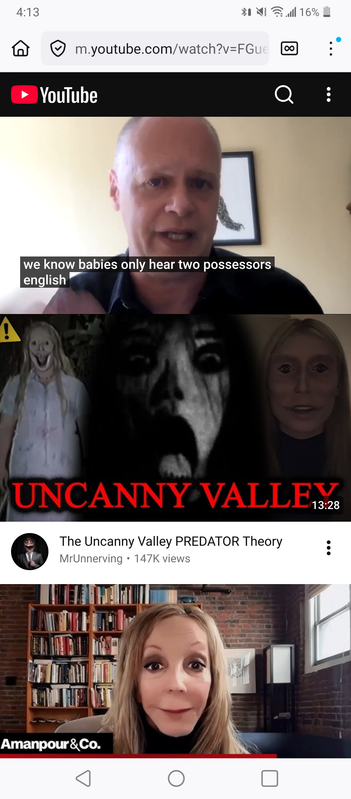
Woah, the image below lol, with what he is saying. I saw the uncanny valley predator thing and then that supposedly real woman's face:
https://i.postimg.cc/jSjV9R1H/1000145448.png
https://jle.aals.org/cgi/viewcontent.cg ... ntext=home
"
Law as Exoteric Magic
Tam Hunt
Tam Hunt
7 min read
·
Apr 28, 2025
For some time now, I’ve been debating myself and others about the relative merits of law and policy versus mysticism and shamanism. This debate has led me to a realization: what we call “law” today functions in many ways as an exoteric form of magic that has largely replaced the esoteric magic of earlier times. It’s not clear if this shift is a net positive or something different.
For the record, I’m a lawyer by day. Philosopher by night.
This debate about law as exoteric magic isn’t merely an interesting academic comparison — it’s an insight into the evolution of human societies and how we’ve systematically transformed our relationship with power, authority, and the manipulation of reality (whether perceived or actual).
Both law and magic share a fundamental goal: to impose human will upon a complex and often chaotic world. The primary difference lies in their methods, visibility, and sources of claimed authority.
When we examine legal systems closely, the parallels to magical traditions become striking. Consider how both systems operate:
Specialized language and incantations: Legal language, often called “legalese,” functions remarkably like magical incantations. Precise wording matters intensely in both traditions. A single misplaced phrase in a contract or spell can nullify its power or create unintended consequences. The Latin phrases that persist in legal practice — habeas corpus, prima facie, mens rea — even resemble the ancient languages often used in magical texts to enhance their mystery and power.
Ritualistic proceedings: Court proceedings follow strict ritualistic patterns — rising when the judge enters, specific formulas for addressing the court, procedural rules that must be followed with precision. These mirror the careful rituals of traditional magical practice. Both create demarcated spaces where ordinary rules are suspended and specialized forms of power can manifest. We are transformed through such practices, whether we know it or not.
Special garments and symbols: Judges in robes, lawyers in suits, the gavel, the bench elevated above the courtroom floor — all create a visual language of power and authority similar to the ceremonial garb and tools of the shaman or sorcerer. These garments transform ordinary individuals into representatives of a higher order, capable of channeling powers beyond their personal capacity.
Appeal to higher authorities: Where shamans invoke spirits or deities, lawyers and judges invoke precedents, constitutional principles, or natural law — forces that exist beyond the individual and carry inherent authority. Both systems claim to access truths or powers that transcend human invention and represent deeper realities.
Transformative declarations: The judge saying “I sentence you to five years” or “I declare you legally married” performs a speech act that instantly alters reality, much like magical declarations or blessings were believed to transform states of being. These performative utterances don’t merely describe reality — they change it.
Edward Peters’ work “The Magician, the Witch, and the Law” traces how, in the early Middle Ages, magic was initially considered a practical science requiring study and skill. However, as European society evolved, this tradition became associated with heresy and sorcery. This historical shift illustrates exactly the relationship I’m exploring — formal systems of power (law) gradually displaced mystical traditions.
It’s no coincidence that the rise of formalized legal systems coincided with efforts to marginalize and criminalize magical practices. Both represented competing systems for ordering society and resolving disputes. As centralized authorities consolidated power, they naturally sought to eliminate rival systems that might challenge their monopoly on legitimate force and judgment. The witch trials of early modern Europe can be understood partially as a struggle between competing paradigms of power — the rising rational-legal authority of the state versus the traditional authority of local practitioners.
The Critical Difference: Verification
A key distinction, albeit debatable, between legal “magic” and traditional esoteric magic lies in verification. When I file a lawsuit, and win, or draft and then pass legislation, the effects can be observed, documented, and directly attributed to specific legal actions I or others have taken. I can point to the document and say, “See, I did that by writing this law or bringing this case.”
Esoteric magic rarely allows for such clear demonstration of cause and effect. When a shaman performs a healing ritual and the patient improves, is it because of the ritual or other factors? This lack of verifiability has been a crucial weakness as our culture has grown increasingly empirical and evidence-based. I have yet to see any peer-reviewed data-based demonstrations of magic or incantation as it is traditionally understood.
However, this distinction isn’t as absolute as it might first appear. Legal outcomes still depend on interpretation, judicial discretion, and the complex interplay of various social factors. It’s all but impossible to say what truly caused what in complex chains of social interactions. A law passed with one intention may produce entirely different effects when implemented. Meanwhile, some traditional practices have developed their own forms of empirical verification through observation and experience over generations.
The difference might be better understood as one of transparency and collective agreement. Legal magic operates through explicit, publicly accessible mechanisms (and documentation) that a community has formally agreed to recognize as legitimate. Esoteric magic typically relies on forces believed to operate outside ordinary perception and consensus reality. There is not generally going to be a paper trail of esoteric magic in any particular situation. As societies have grown larger and more diverse, the appeal of systems based on explicit rather than implicit understanding has naturally increased.
The Cultural Shift
We’ve witnessed a profound transformation in how people seek solutions to problems. Few modern individuals consult witches, sorcerers, or shamans when facing difficulties. Instead, they seek out lawyers for legal issues, doctors for health problems, and various other professional specialists depending on the nature of their concerns.
Get Tam Hunt’s stories in your inbox
Join Medium for free to get updates from this writer.
This shift reflects the triumph of institutionalized, formalized systems over personalized, mystical approaches. The power to create binding rules and consequences has moved from local practitioners with claimed supernatural abilities to centralized authorities with codified procedures.
Yet despite this shift, the psychological and social functions remain remarkably similar. Both systems:
Create a sense of order and predictability in an uncertain world
Offer access to power through specialized knowledge
Provide ritualistic processes for resolving conflicts
Establish consequences for transgressing community boundaries
Confer status on those who master their complexities
The specialized practitioners have merely changed their titles and credentials. The shaman or oracle has become the attorney or judge. The healer has transformed into the physician. Each still serves as an intermediary between ordinary people and forces too complex or powerful for them to engage with directly — whether those forces are spiritual entities or bureaucratic institutions.
What’s Been Lost and Gained
The transition from esoteric to exoteric magical systems has delivered significant benefits: greater transparency, more consistent application of principles, reduced arbitrariness, and systems that can scale to serve large, complex societies.
Yet something has been lost as well. The personal relationship between the shaman and the individual seeking help has been replaced by more impersonal institutional processes. The holistic approach of many traditional practices has given way to specialized domains of expertise. The experiential dimension of ritual participation has been reduced to procedural formalities.
The modern legal system also struggles with issues of accessibility. Just as esoteric magical knowledge was once the province of a select few, sophisticated legal knowledge remains largely inaccessible to those without specialized training or resources to hire experts.
Perhaps most significantly, legal systems operate primarily through external constraint rather than internal transformation. Where shamanic practices often sought to heal the whole person or restore harmony to a community, legal interventions typically focus narrowly on specific prohibited behaviors and their consequences. The law can declare someone guilty or innocent, but it rarely provides pathways to genuine redemption or reintegration.
This limitation has led to the development of complementary approaches like restorative justice, which attempts to recover some of the holistic and relational aspects of traditional dispute resolution. Similarly, the growing interest in therapeutic jurisprudence reflects a recognition that legal systems need to address not just external behaviors but internal healing and reconciliation.
Another crucial difference lies in the emotional dimension. Esoteric practices often explicitly engaged with fear, hope, grief, and other powerful emotions as integral to their effectiveness. Modern legal systems, in contrast, pride themselves on emotional detachment and “blind” justice. Yet emotions inevitably influence legal outcomes, operating as hidden variables rather than acknowledged components of the process.
Rather than seeing the rise of legal systems and the decline of magical practices as unrelated developments, we can view them as parallel and commensurate cultural tracks. Law didn’t simply eliminate magic; it transformed and institutionalized it, creating exoteric systems that perform many of the same functions while meeting the demands of a more complex, literate, and technological society.
This perspective helps us understand both the power of legal systems and their limitations. It reminds us that beneath the rational surface of modern institutions lie deep human needs for ritual, authority, and systems of meaning that transcend the individual.
Perhaps by recognizing law as a form of exoteric magic, we can approach it with both greater respect for its power and a more critical eye toward its limitations and exclusions. And perhaps we can also recover some of the valuable elements of more personalized, experiential approaches to problem-solving that traditional practices offered.
This recognition might also help explain why legal contests often take on such emotional and symbolic significance beyond their practical outcomes. A lawsuit isn’t merely a technical procedure for resolving disputes — it’s a modern form of combat by proxy, a ritualized performance with deep psychological resonance. When people speak of “having their day in court,” they’re expressing a desire not just for a favorable judgment but for a kind of ritual acknowledgment that transcends the specific legal questions at stake.
By recognizing the continuities between traditional magical practices and modern legal systems, we can better appreciate the deep psychological and social functions these institutions serve. We can also identify opportunities to evolve our systems further, creating approaches to conflict resolution and social ordering that combine the best elements of both traditions — the transparency and scalability of modern law with the personal engagement and holistic healing of traditional practices.
The words still hold power; we’ve just changed the language in which we speak them. The robes are different, the incantations have evolved, but we continue to engage in acts of transformation through ritualized speech and action. Each word, when we realize what words represent, is a magic spell, even in normal speech. Perhaps in acknowledging this continuity from the very origins of language, we can better understand magic in its various guises.
[Claude 3.7 assisted in writing this piece]
"
https://anetoday.org/osiris-magic-gods/
"
Osiris Must Die – Understanding the Practice of “Menacing the Gods” in Ancient Egyptian Magic
September 2024 | Vol. 12.9
By Franziska Naether
Ancient Egyptian magical texts offer a rich repository of spells and incantations designed to manipulate divine forces for diverse purposes. From protective amulets inscribed with powerful spells to curse tablets invoking divine retribution upon enemies, these texts reflect a belief in the efficacy of magic as a means of influencing the gods. Central to Egyptian magical practice was the concept of “Heka,” or magical power, believed to reside in words, images, and rituals. By harnessing this supernatural energy, practitioners sought to achieve their goals, whether benevolent or malevolent — depending on their respective social contexts.
Drawing of the Egyptian God Heka as a Child with the Hemhem Crown, holding the Ankh, the Crook and Flail in one hand, based on depictions in the Temple of Khnum. By Eternal Space, CC BY-SA 4.0
Drawing of the Egyptian God Heka as a Child with the Hemhem Crown, holding the Ankh, the Crook and Flail in one hand, based on depictions in the Temple of Khnum. By Eternal Space, CC BY-SA 4.0.
In such spells, one particularly intriguing aspect was the use of curses and threats directed towards the divine realm or a disease or an instrument of the cult practice. This phenomenon, often referred to as “menacing the gods” or with the German term “Götterbedrohung” coined by Hartwig Altenmüller in the “Lexikon der Ägyptologie,”, involved threats of all kinds by the magical practitioner to bring harm or coercion upon divine entities. While there may be some similarities with concepts found in other cultures, the practice itself appears to be uniquely Egyptian.
Sources, Definition, Examples
In Egyptian spells and incantations, we find a rich tapestry of rituals aimed at influencing divine beings such as gods, demons, wild animals such as snakes or scorpions as the transmitters of diseases, or ritual instruments such as a wick of a candle or an oil lamp (e.g. used within a healing spell). These are transmitted in magical texts from the New Kingdom and a collection that modern scholars refer to as the “Greek and Demotic Magical Papyri” (PGM/PDM), which consists of approximately 2000 magical texts from the Hellenistic and Roman periods written on papyri, ostraca, tablets, and other materials. These texts reflect a worldview in which supernatural entities (both pagan and Christian) could be coerced or compelled through the proper application of ritual techniques and invocations.
According to our sources, the ritual practitioners in Egypt were mainly priests or professional healers who had access to the necessary education, to magical handbooks, and to ritual instruments and ingredients, which was considered special knowledge.
The threats can be divided in two groups: threats directed against the gods, demons, sacred animals etc. themselves; and threats against nature and the cosmos, including the landscape on Earth. Here is an overview of the menaces mentioned in the spells:
Threats against the supernatural Threats against the cosmic order
stopping cult practices such as rites, offerings (especially in Memphis, Abydos, and Heliopolis)
desecration of shrines, closing of temples
not celebrating religious festivals, epagomenal days (= birthdays of gods), processions
betrayal of cultic secrets such as the divine names and images of divinities
wounding/killing of sacred animals (Horus’ falcons, Hathor’s cow, Seth’s hippo)
wounding/killing of gods: (especially Osiris, burning the gods of Heliopolis, putting the crocodile god Sobek in a crocodile’s skin, putting the jackal god Anubis in a dog’s skin, blinding the eye of the sun god or of Seth, swallowing the penis of Ra or the head of Osiris, crushing the horns of Chepri, chopping up Isis and Nephthys)
imprisoning gods
relocating gods in the forecourts of other gods’ temples
letting injustice reign
thunder, storm
reversing North and South, destroying the pillars of heaven, stopping heavenly bodies, unifying heaven and earth, making sun and moon disappear/permanent solar eclipse, stopping the sun god’s barque in its daily course or making him fall down into the underworld
making Apophis take over the barque of the sun god
making the Nile flow to heaven, causing a flood, or no flood, making the Nile disappear, or causing permanent drought by merging the Nile’s shores
ending life on earth
bringing back darkness from the moment of creation
Here is an example of love spell (or better: erotic curse) with menaces against gods from the 13th century BCE, written in Late Egyptian Hieratic:
Hail, Ra-Horakhty, father of the gods! Hail, you Seven Hathors who are adorned with red crossed bands! Hail, oh all you gods, lords of the sky and the earth! Let NN (fem.) whom NN (fem.) has born, walk behind me like a cow craves for herbs, like a mother for the child, like a herdsman for his herd. If one [= the gods, FN] does not let her walk behind me, I will put fire on Busiris and burn Osiris!
Ostracon Deir el-Medina [DeM] 1057. Edition: Posener 1938, no. 15; Translation: Quack 2010, p. 52.
In this spell, the practitioner appeals to various gods, including Ra-Horakhty and the Seven Hathors, to make a woman desire the client (“NN” is a placeholder for the names of the woman and her mother). The practitioner threatens to burn down the temple of Osiris in Busiris if the gods do not fulfill his request. The text is most likely incomplete, lacking identification of the magical practitioner and the words for “fire” and “Osiris.” They were inserted after parallels from other texts. Maybe these omissions happened due to the small format and shape of the ostracon.
Ostracon Deir el-Medina 1057. © Ifao
Ostracon Deir el-Medina 1057. ©Ifao
Formulations and Features
In most spells, the actual threats against the gods are recorded in protasis-apodosis-construction (“if … then”) either in active or passive voice. There are two versions attested:
1. the standard formulation of the threat: “If… (the patient won’t heal), then …xyz happens/then I will cause that xyz…” (punishment, spoken in active or passive voice)
2. the “reversed Götterbedrohung:” “If… (patient will heal), then …xyz will not happen/then I will not cause that xyz….”
In our example above, the magical practitioner applies the standard formulation in active voice.
Unlike some spells where the practitioner identifies with a god, in this example, the threat is issued directly against Osiris. The text suggests that the client, likely a male, sought the help of a local priest to perform the spell. The ritual might have involved offerings, chanting, and possibly the client’s presence. Emotions such as desire, fear, and hope would have been prominent for the client during the ritual. The priest, knowledgeable in magical practices and possibly anxious about the outcome, would have navigated the delicate balance between persuading the gods and avoiding their wrath.
The spells achieve their goal (i.e., the healing) by embedding the sickness and the actants in a divine sphere. This usually happens in the following way: firstly, the magical practitioner states his identification with a god, a nṯr (vocalized “netcher”; this term is used to refer to not just “gods” in Egyptian but also demons or divinised human). This is usually expressed by “I am NN”, in Egyptian “ink NN”, in Ancient Greek “ἐγώ εἰμι/egō eimi.” If the disease-causing agent is not a god or a demon, it may nonetheless be personified (“the poison”), if known.
After threatening the agents by uttering the threats, the magical practitioners then step down from their divine role in another phrase. This “non-identification formula” is intended to shift the blame so they cannot be held accountable by the gods, now or in the afterlife, for the threats they have made against the divine, and focus on fulfilling their clients’ desires. In this formula, they are basically saying “it wasn’t me” or “it is not I who says it, (and repeats it,) the god NN is the one who says it (and repeats it).”
Emotions
At the core of “menacing the Gods” lies the tension between human agency and divine authority. In seeking to manipulate divine forces for personal gain or protection, practitioners of magic sought to transcend the boundaries of mortal existence and assert control over their destinies. Yet, this quest for power was not without its risks, as evidenced by the numerous warnings against engaging in illicit magical practices found in ancient sources. From the admonitions of religious authorities to the portrayal of failed magical rituals in literary texts, the dangers of invoking divine wrath loomed large in the minds of ancient practitioners.
One notable aspect is the role of emotions and psychological manipulation. Esther Eidinow, in her work on ancient Greek magic, highlights the emotional dimension of curse tablets and binding spells, suggesting that the expression of anger, envy, or resentment served as a form of agency for the practitioner. By venting their emotions and articulating their desires for vengeance or justice, individuals believed they could harness supernatural forces to enact their will upon the divine realm.
The use of threats and coercion in magical practice also raises questions about the nature of agency and authority in the ancient world. Jan Assmann, in his studies of ancient Egyptian religion, explores the concept of Ma’at, or cosmic order, as a framework for understanding the balance of power and ethics between humans and gods. According to Assmann, menacing the gods represented an assertion of human agency within the cosmic order, albeit one that carried inherent risks and consequences. In his analysis of divine justice in Hellenistic and Roman Asia Minor, Angelos Chaniotis suggests that menacing the gods served as a form of protest or resistance against perceived injustices or grievances. By threatening divine retribution or punishment, individuals sought to challenge or subvert existing power structures and hierarchies.
The London Magical Papyrus, PDM XIV, British Museum EA10070,2, 200-225 AD, from Thebes. The papyrus contains several examples of spells including a threat against the wick and the lamp; a threat to reveal a god's secret names); a threat against the flame. Photo © The Trustees of the British Museum, CC BY-NC-SA 4.0.
The London Magical Papyrus, PDM XIV, British Museum EA10070,2, 200-225 AD, from Thebes. The papyrus contains several examples of spells including a threat against the wick and the lamp; a threat to reveal a god’s secret names); a threat against the flame. Photo © The Trustees of the British Museum, CC BY-NC-SA 4.0.
In conclusion, the practice of menacing the gods in ancient magical practice offers valuable insights into the complexities of human-divine interactions in the ancient world. From ancient Egypt to Greco-Roman antiquity, practitioners sought to wield supernatural powers to their advantage, often employing threats and coercion to compel divine compliance. By examining the textual and archaeological evidence, we gain a deeper understanding of the cultural, psychological, and religious dynamics that shaped ancient magical practice and belief systems. According to the Neoplatonist philosopher Iamblichus (ca. 245–325 CE), who in his treatise “De mysteriis Aegyptorium” (1.6) also speaks of the phenomenon of menacing the gods — and how this is a “transgression,” featuring some threats we have encountered in the sources presented above. Since there is no other proof of “menacing the gods” from outside the Egyptian sphere or religion — a love spell in Latin of a woman from Hadrumetum (today’s Sousse, Tunisia) threatening to destroy the tomb of the god Osiris is clearly modelled after the Egyptian phrases — it seems we have to take Iamblichus seriously: it is a purely Egyptian practice, no matter if attested in pagan or Christian sources.
I have tried to find threats to gods in other ancient cultures and have spoken to many colleagues, but with no success so far. I have found some rhetorical strategies — e.g. in Hittite prayers and magical spells concerning persuasion, where the practitioner argues that it would be beneficial to the divinities to act at the call of the applicants—but not menaces of the kind we see in Egyptian spells. Do you know similar phenomena from your sources? Please let me know if the comments below. I’m happy to interact.
"
https://journals.openedition.org/crimin ... 40?lang=en
"
Editors:
Hélène Ménard (CRISES E.A. 4424, université Paul-Valéry Montpellier 3) and Diane Roussel (ACP – EA 3350, université Gustave Eiffel)
Presentation
Historical research has mainly focused on magic, astrology and divination as objects of progressive criminalisation - particularly in the case of witchcraft, until such time as these crimes are considered to be imaginary and relegated to the rank of cunning petty crimes (e.g. LIEBS 1997; RIVES 2003; RIVES 2006; SOMAN 1977; 1992). However, neither linear nor absolute, the process of disenchantment with the world and the secularisation of judicial culture does not suddenly erase incantatory and divinatory social practices (PORRET, 2008). This is borne out by the long history of magic trials, which have been studied from Antiquity to the modern or even contemporary period, particularly in other civilisational areas (DE ROSNY 2005; FANCELLO, BONHOMME 2018) for contemporary Africa, or the case of voodoo in colonial areas (PLUCHON 1987; HOULLEMARE 2019).
The aim of this dossier is to look at the issue from a different angle and to see how magic (or what is described as 'magic'), astrology or divination, which constitute fields of knowledge that are more or less lawful depending on the period, interfere with justice. Depending on the social and cultural context, these relationships bring into play the relationship between justice and science and religion, varying conceptions of judicial rationality and the role of society and, increasingly, public opinion with regard to so-called magical practices. There are three main strands to the discussion:
1st axis - How magic, astrology or divination become auxiliaries to institutional justice, by making it possible to uncover crime or punish a guilty party (e.g. as evidence)
As a controversial instrument for creating knowledge and making decisions, divination can be read as a practice of power and domination (LUDWIG 2019): does this manifest itself in the exercise of judicial power, and in what ways? The porosity between magical ritual and justice, through the use of legal procedures or terms, has been highlighted (ROUFFET 2016; KERNEIS 2014). Ancient practices in Mesopotamia (GLASSNER 2012), Egypt (MENU 2013) and the Celtic world (KERNEIS 2005) come to mind. In the Tibetan Empire, between the seventh and mid-ninth centuries, local magistrates used dice and divination manuals to settle disputes (DOTSON 2007). The wider problem of the judgments of God and ordination is now well known in the early Western Middle Ages (BARTHELEMY 1988). But magic - or other practices and knowledge considered to be licit or not - was sometimes intended as an auxiliary or alternative to institutional justice: this is what we would like to document.
Some traces of the use of knowledge, whose licit character varied according to the time, are present in later sources: we might think of Laurent Pignon, Contre les devineurs (II.2.3) published in 1411 (in VEENSTRA 1998, p. 276). As the presence of ghosts became a recurring topic of civil law in the 16th-17th centuries, it was accepted that spectres acted as intermediaries between judge and God, and that justice could have recourse, exceptionally, to supernatural evidence to bring out the truth (CALLARD, 2019). The persistence of appeals to the corpse (cruentatio or accusatory bleeding) seems to run counter to a 'rationalisation' of the judicial process (AKOPIAN 2021).
The case of Jacques Aymar, who, at the end of the seventeenth century, found murderers using a divining rod, gave rise to debates about the art of dowsing (or rabdomancy) during the Age of Enlightenment: it was analysed by Michael R. Lynn from the angle of the history of knowledge, but could be taken up again from the more specific angle of the history of justice (LYNN 2001). The 'false sorcerers' targeted by the Paris police in the eighteenth century still claimed to contribute to the revelation of truth through judicial divination and astrology (KRAMPL 2012). In this respect, divination resembles judicial ordeal when a "diviner" identifies thieves through magical tests of truth. Although institutional justice is increasingly basing its authority on the system of evidence, the popular divinatory imagination is vigilant and restorative (PORRET 2008).
2nd axis - How does magic or other forms of knowledge considered to be occult try to influence the justice system, in particular by intervening in the judicial process, to circumvent a representative (judge, lawyer) or the opposing party, or to divert a trial
Can magic be used to win a case? Do people ever accuse their opponents of using magic to suborn witnesses, disguise evidence or even influence the magistrate's decision?
From Greece in the fifth and fourth centuries B.C. (PAPAKONSTANTINOU 2021; LAMONT 2023) to ancient Rome, the category of defixiones iudiciariae includes texts that target opponents in legal proceedings. Prayers for justice constitute another category, targeting thieves or slanderers, whom ordinary justice seems unable to find or punish. Another example can be found in fictional literature: Apuleius (Metamorphoses I, 9) recalls the transformation of a lawyer into a ram by the magician Meroe, who punished him for having pleaded against her.
Scholarly theories and popular beliefs underpin a culture of divination and magic that has survived the centuries. In the Liber prestigiorum, a treatise on astral magic translated by Adélard of Bath in the twelfth century, winning a court case is one of the aims of talismans, at the heart of a precise ritual (BOUDET 2006). Manuals on demonology refer to the demonic body, which has the ability to resist torture and even to "curse the law" (MUCHEMBLED 1991). The sources of judicial practice make it possible to grasp social usages that are nevertheless condemned by the growing scepticism of magistrates with regard to Satanic determinism (THOMAS 1971). Although the aim here is not to study witchcraft trials per se, do the sources that record them nevertheless allow us to identify cases of supernatural intervention during trials, admitted by the accused themselves to explain their acts or denounced by social pressure?
3rd axis - How magic uses the bodies of the convicts
In modern times, the bodies of the sentenced persons could be used for practices somewhere between magic and medicine, both to acquire anatomical knowledge and for pharmacological purposes (LE BRETON 2008). In Book 18 of his Natural History, Pliny the Elder mentions the use of a crucified man's hair and a nail taken from the cross to combat quart fevers. The legend of mandrake also originated at the foot of the pillories (PORRET 2006; MENAPACE 2018). Sorcerers and poisoners used the nails and flesh of hanged men recovered from the gallows, or used their magical power (COLLARD 2003). Similarly, popular rumour attributes to the executioner gifts of "divining" lost or stolen objects, or of thaumaturgic healing that relieves sick or bewitched men. The blood and remains of those executed, the rope and the "executioner's grease" all feature prominently in superstitions in the Germanic world, and in France too (PORRET 1998; BASTIEN 2011). To what extent, despite changes in rituals and methods of execution (e.g. the guillotine, TAÏEB 2011), have these beliefs survived into the modern era?
The relationship between magic, astrology and divination, and justice will be studied from Antiquity to the present day.
In addition to France and Western Countries, colonial areas will be of interest in terms of the confrontation between judicial practices considered to be magical and colonial justice. Other cultural areas may also be included.
Contributions may take the form of either historical articles or more detailed studies of original documents.
Proposal submission deadline: 30 June 2024. They must include a short presentation of the author and a summary of no more than 3,000 characters.
Article submission deadline after proposal is accepted: January 2025.
Publication date: autumn 2025.
Contacts: helene.menard@univ-montp3.fr and diane.roussel@univ-eiffel.fr
"
https://scholarlypublishingcollective.o ... m=fulltext
"
Even as the Valois and Bourbon kings rationalized the institutions of absolute rule, the majority of their subjects continued to participate in a shared culture of magic that was tightly entwined with religious faith. Privileged and underprivileged alike maintained that sacred and supernatural forces could, and did, intervene in the natural world. This article seeks to explore some of the key ways in which those beliefs functioned within the judicial arena. It will contend that France’s highly regarded judicial system was effective because it instrumentalized such understandings. The article will examine the magico-religious powers accorded the central figures in the judicial system—the magistrate, the executioner, and the criminal—and argue that beliefs about the supernatural and the sacred made operative the most prestigious criminal courts of early modern France, and in so doing, enhanced the power of the absolutist state.
"
https://www.jsouthernstudio.com/blogs/e ... MiUNxs74aX
https://www.academia.edu/2926961/Appeal ... tian_Magic
https://www.planetayurveda.com/wp-conte ... bV7oWsnq_O
https://en.wikipedia.org/wiki/Syntax
Woah, the image below lol, with what he is saying. I saw the uncanny valley predator thing and then that supposedly real woman's face:
https://i.postimg.cc/jSjV9R1H/1000145448.png
https://jle.aals.org/cgi/viewcontent.cg ... ntext=home
"
Law as Exoteric Magic
Tam Hunt
Tam Hunt
7 min read
·
Apr 28, 2025
For some time now, I’ve been debating myself and others about the relative merits of law and policy versus mysticism and shamanism. This debate has led me to a realization: what we call “law” today functions in many ways as an exoteric form of magic that has largely replaced the esoteric magic of earlier times. It’s not clear if this shift is a net positive or something different.
For the record, I’m a lawyer by day. Philosopher by night.
This debate about law as exoteric magic isn’t merely an interesting academic comparison — it’s an insight into the evolution of human societies and how we’ve systematically transformed our relationship with power, authority, and the manipulation of reality (whether perceived or actual).
Both law and magic share a fundamental goal: to impose human will upon a complex and often chaotic world. The primary difference lies in their methods, visibility, and sources of claimed authority.
When we examine legal systems closely, the parallels to magical traditions become striking. Consider how both systems operate:
Specialized language and incantations: Legal language, often called “legalese,” functions remarkably like magical incantations. Precise wording matters intensely in both traditions. A single misplaced phrase in a contract or spell can nullify its power or create unintended consequences. The Latin phrases that persist in legal practice — habeas corpus, prima facie, mens rea — even resemble the ancient languages often used in magical texts to enhance their mystery and power.
Ritualistic proceedings: Court proceedings follow strict ritualistic patterns — rising when the judge enters, specific formulas for addressing the court, procedural rules that must be followed with precision. These mirror the careful rituals of traditional magical practice. Both create demarcated spaces where ordinary rules are suspended and specialized forms of power can manifest. We are transformed through such practices, whether we know it or not.
Special garments and symbols: Judges in robes, lawyers in suits, the gavel, the bench elevated above the courtroom floor — all create a visual language of power and authority similar to the ceremonial garb and tools of the shaman or sorcerer. These garments transform ordinary individuals into representatives of a higher order, capable of channeling powers beyond their personal capacity.
Appeal to higher authorities: Where shamans invoke spirits or deities, lawyers and judges invoke precedents, constitutional principles, or natural law — forces that exist beyond the individual and carry inherent authority. Both systems claim to access truths or powers that transcend human invention and represent deeper realities.
Transformative declarations: The judge saying “I sentence you to five years” or “I declare you legally married” performs a speech act that instantly alters reality, much like magical declarations or blessings were believed to transform states of being. These performative utterances don’t merely describe reality — they change it.
Edward Peters’ work “The Magician, the Witch, and the Law” traces how, in the early Middle Ages, magic was initially considered a practical science requiring study and skill. However, as European society evolved, this tradition became associated with heresy and sorcery. This historical shift illustrates exactly the relationship I’m exploring — formal systems of power (law) gradually displaced mystical traditions.
It’s no coincidence that the rise of formalized legal systems coincided with efforts to marginalize and criminalize magical practices. Both represented competing systems for ordering society and resolving disputes. As centralized authorities consolidated power, they naturally sought to eliminate rival systems that might challenge their monopoly on legitimate force and judgment. The witch trials of early modern Europe can be understood partially as a struggle between competing paradigms of power — the rising rational-legal authority of the state versus the traditional authority of local practitioners.
The Critical Difference: Verification
A key distinction, albeit debatable, between legal “magic” and traditional esoteric magic lies in verification. When I file a lawsuit, and win, or draft and then pass legislation, the effects can be observed, documented, and directly attributed to specific legal actions I or others have taken. I can point to the document and say, “See, I did that by writing this law or bringing this case.”
Esoteric magic rarely allows for such clear demonstration of cause and effect. When a shaman performs a healing ritual and the patient improves, is it because of the ritual or other factors? This lack of verifiability has been a crucial weakness as our culture has grown increasingly empirical and evidence-based. I have yet to see any peer-reviewed data-based demonstrations of magic or incantation as it is traditionally understood.
However, this distinction isn’t as absolute as it might first appear. Legal outcomes still depend on interpretation, judicial discretion, and the complex interplay of various social factors. It’s all but impossible to say what truly caused what in complex chains of social interactions. A law passed with one intention may produce entirely different effects when implemented. Meanwhile, some traditional practices have developed their own forms of empirical verification through observation and experience over generations.
The difference might be better understood as one of transparency and collective agreement. Legal magic operates through explicit, publicly accessible mechanisms (and documentation) that a community has formally agreed to recognize as legitimate. Esoteric magic typically relies on forces believed to operate outside ordinary perception and consensus reality. There is not generally going to be a paper trail of esoteric magic in any particular situation. As societies have grown larger and more diverse, the appeal of systems based on explicit rather than implicit understanding has naturally increased.
The Cultural Shift
We’ve witnessed a profound transformation in how people seek solutions to problems. Few modern individuals consult witches, sorcerers, or shamans when facing difficulties. Instead, they seek out lawyers for legal issues, doctors for health problems, and various other professional specialists depending on the nature of their concerns.
Get Tam Hunt’s stories in your inbox
Join Medium for free to get updates from this writer.
This shift reflects the triumph of institutionalized, formalized systems over personalized, mystical approaches. The power to create binding rules and consequences has moved from local practitioners with claimed supernatural abilities to centralized authorities with codified procedures.
Yet despite this shift, the psychological and social functions remain remarkably similar. Both systems:
Create a sense of order and predictability in an uncertain world
Offer access to power through specialized knowledge
Provide ritualistic processes for resolving conflicts
Establish consequences for transgressing community boundaries
Confer status on those who master their complexities
The specialized practitioners have merely changed their titles and credentials. The shaman or oracle has become the attorney or judge. The healer has transformed into the physician. Each still serves as an intermediary between ordinary people and forces too complex or powerful for them to engage with directly — whether those forces are spiritual entities or bureaucratic institutions.
What’s Been Lost and Gained
The transition from esoteric to exoteric magical systems has delivered significant benefits: greater transparency, more consistent application of principles, reduced arbitrariness, and systems that can scale to serve large, complex societies.
Yet something has been lost as well. The personal relationship between the shaman and the individual seeking help has been replaced by more impersonal institutional processes. The holistic approach of many traditional practices has given way to specialized domains of expertise. The experiential dimension of ritual participation has been reduced to procedural formalities.
The modern legal system also struggles with issues of accessibility. Just as esoteric magical knowledge was once the province of a select few, sophisticated legal knowledge remains largely inaccessible to those without specialized training or resources to hire experts.
Perhaps most significantly, legal systems operate primarily through external constraint rather than internal transformation. Where shamanic practices often sought to heal the whole person or restore harmony to a community, legal interventions typically focus narrowly on specific prohibited behaviors and their consequences. The law can declare someone guilty or innocent, but it rarely provides pathways to genuine redemption or reintegration.
This limitation has led to the development of complementary approaches like restorative justice, which attempts to recover some of the holistic and relational aspects of traditional dispute resolution. Similarly, the growing interest in therapeutic jurisprudence reflects a recognition that legal systems need to address not just external behaviors but internal healing and reconciliation.
Another crucial difference lies in the emotional dimension. Esoteric practices often explicitly engaged with fear, hope, grief, and other powerful emotions as integral to their effectiveness. Modern legal systems, in contrast, pride themselves on emotional detachment and “blind” justice. Yet emotions inevitably influence legal outcomes, operating as hidden variables rather than acknowledged components of the process.
Rather than seeing the rise of legal systems and the decline of magical practices as unrelated developments, we can view them as parallel and commensurate cultural tracks. Law didn’t simply eliminate magic; it transformed and institutionalized it, creating exoteric systems that perform many of the same functions while meeting the demands of a more complex, literate, and technological society.
This perspective helps us understand both the power of legal systems and their limitations. It reminds us that beneath the rational surface of modern institutions lie deep human needs for ritual, authority, and systems of meaning that transcend the individual.
Perhaps by recognizing law as a form of exoteric magic, we can approach it with both greater respect for its power and a more critical eye toward its limitations and exclusions. And perhaps we can also recover some of the valuable elements of more personalized, experiential approaches to problem-solving that traditional practices offered.
This recognition might also help explain why legal contests often take on such emotional and symbolic significance beyond their practical outcomes. A lawsuit isn’t merely a technical procedure for resolving disputes — it’s a modern form of combat by proxy, a ritualized performance with deep psychological resonance. When people speak of “having their day in court,” they’re expressing a desire not just for a favorable judgment but for a kind of ritual acknowledgment that transcends the specific legal questions at stake.
By recognizing the continuities between traditional magical practices and modern legal systems, we can better appreciate the deep psychological and social functions these institutions serve. We can also identify opportunities to evolve our systems further, creating approaches to conflict resolution and social ordering that combine the best elements of both traditions — the transparency and scalability of modern law with the personal engagement and holistic healing of traditional practices.
The words still hold power; we’ve just changed the language in which we speak them. The robes are different, the incantations have evolved, but we continue to engage in acts of transformation through ritualized speech and action. Each word, when we realize what words represent, is a magic spell, even in normal speech. Perhaps in acknowledging this continuity from the very origins of language, we can better understand magic in its various guises.
[Claude 3.7 assisted in writing this piece]
"
https://anetoday.org/osiris-magic-gods/
"
Osiris Must Die – Understanding the Practice of “Menacing the Gods” in Ancient Egyptian Magic
September 2024 | Vol. 12.9
By Franziska Naether
Ancient Egyptian magical texts offer a rich repository of spells and incantations designed to manipulate divine forces for diverse purposes. From protective amulets inscribed with powerful spells to curse tablets invoking divine retribution upon enemies, these texts reflect a belief in the efficacy of magic as a means of influencing the gods. Central to Egyptian magical practice was the concept of “Heka,” or magical power, believed to reside in words, images, and rituals. By harnessing this supernatural energy, practitioners sought to achieve their goals, whether benevolent or malevolent — depending on their respective social contexts.
Drawing of the Egyptian God Heka as a Child with the Hemhem Crown, holding the Ankh, the Crook and Flail in one hand, based on depictions in the Temple of Khnum. By Eternal Space, CC BY-SA 4.0
Drawing of the Egyptian God Heka as a Child with the Hemhem Crown, holding the Ankh, the Crook and Flail in one hand, based on depictions in the Temple of Khnum. By Eternal Space, CC BY-SA 4.0.
In such spells, one particularly intriguing aspect was the use of curses and threats directed towards the divine realm or a disease or an instrument of the cult practice. This phenomenon, often referred to as “menacing the gods” or with the German term “Götterbedrohung” coined by Hartwig Altenmüller in the “Lexikon der Ägyptologie,”, involved threats of all kinds by the magical practitioner to bring harm or coercion upon divine entities. While there may be some similarities with concepts found in other cultures, the practice itself appears to be uniquely Egyptian.
Sources, Definition, Examples
In Egyptian spells and incantations, we find a rich tapestry of rituals aimed at influencing divine beings such as gods, demons, wild animals such as snakes or scorpions as the transmitters of diseases, or ritual instruments such as a wick of a candle or an oil lamp (e.g. used within a healing spell). These are transmitted in magical texts from the New Kingdom and a collection that modern scholars refer to as the “Greek and Demotic Magical Papyri” (PGM/PDM), which consists of approximately 2000 magical texts from the Hellenistic and Roman periods written on papyri, ostraca, tablets, and other materials. These texts reflect a worldview in which supernatural entities (both pagan and Christian) could be coerced or compelled through the proper application of ritual techniques and invocations.
According to our sources, the ritual practitioners in Egypt were mainly priests or professional healers who had access to the necessary education, to magical handbooks, and to ritual instruments and ingredients, which was considered special knowledge.
The threats can be divided in two groups: threats directed against the gods, demons, sacred animals etc. themselves; and threats against nature and the cosmos, including the landscape on Earth. Here is an overview of the menaces mentioned in the spells:
Threats against the supernatural Threats against the cosmic order
stopping cult practices such as rites, offerings (especially in Memphis, Abydos, and Heliopolis)
desecration of shrines, closing of temples
not celebrating religious festivals, epagomenal days (= birthdays of gods), processions
betrayal of cultic secrets such as the divine names and images of divinities
wounding/killing of sacred animals (Horus’ falcons, Hathor’s cow, Seth’s hippo)
wounding/killing of gods: (especially Osiris, burning the gods of Heliopolis, putting the crocodile god Sobek in a crocodile’s skin, putting the jackal god Anubis in a dog’s skin, blinding the eye of the sun god or of Seth, swallowing the penis of Ra or the head of Osiris, crushing the horns of Chepri, chopping up Isis and Nephthys)
imprisoning gods
relocating gods in the forecourts of other gods’ temples
letting injustice reign
thunder, storm
reversing North and South, destroying the pillars of heaven, stopping heavenly bodies, unifying heaven and earth, making sun and moon disappear/permanent solar eclipse, stopping the sun god’s barque in its daily course or making him fall down into the underworld
making Apophis take over the barque of the sun god
making the Nile flow to heaven, causing a flood, or no flood, making the Nile disappear, or causing permanent drought by merging the Nile’s shores
ending life on earth
bringing back darkness from the moment of creation
Here is an example of love spell (or better: erotic curse) with menaces against gods from the 13th century BCE, written in Late Egyptian Hieratic:
Hail, Ra-Horakhty, father of the gods! Hail, you Seven Hathors who are adorned with red crossed bands! Hail, oh all you gods, lords of the sky and the earth! Let NN (fem.) whom NN (fem.) has born, walk behind me like a cow craves for herbs, like a mother for the child, like a herdsman for his herd. If one [= the gods, FN] does not let her walk behind me, I will put fire on Busiris and burn Osiris!
Ostracon Deir el-Medina [DeM] 1057. Edition: Posener 1938, no. 15; Translation: Quack 2010, p. 52.
In this spell, the practitioner appeals to various gods, including Ra-Horakhty and the Seven Hathors, to make a woman desire the client (“NN” is a placeholder for the names of the woman and her mother). The practitioner threatens to burn down the temple of Osiris in Busiris if the gods do not fulfill his request. The text is most likely incomplete, lacking identification of the magical practitioner and the words for “fire” and “Osiris.” They were inserted after parallels from other texts. Maybe these omissions happened due to the small format and shape of the ostracon.
Ostracon Deir el-Medina 1057. © Ifao
Ostracon Deir el-Medina 1057. ©Ifao
Formulations and Features
In most spells, the actual threats against the gods are recorded in protasis-apodosis-construction (“if … then”) either in active or passive voice. There are two versions attested:
1. the standard formulation of the threat: “If… (the patient won’t heal), then …xyz happens/then I will cause that xyz…” (punishment, spoken in active or passive voice)
2. the “reversed Götterbedrohung:” “If… (patient will heal), then …xyz will not happen/then I will not cause that xyz….”
In our example above, the magical practitioner applies the standard formulation in active voice.
Unlike some spells where the practitioner identifies with a god, in this example, the threat is issued directly against Osiris. The text suggests that the client, likely a male, sought the help of a local priest to perform the spell. The ritual might have involved offerings, chanting, and possibly the client’s presence. Emotions such as desire, fear, and hope would have been prominent for the client during the ritual. The priest, knowledgeable in magical practices and possibly anxious about the outcome, would have navigated the delicate balance between persuading the gods and avoiding their wrath.
The spells achieve their goal (i.e., the healing) by embedding the sickness and the actants in a divine sphere. This usually happens in the following way: firstly, the magical practitioner states his identification with a god, a nṯr (vocalized “netcher”; this term is used to refer to not just “gods” in Egyptian but also demons or divinised human). This is usually expressed by “I am NN”, in Egyptian “ink NN”, in Ancient Greek “ἐγώ εἰμι/egō eimi.” If the disease-causing agent is not a god or a demon, it may nonetheless be personified (“the poison”), if known.
After threatening the agents by uttering the threats, the magical practitioners then step down from their divine role in another phrase. This “non-identification formula” is intended to shift the blame so they cannot be held accountable by the gods, now or in the afterlife, for the threats they have made against the divine, and focus on fulfilling their clients’ desires. In this formula, they are basically saying “it wasn’t me” or “it is not I who says it, (and repeats it,) the god NN is the one who says it (and repeats it).”
Emotions
At the core of “menacing the Gods” lies the tension between human agency and divine authority. In seeking to manipulate divine forces for personal gain or protection, practitioners of magic sought to transcend the boundaries of mortal existence and assert control over their destinies. Yet, this quest for power was not without its risks, as evidenced by the numerous warnings against engaging in illicit magical practices found in ancient sources. From the admonitions of religious authorities to the portrayal of failed magical rituals in literary texts, the dangers of invoking divine wrath loomed large in the minds of ancient practitioners.
One notable aspect is the role of emotions and psychological manipulation. Esther Eidinow, in her work on ancient Greek magic, highlights the emotional dimension of curse tablets and binding spells, suggesting that the expression of anger, envy, or resentment served as a form of agency for the practitioner. By venting their emotions and articulating their desires for vengeance or justice, individuals believed they could harness supernatural forces to enact their will upon the divine realm.
The use of threats and coercion in magical practice also raises questions about the nature of agency and authority in the ancient world. Jan Assmann, in his studies of ancient Egyptian religion, explores the concept of Ma’at, or cosmic order, as a framework for understanding the balance of power and ethics between humans and gods. According to Assmann, menacing the gods represented an assertion of human agency within the cosmic order, albeit one that carried inherent risks and consequences. In his analysis of divine justice in Hellenistic and Roman Asia Minor, Angelos Chaniotis suggests that menacing the gods served as a form of protest or resistance against perceived injustices or grievances. By threatening divine retribution or punishment, individuals sought to challenge or subvert existing power structures and hierarchies.
The London Magical Papyrus, PDM XIV, British Museum EA10070,2, 200-225 AD, from Thebes. The papyrus contains several examples of spells including a threat against the wick and the lamp; a threat to reveal a god's secret names); a threat against the flame. Photo © The Trustees of the British Museum, CC BY-NC-SA 4.0.
The London Magical Papyrus, PDM XIV, British Museum EA10070,2, 200-225 AD, from Thebes. The papyrus contains several examples of spells including a threat against the wick and the lamp; a threat to reveal a god’s secret names); a threat against the flame. Photo © The Trustees of the British Museum, CC BY-NC-SA 4.0.
In conclusion, the practice of menacing the gods in ancient magical practice offers valuable insights into the complexities of human-divine interactions in the ancient world. From ancient Egypt to Greco-Roman antiquity, practitioners sought to wield supernatural powers to their advantage, often employing threats and coercion to compel divine compliance. By examining the textual and archaeological evidence, we gain a deeper understanding of the cultural, psychological, and religious dynamics that shaped ancient magical practice and belief systems. According to the Neoplatonist philosopher Iamblichus (ca. 245–325 CE), who in his treatise “De mysteriis Aegyptorium” (1.6) also speaks of the phenomenon of menacing the gods — and how this is a “transgression,” featuring some threats we have encountered in the sources presented above. Since there is no other proof of “menacing the gods” from outside the Egyptian sphere or religion — a love spell in Latin of a woman from Hadrumetum (today’s Sousse, Tunisia) threatening to destroy the tomb of the god Osiris is clearly modelled after the Egyptian phrases — it seems we have to take Iamblichus seriously: it is a purely Egyptian practice, no matter if attested in pagan or Christian sources.
I have tried to find threats to gods in other ancient cultures and have spoken to many colleagues, but with no success so far. I have found some rhetorical strategies — e.g. in Hittite prayers and magical spells concerning persuasion, where the practitioner argues that it would be beneficial to the divinities to act at the call of the applicants—but not menaces of the kind we see in Egyptian spells. Do you know similar phenomena from your sources? Please let me know if the comments below. I’m happy to interact.
"
https://journals.openedition.org/crimin ... 40?lang=en
"
Editors:
Hélène Ménard (CRISES E.A. 4424, université Paul-Valéry Montpellier 3) and Diane Roussel (ACP – EA 3350, université Gustave Eiffel)
Presentation
Historical research has mainly focused on magic, astrology and divination as objects of progressive criminalisation - particularly in the case of witchcraft, until such time as these crimes are considered to be imaginary and relegated to the rank of cunning petty crimes (e.g. LIEBS 1997; RIVES 2003; RIVES 2006; SOMAN 1977; 1992). However, neither linear nor absolute, the process of disenchantment with the world and the secularisation of judicial culture does not suddenly erase incantatory and divinatory social practices (PORRET, 2008). This is borne out by the long history of magic trials, which have been studied from Antiquity to the modern or even contemporary period, particularly in other civilisational areas (DE ROSNY 2005; FANCELLO, BONHOMME 2018) for contemporary Africa, or the case of voodoo in colonial areas (PLUCHON 1987; HOULLEMARE 2019).
The aim of this dossier is to look at the issue from a different angle and to see how magic (or what is described as 'magic'), astrology or divination, which constitute fields of knowledge that are more or less lawful depending on the period, interfere with justice. Depending on the social and cultural context, these relationships bring into play the relationship between justice and science and religion, varying conceptions of judicial rationality and the role of society and, increasingly, public opinion with regard to so-called magical practices. There are three main strands to the discussion:
1st axis - How magic, astrology or divination become auxiliaries to institutional justice, by making it possible to uncover crime or punish a guilty party (e.g. as evidence)
As a controversial instrument for creating knowledge and making decisions, divination can be read as a practice of power and domination (LUDWIG 2019): does this manifest itself in the exercise of judicial power, and in what ways? The porosity between magical ritual and justice, through the use of legal procedures or terms, has been highlighted (ROUFFET 2016; KERNEIS 2014). Ancient practices in Mesopotamia (GLASSNER 2012), Egypt (MENU 2013) and the Celtic world (KERNEIS 2005) come to mind. In the Tibetan Empire, between the seventh and mid-ninth centuries, local magistrates used dice and divination manuals to settle disputes (DOTSON 2007). The wider problem of the judgments of God and ordination is now well known in the early Western Middle Ages (BARTHELEMY 1988). But magic - or other practices and knowledge considered to be licit or not - was sometimes intended as an auxiliary or alternative to institutional justice: this is what we would like to document.
Some traces of the use of knowledge, whose licit character varied according to the time, are present in later sources: we might think of Laurent Pignon, Contre les devineurs (II.2.3) published in 1411 (in VEENSTRA 1998, p. 276). As the presence of ghosts became a recurring topic of civil law in the 16th-17th centuries, it was accepted that spectres acted as intermediaries between judge and God, and that justice could have recourse, exceptionally, to supernatural evidence to bring out the truth (CALLARD, 2019). The persistence of appeals to the corpse (cruentatio or accusatory bleeding) seems to run counter to a 'rationalisation' of the judicial process (AKOPIAN 2021).
The case of Jacques Aymar, who, at the end of the seventeenth century, found murderers using a divining rod, gave rise to debates about the art of dowsing (or rabdomancy) during the Age of Enlightenment: it was analysed by Michael R. Lynn from the angle of the history of knowledge, but could be taken up again from the more specific angle of the history of justice (LYNN 2001). The 'false sorcerers' targeted by the Paris police in the eighteenth century still claimed to contribute to the revelation of truth through judicial divination and astrology (KRAMPL 2012). In this respect, divination resembles judicial ordeal when a "diviner" identifies thieves through magical tests of truth. Although institutional justice is increasingly basing its authority on the system of evidence, the popular divinatory imagination is vigilant and restorative (PORRET 2008).
2nd axis - How does magic or other forms of knowledge considered to be occult try to influence the justice system, in particular by intervening in the judicial process, to circumvent a representative (judge, lawyer) or the opposing party, or to divert a trial
Can magic be used to win a case? Do people ever accuse their opponents of using magic to suborn witnesses, disguise evidence or even influence the magistrate's decision?
From Greece in the fifth and fourth centuries B.C. (PAPAKONSTANTINOU 2021; LAMONT 2023) to ancient Rome, the category of defixiones iudiciariae includes texts that target opponents in legal proceedings. Prayers for justice constitute another category, targeting thieves or slanderers, whom ordinary justice seems unable to find or punish. Another example can be found in fictional literature: Apuleius (Metamorphoses I, 9) recalls the transformation of a lawyer into a ram by the magician Meroe, who punished him for having pleaded against her.
Scholarly theories and popular beliefs underpin a culture of divination and magic that has survived the centuries. In the Liber prestigiorum, a treatise on astral magic translated by Adélard of Bath in the twelfth century, winning a court case is one of the aims of talismans, at the heart of a precise ritual (BOUDET 2006). Manuals on demonology refer to the demonic body, which has the ability to resist torture and even to "curse the law" (MUCHEMBLED 1991). The sources of judicial practice make it possible to grasp social usages that are nevertheless condemned by the growing scepticism of magistrates with regard to Satanic determinism (THOMAS 1971). Although the aim here is not to study witchcraft trials per se, do the sources that record them nevertheless allow us to identify cases of supernatural intervention during trials, admitted by the accused themselves to explain their acts or denounced by social pressure?
3rd axis - How magic uses the bodies of the convicts
In modern times, the bodies of the sentenced persons could be used for practices somewhere between magic and medicine, both to acquire anatomical knowledge and for pharmacological purposes (LE BRETON 2008). In Book 18 of his Natural History, Pliny the Elder mentions the use of a crucified man's hair and a nail taken from the cross to combat quart fevers. The legend of mandrake also originated at the foot of the pillories (PORRET 2006; MENAPACE 2018). Sorcerers and poisoners used the nails and flesh of hanged men recovered from the gallows, or used their magical power (COLLARD 2003). Similarly, popular rumour attributes to the executioner gifts of "divining" lost or stolen objects, or of thaumaturgic healing that relieves sick or bewitched men. The blood and remains of those executed, the rope and the "executioner's grease" all feature prominently in superstitions in the Germanic world, and in France too (PORRET 1998; BASTIEN 2011). To what extent, despite changes in rituals and methods of execution (e.g. the guillotine, TAÏEB 2011), have these beliefs survived into the modern era?
The relationship between magic, astrology and divination, and justice will be studied from Antiquity to the present day.
In addition to France and Western Countries, colonial areas will be of interest in terms of the confrontation between judicial practices considered to be magical and colonial justice. Other cultural areas may also be included.
Contributions may take the form of either historical articles or more detailed studies of original documents.
Proposal submission deadline: 30 June 2024. They must include a short presentation of the author and a summary of no more than 3,000 characters.
Article submission deadline after proposal is accepted: January 2025.
Publication date: autumn 2025.
Contacts: helene.menard@univ-montp3.fr and diane.roussel@univ-eiffel.fr
"
https://scholarlypublishingcollective.o ... m=fulltext
"
Even as the Valois and Bourbon kings rationalized the institutions of absolute rule, the majority of their subjects continued to participate in a shared culture of magic that was tightly entwined with religious faith. Privileged and underprivileged alike maintained that sacred and supernatural forces could, and did, intervene in the natural world. This article seeks to explore some of the key ways in which those beliefs functioned within the judicial arena. It will contend that France’s highly regarded judicial system was effective because it instrumentalized such understandings. The article will examine the magico-religious powers accorded the central figures in the judicial system—the magistrate, the executioner, and the criminal—and argue that beliefs about the supernatural and the sacred made operative the most prestigious criminal courts of early modern France, and in so doing, enhanced the power of the absolutist state.
"
https://www.jsouthernstudio.com/blogs/e ... MiUNxs74aX
https://www.academia.edu/2926961/Appeal ... tian_Magic