
"
The modern capital of Serbia, as I now learned, is located on what was once a Celtic settlement called Singidún – with some variant spellings – the last syllable of which meant “fortress”, as in so many place-names of Ireland and Scotland.
By the first century AD, the Romans were calling it Singidunum, and building on the original town. But subsequent visitors included Attila the Hun. For that and other reasons, there is little trace of the Celtic era now.
It explained, however, the thing that had set me reading about it: my discovery, via the aforementioned ballad, of a weirdly-named band from modern Belgrade: “Irish Stew of Sindidun”. Their music is described as “Serbian Celtic Rock”, although they began life circa 2002 doing straight covers of Irish ballads before starting to write their own stuff and veering towards a punk style. The Pogues are an obvious influence.
Irish Stew, as they’re known for short, are not the only such band in Serbia. There is another called Orthodox Celts, also one named Tír na nÓg, in similar vein. And as far as I can tell, none of these have any connection with Ireland other than affection for its music, which they play skilfully on fiddles, flutes, and banjos, so that you wouldn’t know they were from Eastern Europe except, sometimes, from their accents.
One of the pronunciations they struggle with, for example, is the letter V, which tends to sound more like W. Such details apart, they appear to justify the point my Bosnian friend was making 25 years ago.
Hence the strange but stirring connection I felt on the bus in Cork the other day as I listened to Irish Stew’s lead singer urging me to rally “beneath the flag of green” – wherefrom, loud and high, he would raise the cry: “rewenge for Skibbereen”.
"
This is a Lithuanian girl that also looks like them:
https://encrypted-tbn0.gstatic.com/imag ... fvglx&s=10
https://encrypted-tbn0.gstatic.com/imag ... dIo9u&s=10
So that people in the former Yugoslavia and among Irish Americans have these appearances repeatedly.
https://encrypted-tbn0.gstatic.com/imag ... l0uMe&s=10
https://www.draugas.org/news/folklore-t ... nection-2/
https://en.wikipedia.org/wiki/Lithuanian_mythology
https://culturalanthropologyandethnosem ... baltic.pdf
These are 3 regions pretty far from each other.
They are all on coasts, all have links to Celtic and Indo-European things, and all have similar looking people who are from there. Modern Irish don't look like the Irish American upper and upper middle class people who traveled to the United States.
Added in 42 minutes 56 seconds:
https://folklife.si.edu/magazine/croati ... ted-states
These are likely more similar to older Irish customs that existed until overtaken by this modern dance which was tied to fabricated things and nationalist identity politics:
"
The pageantry in Irish dance is destroying my passion for the sport (rant?)
I'm an open champion dancer and I just feel like some aspects of Irish dance are so over the top now and I hate how it feels so necessary to have it in order to place well. I understand the dress, the makeup, and the fake tan....but are the wigs really so necessary? Taking out the appearance factor of them (even though I think they don't look too great), the wig is genuinely painful to wear and is such a major hassle in the morning. Not to mention the fact that the wig is harmful to wear! Many girls in my competition and outside of it (including myself) are balding from these wigs! I've noticed that with the wig I place better, and without it (I still style my hair in a very large fashion) I do worse despite making progress in skill. On top of this I feel like I must be of a certain body type to do well in this sport (very thin and long-legged) and it's just so frustrating to feel like my success isn't based off of how much work I put into the sport, and instead based off of how I look instead. Judges should be deciding who places off of skill, and not if they're wearing a wig or not, etc
....I dunno just some thoughts I have that I hope aren't too crazy or anything. What do you guys think?
HausKino
•
2y ago
It was bad when I was still dancing and I last competed in 2001! I never understood why the ladies had to jump through so many restrictive hoops whilst us lads could turn up in trousers, a waistcoat and an ironed shirt if we didn't want to wear a kilt which is comparatively zero effort.
It's a dance competition not a fashion show. Fancy dress and perfect hair and makeup do not equal talent.
42
co-u-ch
OP •
2y ago
Exactly! I'm so jealous of a friend of mine who literally wakes up like 20 mins before competing meanwhile I wave to wake up at 3-4am
 Occasionally I joke about having male dancers wear founding father-esque wigs to match us loll
10
42
co-u-ch
OP •
2y ago
Exactly! I'm so jealous of a friend of mine who literally wakes up like 20 mins before competing meanwhile I wave to wake up at 3-4am
Occasionally I joke about having male dancers wear founding father-esque wigs to match us loll10
co-u-ch
OP •
2y ago
Exactly! I'm so jealous of a friend of mine who literally wakes up like 20 mins before competing meanwhile I wave to wake up at 3-4am
Occasionally I joke about having male dancers wear founding father-esque wigs to match us loll10
10
HausKino
•
2y ago
It was bad when I was still dancing and I last competed in 2001! I never understood why the ladies had to jump through so many restrictive hoops whilst us lads could turn up in trousers, a waistcoat and an ironed shirt if we didn't want to wear a kilt which is comparatively zero effort.
It's a dance competition not a fashion show. Fancy dress and perfect hair and makeup do not equal talent.
42
co-u-ch
OP •
2y ago
Exactly! I'm so jealous of a friend of mine who literally wakes up like 20 mins before competing meanwhile I wave to wake up at 3-4am
Occasionally I joke about having male dancers wear founding father-esque wigs to match us loll10
Vaqu3ra13
•
2y ago
I think it's the pressure to be tanned that irks me the most. I'm of Irish descent, I'm very fair-skinned. Why on earth do I need to bathe in spray tan? It makes me look like an Oompa Loompa.
37
turn-the-dial
•
2y ago
I have super fair skin as well. I don’t get the obsession with the fake tan - seems like a beauty standard left over from the 90s.
10
toxbrarian
•
2y ago
Our TC says it’s to make legs look more muscular and that unfortunately if you don’t do it your legs automatically look less toned than a girl who tanned, even if you’re just as toned and strong. So basically EVERYONE needs to stop doing it. Which is not likely to happen.
9
Vaqu3ra13
•
2y ago
I think it's the pressure to be tanned that irks me the most. I'm of Irish descent, I'm very fair-skinned. Why on earth do I need to bathe in spray tan? It makes me look like an Oompa Loompa.
37
turn-the-dial
•
2y ago
I have super fair skin as well. I don’t get the obsession with the fake tan - seems like a beauty standard left over from the 90s.
10
toxbrarian
•
2y ago
Our TC says it’s to make legs look more muscular and that unfortunately if you don’t do it your legs automatically look less toned than a girl who tanned, even if you’re just as toned and strong. So basically EVERYONE needs to stop doing it. Which is not likely to happen.
9
37
turn-the-dial
•
2y ago
I have super fair skin as well. I don’t get the obsession with the fake tan - seems like a beauty standard left over from the 90s.
10
turn-the-dial
•
2y ago
I have super fair skin as well. I don’t get the obsession with the fake tan - seems like a beauty standard left over from the 90s.
10
"
Really obnoxious stupidity and oppression.
https://maynoothgeography.wordpress.com ... tep-dance/
Those European folk dances which were widespread and in both Lithuania and Croatia, and spread all across Europe, also existed in places like Pakistan, meaning they were likely very ancient and tied to the Indo-European languages spoken by all these people.
https://lilwizz.wordpress.com/wp-conten ... alash1.jpg

https://pbs.twimg.com/media/GBUlOmTaMAASNLm.jpg
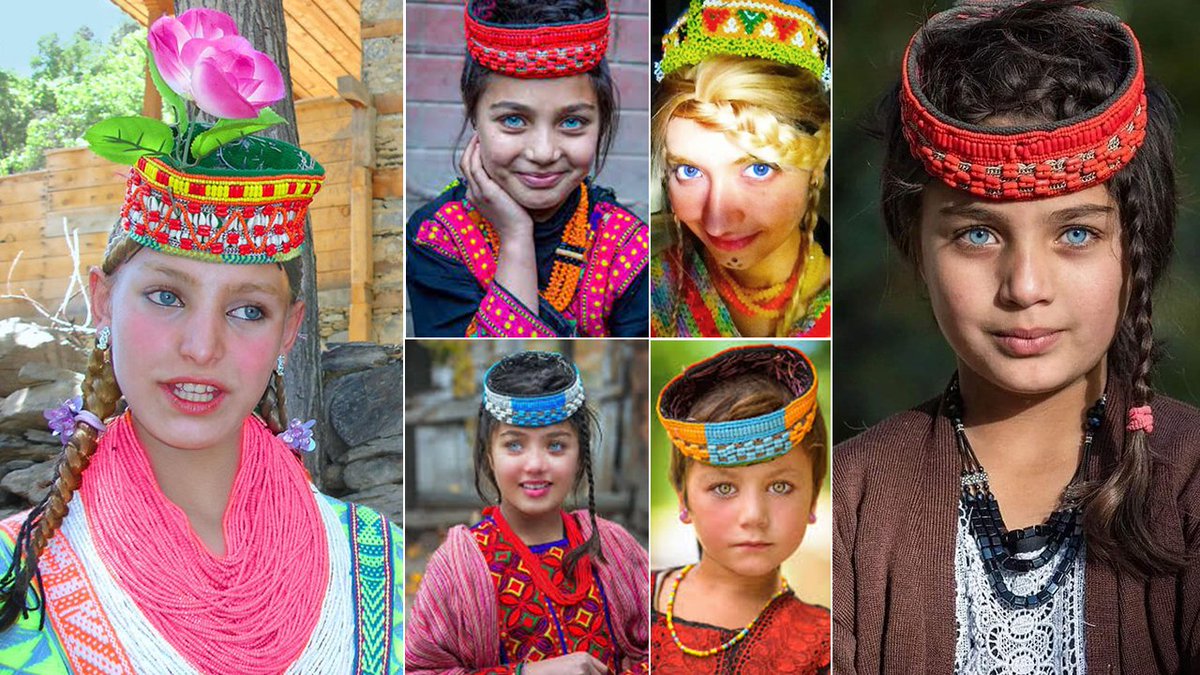
Their religion seemed to be Indo-Aryan in fashion also:
https://en.wikipedia.org/wiki/List_of_L ... al_figures
Added in 49 minutes 13 seconds:
"
Gods and goddesses
edit
Ašvieniai, the divine twins who pulled the chariot of the Sun (the Vedic Hindu Ashwins).
Aušrinė, the Morning Star, a goddess, a daughter of the God ("dievaitė"). She was the goddess of the morning. Alternatively her name is given as Aušra ("dawn"). Ushas in Vedic hinduism.
Auštaras (Auštra), the god of the northeast wind, who stands at the gates of paradise and lights the way for those going to paradise. His function of shining this beacon makes him similar to Aušrinė; some consider him to be her cousin.
Bangpūtys, the god of the seas and storms ––he is two-faced like the Roman god Janus.
Dalia, goddess of fate and weaving.
Deivės Valdytojos (Lithuanian: Governing Goddesses), were the goddesses who made garments from human's lives. They were seven sisters: Verpiančioji (who spun the threads of life), Metančioji (who threw rims [clarification needed] of life), Audėja (the weaver), Gadintoja (who broke the thread), Sergėtoja (who scolded Gadintoja, and instigated war between people), Nukirpėja (who cut the cloth of life), and Išskalbėja (the laundress). They have similarities with the Greek Fates and the Norse Norns. Deivės Valdytojos were associated with Dalia and Laima.
Dievas ("God"), the supreme deity
Dievas Senelis ("God Old Man"), a teacher of people and judge of their morality. He looks like an old traveling beggar. Dievas Senelis is proficient at magic and medicine. Epithet of Dievas.
Gabija, the foster of the Holy Fire, a goddess, a daughter of Dievas ("dievaitė").
Laima, goddess of Fate and pregnant women.
Mėnuo, the Moon, a son of Dievas ("dievaitis").
Perkūnas, the Thunder, the main god. ("dievaitis") (Parjanya/Indra in Vedic hinduism).
Praamžius, Praamžis, Pramšans, Pramžimas, Praamžimas, an epithet of Dievas (the chief god); probably of later literary origin.[1]
Saulė, the Sun Goddess (Surya in Vedic hinduism)
Vakarinė, goddess of the Evening Star.
Vėjopatis, god of the wind and master of Dausos (paradise)
Žemyna, goddess, the deified soil (Thracian Zemele; Zamin in Persian and Hindi for "land").
Žvaigždės (singular: žvaigždė), stars. Saulė (the sun) is their mother and sometimes[when defined as?] with the Moon as their father. One of the most important stars is Aušrinė. Other stars, Aušrinė's sisters, are less important, but they sometimes appear in mythic stories too. Especially notable ones are Vakarinė or Vakarė (the evening Venus, who makes the bed for Saulė), Indraja (indra, the hindu devta) (Jupiter), Sėlija (shani, the hindu devta) (Saturn), Žiezdrė (Mars), and Vaivora (Mercury).
Heroes and heroines
edit
Pajauta, the legendary princess of Kernavė
Jūratė and Kastytis are heroes of a Lithuanian legend, which subsequently became popular, mostly because of its modern poetic interpretation by Maironis. The queen of the amber palace Jūratė may be considered a manifestation of the goddess of Sea in this legend.
Local and nature spirits
edit
Ežerinis, a spirit of lakes
Javinė, a household goddess who protects grain in barns.
Jievaras, a household spirit who protects grain. Sacrifices to Jievaras are made after the rye harvest. While cutting grain, women would leave a few grain tufts uncut, which would later be braided into plaits. They would also leave some bread and salt under the plait, and would say: Davei manei, Žemele, duodame ir tau ([You] gave for us, Mother Earth, we are giving for you too), a request for the land to continue to be fruitful.
Kupolė, the spirit of springtime vegetation and flowers. The Festival of Kupolė (Kupolinės) was associated with Feast of St. John the Baptist (Joninės). In this festival, women picked sacral herbs, danced and sang songs. Kupolinės is also known as Rasos. Compare this with Ziedu māte in Latvian mythology, Kupala in Polish mythology and Ivan Kupala in Russian mythology
Laukų dvasios (spirits of fields), spirits, who were running through the fields. When crops in the fields waved in the wind, people saw them as being the actions of spirits. Laukų dvasios include Nuogalis, Kiškis (hare), Meška (bear), Lapė (fox), Katinas (tomcat), Bubis, Bubas, Bubė, Baubas, Babaužis, Bobas, Maumas (bugaboo), Raudongalvis (red-headed), Raudongerklis (red-throated), Žaliaakis (green-eyed), Paplėštakis, Guda, Dizikas, Smauglys (boa), Ruginis (spirit of rye), Papiokė, Pypalas, Žebris, Arklys (horse), Vilkas (wolf).
Upinis, a spirit of rivers
Various lower beings
edit
Kaukas, spirits similar to leprechauns.
Laumė, a fairy-like female creature (pixies). Described as white and blue as the sky itself. Good spirit, very friendly with the Earth and Nature gods. However, if anyone tried to use them for personal gain, their punishment would be severe.
Nykštukas, gnomes.
Vėlės, spirits of dead human beings.
"Demonic" beings
edit
Aitvaras, a household spirit bringing both good and bad luck
Baubas [lt], an evil spirit with long lean arms, wrinkly fingers and red eyes. He harasses people and tears their hair or stifles them. To children, he is the equivalent of the boogeyman of the English-speaking countries. A misbehaving child could be told by the parents: "Behave, or baubas will come and get you". Also it could be described as a dark or black creature living under the carpet or in some dark spot of the house.
Giltinė [lt] – goddess of death, also The Reaper. Other names include Kaulinyčia, Maras (black death or the Plague), Maro mergos, Kolera, Pavietrė, Kapinių žmogus.[2] Her sacred bird is the owl. Sometimes she was considered to be a sister of Laima (luck).
Ragana [lt; lv], Lithuanian and Latvian word for witch.
Slogutis means pain, misery or nightmare. Also can mean fear or bad feelings.
Pinčiukas or Pinčukas; the word literally means "inhabitant of Pinsk" in Lithuanian (cf. "Pinchuk"). Bronislava Kerbelytė, in her work on classification of "devilish" beings in Lithuanian folklore remarks that often a stranger was seen as an evil being; on particular, "pinchuks" from Belarus were seen as strangers. She writes that in one East Lithuanian legend a pinčiukas is portrayed as a mischievous being.[3] The devil Pinčiukas was popularized by the novel Baltaragis's Mill by Kazys Boruta, especially when it was turned into the first Soviet rock opera and musical film Devil's Bride. There Pinčiukas is a comic character: lazy, easily deceived, vengeful.[4]
Žiburinis [lt], a scary forest spirit that appears as a phosphorescent skeleton.
Holy places and things
edit
Dausos [lt] or Dangus ("heaven"), the home of good souls. Dausos is on a high mountain (Latvian Debeskalns, or Norse Valhalla), between two rivers. Like the Greek Garden of the Hesperides, the garden of Dausos contains trees which bear golden apples. Day in the garden is perpetual but outside its confines lies perpetual night. Master of Dausos is Vėjopatis (Lord of the wind) or Vėjas (Wind) who is also one of the oldest gods in Lithuanian mythology. Vėjas is identical to Vayu of Hinduism. Auštaras and Vėjopatis are the gatekeepers of Dausos (Dausų Vartai). While Auštaras acts as the psychopomp of good souls, Vėjas (Vėjopatis) blows bad souls into oblivion.[citation needed]
Names by written sources
edit
Earliest Rus' chronicles
edit
Some names from Lithuanian mythology are also found in Kievan Rus' chronicles of the 13th century. These deities were secretly worshiped by King of Lithuania Mindaugas after his baptism. Rus' chronicles are considered the best source of information about the ancient Lithuanian pantheon worshiped by nobles and the military.
Sovijus in 13th-century Rus' chronicles was a person who introduced the pagan custom of burning bodies after death, according to studies by Gintaras Beresnevičius.
Žvoruna (Zvoruna) was a euphemism for the hunting and forest goddess like Roman Diana. Her name is connected with wild animals. There was mentioned in chronicle that she is a bitch, it means that her zoomorphic shape is female dog.
Medeina (Medeinė) is another euphemism of the hunting and forest goddess. Medeina also was mentioned in the 16th century by J. Lasicki. She was worshiped by King Mindaugas and represented military interest of warriors.
Teliavelis (Televelis) was a powerful smith who made the sun and threw it to the sky. This myth survived in folk tales in the beginning of the 20th century. Some scholars, like K. Būga, tried to prove that Televelis is incorrectly written Kalvelis (smith diminutive in Lithuanian). Teliavelis has connections with Finnish Ilmarinen.
Andajus (Andajas, Andojas, etc.) was mentioned in medieval chronicles as the supreme deity. It may be euphemism for Dievas. It is mentioned in chronicle that warriors invoke Andajus in battle.
Nonadievis (Nunadievis; etimologized by some scholars as Numadievis) is an incorrectly written name of the supreme god or just another euphemism.
Perkūnas was the god of thunder, one of the most powerful deities. Perkūnas survived in popular belief and folk tales until the 20th century.
Diviriks is thought to be one of Perkūnas' euphemisms, meaning "leader of gods".
Martynas Mažvydas
edit
Martynas Mažvydas in his Latin introduction to Catechismusa Prasty Szadei (1547) urged the people to abandon their pagan ways and mentioned the following gods:[5][6]
Perkūnas (Percuno) – god of thunder
Laukosargas (Laucosargus) – god of grains and other agricultural plants
Žemėpatis (Semepates) – god of cattle and other farm animals
Aitvaras and kaukas (Eithuaros and Caucos) – evil spirits
Maciej Stryjkowski
edit
Maciej Stryjkowski (1547–1593) – Polish–Lithuanian historian and author of Chronicle of Poland, Lithuania, Samogitia and all Russia. In this work, Stryjkowski provided two lists of gods, one Old Prussian and another Lithuanian. He listed 16 Lithuanian gods:[7]
Prakorimas (Prokorimos) – the supreme deity. Stryjkowski elaborated that people used to sacrifice white cocks to Prakorimas. Their flesh was divided into three pieces: one for peasants, another for pagan priests (Lithuanian: žynys), and a third for burning. Stryjkowski pointed out that Prakorimas was similar to the Prussian supreme god Okopirmas.
Rūgutis (Ruguczis) – god of fermentation and fermented foods
Žemininkas (Ziemennik) – god of land and agriculture. The cult of the žaltys (grass snake) is associated with the cult of Žemininkas.
Krūminė (Kruminie Pradziu Warpu) – deity of ears, provider of crops
Lietuvonis (Lituwanis) – god of rain
Kauriraris (Chaurirari) – deity of war and warhorses. The name etymology is unclear. Vladimir Toporov suggested that it is derived from the Lithuanian word kaurai (fur), while Wilhelm Mannhardt argued it stems from karas (war).[8]
Sutvaras (Sotwaros) – god of all cattle
Šeimos dievas (Seimi Dewos) – god of family
Upinis dievas (Upinis Dewos) – god of rivers
Bubilas – god of honey and bees
Didis Lado (Dzidzis Lado) – the great god. Festivities, songs, and dances in his honor lasted from May 25 to June 25. There are doubts whether this represents an actual god.[9]
Gulbis (Gulbi Dzievos) – the good spirit of every human, guardian angel
Ganiklis (Goniglis Dziewos) – god of herds and shepherds
Šventpaukštinis (Swieczpunscynis) – god of all domesticated and wild birds. People did not offer sacrifices to him as he was a free spirit.
Kelių dievas (Kielu Dziewos) – god of roads, trade and travel
Pušaitis or Puškaitis (Puszajtis) – deity of land, dwelling in elder bushes and commanding chthonic dwarfs (barstukas)
Jan Łasicki
edit
Jan Łasicki (Lasicius) was a Polish Protestant activist. He wrote a treatise on idolatry About the gods of Samogitians, other Sarmatians, and false Christians (De diis Samagitarum caeterorumque Sarmatarum et falsorum Christianorum, written ca. 1582 and published in 1615). This 18-page treatise contained a lists of 76 Lithuanian gods with brief description of their functions. Łasicki obtained most of his information from Łaszkowski, a Polish lesser noble who worked as a royal land surveyor. The list contained very minor deities, representing everyday household items. Łasicki was also not intimately familiar with Lithuanian culture or language. Therefore, the academic opinion on the list ranges from a valuable resource to a practical joke designed to poke fun of Christian saints through an inverted mirror. Deities mentioned by Jan Łasicki were:[10]
Aukštėjas (Auxtheias Vissagistis) – a euphemism for the supreme god. Derived from the Lithuanian word aukštas (high).
Žemėpatis (Zemopacios)
Perkūnas (Percunos) – god of thunder
Audros – god of storms
Algis
Aušra (Ausca) – the morning star (Venus). Her other name was Aušrinė.
Bežlėja (Bezlea)
Brėkšta (Breksta) – goddess of twilight. Also could be a euphemism for Vakarė.
Ligyčius (Ligiczus)
Datanus
Kirnis (Kirnus) – local god of cherries
Kremata – god of hogs[11]
Pyzius (Pizio) – god of spouses
Medeina (Modeina et Ragaina) – goddess of forest and hunting
Kerpyčius and Šilinytis (Kierpiczus and Siliniczus) – gods of forest, mosses and lichens
Tavalas (Tavvals) – deity of physical strength. Gintaras Beresnevičius noted that this deity could be the same as medieval Teliavelis.
Orthus
Ežerinis (Ezernim) – spirit or deity of lakes. Derived from ežeras (lake).
Sidžius, Simonaitis and Ventis Rekičionis (Simonaitem, Sidzium, Ventis Rekicziouum) – spirits worshiped by individual noble families
Karvaitis Ėraitinis (Kurvvaiczin Eraiczin) – deity of calves and lambs[11]
Gardūnytis (Gardunithis) – protector of newly born lambs[12]
Prigirstytis (Prigirstitis) – can hear whispers
Derintojas (Derfintos)
Bentis
Laukpatis (Lavukpatimo)
Priparšis (Priparscis)
Ratainyčia (Ratainicza) – god of horses[8]
Valgina (Walgina) – god of cattle[11]
Krikštas (Kriksthos) – protector of tombstones[11]
Apydėmė (Apidome) – deity of changed residence. The name is also known from hand-written collection of sermons from 1573.[13]
Kriukis (Krukis) – deity of pigs
Lazdona (Lasdona) – goddess of hazelnuts
Bubilas (Babilos) – household god of bees, husband of Austėja
Žemyna (Zemina) – goddess of land and agriculture
Austėja (Austheia) – household goddess of bees, often presented as wife of Bubilas
Deuoitis
Vetustis
Guboi and Tvverticos
Veliuona (Vielona) – goddess of death
Warpulis
Salaus – no function recorded by Łasicki.
Šluotražis (Szlotrazis) – no function recorded by Łasicki. The name is derived from šluota (broom).[14]
Tiklis – no function recorded by Łasicki.
Beržulis (Birzulis) – no function recorded by Łasicki. Based on etymology, it could be a god of birches and birch sap.
Šeryčius (Siriczus) – no function recorded by Łasicki. The name is possibly derived from šerti (feed).[14]
Dvargantis (Dvvargonth) – no function recorded by Łasicki.
Klamals – no function recorded by Łasicki.
Atlaibas (Atlaibos) – no function recorded by Łasicki.
Numeias
Ublanyčia (Vblanicza) – patron of beggars[15]
Dugnai – spirit of flour
Pesseias
Trotytojas kibirkščių (Tratitas Kirbixtu) – deity of spark, fire
Alabathis
Polengabia
Užpelenė (Aspelenie)
Budintojas (Budintaia)
Matergabiae
Raugo Žemėpatis (Rauguzemapati) – deity of sourdough, leaven and fermentation
Luibegeldas
Ziemennik
Vaižgantas (Waizganthos) – a god of flax
Gabija (Gabie) – goddess of household fire
Smik smik per velėną (Smik Smik Perleuenu) – a phrase rather than a being
Ežiagalis (Ezagulis) – god of death
Aitvaras (Aitvvaros)
Kaukas (Kaukie)
Gyvatė (Giuoitos) – black snake (see also žaltys)
Srutis and Miechutele – deities of paint and color[14]
Matthäus Prätorius
edit
Deities mentioned by Matthäus Prätorius (1635–1704) were:[14]
Žalius (Zallus) – god of disagreement
Žėlius (Zelus) – god of grass
Šulininis (Szullinnijs) – god of wells
Bangpūtys, Vėjopatis, Bičbirbis, Giltinė, Gota, Jaučių Baubis, Karvaitis, Ėraitis, Skalsa, Biržulis / Beržulis, Prigirstytis / Girystis, Ligyčius / Lygėjus, Kelio dievas / Kelukis
Drebkulis and Magyla - Prussian Lithuanian
Gabjauja (Gabvartas)[16]
Theodor Narbutt
edit
Polish-Lithuanian historian Teodor Narbutt wrote the ten-volume work History of the Lithuanian Nation (Dzieje starożytne narodu litewskiego) between 1835 and 1841. The first volume contained a description of Lithuanian mythology. However, modern historians have accused Narbutt of falsifying historical facts and reporting speculations. Thus, some gods mentioned only by Narbutt and unknown from other sources are usually treated as inventions of the author.
Male deities
edit
Praamžius (Pramżimas) – highest god, determines the fate of people, world, and other gods
Ukapirmas (Okkapirmas) – preceded time, his feast is celebrated on December 25
Viršaitis (Wirszajtos) – protected household, domestic animals. Narbutt claimed that he was equivalent to Auxtejas Wissagistis mentioned by Łasicki and to Roman Saturn
Perkūnas (Perkunas) – thunder god
Kovas (Kawas) – god of war
Ragutis – god of beer, vodka, mead
Santvaras or Sotvaras (Sotwaros) – god of daylight, poets, doctors
Atrimpas (Atrimpos) – god of sea and water
Gardaitis (Gardeoldiis) – god of wind, storm, protector of ships
Poklius (Poklus) – god of death and underworld
Kriukis (Krugis) – god of smiths
Žiemininkas (Ziemienikas) – god of earth, harvest, and darkness
Patelas (Patelo) – flying god of air, similar to an angel
Šneibratas (Sznejbrato) – god of birds and hunting
Kibirai (Kabiry) – a trinity
Female deities
edit
Goddess Milda by Kazimierz Alchimowicz (1910), National Museum in Warsaw
Praurimė (Praurime) – goddess of sacred fire, she was served by vaidilutės
Lada (Lado) – the great goddess, Rasos festival is dedicated to her
Budtė (Budte) – goddess of wisdom
Laima (Lajma) – goddess of fate
Pelenų Gabija (Polengabia) – goddess of fireplaces
Moterų Gabija (Matergabia) – goddess of bread and bakery
Perkūnaitėlė (Perkunatele) – wife of Perkūnas
Pilvytė (Pilwite) – goddess of money, riches, and good luck
Lietuva (Liethua) – goddess of freedom, pleasure, joy
Veliuona (Wellona) – goddess of eternity, afterlife
Pergrubė (Pergrubie) – goddess of spring, flowers, gardens
Milda – goddess of love, courtship
Krūminė (Krumine) – goddess of grain, agriculture
Nijolė (Nijola) – mistress of the underworld, wife of Poklius
Alabatis – goddess of flax
Aušra (Ausssra) – morning goddess
Bezelea – evening goddess
Brėkšta (Brekszta) – goddess of darkness and dreams
Kruonis (Kronis) – goddess of time
Užsparinė (Usparinia) – goddess of land borders
Verpėja (Werpeja) – weaver of the thread of life
Gondu – goddess of weddings
Upinė (Upine) – goddess of rivers, springs
Ratainyčia (Ratajniczu) – goddess protecting horses
Valginė (Walgina) – goddess protecting domestic animals
Luobo gelda (Lajbegelda) – goddess of knowledge and rumors
Mėšlų boba (Mahslu baba) – goddess of garbage
Budintoja – spirit that wakes sleeping people
Austėja (Austheja) – goddess of bees
Ragutiene Pati (Ragutenapati) – wife of Ragutis
Žemės Motina (Zemmes mahti) – goddess of underground, responsible for lost items
Gaila (Gajla) – spirit torturing people and animals
Neris – nymph of Neris River
Dugnė (Dugna) – nymph of rivers
Ragana – goddess of trees
Lazdona – goddess of hazelnut
Medziojna – goddess of forests
Pajauta – worshiped woman, daughter of Duke Kernius, wife of Živinbudas
Birutė (Biruta) – worshiped woman, wife of Kęstutis
Other written sources
edit
This section contains those names of Lithuanian and Prussian gods or other mythical beings that are mentioned in old treatises on history or philosophy, sometimes accompanied by brief descriptions, and which are known from a few independent sources or from their counterparts under different names in later collections of myths and tales.
Dimstipatis (mentioned by Jokūbas Lavinskis), is a masculine deity (genius loci). It is a household god, the guardian of houses and caretaker of the hearth. People sacrificed roosters and black hens to the deity. The birds were boiled; later people would gather around the kettle and eat the birds. The bones were burned. Sometimes Dimstipatis is reconstructed as a god of housewives, to whom pigs were sacrificed. Dimstipatis was also seen as a power protecting from fires.[5]
Dirvolika, Nosolus (Jesuit reports from 1605)[17]
Pagirnis (Jesuit reports from 1605)[5]
Baukuris (Kraziu kolegijos)[18]
Velinas (mentioned by Konstantinas Sirvydas)[2]
Javinė (Jawinne by Jacob Brodowski)[17]
Laima (Daniel Klein in 1666)[19]
Other names
edit
Names of figures that were more marginal in Lithuanian mythology or less known from existing sources are put here. In fact they denote some spirits or local deities that do not play a main role in the mythology of Lithuanians.
Blizgulis, a god of snow. His name means "He who sparkles."
Junda, Goddess of War
Baubis, a household god of meat and cattle.
Divytis, a god-like hero of fishermen legends. Fishermen at sea sang songs about Divytis.
Gardaitis, a god (a spirit?) of ships and sailors.
Jagaubis, a household spirit of fire and the furnace.
Rasa, Kupolė's and Kaupolis' daughter. She is the goddess of summer's greenage and flowers.
Mokas, a stone with an ability to teach people, sometimes they are found in families - with wife Mokienė and children Mokiukas
"
https://www.hinduismtoday.com/hpi/2021/ ... -of-india/
"
BELGRADE, SERBIA, January 27, 2021 (Bharata Bharati by Zvonimir Kostic): Of all the Indo-European people, Slavs are the ones who inhabit the largest territory on the Euro-Asian continent today. Also, Slavs are the most numerous ethno-linguistic group on the European continent. There are about 300 million of them today. Slavic peoples are traditionally divided into Eastern Slavs (Russians, Belarus, Ukrainians), Western Slavs (Polish, Czech, Slovakians, Lusatian Sorbs, Kashubians) and Southern Slavs (Serbs, Croatians, Slovenians, Macedonians, Bulgarians). In the current religious division, the Slavs are divided into: Orthodox (Russians, Ukrainians, Belarus, Serbs, Macedonians and Bulgarians), Catholic (Polish, Czech, Slovakians, Croatians and Slovenians) and Muslim (Bosniaks). Despite their numbers and the huge territory they inhabit, Slavs are the people about whose pre-Christian history and religion there are the fewest published scientific papers in English and there is little general knowledge about them overall.
When it comes to Eastern Slavs, we have the main testimony in the form of Nestor’s Chronicle, as well as the secondary testimonies in the forms of Novgorod Chronicle, The Tale of Igor’s Campaign and The Hypatian Codex, which describe the faith in Kievan Rus near the end of the tenth century. Eastern Slavic Gods mentioned there include Perun, Xors, Dazhbog, Simargl, Veles, Stribog, Swarog, the Goddess Mokosh, etc. Of these, the primary spot undoubtedly belonged to Perun, the God of thunder, as the supreme Deity of the Eastern Slavs. Like many other Slavic Gods, Perun is etymologically related to the Vedic God Parjanya from whom he likely originated). But, aside from Perun (the Slavic Parjanya), two other Eastern-Slavic Deities have often been considered to be of Indian origin based on the words from Sanskrit. Those two Deities are the God Swarog, whose name comes from Sanskrit Svarga (meaning turbulent, cloudy, dim sky) and the Goddess Mokosh, whose name most likely originates from the Sanskrit word moksha (meaning “liberation from the eternal circle of reincarnation”).
"
https://en.wikipedia.org/wiki/List_of_Slavic_deities
https://www.wisdomlib.org/definition/paryana
https://www.wisdomlib.org/definition/parnana
https://en.wikipedia.org/wiki/Parjanya
"
The deity can be identified with various other Indo-European Gods such as Slavic Perun, Lithuanian Perkūnas, Latvian Pērkons and Finnish Perkele "god of thunder", Gothic fairguni "mountain", and Mordvin language Pur'ginepaz.[8]
"
"
RV 5.83 in the translation of Jamison and Brereton:[9]
1 áchā vada tavásaṃ gīrbhír ābhí stuhí parjányaṃ námasâ vivāsa
kánikradad vṛṣabhó jīrádānū réto dadhāty óṣadhīṣu gárbham
Address the powerful one with these hymns. Praise Parjanya. With reverence seek to entice him here.
The constantly roaring bull of lively drops deposits his semen as embryo in the plants.
2 ví vṛkṣân hanty utá hanti rakṣáso víśvam bibhāya bhúvanam mahâvadhāt
utânāgā īṣate vŕṣṇyāvato yát parjánya stanáyan hánti duṣkŕtaḥ
He smashes apart the trees and also smashes the demons. All creation fears him who has the mighty weapon.
And (even) the blameless one shrinks from the one of bullish powers, when Parjanya, thundering, smashes those who do ill.
3 rathîva káśayâśvāṁ abhikṣipánn āvír dūtân kṛṇute varṣyāaàṁ áha
dūrât siṁhásya stanáthā úd īrate yát parjányaḥ kṛṇuté varṣyàṃ nábhaḥ
Like a charioteer lashing out at his horses with a whip, he reveals his rain-bearing messengers.
From afar the thunderings of the lion rise up, when Parjanya produces his rain-bearing cloud.
4 prá vâtā vânti patáyanti vidyúta úd óṣadhīr jíhate pínvate svàḥ
írā víśvasmai bhúvanāya jāyate yát parjányaḥ pṛthivîṃ rétasâvati
The winds blow forth; the lightning bolts fly. The plants shoot up; the sun swells.
Refreshment arises for all creation, when Parjanya aids the earth with his semen
5 yásya vraté pṛthivî nánnamīti yásya vraté śaphávaj járbhurīti
yásya vratá óṣadhīr viśvárūpāḥ sá naḥ parjanya máhi śárma yacha
At whose commandment the earth bobs up and down, at whose commandment the hoofed (livestock) quivers,
at whose commandment the plants take on all forms—you, Parjanya— extend to us great shelter.
6 divó no vṛṣṭím maruto rarīdhvam prá pinvata vŕṣṇo áśvasya dhârāḥ
arvâṅ eténa stanayitnúnéhy apó niṣiñcánn ásuraḥ pitâ naḥ
Grant us rain from heaven, o Maruts; make the streams of the bullish stallion swell forth.
(Parjanya,) come nearby with this thundering, pouring down the waters as the lord, our father.
7 abhí kranda stanáya gárbham â dhā udanvátā pári dīyā ráthena
dŕtiṃ sú karṣa víṣitaṃ nyàñcaṃ samâ bhavantūdváto nipādâḥ
Roar! Thunder! Set an embryo! Fly around with your water-bearing chariot.
Drag the water-skin unleashed, facing downward. Let uplands and lowlands become alike.
8 mahântaṃ kóśam úd acā ní ṣiñca syándantāṃ kulyâ víṣitāḥ purástāt
ghṛténa dyâvāpṛthivî vy ùndhi suprapāṇám bhavatv aghnyâbhyaḥ
The great bucket—turn it up, pour it down. Let the brooks, unleashed, flow forward.
Inundate Heaven and Earth with ghee. Let there be a good watering hole for the prized cows.
9 yát parjanya kánikradat stanáyan háṁsi duṣkŕtaḥ
prátīdáṃ víśvam modate yát kíṃ ca pṛthivyâm ádhi
When, o Parjanya, constantly roaring, thundering you smash those who do ill,
all of this here, whatever is on the earth, rejoices in response.
10a ávarṣīr varṣám úd u ṣû gṛbhāyâkar dhánvāny átyetavâ u
10c ájījana óṣadhīr bhójanāya kám utá prajâbhyo 'vido manīṣâm
You have rained rain: (now) hold it back. You have made the wastelands able to be traversed.
You have begotten the plants for nourishment, and you have found (this?) inspired thought for the creatures.
"
https://www.academia.edu/26262290/Iranian_Goddesses
Multiple of these Indo-European and Indo-Aryan references and symbols appear throughout the Qur'an but are overlooked due to people having narrow specializations and thinking that these somehow couldn't appear from a region with strong ties to both the Indus and Iran as well as to the Ancient cultures which permeated the entire region, and there is even evidence that some of the tribes called "Arab" were Indo-European as well while others may have adopted things from Indo-European and Indo-European influenced cultures over many centuries, as even the influential Assyrians and people in Syria show signs of both Indo-European genetics and culture, and so much of the information currently accepted which ignores or denied these things is negatively impacted by identity politics and similar concerns.
Genetically, Kurds are supposed to be most similar to J, but the "S" people are all jumbled together due to the separated language families mixed with Imperialist concerns and racist prejudices and agendas and groups vying for territories, most annoyingly from far away woth very little "quantum" to justify territorial claims:
https://pmc.ncbi.nlm.nih.gov/articles/PMC3941118/
https://digitalcommons.law.ou.edu/cgi/v ... c_articles
https://en.wikipedia.org/wiki/Kulturkampf
"
In the late 19th century, cultural wars arose over issues of prohibition and education in the United States.[93] The Bennett Law was a highly controversial state law passed in Wisconsin in 1889 that required the use of English to teach major subjects in all public and private elementary and high schools. Because Wisconsin German Catholics and Lutherans each operated large numbers of parochial schools where German was used in the classroom, it was bitterly resented by German-American (and some Norwegian) communities. Although the law was ultimately repealed, there were significant political repercussions, with the Republicans losing the governorship and the legislature, and the election of Democrats to the Senate and House of Representatives.[94][95]
In the United States, the term "culture war(s)" has been used to refer to conflict in the late 20th and early 21st centuries between religious social conservatives and secular social liberals.[96][97] This theme of "culture war" was the basis of Patrick Buchanan's keynote speech at the 1992 Republican National Convention.[98] It has also been used to refer to neoconservative reaction to the New Left[99] and the ideological battles playing out in the country's public schools.[100]
Throughout the 1980s, there were battles in Congress and the media regarding federal support for the National Endowment for the Arts and the National Endowment for the Humanities that amounted to a war over high culture between neoconservatives and paleoconservatives.[101] Justice Antonin Scalia referenced the term in the Supreme Court case Romer v. Evans, 517 U.S. 620 (1996), saying "the Court has mistaken a Kulturkampf for a fit of spite". The case concerned an amendment to the Colorado state constitution that prohibited any subdepartment from acting to protect individuals on the basis of sexual orientation. Scalia believed that the amendment was a valid move on the part of citizens who sought "recourse to a more general and hence more difficult level of political decision making than others". The majority disagreed, holding that the amendment violated the Equal Protection clause of the Fourteenth Amendment.[citation needed]
The term, translated to H as Milhemet Tarbut (מלחמת תרבות) is also frequently used, with similar connotations, in the political debates of Is—having been introduced by J who fled Nazi Germany in the 1930s.[102]
"
https://en.wikipedia.org/wiki/Culture_war
https://www.mdpi.com/2313-5778/9/4/146
https://en.wikipedia.org/wiki/Scholasticide
"
Scholasticide, often used interchangeably with the terms educide and epistemicide,[1][2][3] refers to the intended mass destruction of education in a specific place.[4]
Educide has been used to describe the mass destruction in the Iraq War (2003–2011) and the Gaza war (2023–present).[5]
Between 2013 and 2017 the educational infrastructure suffered again due to the war against Daesh (also known as "IS", "ISIS", or "ISIL"). According to the Norwegian Council for the Displaced the war led to the Iraqi government reducing or cutting assistance to 5.2 million children. Since 2023, 770,000 children have been displaced.[23] Between 2013 and 2017, in places under Daesh control, the curriculum was changed. Classes such as history or literature were replaced with religious education. The change of curriculum resulted in parents taking their children out of school to prevent indoctrination. Girls were disadvantaged in their access to education, with an adapted curriculum based on gender and having access to education only up up to the age of 15. Girls dropped out due to marrying young, as this could prevent them from being forcefully married to Daesh fighters. Refworld reports that between 2013 and 2017, there were that more than 100 attacks on schools in which 300 people students and staff were injured. Additionally, there were targeted murders, kidnappings, and threats which harmed 60 students and over 100 staff. The UN reported that at least 350 schools were damaged or destroyed in Iraq. In addition, buildings of educational institutions were used for military purposes, such as Mosul University.[24]
"
Is is Is.
"
As a result of the war on Gaza, most educational institutions have been destroyed, including 80% of all schools in Gaza.[31] Critics have claimed that Is systematically and intentionally destroyed all the universities in Gaza.[32][33] Some of the educational buildings were converted into military bases by Is.[34] In addition to the material infrastructure, Israel has targeted those connected to the educational infrastructure, such as students and academics. As of April 2024, 5,479 students, 261 teachers, and 95 university professors were killed and 7819 students and 756 teachers injured. The numbers have been increasing ever since.[35][31] According to the Ministry of Education and Higher Education of Gaza, 625,000 students could not access education as a result of the conflict.[36]
"
https://en.wikipedia.org/wiki/Cultural_genocide
"
u/lagerdalek avatar
lagerdalek
•
13y ago
To quote Tacitus "Auferre, trucidare, rapere, falsis nominibus imperium; atque, ubi solitudinem faciunt, pacem appellant"
They plunder, they slaughter, and they steal: this they falsely name Empire, and where they make a desert, they call it peace.
"
https://orca.cardiff.ac.uk/id/eprint/10 ... ldjphd.pdf
https://discovery.ucl.ac.uk/id/eprint/1 ... nocide.pdf
"
While Alexander the Great's campaigns involved significant destruction, enslavement (like selling 30,000 people into slavery after Thebes), and mass killings, historians don't typically label his actions as "genocide" in the modern sense of systematic extermination of a group, but rather as brutal warfare, with
genocide being a modern term for targeting entire peoples. His army inflicted immense suffering, but the concept of systematic ethnic cleansing as seen in later periods (like the Circassian or Armenian genocides) wasn't the defining feature of Alexander's conquests, which focused more on empire-building and Hellenization.
Key Events & Brutality:
Thebes (335 BC): Alexander destroyed the city and sold its population into slavery, a horrific act but a singular event against one rebellious city, not a widespread ethnic group.
Sack of Gaza (332 BC): Extreme violence and enslavement of the populace occurred.
Indian Campaign: The army faced mutiny due to exhaustion and fear of further battles, highlighting the brutality and hardship of the conquests.
Distinction from Modern Genocide:
Modern Definition: Genocide involves the intent to destroy, in whole or in part, a national, ethnic, racial, or religious group, often through systematic means.
Alexander's Actions: While brutal and resulting in massive death and displacement (e.g., slavery), his conquests aimed at subjugation, expansion, and spreading Greek culture (Hellenization) rather than total extermination of entire peoples as ethnic groups.
In Summary: Alexander's army committed atrocities, massacres, and enslavements, but his campaigns are generally understood as ancient warfare and imperial conquest, not "genocide" in the specific, systematic sense the term is used for events like the Circassian or Armenian genocides.
"
https://www.southcoasttoday.com/story/l ... 386015007/
Notice all the things that people try to link to something they deem as powerful and important, thus linking themselves or an identity with current socio-political implications that they want to link for modern prestige:
"
The real Alexander ,
The face of this fall is Greek -- Macedonian, to be exact.
He's young, handsome, maybe even gay. And 2,300 years old.
Blond or brunet, gay or straight, Homeric hero or paranoid genocidal conqueror, Alexander the Great turns up everywhere this month, in bookstores, in games, on video and on cable, where The History Channel and The Discovery Channel are presenting documentaries.
"
"
That view of Alexander -- as "an ancient Greek version of Stalin," as Cartledge puts it -- murdering those in his ranks whom he suspected of conspiring against him, killing as many as 750,000 enemy soldiers and civilians, has been a major bone of contention among modern historians.
Many have taken the view that the conquest was of little consequence, a bloody aberration carried out by a megalomaniac.
"
Even the "darkening" and adding grit to the perception of history as a corrective is likely severely distorting.
"
"What he is not is a one-way gay man, standing for gay triumphs as a counterculture against the heterosexual world."
Cartledge seconds that.
"If you're gay, you might want to claim a really powerful figure from history as one of your own," Cartledge says. "But the fact is that he slept with males as well as females. It was treated as a phase young men went through."
"
"
Murray has tried to get his students at USF to make and march with "sarissas," the 18-foot-long pikes that Alexander's infantry carried. He's eager to see "just what 40,000 Greeks and 150,000 Persians look like."
"
https://www.bbc.com/news/articles/cy87076pdw3o.amp
https://en.wikipedia.org/wiki/Estimates ... population